
Suet pastry is a traditional British dough made with flour and suet, perfect for savoury steamed puddings such as steak and kidney, or old-fashioned favourites like jam roly poly and spotted dick. It also makes a delicious pie crust with a crisp, golden top and a soft, tender underside that soaks up some of the rich gravy from a meaty filling.
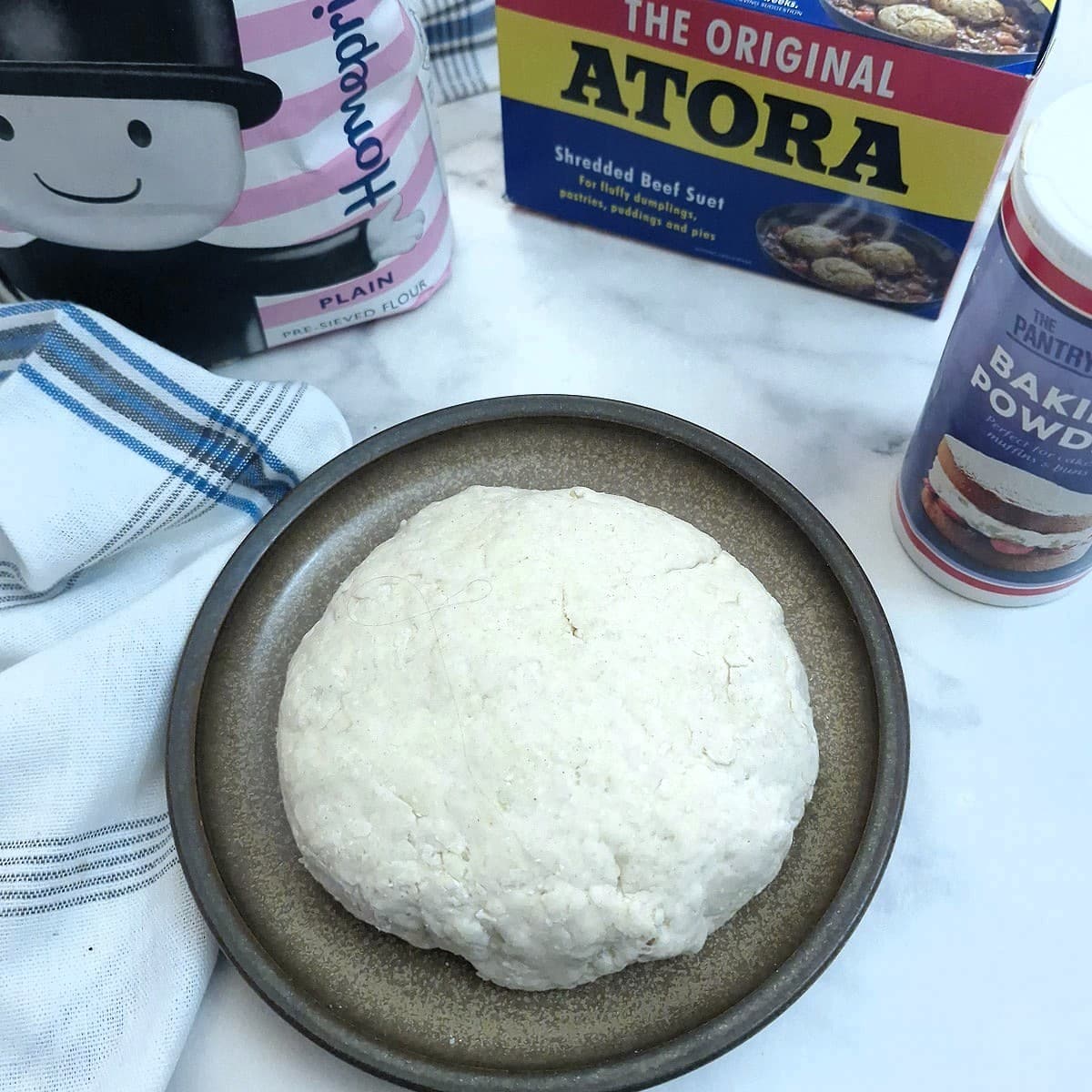
Suet pastry is one of the easiest pastries to make, taking less than 5 minutes to prepare and mix. It is a substantial pastry, with a little more bite than the delicate crumble of shortcrust.
The difference between suet pastry and shortcrust pastry is in the form of the fat, and how it is combined with the flour. Suet is simply stirred into the flour, then moistened with water to form soft dough. With shortcrust pastry, the butter or lard is usually rubbed into the flour until the mixture resembles breadcrumbs. As the suet melts during baking, it leaves little pockets in the pastry, giving it a more open texture. Suet pastry also contains a raising agent, either in self-raising flour or as added baking powder, which helps it to rise and become lighter.
Once you have mastered this simple dough, you can use it for everything from a traditional steamed pudding to a hearty meat pie. Leave it plain for sweet or savoury fillings, or add a few herbs or a teaspoon of mustard powder for a savoury pie crust. You can even shape it into dumplings to cook on top of a bubbling stew.
Table of Contents
What I love about suet pastry
- How easy it is to mix. Simply measure the flour and suet into a mixing bowl and stir in enough cold water to make a soft dough. Because there's no rubbing in, there's no hard work or need to use the food processor.
- Simple recipe to remember. You don't even need a recipe - just remember 2 parts flour to one part suet (by weight), and you can scale it up or down to make just the quantity you need.
- Versatile. Use it to make sweet or savoury steamed puddings, baked pie crusts or dumplings to cook on top of a stew.
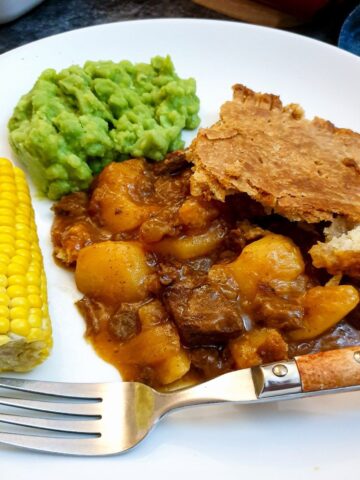
- Perfect with gravy. When baked over a meat filling (such as this British meat and potato pie), the top of the pastry becomes crispy and golden, while the underside soaks up some of the lovely meaty gravy (my favourite bit, if I'm honest). It also makes an amazing mushroom and onion oven-baked roly poly pudding!
What is suet?
Before we get on with the recipe, I thought it might be useful to explain what suet actually is.
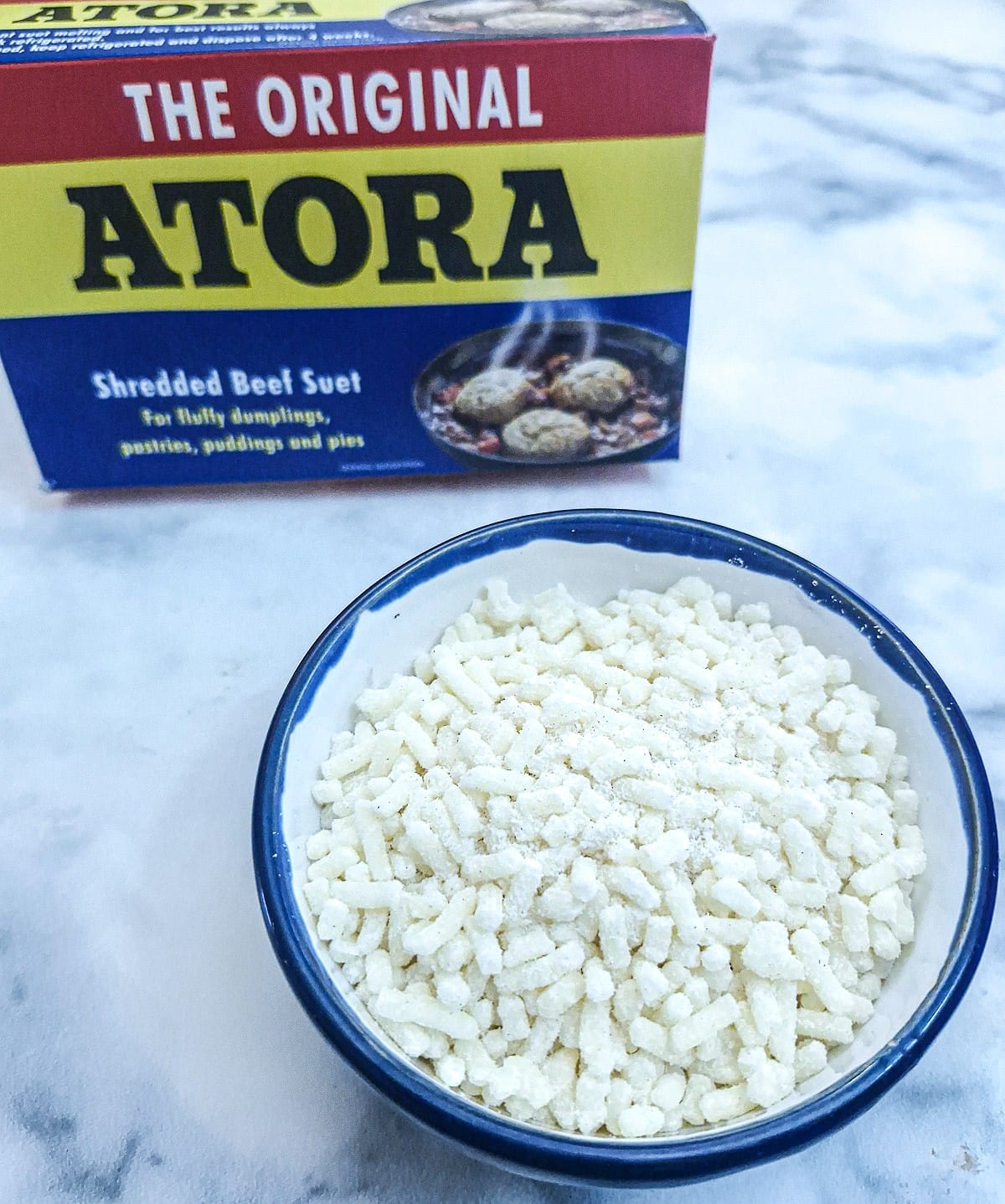
Fresh suet
To be perfectly honest, I don't know anyone who uses fresh suet for their pastry these days. Commercially produced suet is much more convenient.
- Suet is the hard white fat found around the kidneys and loins of cattle and sheep.
- If you buy fresh suet from a butcher, remove any membrane, then grate it coarsely or chop it very finely while cold.
- If it's too soft to grate cleanly, firm it up briefly in the freezer, then toss the shreds with some of the measured flour to keep them separate.
- You can use the same ratio of two parts flour to one part suet by weight, adding cold water gradually to form a soft dough.
Commercially produced suet
This is what I prefer to use.
- Commercially prepared shredded suet is processed and packaged for a longer shelf life than fresh suet, and coated with flour or starch, depending on the brand, to keep the pieces separate and prevent clumping.
- You can buy either beef or vegetable suet. Beef suet is made from animal fat, whereas vegetable suet is made from vegetable fats and provides an alternative for vegetarian cooking. I've used both versions over the years, and to be honest I can't tell the difference.
- For a gluten-free version, make sure to check the label, as some commercially produced varieties may contain wheat flour. And of course, you would also need to use a suitable gluten-free flour for the pastry itself.
Ingredients for suet pastry
**This is just an overview to explain why I used a particular ingredient. The complete list of ingredients and the exact measurements are on the printable recipe card at the end of this post.**
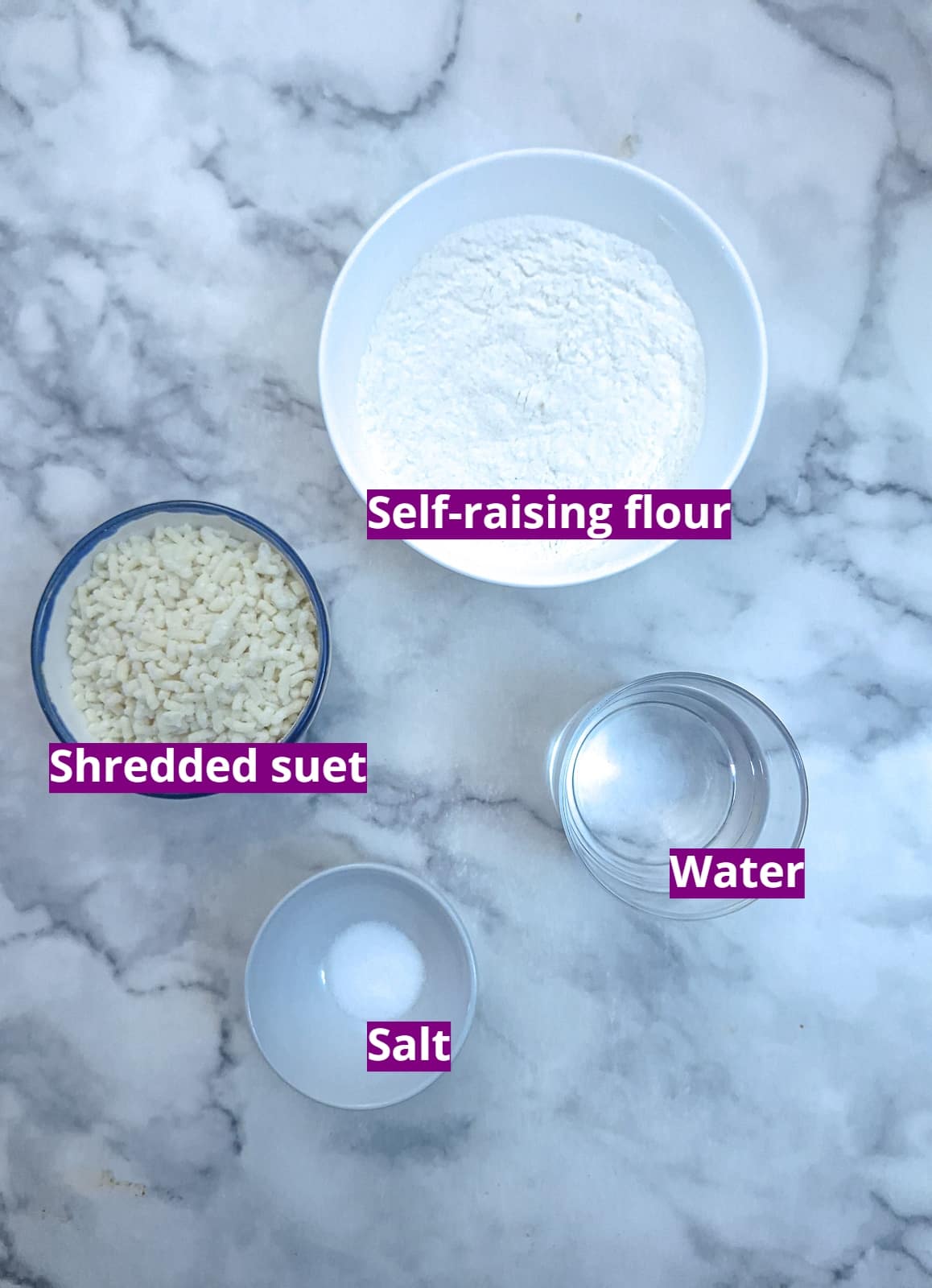
- Flour. Use self-raising flour, or add one teaspoon of baking powder for every 140 grams (or 1 cup) of plain flour. Unlike shortcrust pastry, suet pastry benefits from the use of a raising agent.
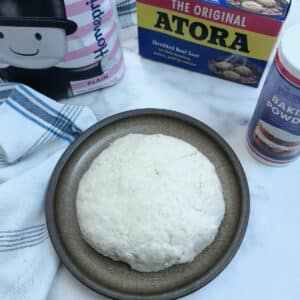
- Suet. This provides the fat content of the pastry. The ratio of flour to suet is 2:1 by weight, so for every 4 ounces of flour you will need 2 ounces of suet. You can use either beef or vegetable suet. I normally use commercially produced suet such as Atora, unless I can find the supermarket's own brand (which is cheaper, but just as good).
- Milk or water. I normally use cold water. Milk can be used instead for a slightly richer dough, and can also help a baked crust to brown.
- Salt. This is optional. I like to add half a teaspoon to the quantities in this recipe, especially when making a savoury pastry.
How to make suet pastry
You can't get much easier than this!
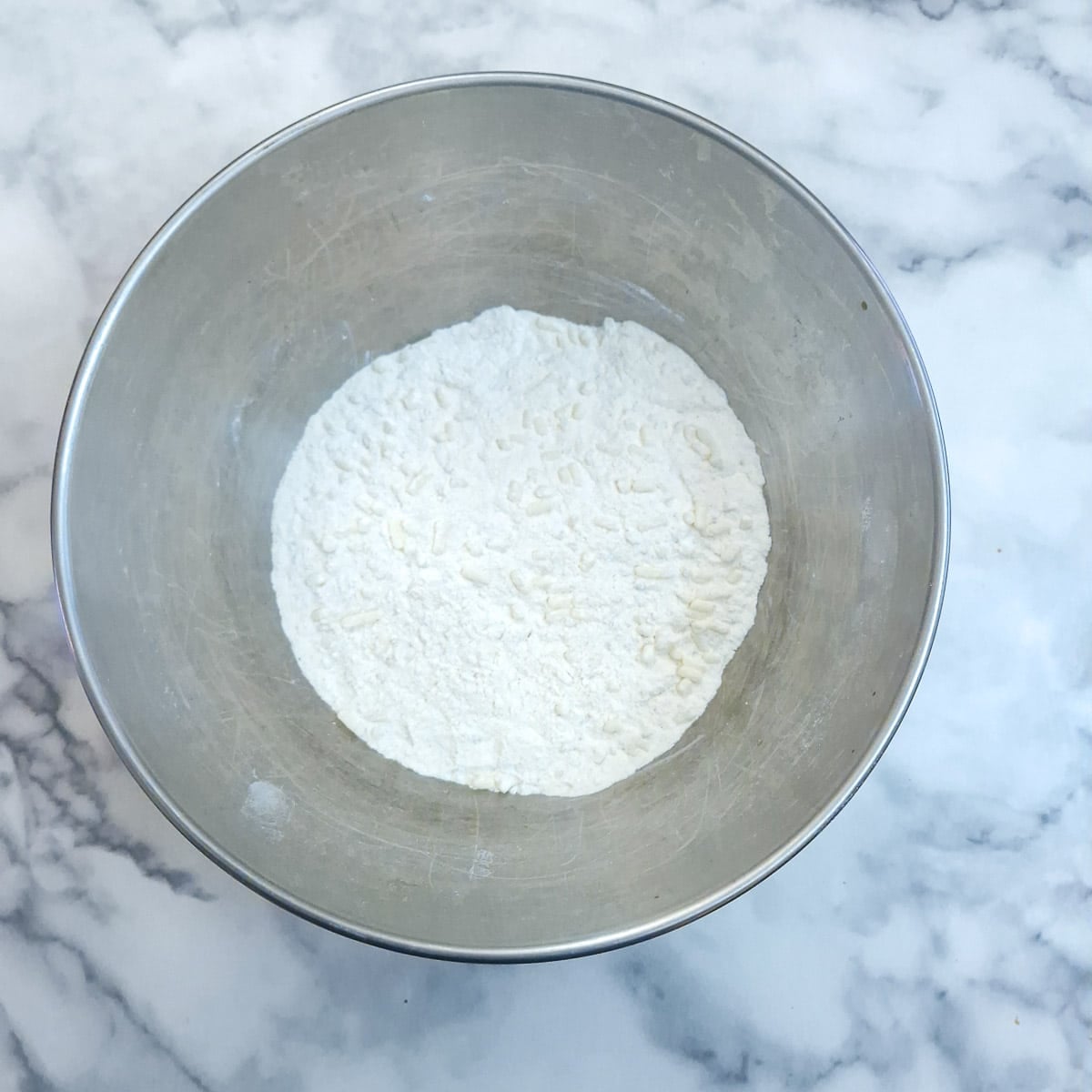
Step 1: Combine the flour, suet and salt (if using) into a mixing bowl.
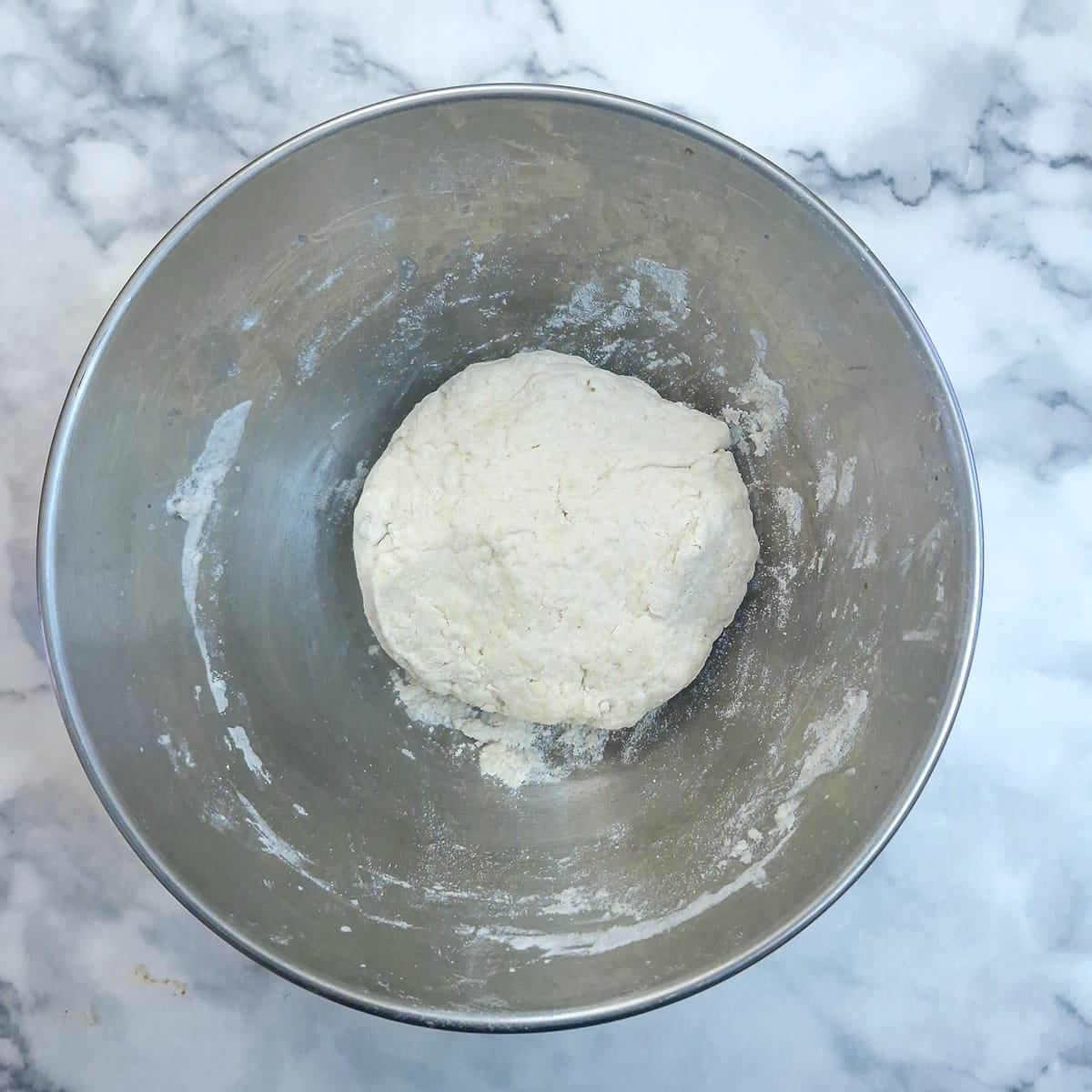
Step 2: Add most of the water listed in the recipe and mix to form a smooth ball. Add the remaining water a teaspoon at a time until you have a soft, non-sticky ball of dough.
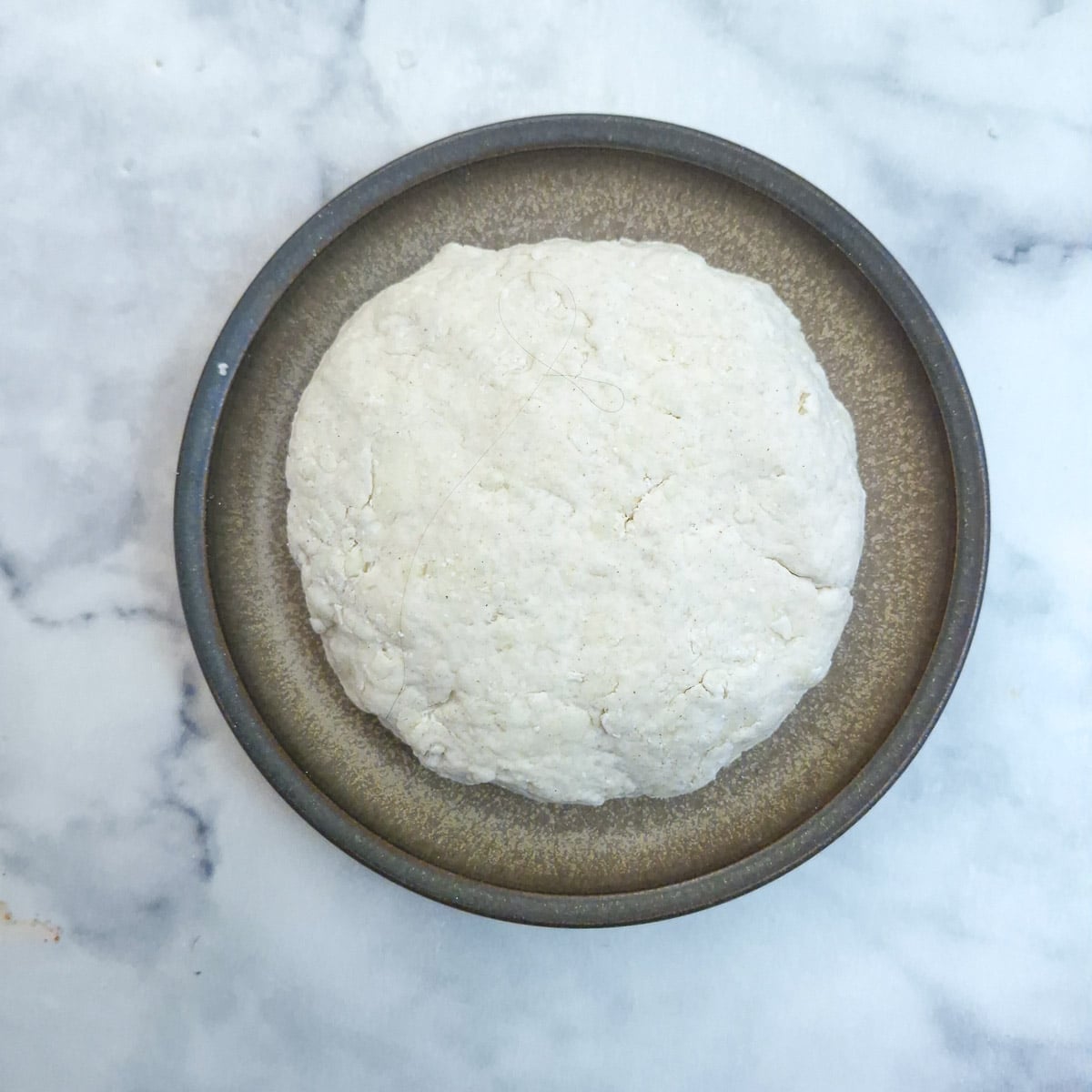
Step 3: Knead the dough lightly until any remaining flour has been incorporated. Cover with plastic wrap to prevent the dough from drying out, and set it aside until you are ready to roll it. There's also no need to leave it to rest in the refrigerator. It will be ready to use as soon as you have made it.
Foodle Club tips for perfect suet pastry
- Use cold ingredients. Cold water and firm suet help keep the shreds of fat separate as you mix the dough.
- Mix the dry ingredients first. Stir the flour, suet and any salt or seasonings together before adding the liquid.
- Add the liquid gradually. You want a soft, pliable dough that holds together without being wet or sticky. Different flours may need slightly different amounts.
- Handle the dough lightly. Bring it together and knead only briefly if needed. Too much kneading can make the pastry tough.
- Dust the work surface lightly. Use just enough flour to stop the dough sticking. Too much extra flour can make it dry.
- Keep the thickness even. This helps the pastry cook evenly. Suet pastry is usually rolled thicker than shortcrust, so follow the thickness specified in the recipe you're making.
Additions
Plain suet pastry works well with both sweet and savoury fillings, but you can add a few extras to complement the dish. These amounts are based on 200 grams of flour and 100 grams of suet.
- Mustard powder. Add 1 teaspoon to the flour for a savoury pie crust. It works particularly well with beef or cheese and onion fillings.
- Herbs. Add 1 teaspoon of dried herbs or 1 tablespoon of finely chopped fresh herbs. Try parsley or thyme for dumplings, or sage with a pork filling.
- Black pepper. Add ¼ to ½ teaspoon of freshly ground black pepper for a peppery crust or dumplings.
- Cheese. Mix in 40-50 grams of finely grated mature cheddar for cheese dumplings or a savoury pie topping. You may want to reduce the salt.
- Spices. Add ½ teaspoon of smoked paprika for a savoury pastry, or ground cinnamon or mixed spice for a sweet pudding.
- Citrus zest. Add the finely grated zest of a lemon or orange to complement a sweet filling. Lemon is particularly good with jam, while orange goes well with dried fruit.
Stir your chosen additions into the flour and suet before adding the liquid.
Equipment tips
- Make sure you have a mixing bowl large enough to comfortably hold all the flour and suet. This will ensure you can mix the pastry without spilling flour all over your kitchen counter.
- A kitchen scale is invaluable for weighing ingredients, especially for baking where precise measurements make all the difference.
- If you don't have a scale, and measure in cups, my advice would be to use a tablespoon to measure the flour into the measuring cup (don't press it down) until the flour is piled just above the surface of the cup. Then take the back of a knife and carefully scrape the flour off the cup until the flour is level with the rim of the cup.
Storage and freezing
- Refrigerator. Suet pastry is best used freshly mixed. If making it ahead, place the dough in a Ziploc bag or similar, and refrigerate. For the best results, I suggest making it no more than a day in advance. This applies to the mixed dough, even when using commercially prepared suet.
- Freezer. Flatten the dough into a disc and wrap tightly with cling film and place it in a freezer bag. Label with the date and freeze for up to 3 months.
- Defrosting. Leave the pastry in its wrapping and defrost in the refrigerator. Once fully thawed, use within 24 hours. If it feels too firm to roll, let it stand at room temperature of a few minutes until it becomes pliable.
Suet pastry FAQ
The reason we use self-raising flour for suet pastry is that it needs a raising agent to help it rise. If you don't have self-raising flour, add one teaspoon of baking powder to every 140 grams (or 1 cup) of plain or all-purpose flour.
Yes, you can use either. I've used both varieties with great success.
No. You can roll it out as soon as the dough comes together. Unlike shortcrust pastry, it doesn't need a chilling period before use.
Suet pastry is generally rolled thicker than shortcrust, usually 5 to 6 cm or one-quarter of an inch. Follow the instructions in individual recipes as steamed puddings may need a different thickness.
Yes. Plain suet pastry works well for both. For a sweet pudding such as jam roly poly, the filling usually provides sufficient sweetness without adding extra sugar to the dough.
Suet is normally sold in supermarkets in the baking section, normally close by the flour. The most common variety (in the UK at least) is Atora, but some supermarkets sell their own in-house brand which is around half the price. If you can't find it in your local supermarket, you can source suet from Amazon <affiliate link>.
Save for later
If you would like to make your own suet pastry, why not save this recipe to one of your Pinterest boards so you can find it easily? Just click the link below.
Alternatively, you can save the recipe by clicking on the floating heart icon on the right-hand side of the screen.
Related recipes
Looking for other recipes like this? Try these:

The recipe
How to make suet pastry
(Click the stars to rate this recipe)
Equipment
- Mixing bowl Large enough to hold the flour and suet
- Kitchen scales optional
- Measuring cups use these to measure flour and suet if you don't have scales
Ask a Question
If you have a question about this recipe that has not been answered, please use the box below to ask it.
Use this with care. This is an AI-generated result and may contain errors or inaccuracies. I cannot be held responsible for the information returned.
Ingredients
- 1¾ cups / 250 grams self-raising flour
- 1 cup / 125 grams suet I used Atora
- ⅕ cup / 80 ml water or more if needed to make a soft non-sticky dough
- ½ teaspoon salt optional
Instructions
- Place the flour, suet and salt into a large mixing bowl and stir lightly to combine.1¾ cups / 250 grams self-raising flour, 1 cup / 125 grams suet, ½ teaspoon salt
- Add the water and use your fingers to combine. Add extra water one teaspoon at a time until the mixture comes together in a soft, non-sticky dough.⅕ cup / 80 ml water
- Tip out onto a lightly floured surface and knead briefly (no more than 90 seconds) until you have a smooth ball of dough.
- Use immediately or place in a ziploc bag and freeze until required.
Nutrition
I am not a nutritionist. The nutrition information has been calculated using an on-line calculator, and is intended for information and guidance purposes only. If the nutrition information is important to you, you should consider calculating it yourself, using your preferred tool.
If you made this recipe and enjoyed it, I'd love it if you could give me a star rating in the comments below. And if you'd like to get in touch, you can email me at veronica@foodleclub.com. I'd love to hear from you. And don't forget to subscribe to my mailing list so you can grab yourself a copy of my FREE COOKBOOK!
If you'd like to continue browsing, just click on this link to all my recipes.



Did you make this recipe? Let me know!