
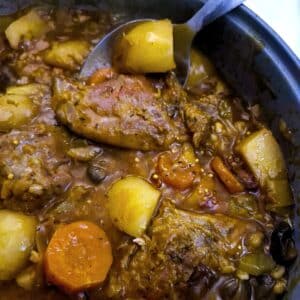
This British rabbit stew with root vegetables combines tender rabbit, smoky bacon and pearl barley in a rich, savoury gravy. Cooked gently on the hob, it's a hearty one-pot meal that's well worth a little simmering time. Now that the nights are drawing in, it's just the thing for a comforting supper, served with crusty bread to soak up the gravy.
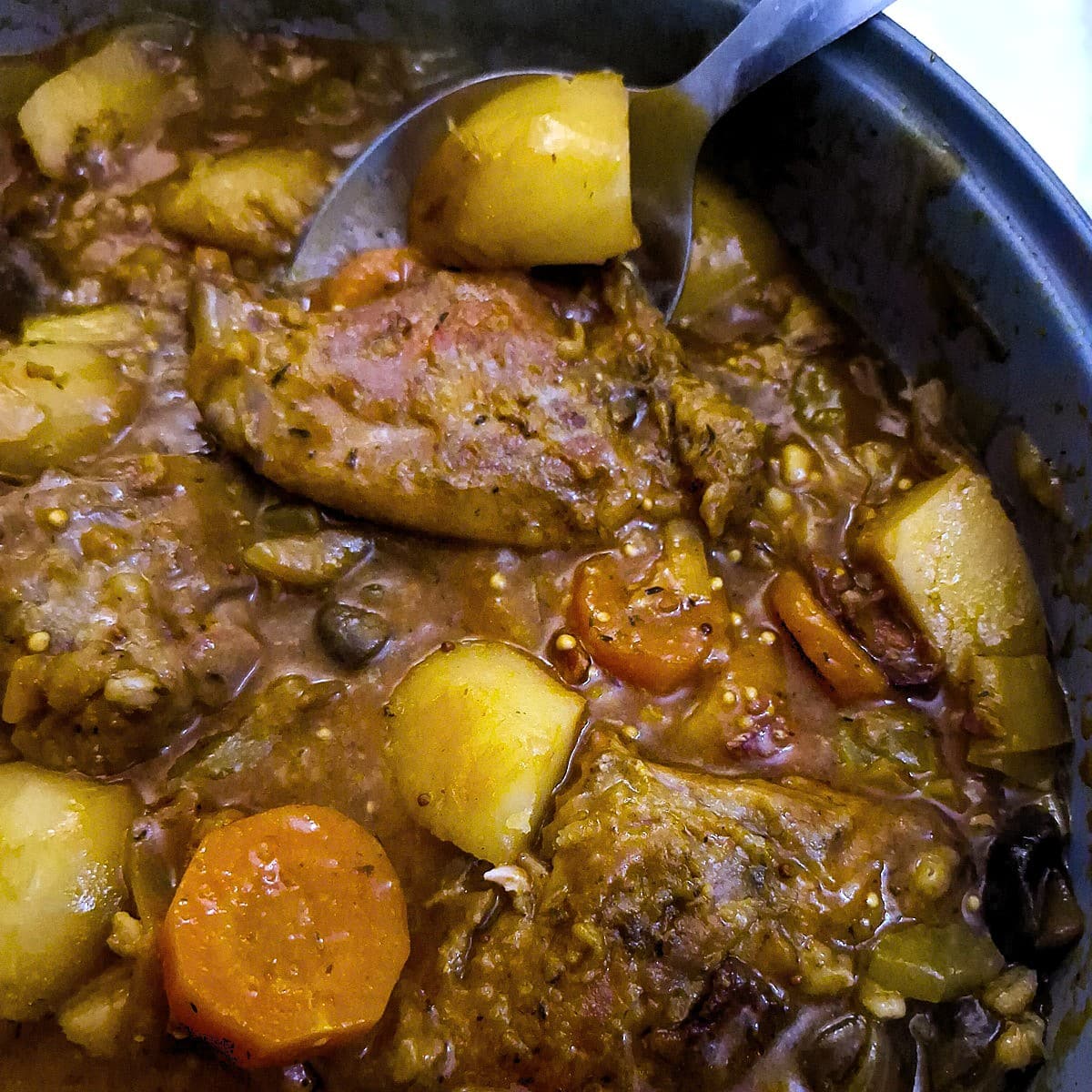
This British rabbit stew is packed with vegetables, with potatoes and a little pearl barley to make it a hearty meal in one pot. The barley soaks up the savoury stock and helps thicken the gravy, while the carrots, leeks, onions, celery and mushrooms add plenty of flavour alongside the smoky bacon.
A spoonful of cranberry sauce adds a touch of sweetness, balanced by the tomato purée and wholegrain mustard. These additions don't overpower the stew - they simply give the gravy a little more depth as everything simmers gently on the hob until the rabbit is tender.
If pearl barley isn't your thing, you can leave it out and add a few more potatoes instead. Either way, you'll have plenty of gravy, so a piece of crusty bread wouldn't go amiss.
I think I last made rabbit stew about 40 years ago when I was living in South Africa. Rabbit was readily available there, either from the butcher or the local supermarket meat counter. I don't see it for sale very often these days, so I was delighted to find prepared rabbits at my local farmers' market a couple of weeks ago.
Naturally, I bought one, and this stew is the result. I have to say it tasted even better than I remembered, so I'll be looking out for rabbit next time I'm at the market. I hope you enjoy it too!
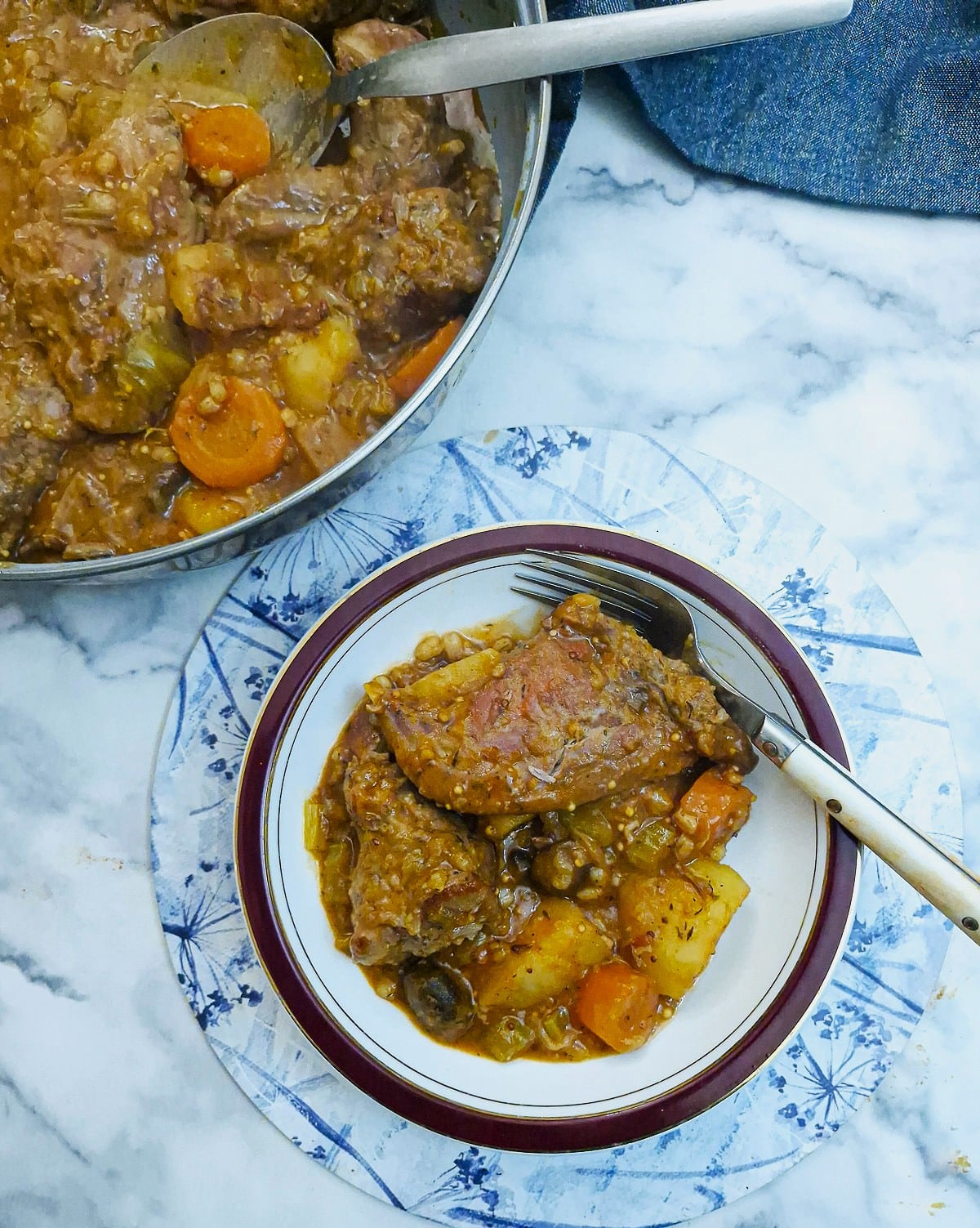
Table of Contents
Why I love this rabbit stew
- It brings back memories! I last made rabbit stew at least 40 years ago for my late father when we were living in South Africa. The kiddies weren't very keen - probably because they had pet rabbits in the back garden - so it didn't appear on the menu very often!
- It's packed with nutritious vegetables and barley. I love vegetables in a meaty stew, so I crammed as many in as I possibly could. You can use fewer vegetables if you prefer, or leave out the barley and add extra potatoes.
- It's easy to prepare. Once you've browned the rabbit and softened the vegetables, there's very little work left to do. Add the remaining ingredients as directed, cover and simmer gently until the meat is tender, checking the liquid occasionally.
- It's very versatile. If you don't fancy rabbit, you can make this stew with chicken thighs instead. Bone-in thighs (preferably skinless unless you're going to finish them off under the grill) will usually take around 45-60 minutes of gentle simmering, so check them earlier and make sure the vegetables and barley are cooked before serving.
Ingredients for rabbit stew
**This is just an overview to explain why I used a particular ingredient. The complete list of ingredients and the exact measurements are on the printable recipe card at the end of this post.**
It looks as though there are a lot of ingredients in this stew, but they're mainly vegetables.
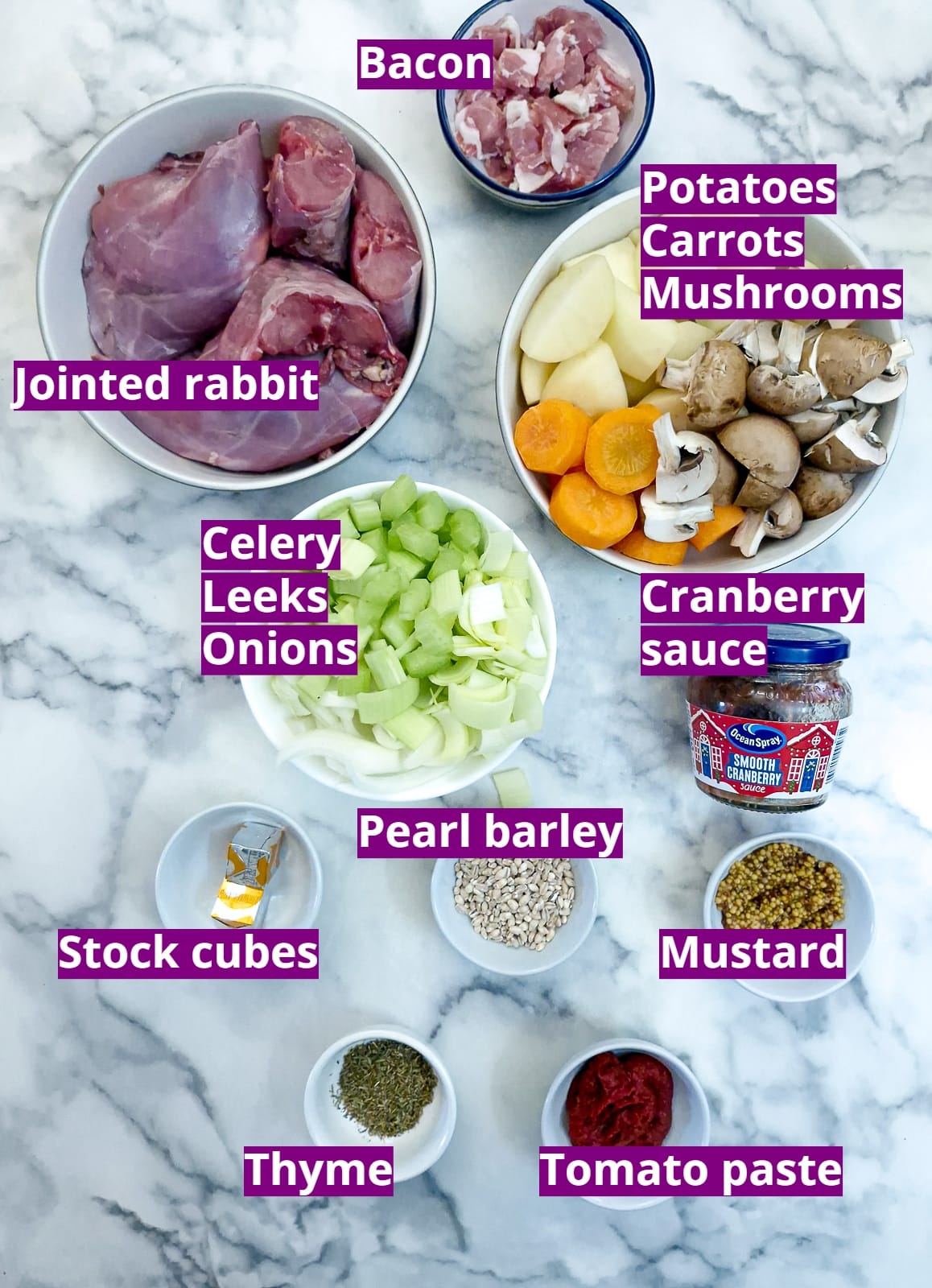
- Rabbit. I used a farm-reared rabbit, bought ready-skinned and cleaned from my local farmers' market, which I jointed at home. You could also ask your butcher to do it for you. Farmed rabbit generally has a milder flavour than wild rabbit. You can use either farmed or wild rabbit (or even a hare if you can find one) for this stew, but a wild rabbit may need longer to become tender, depending on its age. This YouTube video shows you how to joint a rabbit - it's not difficult.
- Bacon. I used smoked streaky bacon, which releases fat as it fries. This fat is used to soften the vegetables, while the bacon adds a smoky flavour to the stew.
- Vegetables. I used carrots, potatoes, mushrooms, celery, leeks and onions, but you can chop and change the vegetables to suit your own taste or use what you have available. A cup of shredded cabbage added at the beginning of cooking will soften and almost disappear into the gravy, adding extra flavour and body. Alternatively, a cup of frozen peas added during the final 5 minutes would bring a touch of sweetness. Or push the boat out and use both!
- Cranberry sauce. I added a little cranberry sauce to the rabbit stew to counteract the slight gaminess of the rabbit. The sweetness complements the rabbit perfectly.
- Pearl barley. This is optional, but it does add a lovely texture to the stew. If you decide not to use pearl barley, increase the amount of potatoes slightly.
- Mustard. My all-time favourite mustard is wholegrain, so that's what I've used here. For more heat, use Dijon or English mustard.
- Tomato paste or tomato puree. A little tomato puree adds a depth of flavour to the gravy.
- Thyme. My favourite herb! I used dried thyme; you could use a few small sprigs of fresh thyme, but fish out the woody bits before serving. If you're not a lover of thyme, try rosemary, sage or even a teaspoon of mixed herbs.
- Stock cubes. For the gravy, I used 2 chicken stock cubes dissolved in 2 and a half cups of water. I found that with the long simmering (and the barley, which also absorbs liquid), I needed an additional cup of stock.
Not pictured
Additional ingredients not included in the image:
- Flour. I coated the rabbit pieces lightly with seasoned flour. The flour helps the browning process and also thickens the gravy.
- Salt. A little salt added to the flour adds flavour. Leave it out if you don't use salt.
- Oil. Any vegetable oil would be suitable for browning the rabbit. I used rapeseed.
How to make British rabbit stew
In a nutshell
- Coat the rabbit in seasoned flour and brown it in a pan, then set aside
- Brown the bacon, then soften the onions, celery, mushrooms and leeks in the rendered fat.
- Add the stock and seasonings.
- Add the potatoes and carrots and return the rabbit to the pan.
- Cover with a lid and simmer until tender.
And now for the details:
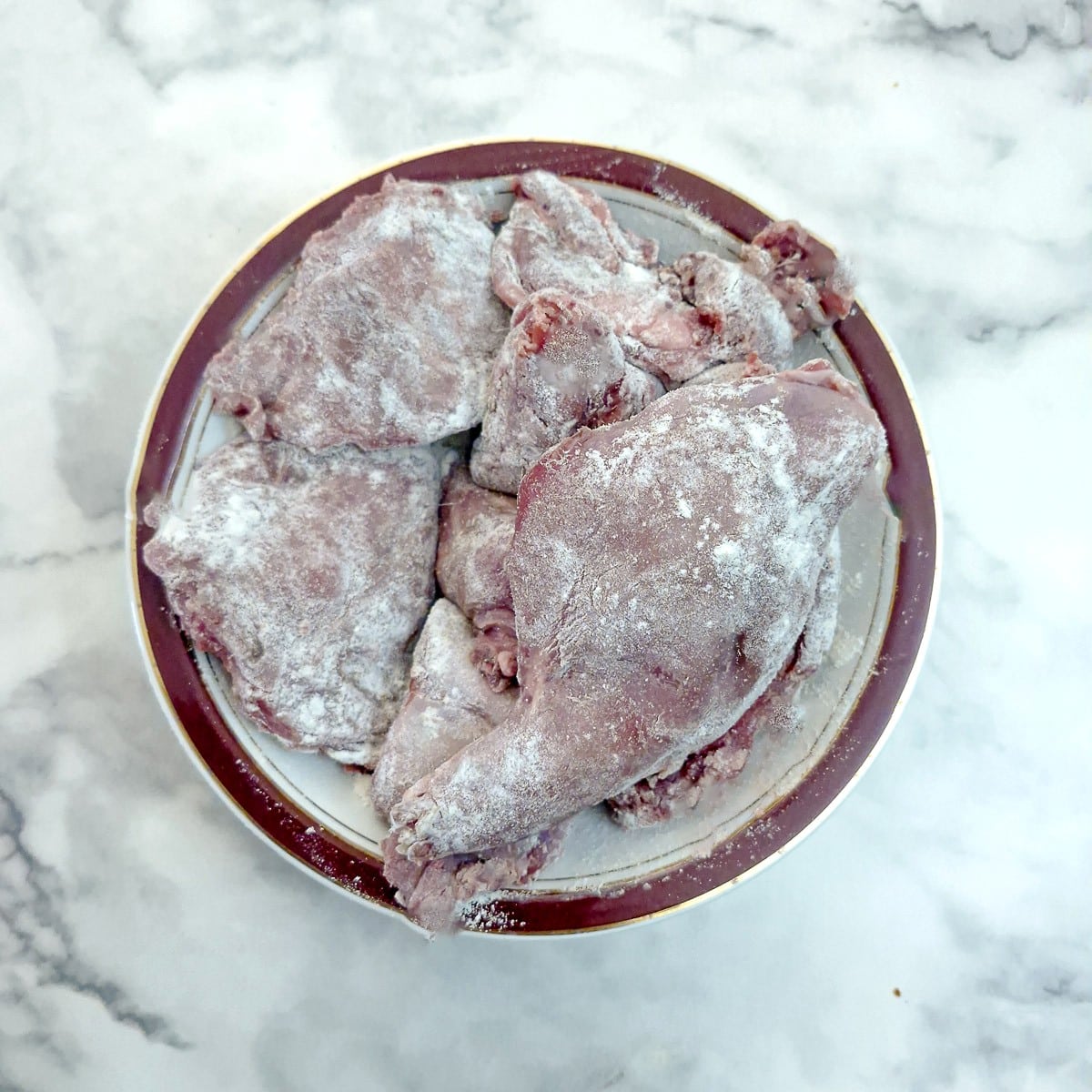
Step 1: Pat the rabbit with paper towels to remove any moisture, then dredge the rabbit lightly in flour seasoned with salt and pepper. Reserve any remaining flour for later.
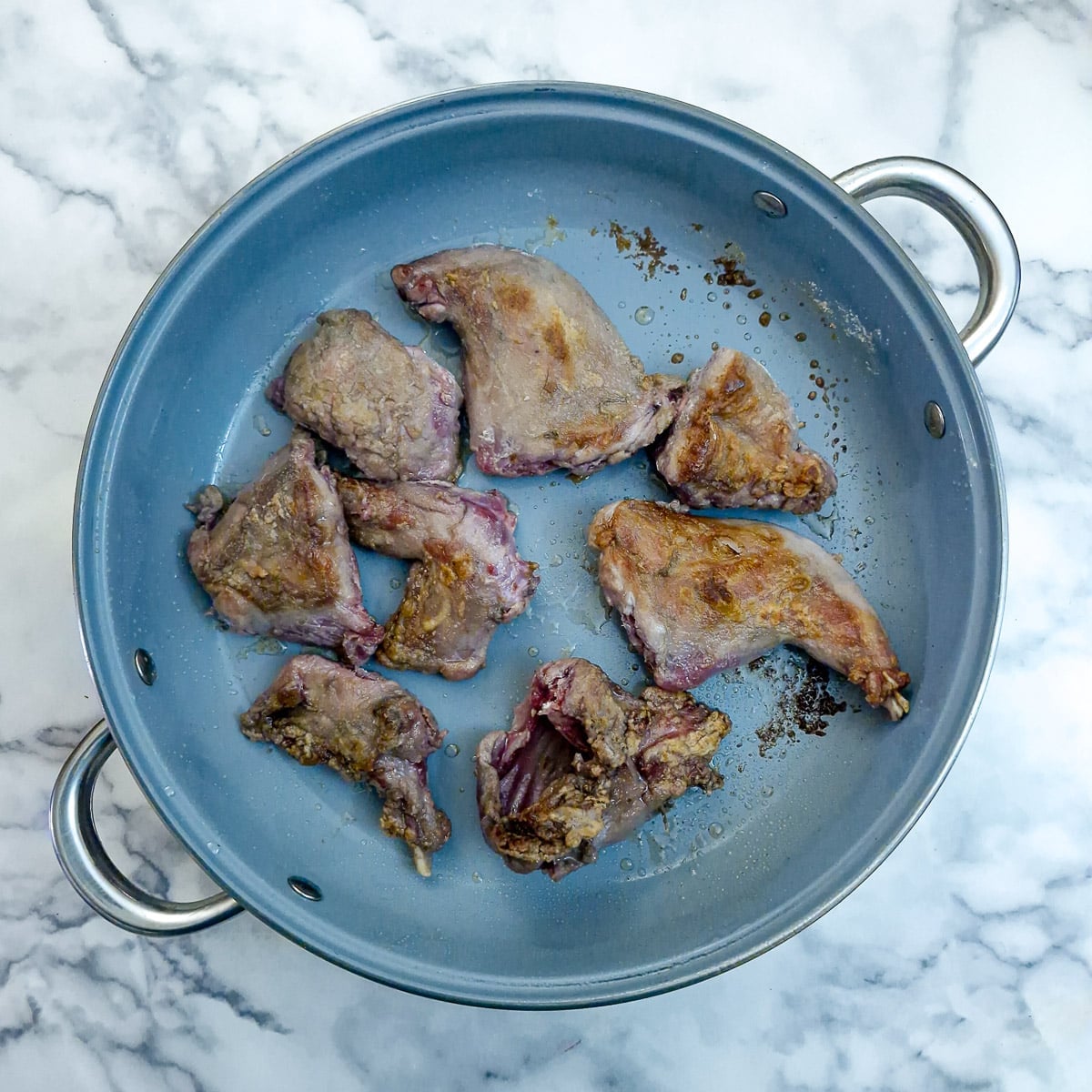
Step 2: Heat the oil in a large, heavy-bottomed pan or casserole and fry the floured rabbit pieces over moderate to high heat for 3 to 4 minutes per side until they have browned. Remove the rabbit pieces to a plate and set aside.
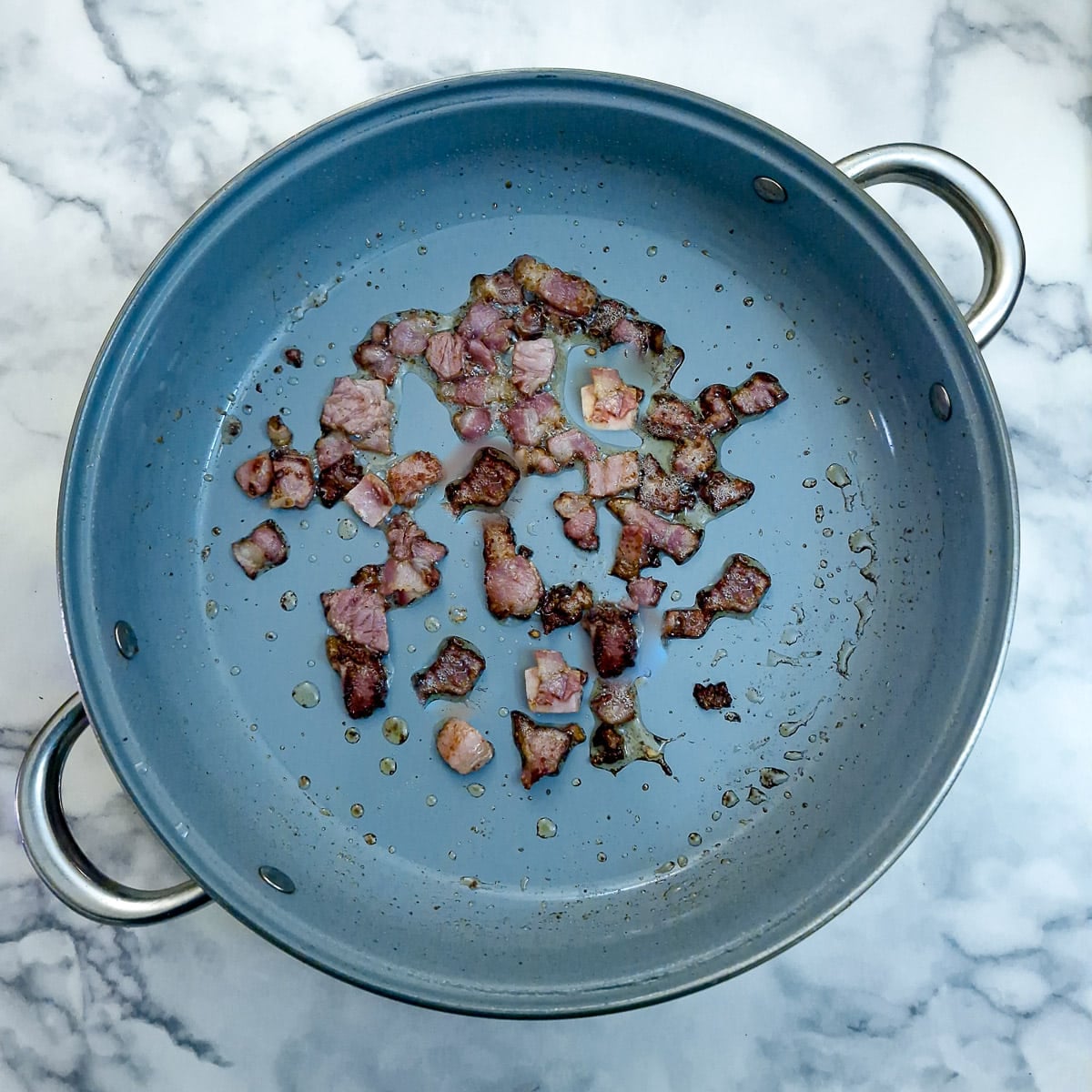
Step 3: Add the bacon to the pan and fry over moderate heat for 2 to 3 minutes to render out the fat. Add the bacon to the rabbit on the plate, leaving the bacon fat in the pan. There should be about 2 tablespoons of fat; add an extra splash of oil if there seems to be too little.
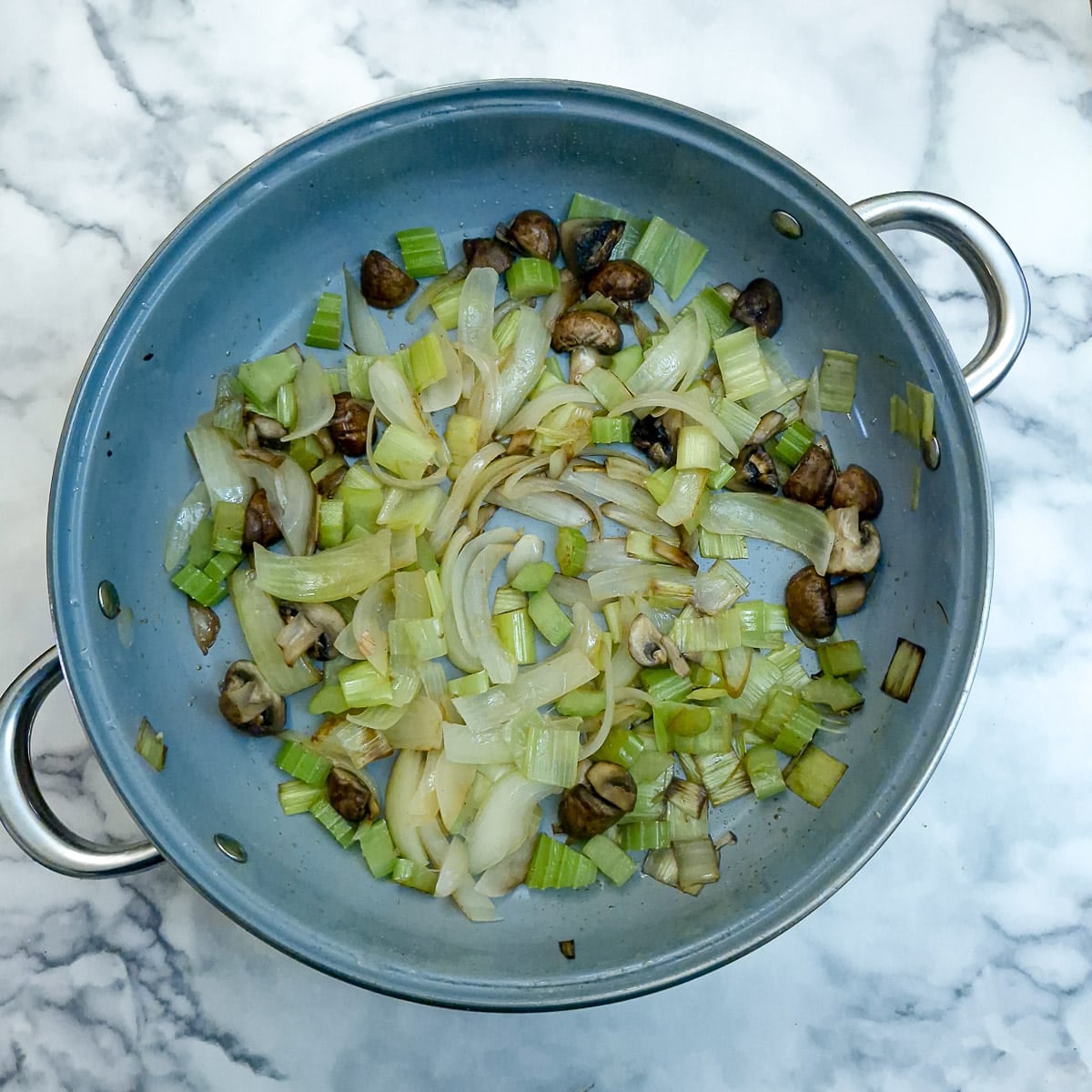
Step 4: Add the onions, leeks, celery and mushrooms to the pan and stir well to coat them in the bacon fat. Cover the pan with a lid and allow the vegetables to sauté for 3 to 4 minutes until they are starting to soften.
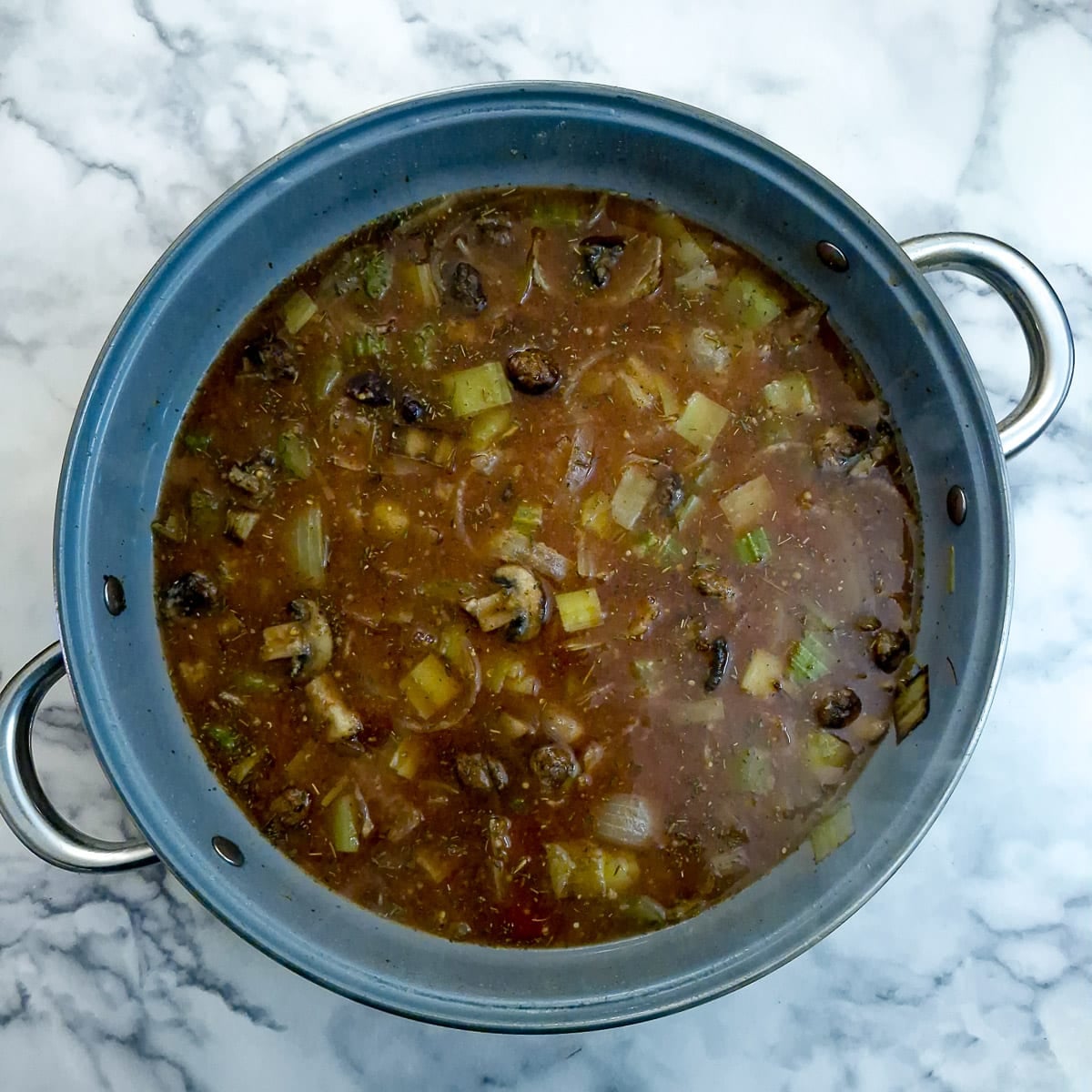
Step 5: Remove the pan from the heat and stir in the reserved flour. Return to the heat and cook for one minute, then stir in the stock, tomato puree, barley, mustard, cranberry sauce, and thyme.
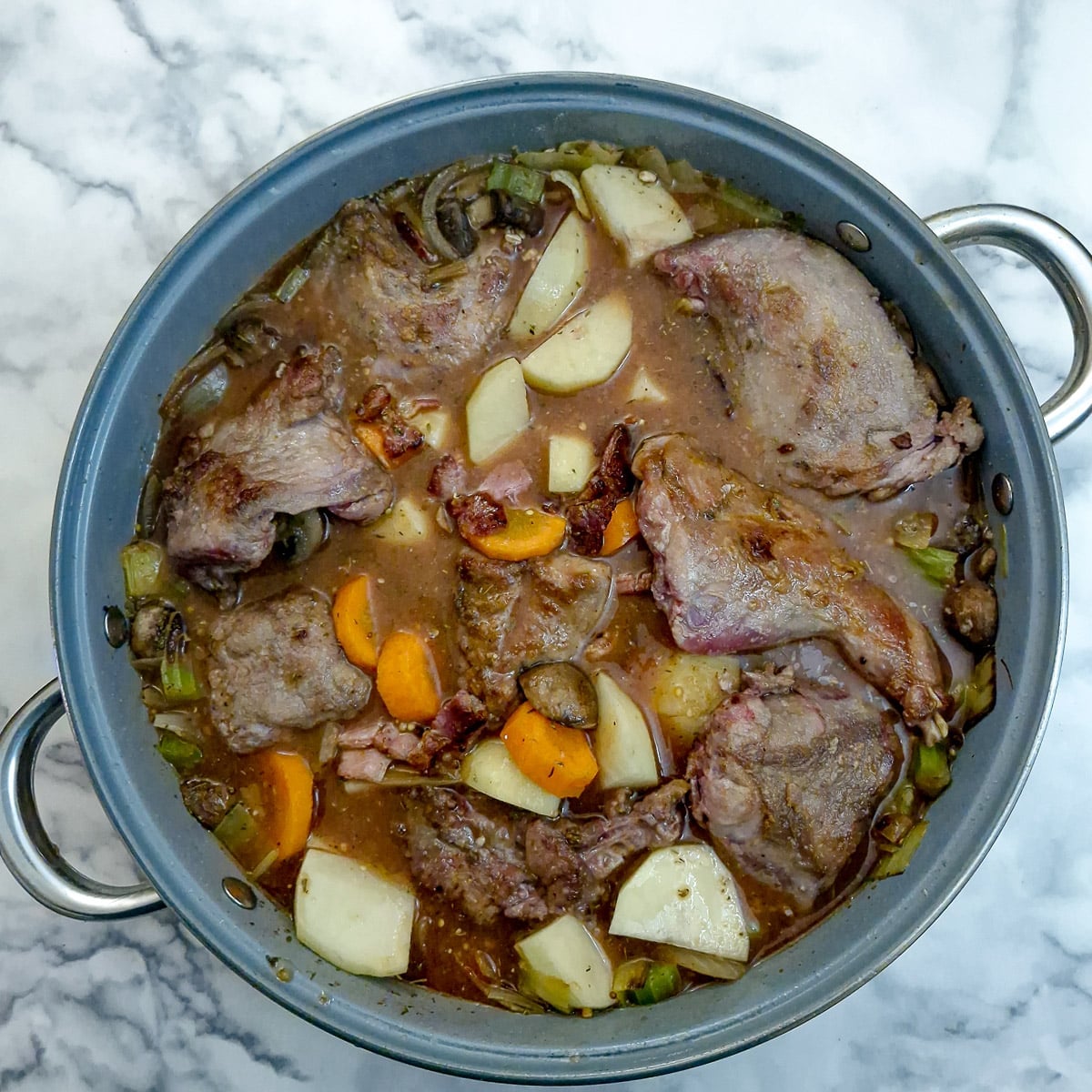
Step 6: Add the carrots and potatoes, then nestle the rabbit and bacon pieces into the stock. Bring to a gentle simmer, cover with a lid and reduce the heat.
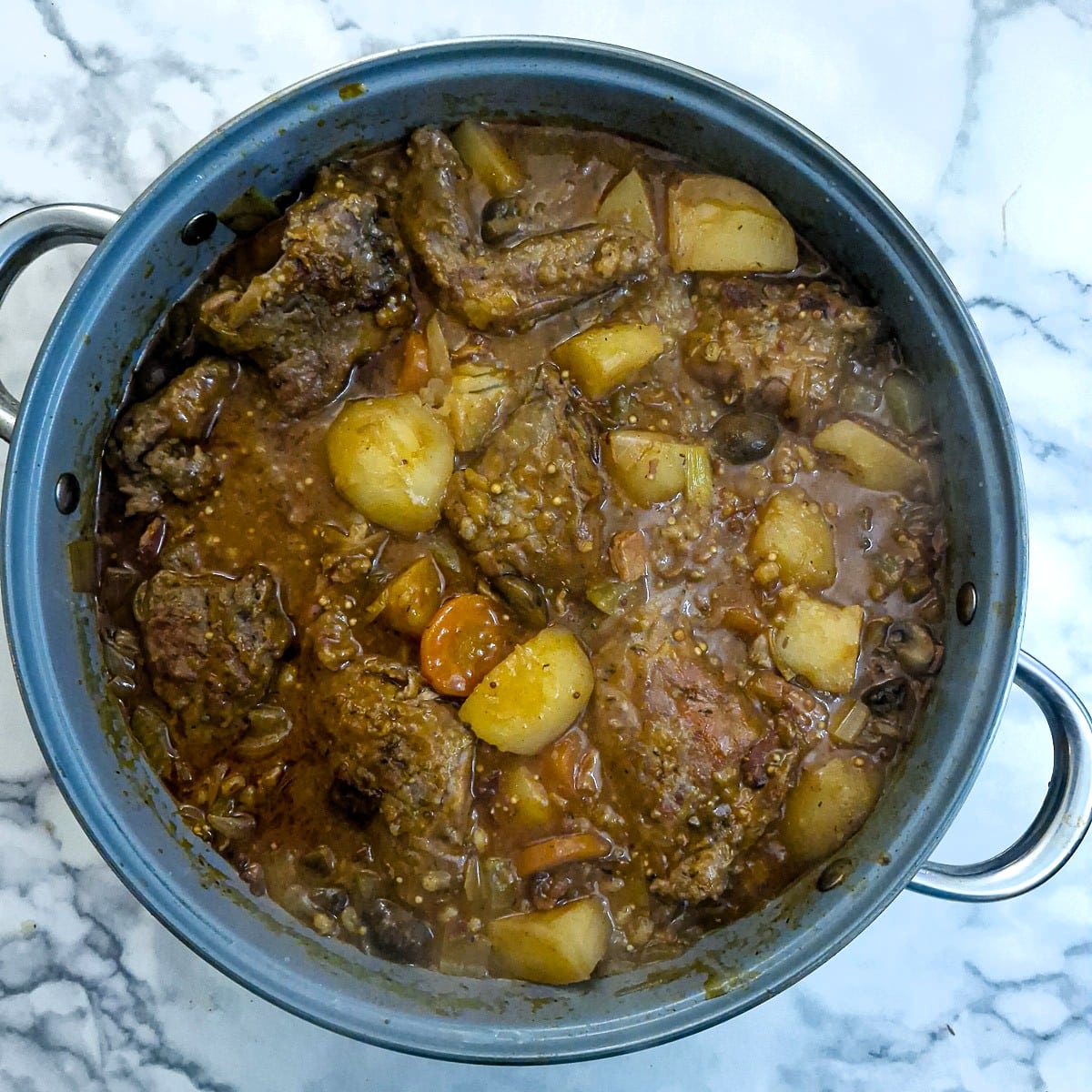
Step 7: After an hour, check the stock level and top up with extra stock if necessary. Replace the lid and continue to simmer for another 30 to 60 minutes, or until the meat pulls back from the bone. Check the stock level occasionally.
Taste for seasoning and add salt and black pepper if necessary. Garnish with chopped parsley and serve hot.
Foodle Club top tips
Follow these handy tips for making a hearty rabbit stew:
- Shake off excess flour before browning. The rabbit only needs a light coating; loose flour can catch and burn in the pan.
- Brown the rabbit in batches. Leave space between the pieces so they brown rather than steam.
- Let the bacon release its fat. Fry it before adding the vegetables, then use the fat to soften the leeks, onions and celery and pick up that smoky flavour.
- Remove the pan from the heat before stirring in the flour. Stir the reserved flour into the softened vegetables, then return to the heat and cook for one minute. Gradually add the stock, stirring well to keep the gravy smooth.
- Keep the simmer gentle and the lid on. A gentle simmer helps the rabbit become tender, while the lid limits evaporation.
- Keep an eye on the liquid. Check after about 45 minutes to an hour, then occasionally thereafter. Add a little stock if needed, especially if you've included pearl barley, which absorbs liquid as it cooks.
- Check tenderness rather than relying only on time. The meat should pull back from the bones and yield easily to a fork. Older or wild rabbits may take longer.
- Time the vegetables to suit the rabbit. If the rabbit needs a long simmer, add the potatoes and carrots later so they hold their shape.
- Taste before adding more salt. Bacon and stock both contribute salt, and the flavour becomes more concentrated as the gravy reduces.
- Check for loose bones before serving. Remove any small bone fragments that may have been left from jointing. Also remove any woody stems if you used fresh thyme.
Variations
Chop and change the vegetables to suit your family's preference. Shredded cabbage stirred in at the same time as the rabbit is particularly good.
If you don't fancy rabbit, use a jointed chicken instead. I would probably remove the skin before cooking; boiled chicken skin isn't all that appealing.
Follow the same method, but start checking the chicken after 45 minutes of gentle simmering. It will usually be cooked and tender within an hour.
Make sure the potatoes, carrots, and pearl barley are also fully cooked before serving. If they need a few minutes more, remove the chicken to a plate and cover it while the vegetables finish cooking. Return the chicken to the pan and heat through before serving.
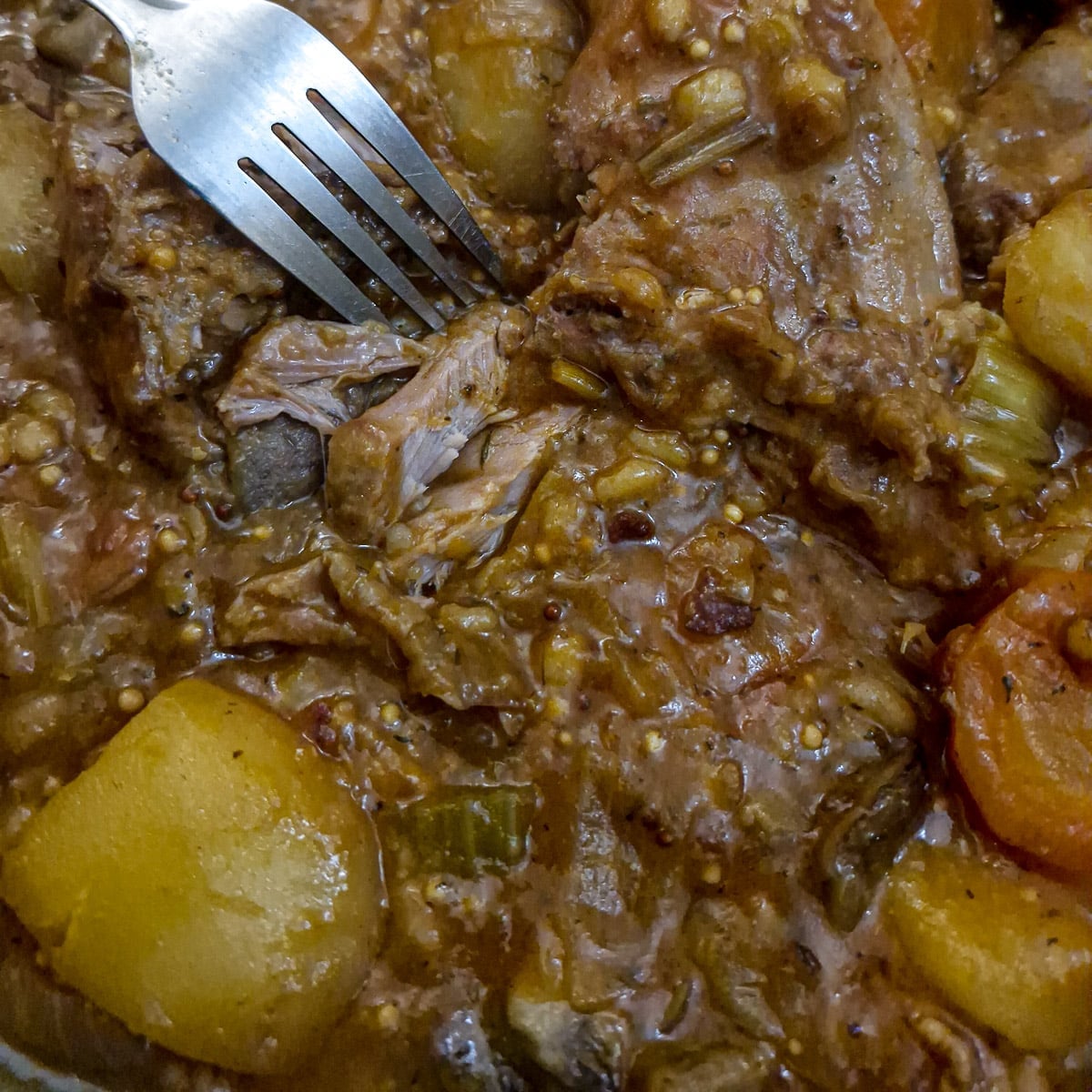
Serving suggestions
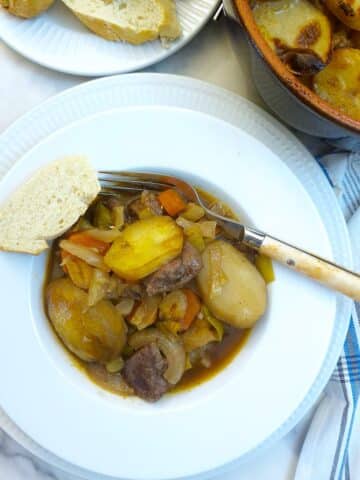
This stew is a complete meal in one pan. There are more than enough vegetables, but if your appetite runs to it, include a crusty roll on the side to soak up the delicious gravy.
Equipment tips
Use a large, heavy-based pan or casserole with a snug-fitting lid. It needs enough room for the rabbit, the generous quantity of vegetables, and at least 3 cups of stock, with space to stir without spilling.
A heavy base helps prevent the stew from catching during the long simmer, while a well-fitting lid keeps evaporation to a minimum.
Storage and freezing
- Refrigerator. Cool leftovers promptly and refrigerate in an airtight container within two hours. Use within two days and reheat until piping hot throughout.
- Freezer. I haven't frozen this stew myself, but there's no reason why it won't freeze well. Once cooled, transfer to freezer-safe containers and freeze for up to three months.
- Defrosting and reheating. Defrost overnight in the refrigerator, then reheat gently in a saucepan until piping hot. The potatoes may be softer after freezing, and the vegetables may release a little water during defrosting. If the gravy seems thin, simmer gently, uncovered, until it reaches your preferred consistency.
Rabbit stew FAQ
I used farmed rabbit for this stew, which has a mild flavour and is generally more tender than wild rabbit. You can use wild rabbit instead, but it may need a longer simmering time before the meat becomes tender. A hare is a different animal altogether, rather than simply a large wild rabbit. Its meat is darker and has a much stronger, gamier flavour, closer to venison.
It may need more cooking time, especially if it is an older or wild rabbit. Keep the stew at a gentle simmer with the lid on and enough liquid to prevent it drying out. Check occasionally and continue cooking until the meat yields easily to a fork. A rapid boil can make lean rabbit meat dry and stringy.
The flour and optional pearl barley should help thicken the gravy. If it is still too thin, simmer uncovered to reduce it, stirring occasionally. Alternatively, mix a teaspoon of cornflour (cornstarch) with a tablespoon of cold water, stir it into the simmering gravy and cook for a few minutes. Repeat if needed.
Yes. Gentle cooking in stock suits lean rabbit meat, while cooking the pieces on the bone adds flavour to the gravy. Rabbit pairs well with bacon, root vegetables and herbs such as thyme, rosemary and sage.
Carrots, potatoes, onions, leeks, celery and mushrooms all work well. You can also add swede, parsnips or shredded cabbage. Add firmer vegetables early enough to become tender, and stir in frozen peas (if using) during the final five minutes.
No, it is optional. It adds texture and helps thicken the gravy, but you can leave it out and increase the potatoes to 750 g instead. You may need less stock without the barley, so check the consistency as the stew cooks.
Save for later
If you would like to try this British rabbit stew, why not save the recipe to one of your Pinterest boards so you can find it easily? Just click the image below.
Alternatively, you can save the recipe by clicking on the floating heart icon on the right-hand side of the screen.
Related recipes
Visit my soups, stews and casserole recipes page for other hearty warming meals. Here are a few you might enjoy:



The recipe
British rabbit stew with root vegetables
(Click the stars to rate this recipe)
Equipment
- Large, heavy-based pan or casserole with a lid For making the stew
- Sharp Knife
- Chopping Board
- Silicone spatula
- Tongs Use for turning the rabbit pieces as they brown
Ask a Question
If you have a question about this recipe that has not been answered, please use the box below to ask it.
Use this with care. This is an AI-generated result and may contain errors or inaccuracies. I cannot be held responsible for the information returned.
Ingredients
Meat and vegetables
- 2¼ - 3¼ pounds / 1 - 1.5 kg rabbit jointed
- 3½ ounces / 100 grams smoked streaky bacon chopped
- 2 medium onions peeled and roughly chopped
- 3 medium carrots peeled and cut into thick slices
- 1¼ pounds / 570 grams potatoes peeled and cut into large chunks
- 5¼ ounces / 150 grams mushrooms wiped and sliced
- 1 stalk celery diced
- 1 small leek trimmed, washed and sliced
- 2 tablespoons plain flour to coat the rabbit
- ½ teaspoon salt combined with the flour to coat the rabbit
- ¼ teaspoon black pepper
- 2 tablespoons vegetable oil plus extra if needed
Gravy and seasonings
- 2½ cups / 600 ml chicken stock you can make it with stock cubes and boiling water
- ¼ cup / 40 grams pearl barley optional, but if omitting it, increase the potatoes to 750 grams (roughly 1¾ pounds)
- 2 teaspoons wholegrain mustard optional
- 2 tablespoons tomato puree (tomato paste)
- 1 tablespoon cranberry sauce
- 1 teaspoon dried thyme or 2 - 3 fresh sprigs (leaves only)
- Salt and black pepper to your own taste
- Chopped parsley for garnish
Instructions
- Pat the pieces of rabbit with a paper towel to remove any moisture, then dredge the rabbit lightly in flour that has been seasoned with salt and pepper. Reserve the remaining flour2¼ - 3¼ pounds / 1 - 1.5 kg rabbit, 2 tablespoons plain flour, ½ teaspoon salt, ¼ teaspoon black pepper
- Heat the oil in a large frying pan and fry the floured rabbit pieces over moderate to high heat for 3 to 4 minutes per side until they have browned. Remove the rabbit pieces to a plate and set aside.2 tablespoons vegetable oil
- Add the bacon to the pan and fry over moderate heat for 2 to 3 minutes to render the fat. Add the bacon to the rabbit on the plate, leaving the bacon fat in the pan. There should be about 2 tablespoons of fat; add an extra splash of oil if there seems to be too little.3½ ounces / 100 grams smoked streaky bacon
- Add the onions, leeks, celery and mushrooms to the pan and stir well to coat them in the bacon fat. Cover the pan with a lid and allow the vegetables to saute for 3 to 4 minutes until they are starting to soften.2 medium onions, 5¼ ounces / 150 grams mushrooms, 1 stalk celery, 1 small leek
- Stir the reserved flour into the softened vegetables and cook for one minute. Gradually stir in the stock, then add the tomato purée, pearl barley, mustard, cranberry sauce and thyme.2½ cups / 600 ml chicken stock, ¼ cup / 40 grams pearl barley, 2 teaspoons wholegrain mustard, 2 tablespoons tomato puree (tomato paste), 1 tablespoon cranberry sauce, 1 teaspoon dried thyme
- Add the carrots and potatoes, then nestle the rabbit and bacon pieces into the stock. Cover the pan with a lid, turn the heat to a simmer and leave for an hour.3 medium carrots, 1¼ pounds / 570 grams potatoes
- After an hour, check the stock level and top up with extra stock if necessary. Replace the lid and continue to simmer for another 30 to 60 minutes, or until the meat pulls back from the bone. Check the stock level occasionally.
- Taste for seasoning and add salt and black pepper if necessary. Garnish with chopped parsley and serve hot.Salt and black pepper, Chopped parsley
Notes
- Shake off excess flour before browning. The rabbit only needs a light coating; loose flour can catch and burn in the pan.
- Brown the rabbit in batches. Leave space between the pieces so they brown rather than steam.
- Let the bacon release its fat. Fry it before adding the vegetables, then use the fat to soften the leeks, onions and celery and pick up that smoky flavour.
- Remove the pan from the heat before stirring in the flour. This helps prevent lumps from forming in the flour. Return the pan to the heat and stir in the stock.
- Keep the simmer gentle and the lid on. A gentle simmer helps the rabbit become tender, while the lid limits evaporation.
- Keep an eye on the liquid. Check after about 45 minutes to an hour, then occasionally thereafter. Add a little stock if needed, especially if you've included pearl barley, which absorbs liquid as it cooks.
- Check tenderness rather than relying only on time. The meat should pull back from the bones and yield easily to a fork. Older or wild rabbits may take longer.
- Time the vegetables to suit the rabbit. If the rabbit needs a long simmer, add the potatoes and carrots later so they hold their shape.
- Taste before adding more salt. Bacon and stock both contribute salt, and the flavour becomes more concentrated as the gravy reduces.
- Check for loose bones before serving. Remove any small bone fragments that may have been left from jointing. Also remove any woody stems if you used fresh thyme.
Storage and freezing:
- Refrigerator. Cool leftovers promptly and refrigerate in an airtight container within two hours. Use within two days and reheat until piping hot throughout.
- Freezer. I haven't frozen this stew myself, but there's no reason why it won't freeze well. Once cooled, transfer to freezer-safe containers and freeze for up to three months. Defrost overnight in the refrigerator.
- Defrosting and reheating. Defrost overnight in the refrigerator, then reheat gently in a saucepan until piping hot. The potatoes may be softer after freezing, and the vegetables may release a little water during defrosting. If the gravy seems thin, simmer gently, uncovered, until it reaches your preferred consistency.
Nutrition
I am not a nutritionist. The nutrition information has been calculated using an on-line calculator, and is intended for information and guidance purposes only. If the nutrition information is important to you, you should consider calculating it yourself, using your preferred tool.
If you made this recipe and enjoyed it, I'd love it if you could give me a star rating in the comments below. And if you'd like to get in touch, you can email me at veronica@foodleclub.com. I'd love to hear from you. And don't forget to subscribe to my mailing list so you can grab yourself a copy of my FREE COOKBOOK!
If you'd like to continue browsing, just click on this link to all my recipes.



Did you make this recipe? Let me know!