
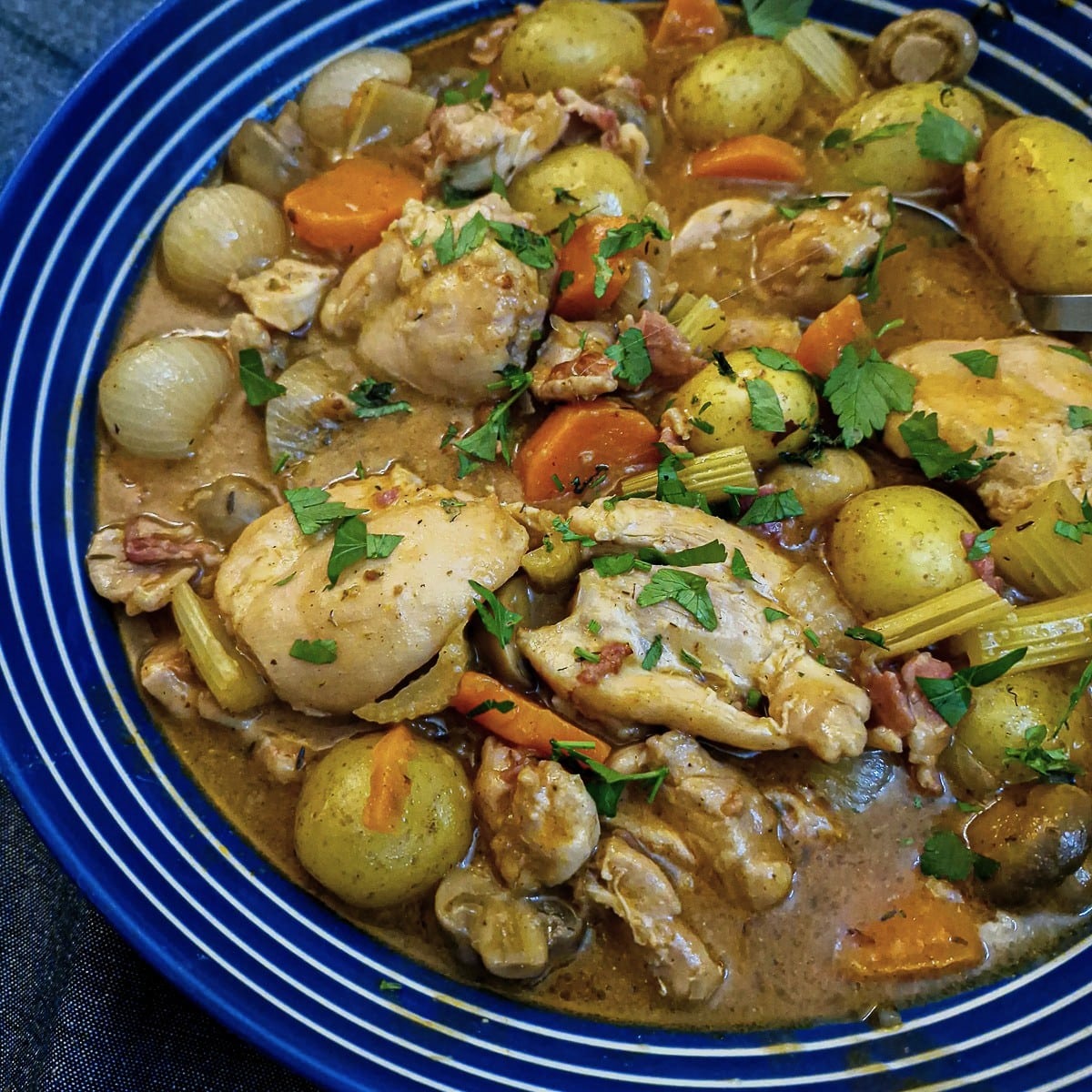
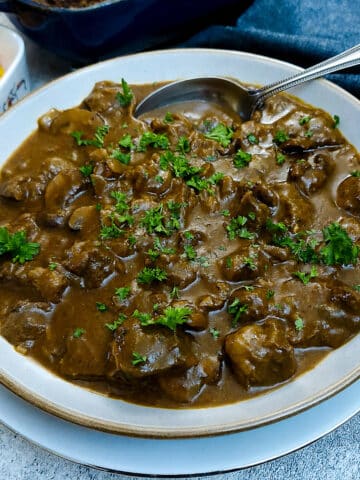
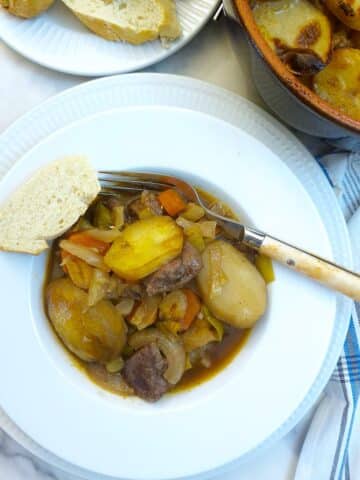
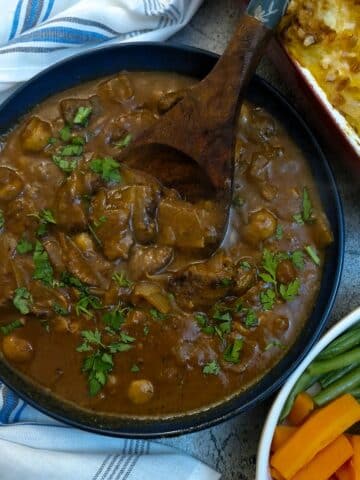
When you're after an easy chicken dinner, with plenty of veg and lashings of tasty gravy, this Somerset cider chicken casserole is just the thing! With tender chicken thighs, baby potatoes, pearl onions, mushrooms, carrots and celery, this is an easy one-pan meal. And the addition of a cup of Somerset cider takes the gravy to the next level of deliciousness!
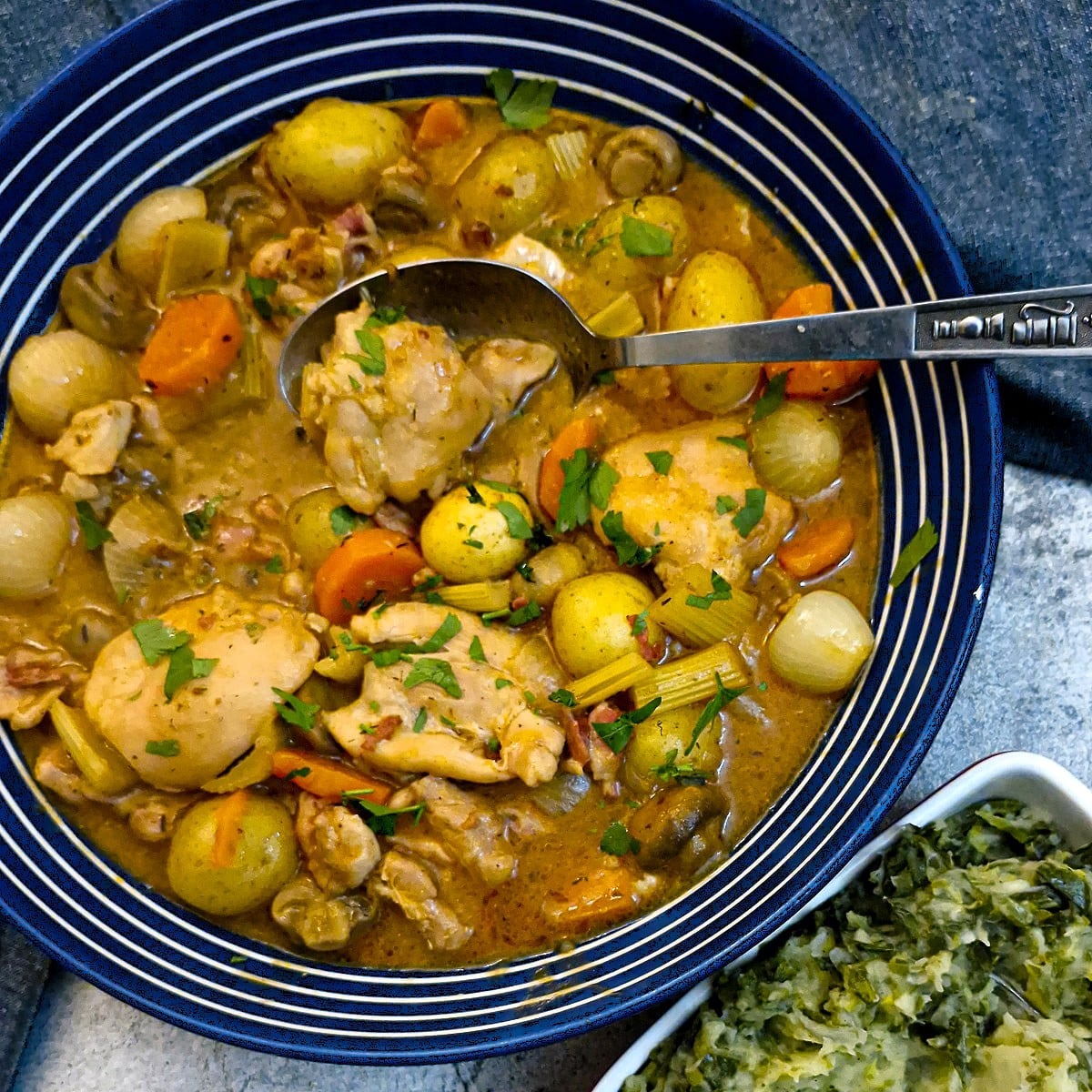
I have to say, I do love a good chicken dinner - and when it's as easy to prepare as this Somerset cider chicken casserole, so much the better!
This one-pan chicken casserole is one of those dishes that turns simple ingredients into something far greater than the sum of their parts. There's nothing fancy going on here, just good, wholesome ingredients that come together beautifully (and may well have you licking your fingers).
I've used boneless chicken thighs because they stand up to slow braising far better than chicken breasts. For an extra layer of flavour, I've fried a couple of rashers of chopped bacon with the pearl onions until the bacon crisps and the onions start to brown.
The chicken is coated in seasoned flour, which not only gives the chicken a lovely brown colour but also helps thicken the gravy as the dish simmers.
Once everything is nicely browned, the pan is deglazed with a cup of apple cider, then the vegetables and stock go in, and the whole lot is left to simmer for about an hour until the vegetables are soft and the chicken is beautifully tender.
And that's it - dinner is served! You could thicken the gravy with a little cornflour and water if you prefer it thicker, but other than that, there's no extra work involved. Just a comforting, hearty one-pan meal with maximum flavour and minimum effort.
If you liked this recipe, you may like to try these other chicken dinners.
- Asian-style garlic chicken with cashews
- French onion chicken casserole
- Chicken aloo mater (curried chicken with peas and potatoes)

Jump to:
Why you should try this Somerset cider casserole
- A true one-pan wonder. Unless you want to serve extra vegetables on this side, this is a completely one-pan meal. And if you wanted to, you could add extra veg in with the potatoes and carrots.
- Loads of flavour. The combination of cider, bacon and browned chicken creates an irresistibly tasty gravy. (I've been known to pour leftover gravy into a cup and drink it like a soup).
- Simple, honest ingredients. Nothing fancy at all - just everyday ingredients that transform into a delicious meal.
- Family-friendly flavours. I think everyone loves a chicken stew, and this is up there with the best of them.
- Easily adaptable. Swap the veg to suit what you have available, substitute the cider for apple juice, use different cuts of chicken ... this recipe just works.
Recipe information
- ⌚ Prep time - about 25 minutes - just enough to prepare the vegetables, brown the bacon, onions and meat and load everything into a casserole dish.
- ⌛ Cooking time - 60 minutes.
- 🍚 Yield - 4 generous servings - and you might even have leftovers.
Ingredients for chicken cider casserole
**You can find the exact ingredient measurements for this recipe on the printable recipe card at the end of this post.**
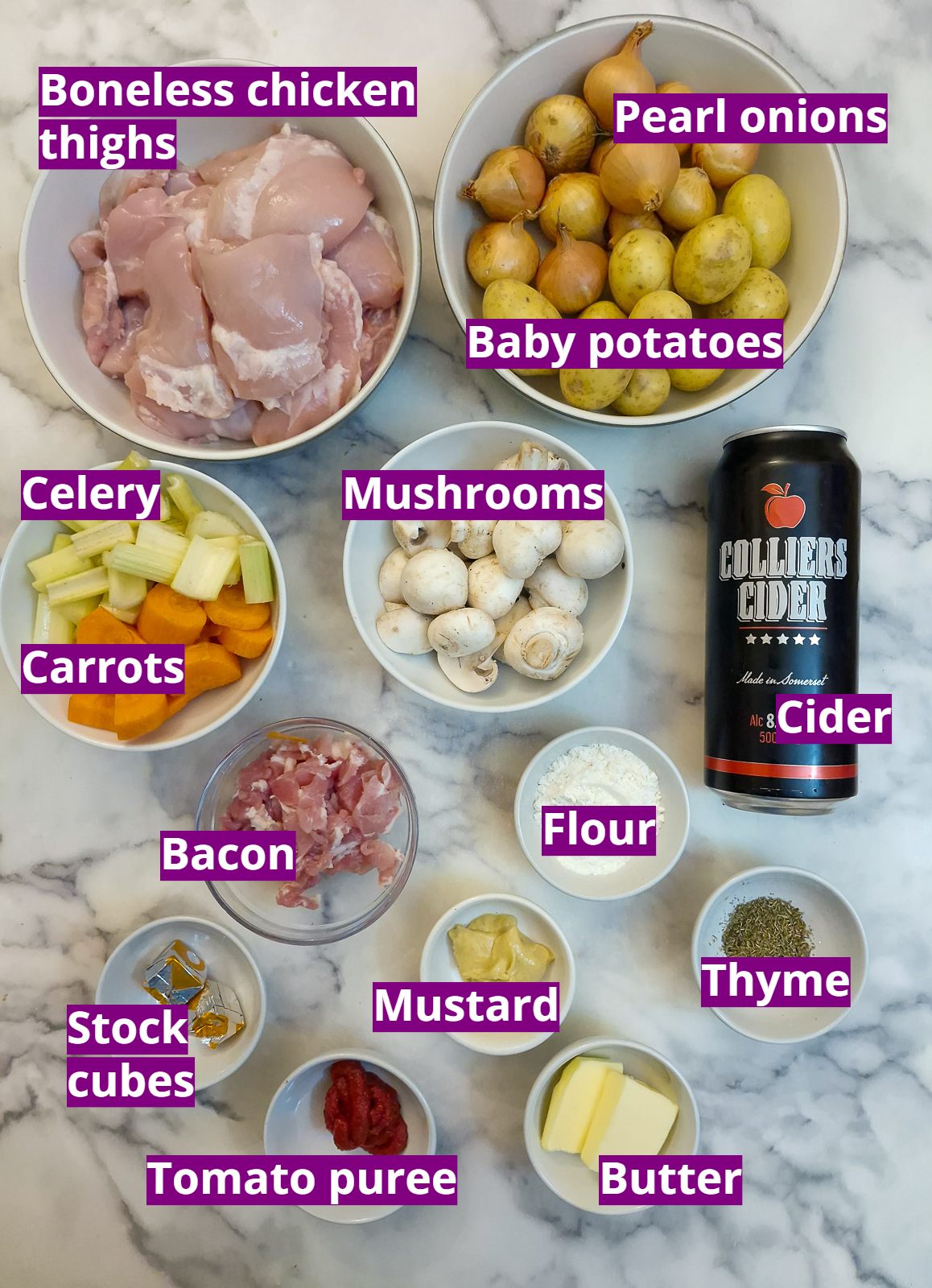
- Chicken. I used boneless, skinless chicken thighs, which were cut in half, with most of the visible fat removed. You could substitute with bone-in thighs or drumsticks. If you do this, you may have to allow a little more time for the chicken to cook thoroughly against the bone. I would be inclined to remove the skin, as boiled chicken skin is quite unappealing.
- Pearl onions. These are very small onions - you may also find them labelled pickling onions. The easiest way to peel them is to place them in a bowl and cover them with boiling water. Let them stand for 2 to 3 minutes and pour off the water. Use a sharp knife to remove the tip and root end, and the skins will just slip off. Substitute with coarsely chopped white or brown onions.
- Baby potatoes. There is no need to peel them (unless you want to). I just scrub them lightly in clean water to remove any bits of dirt. Because they are so small, I leave them whole.
- Celery and carrots. Peeled and cut into chunks. You can substitute with any other vegetables of your choice - green beans, swede (or rutabaga), butternut or other squash, or even sweet potatoes. Take the cooking time into account if you substitute the vegetables. Softer vegetables like squash or sweet potato don't need as much time to soften, so add them halfway through the cooking time.
- Mushrooms. I used baby button mushrooms and left them whole. They should be wiped with a damp paper towel to remove any bits of dirt. You can substitute with larger mushroom - white closed cap or chestnuts (cremini). If they are quite large, you can cut them in half.
- Bacon. 2 or 3 rashers of bacon, cut into small pieces, make all the difference to the flavour of the gravy. Leave it out if you prefer, or substitute with prosciutto or serrano ham.
- Cider. This is alcoholic apple cider, made in Somerset in the UK, which is where the recipe gets its name. Substitute with any apple-based cider. For a non-alcoholic version, use apple juice and 1 tablespoon of vinegar instead.
- Flour. This is used to coat the chicken.
- Mustard. Dijon mustard is nice and mild and provides a slight tang. You can substitute with wholegrain mustard, which is also quite mild. For a sharper tang, use English mustard.
- Tomato puree or tomato paste. Balances the tang of the mustard and adds depth to the gravy.
- Thyme. A little dried thyme adds a slightly herby flavour. Use fresh thyme instead, or use rosemary. You could also leave it out.
- Butter. Used to fry the bacon and onions, and also to brown the chicken. It gives a nicer flavour than vegetable oil, but you could use oil if you prefer.
- Stock cubes. These are chicken stock cubes, which should be dissolved in boiling water. You could use vegetable stock cubes, but I wouldn't recommend beef stock cubes as the flavour will be too strong.
Instructions
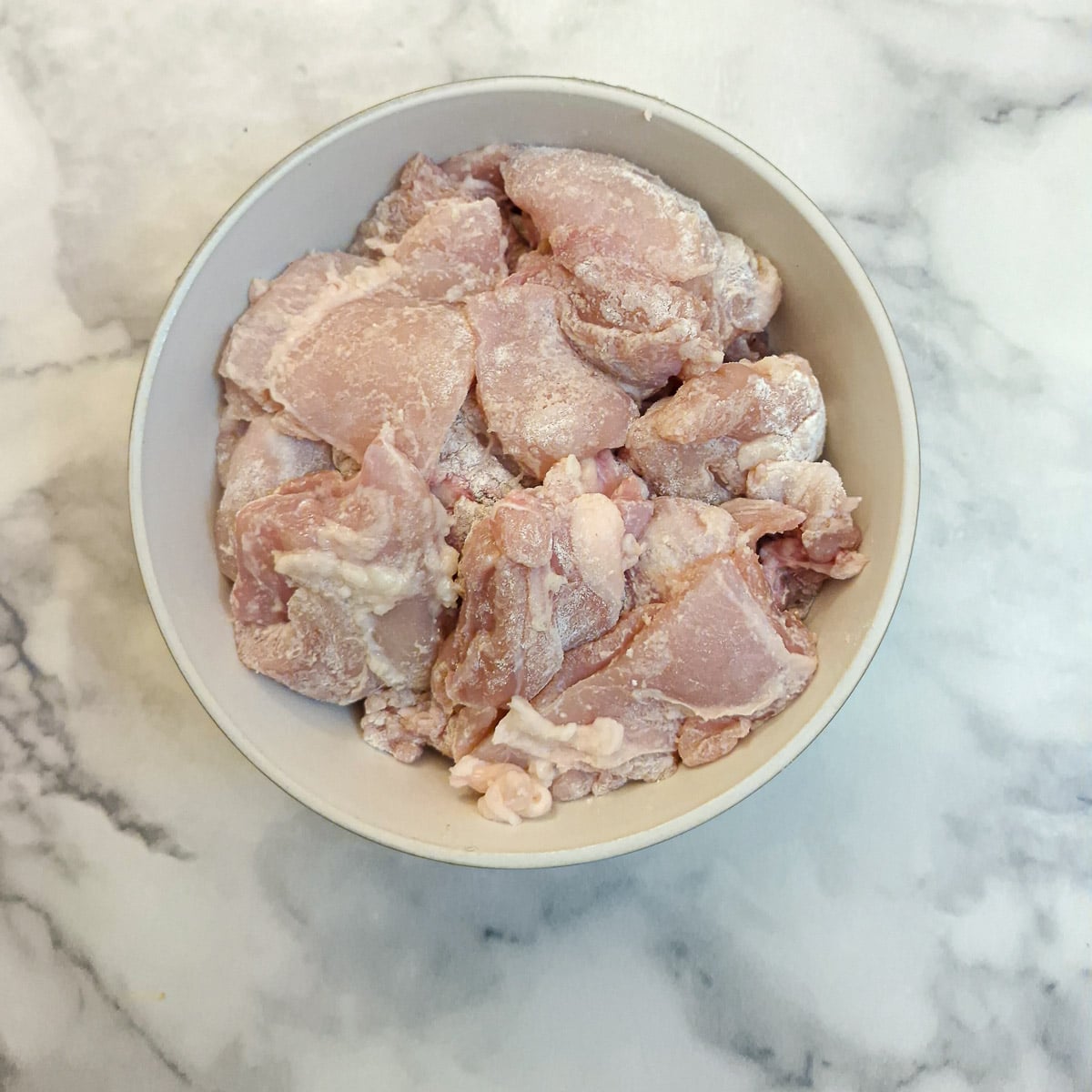
Step 1: Sprinkle the pieces of chicken thigh lightly with salt, then coat them in the flour. Shake off any excess flour. Set the chicken aside while you fry the bacon and onions.
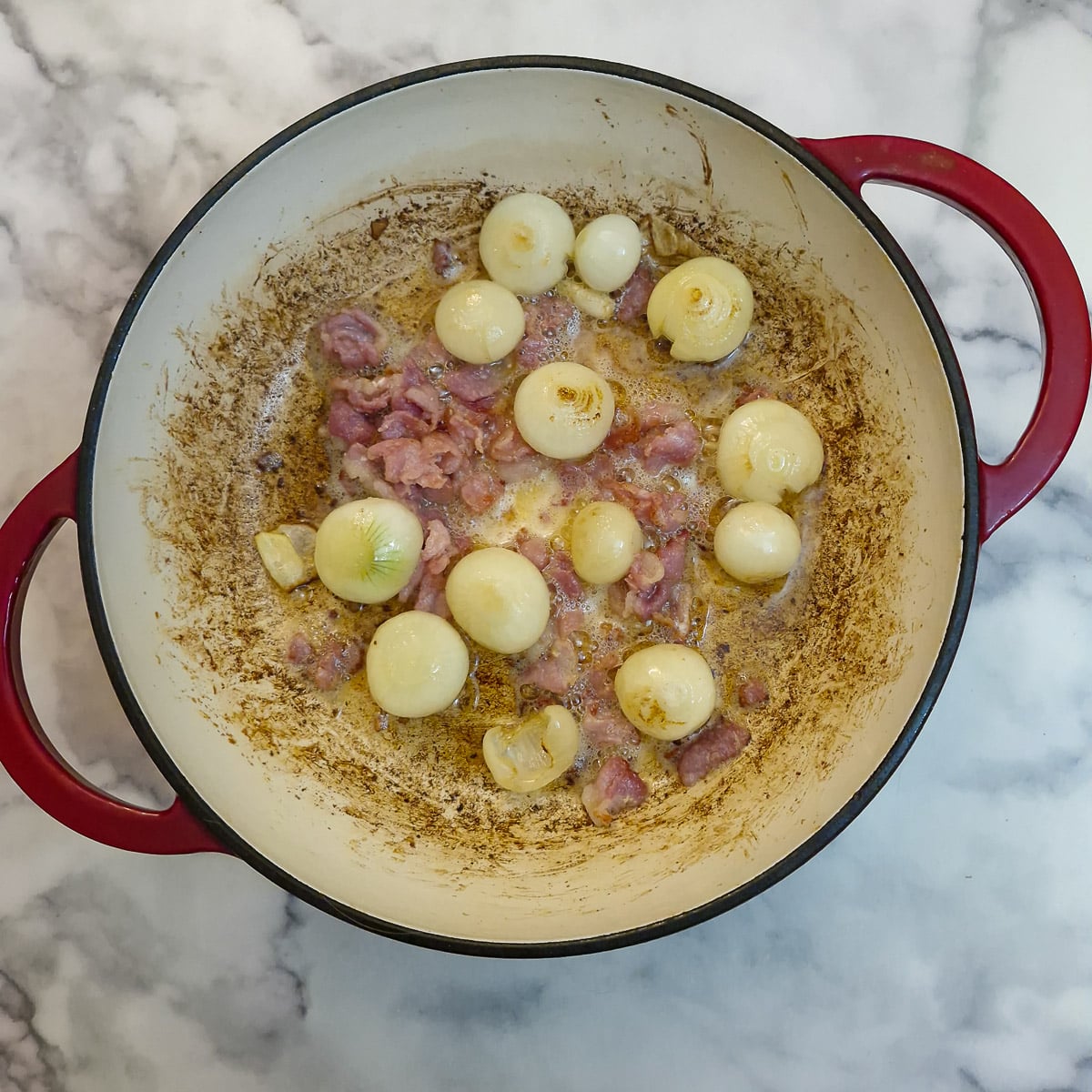
Step 2: Melt the butter in a heavy casserole dish, then add the bacon and onions and fry on medium heat, stirring often, until the bacon is crispy and the onions are starting to brown. Transfer the bacon and onions to a plate.
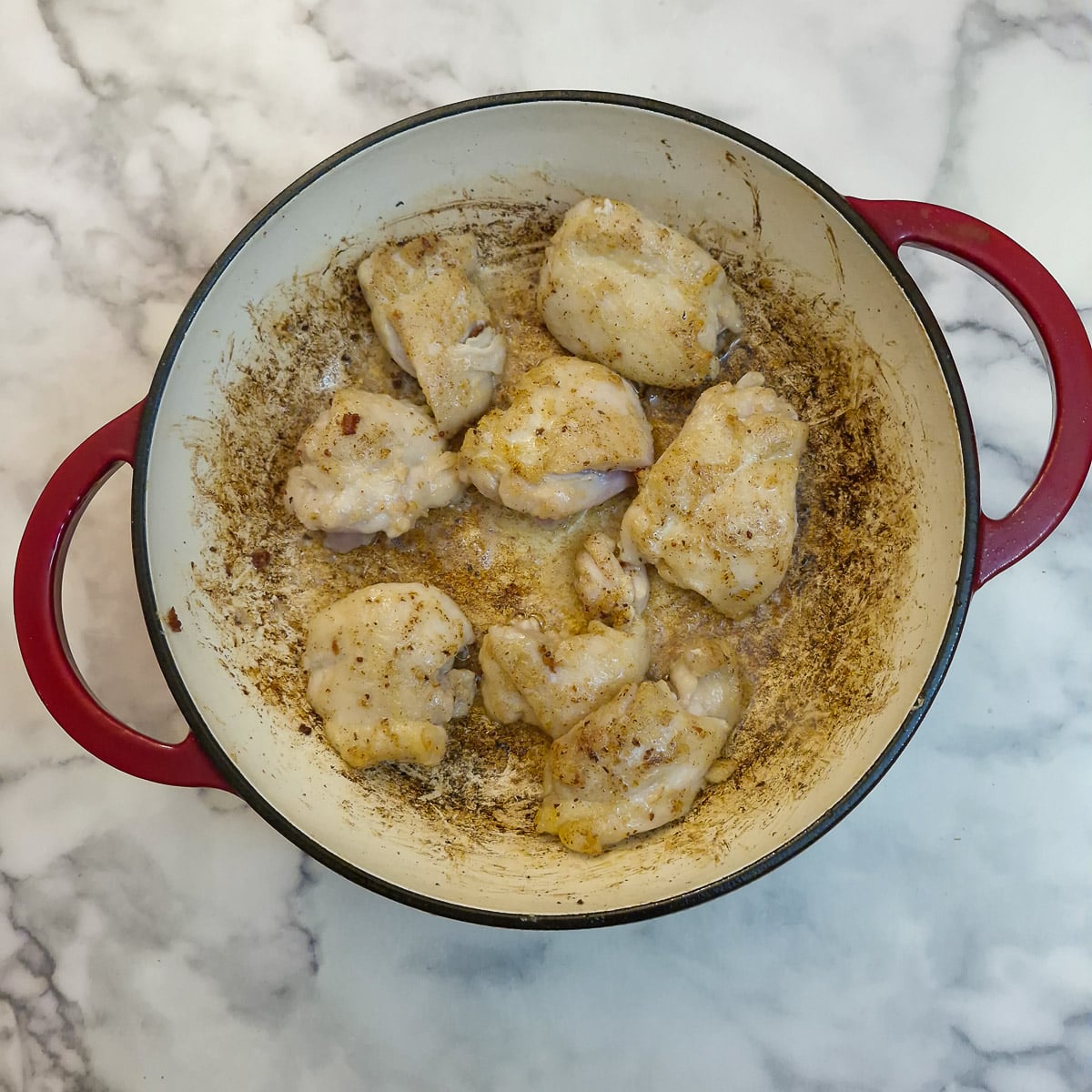
Step 3: Fry the pieces of chicken in the same pan, adding another knob of butter if necessary. Allow the chicken to brown on one side, then turn it and brown the other side. Transfer the chicken to the plate with the bacon and onions.
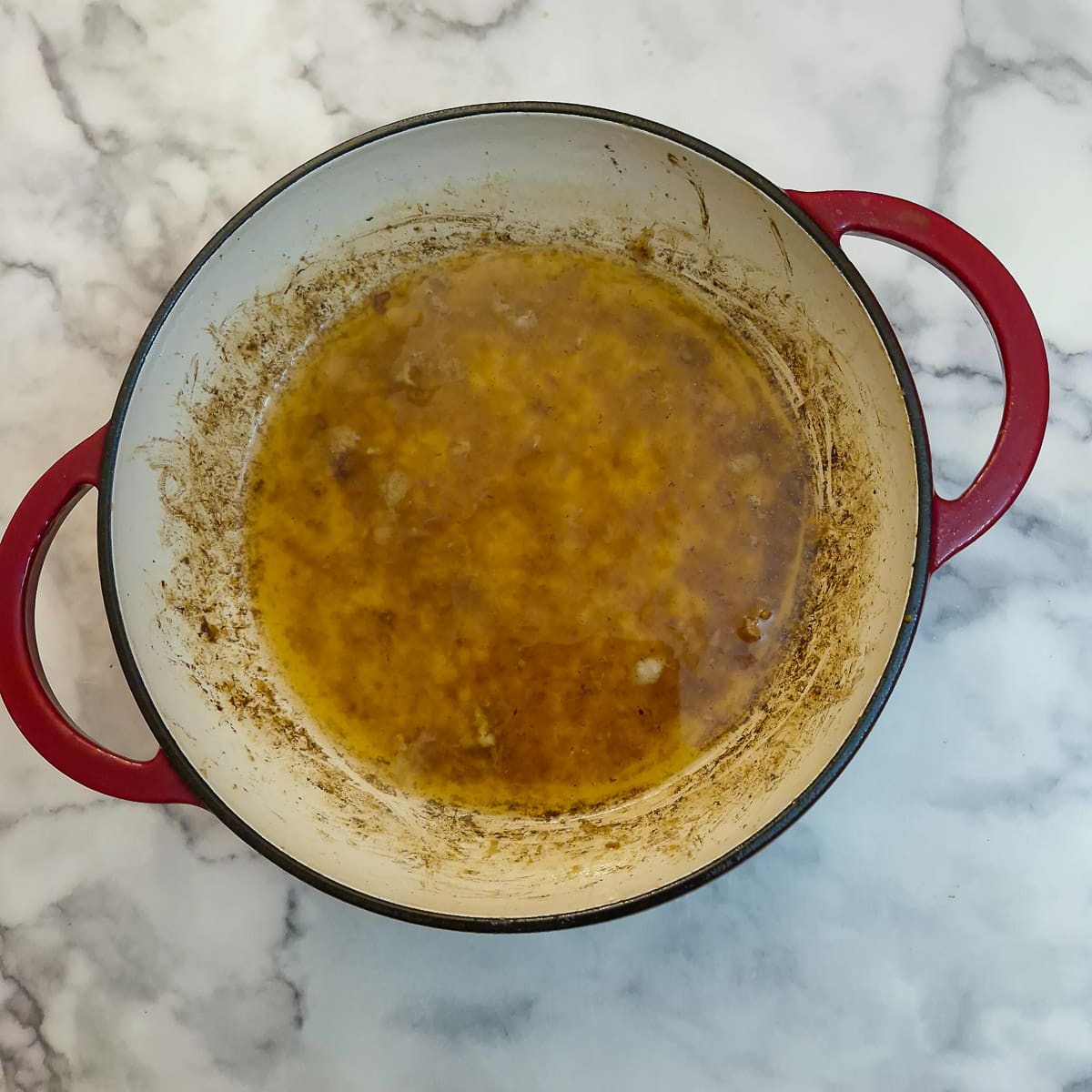
Step 4: Pour the cider into the pan to deglaze it. Stir with a spatula, scraping the bottom of the pan to loosen any bits (the fond) left from frying the bacon and chicken.
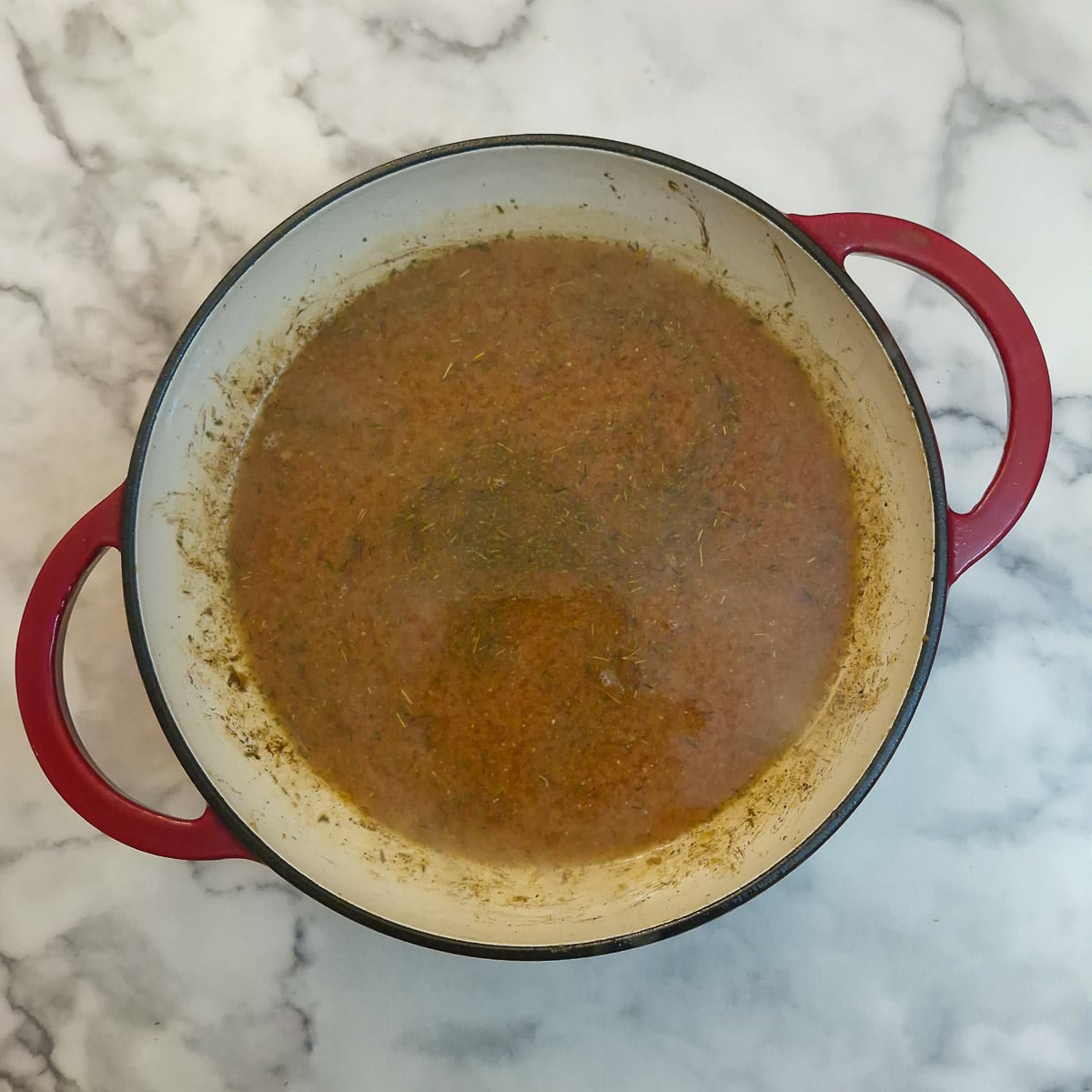
Step 5: Dissolve the stock cubes in boiling water and stir in the mustard and tomato puree. Pour the stock into the pan and stir in the dried thyme.
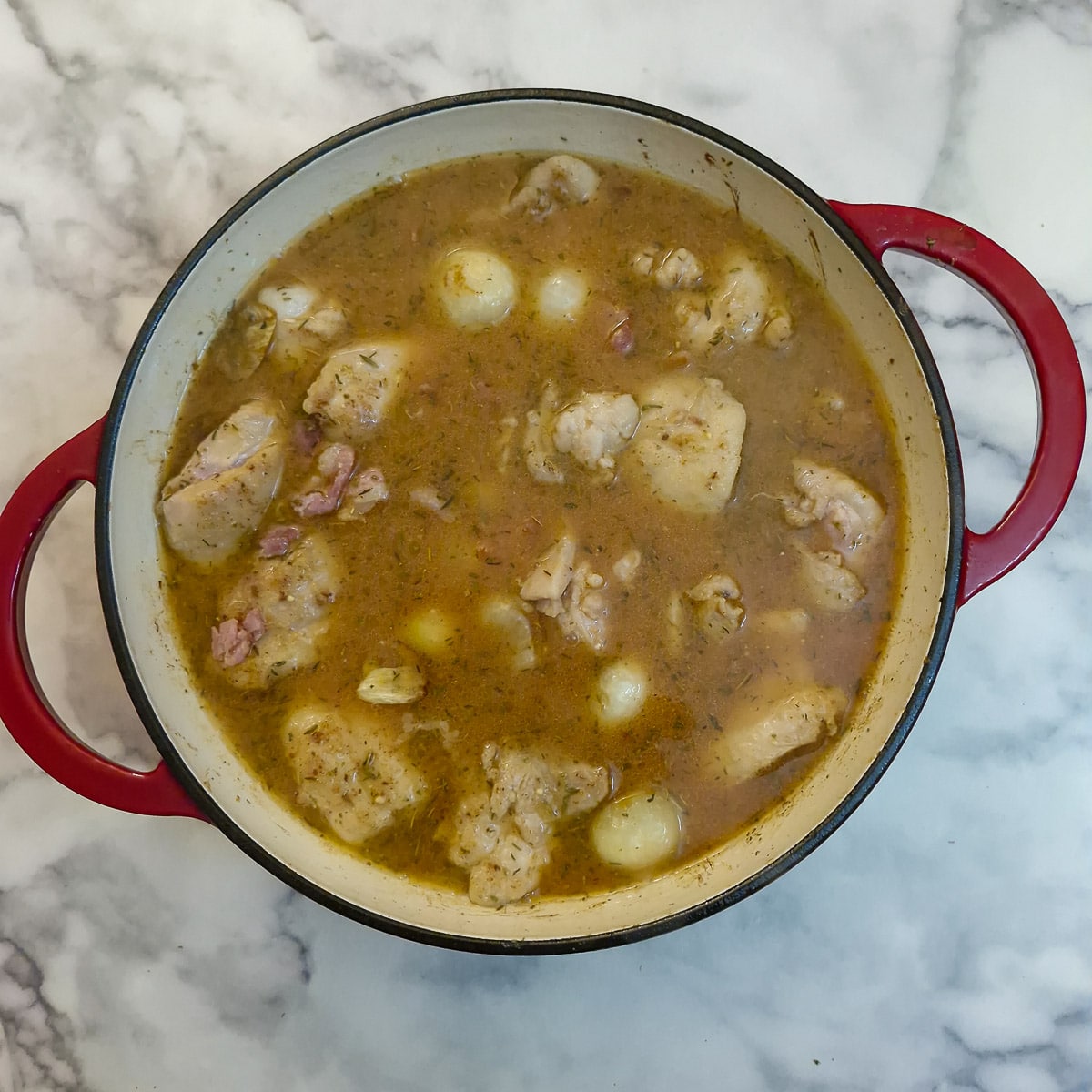
Step 6: Add the chicken, bacon and onions back to the pan.
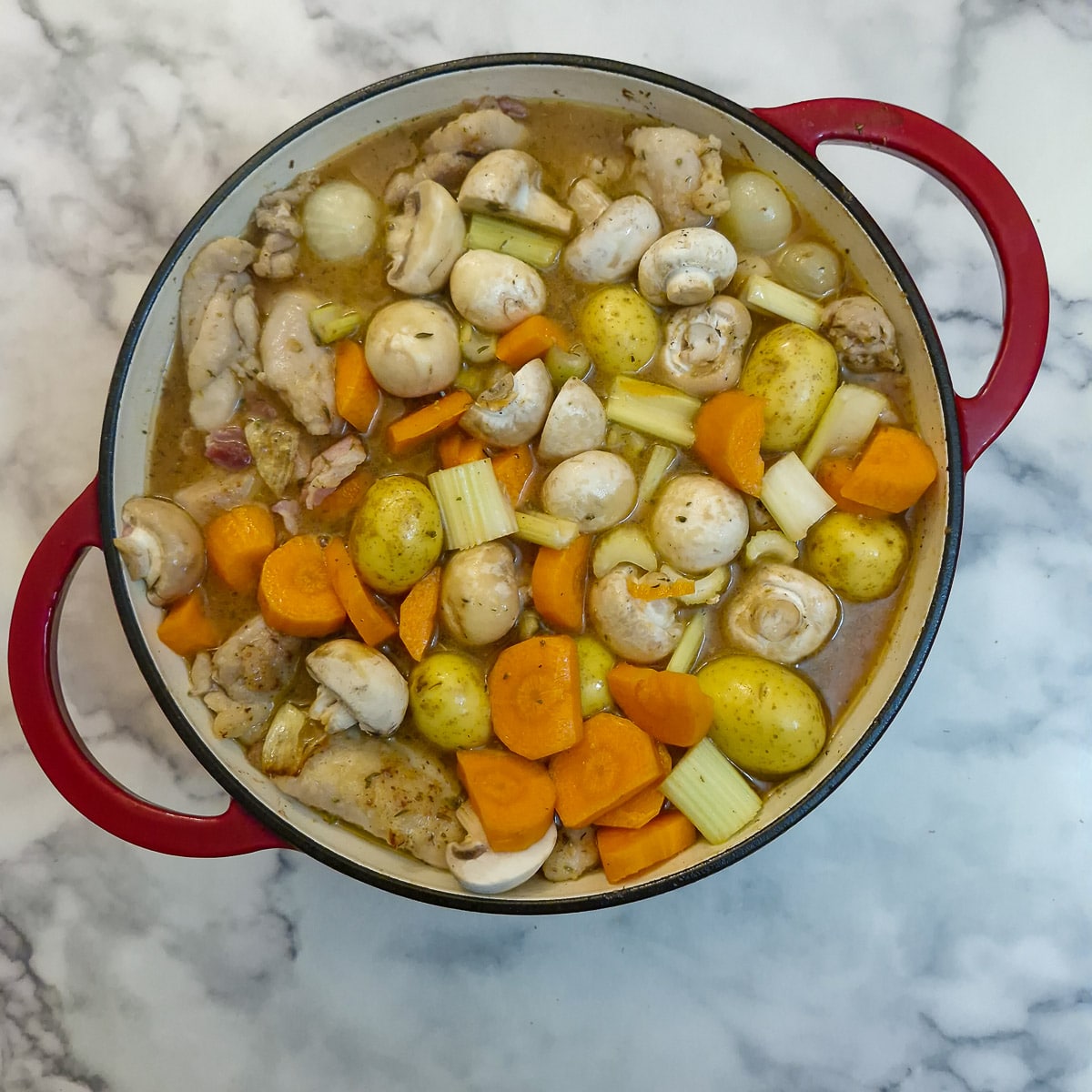
Step 7: Add the potatoes, mushrooms, celery and carrots and bring the pan to a boil.

Step 8: Turn the heat down to a simmer, cover the pan with a lid and leave for an hour. Check the level of the stock occasionally and top up with a splash of water if it seems to be drying out.
To thicken the gravy
If you prefer a thicker gravy you can thicken it as follows:
- Combine 1 tablespoon of cornflour with 2 tablespoons of water until smooth and stir slowly into the pan until the gravy thickens to your liking; OR
- Combine 1 tablespoon of flour with one tablespoon of softened butter until there are no lumps. This is known as a beurre manie. Stir it into the pan a little at a time until the desired consistency is reached.
- In either case, allow the casserole to simmer for a few minutes until the gravy has thickened and the starch (cornflour or flour) has cooked.
Tips for a successful outcome
Here are my top tips to ensure your Somerset chicken casserole always turns out perfectly:
- Brown the bacon and onions well - the deeper the colour, the richer the flavour in the final gravy.
- Dust the chicken lightly with flour - too much flour will make the gravy turn gloopy.
- Don't rush the simmering time - the casserole needs a gentle simmer for the entire hour to allow the chicken to soften and the flavours to combine. If you turn up the heat to cook the casserole more quickly, it might cook OK, but the flavours won't be as developed.
- Keep the lid on while simmering - this prevents the liquid from evaporating too quickly. If you don't want to thicken the gravy with flour or cornflour, remove the lid for the last 15 minutes to allow the gravy to thicken naturally.
Serving suggestions
Serve it exactly as is, straight from the pan - the casserole already has potatoes, vegetables and chicken built in, so it's complete on its own.
However, to cater for larger appetites, you may like to add a few other sides. Here are some suggestions:
- Spring green potato mash
- Fresh buttered corn and rice
- Roasted butternut
- Buttered cabbage and leeks
- And of course, you can't go wrong with a crusty bread roll to mop up all the delicious gravy!
Substitutions
Disclaimer: Please check all ingredients carefully if you have allergies or dietary restrictions. This recipe has not been tested for specific dietary needs.
- Low carb option - you can reduce carbs by leaving out the baby potatoes or replacing them with extra mushrooms.
- Dairy-free - this recipe contains no milk, cream or cheese, but it does make use of butter for frying the bacon and browning the chicken. Use vegetable oil instead.
- Nut-free - this recipe does not contain nuts.
- Alcohol-free - substitute the cider for extra stock or apple juice and a tablespoon of vinegar. If you can find it, alcohol-free cider would also be a good alternative.
- Gluten-free - the chicken is coated in flour. To make it gluten-free, use gluten-free flour or cornflour for coating. Check the ingredients in the tomato puree, mustard and stock cubes to ensure they are gluten-free.
- Vegetarian - this recipe contains both bacon and chicken so is not suitable for vegetarians.
Variations
If you would like to vary the recipe, here are a few ideas:
- Creamy Somerset chicken - stir in ½ a cup of double cream or creme fraiche at the end of the cooking time for a richer sauce. Remove it from the heat before adding so it doesn't split.
- Apple and sage - add a chopped apple and swap the thyme for dried sage. The apple softens into the gravy and adds a sweetness that perfectly complements the cider.
- Somerset chicken cider pie - after cooking, transfer the casserole to a pie dish and top with puff pastry. Bake for 25 minutes in a hot oven to tranform the casserole into a delicious pie.
Equipment
I used a cast iron Dutch oven with a tightly-fitting lid. You could make the casserole in a saucepan, preferably with a thick heavy bottom to prevent burning.
Storage
- Refrigerator. Store cooled leftovers in a covered container in the refrigerator for up to 3 days.
- Freezing. Portion into airtight tubs or freezer bags and freeze for up to 3 months. The potatoes may soften slightly after freezing, but they are still perfectly good in a casserole.
- Defrosting. For best results, defrost overnight in the refrigerator and then reheat as below. You can reheat from frozen in a saucepan on a very low heat on the stove but it will take longer.
- Reheating. Reheat gently in a sauepan on low to medium heat for about 10 minutes until piping hot. Stir occasionally. You can also reheat portions in the microwave on full power in 1 to 2 minute bursts until hot all the way through.
Top Tip
Taste and adjust the seasoning before serving. The flavours mellow as they cook, you may want a little more salt, mustard or tomato paste at the end.
FAQ
Yes, brown the bacon, onion and chicken as per the recipe, and transfer to a slow cooker.
Deglaze the pan with cider and pour over the chicken.
Add the remaining ingredients to the slow cooker and cook on LOW for 5 to 6 hours or HIGH for 3 to 4 hours.
Somerset cider is a traditional English cider made in the county of Somerset. It is usually made from bittersweet cider apples, which give it a deeper, more complex flavour than standard cider.
If you can't get proper Somerset cider, any good-quality dry of medium dry cider will work in this recipe.
Save for later
If you would like to try this Somerset chicken casserole, why not save the recipe to one of your Pinterest boards so you can find it easily? Just click the image below.
Alternatively, you can save the recipe by clicking on the floating heart icon on the right-hand side of the screen.
Related recipes
Visit my Recipes from the British Isles page for other traditional recipes. Here are a few you might enjoy.


📋The recipe

Somerset chicken cider casserole
(Click the stars to rate this recipe)
Equipment
- Dutch oven or heavy casserole dish
- Sharp Knife
- Vegetable peeler
- Chopping Board
- Spatula
- Small dish for coating chicken
Ask a Question
If you have a question about this recipe that has not been answered, please use the box below to ask it.
Use this with care. This is an AI-generated result and may contain errors or inaccuracies. I cannot be held responsible for the information returned.
Ingredients
- 1½ pounds / 680 grams chicken thigh fillets
- 2 tablespoons flour
- Salt to taste
- 3 rashers bacon cut into pieces
- 16 pearl onions or pickling onions - peeled
- 2 ounces / 60 grams butter
- 1 cup / 240 ml Somerset cider or dry / medium dry cider
- 2 chicken stock cubes
- 1½ cups / 360 ml boiling water
- 1 tablespoon Dijon mustard
- 1 tablespoon Tomato puree or tomato paste
- 1 teaspoon dried thyme
- 16 baby potatoes washed
- 16 button mushrooms wiiped
- 1 - 2 large carrots peeled and cut into chunks
- 2 stalks celery washed and sliced
Instructions
- Sprinkle the pieces of chicken thigh lightly with salt, then coat them in the flour. Shake off any excess flour. Set the chicken aside while you fry the bacon and onions.1½ pounds / 680 grams chicken thigh fillets, 2 tablespoons flour, Salt to taste
- Melt the butter in a heavy casserole dish, then add the bacon and onions and fry on medium heat, stirring often, until the bacon is crispy and the onions are starting to brown. Transfer the bacon and onions to a plate.3 rashers bacon, 2 ounces / 60 grams butter, 16 pearl onions
- Fry the pieces of chicken in the same pan, adding another knob of butter if necessary. Allow the chicken to brown on one side, then turn it and brown the other side. Transfer the chicken to the plate with the bacon and onions.
- Pour the cider into the pan to deglaze it. Stir with a spatula, scraping the bottom of the pan to loosen any bits (the fond) left from frying the bacon and chicken.1 cup / 240 ml Somerset cider
- Dissolve the stock cubes in boiling water and stir in the mustard and tomato puree. Pour the stock into the pan and stir in the dried thyme.2 chicken stock cubes, 1½ cups / 360 ml boiling water, 1 tablespoon Dijon mustard, 1 tablespoon Tomato puree or tomato paste, 1 teaspoon dried thyme
- Add the chicken, bacon and onions back to the pan.
- Add the potatoes, mushrooms, celery and carrots and bring the pan to a boil.16 baby potatoes, 16 button mushrooms, 1 - 2 large carrots, 2 stalks celery
- Turn the heat down to a simmer, cover the pan with a lid and leave for an hour. Check the level of the stock occasionally and top up with a splash of water if it seems to be drying out.
Notes
If you prefer a thicker gravy, you can thicken it as follows:
- Combine 1 tablespoon of cornflour with 2 tablespoons of water until smooth and stir slowly into the pan until the gravy thickens to your liking; OR
- Combine 1 tablespoon of flour with one tablespoon of softened butter until there are no lumps. This is known as a beurre manie. Stir it into the pan a little at a time until the desired consistency is reached.
- In either case, allow the casserole to simmer for a few minutes until the gravy has thickened and the starch (cornflour or flour) has cooked.
- Brown the bacon and onions well - the deeper the colour, the richer the flavour in the final gravy.
- Dust the chicken lightly with flour - too much flour will make the gravy turn gloopy.
- Don't rush the simmering time - the casserole needs a gentle simmer for the entire hour to allow the chicken to soften and the flavours to combine. If you turn up the heat to cook the casserole more quickly, it might cook OK, but the flavours won't be as developed.
- Keep the lid on while simmering - this prevents the liquid from evaporating too quickly. If you don't want to thicken the gravy with flour or cornflour, remove the lid for the last 15 minutes to allow the gravy to thicken naturally.
- Taste and adjust the seasoning before serving. The flavours mellow as they cook, you may want a little more salt, mustard or tomato paste at the end.
- Refrigerator. Store cooled leftovers in a covered container in the refrigerator for up to 3 days.
- Freezing. Portion into airtight tubs or freezer bags and freeze for up to 3 months. The potatoes may soften slightly after freezing, but they are still perfectly good in a casserole.
- Defrosting. For best results, defrost overnight in the refrigerator and then reheat as below. You can reheat from frozen in a saucepan on a very low heat on the stove but it will take longer.
- Reheating. Reheat gently in a sauepan on low to medium heat for about 10 minutes until piping hot. Stir occasionally. You can also reheat portions in the microwave on full power in 1 to 2 minute bursts until hot all the way through.
Nutrition
I am not a nutritionist. The nutrition information has been calculated using an on-line calculator, and is intended for information and guidance purposes only. If the nutrition information is important to you, you should consider calculating it yourself, using your preferred tool.
If you made this recipe and enjoyed it, I'd love it if you could give me a star rating in the comments below. And if you'd like to get in touch, you can email me at [email protected]. I'd love to hear from you. And don't forget to subscribe to my mailing list so you can grab yourself a copy of my FREE COOKBOOK!
If you'd like to continue browsing, just click on this link to all my recipes.


Did you make this recipe? Let me know!