
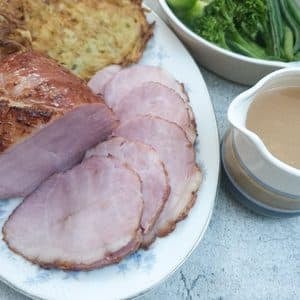
This deliciously tender apple cider gammon is gently simmered with fresh vegetables and an apple and served with a tasty gravy made from the cooking liquid. Leave it plain or add an optional redcurrant and whole-grain mustard glaze for a beautifully glossy finish that's perfect for a special occasion.
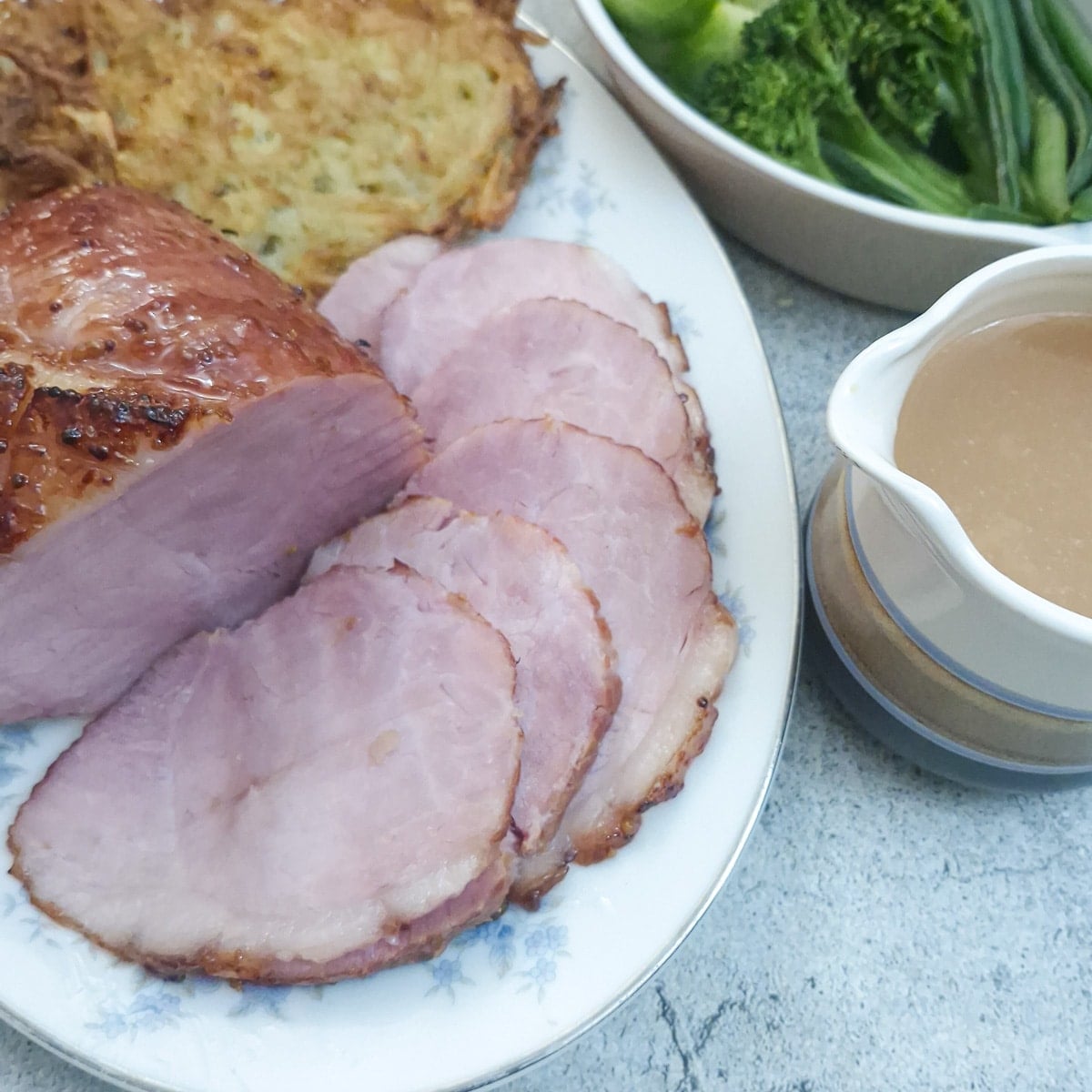
This apple cider gammon is a delicious alternative to a traditional roast. The gammon is gently simmered in apple cider with onions, carrots, celery and fresh apple until tender and succulent. The cider takes on all the lovely flavours from the meat and vegetables, making a delicious gravy with very little effort.
For a special occasion, you can finish the boiled gammon with a simple redcurrant and wholegrain mustard glaze, which adds a lovely sweet and tangy flavour. But to be honest, the gammon is just as delicious without it, making this an easy meal that's perfect for a relaxed Sunday lunch or an easy midweek dinner.
I remember going to the local grocer's with my mother, long before supermarkets became commonplace. She would ask for two ounces of boiled ham, and the grocer would carefully slice it from an enormous joint using a machine with a large rotating blade. He'd catch each thin slice on a piece of paper before wrapping it up for us to take home. My younger 6-year-old self always watched with bated breath, convinced that at any moment he was going to slice his fingers off along with the ham!
I imagine that ham would have been very similar to this gammon cooked in cider, simply boiled until tender and served cold in thin slices.
If you enjoy gammon (or ham), you might like to try these other recipes too:
- Honey-glazed smoked ham - oven-baked with a delicious honey and mustard glaze brushed on during the final 20 minutes.
- Easy oven-baked gammon - no glaze needed for this one. Instead, the gammon is oven-baked in a marinade of honey, chilli, soy sauce and ginger.
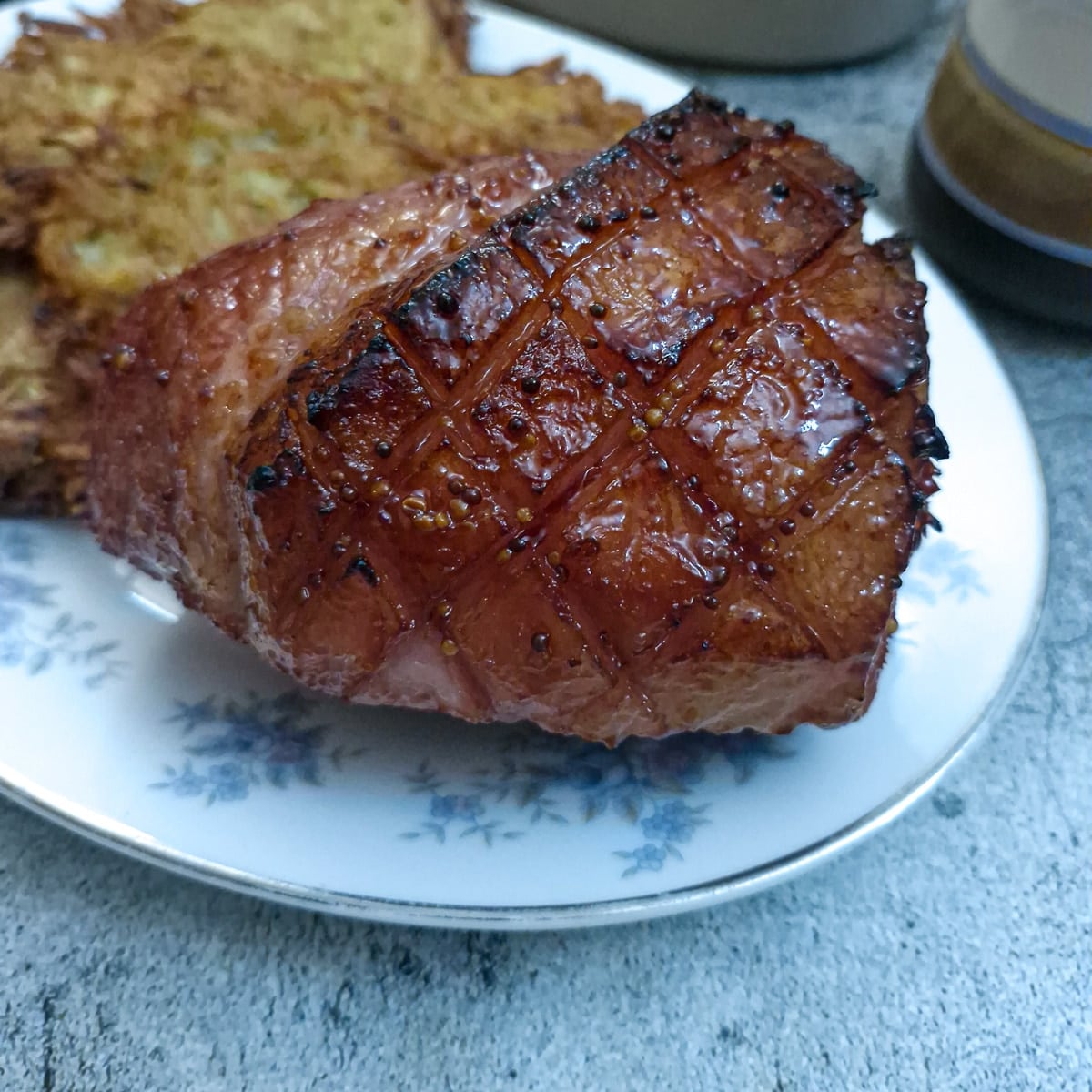
Table of Contents
- Why I love this apple cider gammon joint recipe
- Apple cider gammon at a glance
- Ingredients for apple cider gammon
- How much cider do I need?
- How to cook a gammon in apple cider
- Don't forget the cider gravy!
- Foodle Club top tips
- What to serve with apple cider gammon
- Equipment tips
- Storage and reheating
- Apple cider ham FAQ
- Save for later
- Related recipes
- The recipe
Why I love this apple cider gammon joint recipe
- Easy to prepare. Just pop everything into a saucepan and leave the gammon to simmer gently until tender.
- Tender and succulent. Cooking the gammon slowly in cider keeps the meat beautifully moist and full of flavour.
- The gravy makes itself. The cider absorbs the flavours of the gammon, apple and vegetables, creating a delicious gravy that only needs a little thickening.
- Perfect for any occasion. Serve it simply for a family dinner, or add the optional redcurrant and mustard glaze for something a little more special.
- Delicious leftovers. Any leftover gammon is just as tasty served cold in sandwiches or salads the following day.
Apple cider gammon at a glance
- Recipe in a nutshell: The gammon is simmered in apple cider (hard cider) with an onion, carrot, apple and a stick of celery.
- Prep time: 10 minutes. Just long enough to clean the veggies and get the gammon in the pan to cook.
- Cooking time: 25 minutes per pound or 450 grams plus a final 20 minutes measured from the time it starts simmering. My 790-gram joint took around 70 minutes, measured from when the cider started simmering.
- Yield: Serves 4
- Difficulty: Easy
Ingredients for apple cider gammon
**This is just an overview to explain why I used a particular ingredient. The complete list of ingredients and the exact measurements are on the printable recipe card at the end of this post.**
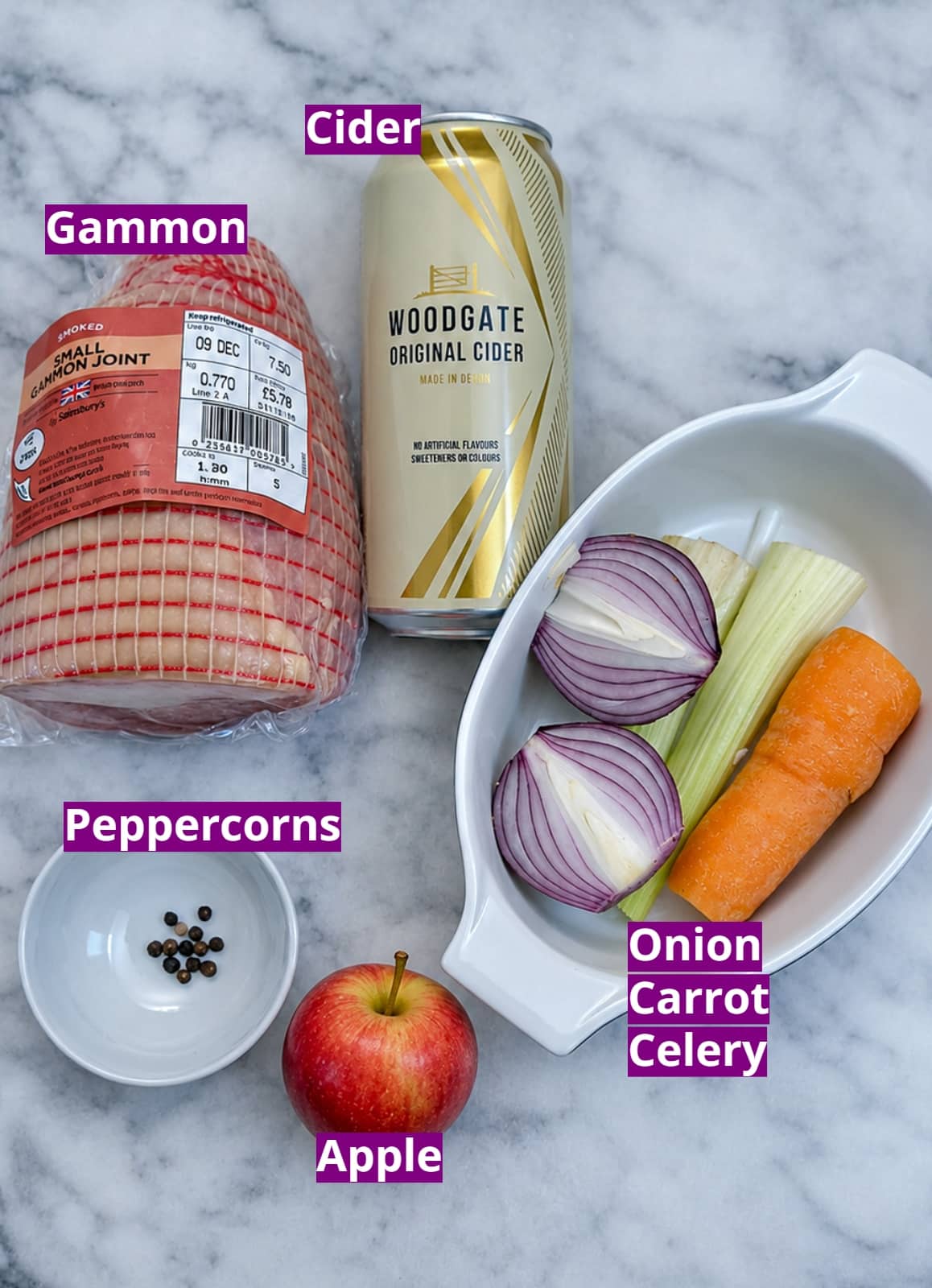
- Gammon. You can use either smoked or unsmoked gammon for this recipe. The gammon normally comes in a mesh bag inside a plastic bag. Remove the outer bag, but leave the gammon in the mesh bag to help it keep its shape as it cooks.
- Apple cider. I used alcoholic apple cider, which gives the gammon and gravy a lovely flavour. For an alcohol-free version, use dry alcohol-free apple cider, or replace the cider with equal quantities of unsweetened apple juice and water, plus a tablespoon of cider vinegar to balance the sweetness. The gravy will taste slightly different, but should still be delicious. Note: I haven't tested this recipe using plain apple juice and water.
- Aromatics. These add flavour to the cider and ultimately to the gravy. I used a carrot, an onion, a stalk(stick) of celery and an apple, along with a dozen black peppercorns. The apple is there to add a little sweetness to the gravy and emphasise the apple flavour of the cider. The vegetables can just be rinsed; there's no need to peel them. They will be sieved out of the gravy and discarded once the gammon has cooked. I haven't included salt as gammon can be quite salty. Taste the finished gravy before adding salt to it - you will probably find it doesn't need any.
Optional glaze (not pictured)
- Redcurrant jelly. Adds a lovely fruity sweetness with just a hint of tartness, which complements the salty gammon and balances the sharpness of the wholegrain mustard. It also gives the glaze a beautiful glossy finish. Substitute with cranberry sauce or apple jelly, or use apricot jam with a teaspoon of cider vinegar to balance the sweetness.
- Mustard. I used whole-grain mustard, but you could use Dijon, or for a stronger tang, use English mustard.
- Stock. I combined the above 2 ingredients with a tablespoon of the cooked stock to loosen them and make them easier to brush over the gammon.
How much cider do I need?
The amount of cider you need will depend on the size of your gammon joint and the saucepan you're using.
For a small boneless gammon joint of approximately 790 g (1.75 lb), one 440 ml can of cider is sufficient. The cider doesn't need to cover the meat completely; it should come roughly halfway up the joint. Keep the lid on the saucepan and turn the gammon halfway through cooking so that both sides spend some time submerged in the cider.
For a larger 1.5 kg (3¼ lb) joint, you may need two 440 ml cans of cider, depending on the size of your saucepan.
If you find you have too much cooking liquid (which might happen if you use 2 cans), you can do any (or all) of the following:
- Remove the cooked gammon and keep it warm while you simmer the cider uncovered for a few minutes to concentrate the flavours.
- Leave the lid off the pan for the final 15 minutes of simmering
- Thicken the gravy with a slurry made with a tablespoon of cornflour and 2 tablespoons of cold water. Stir it slowly into the gravy over a low heat until the gravy has thickened sufficiently. You may not need all the cornflour mixture.
- Taste as you go, because reducing the liquid will also concentrate any salt released by the gammon.
How to cook a gammon in apple cider
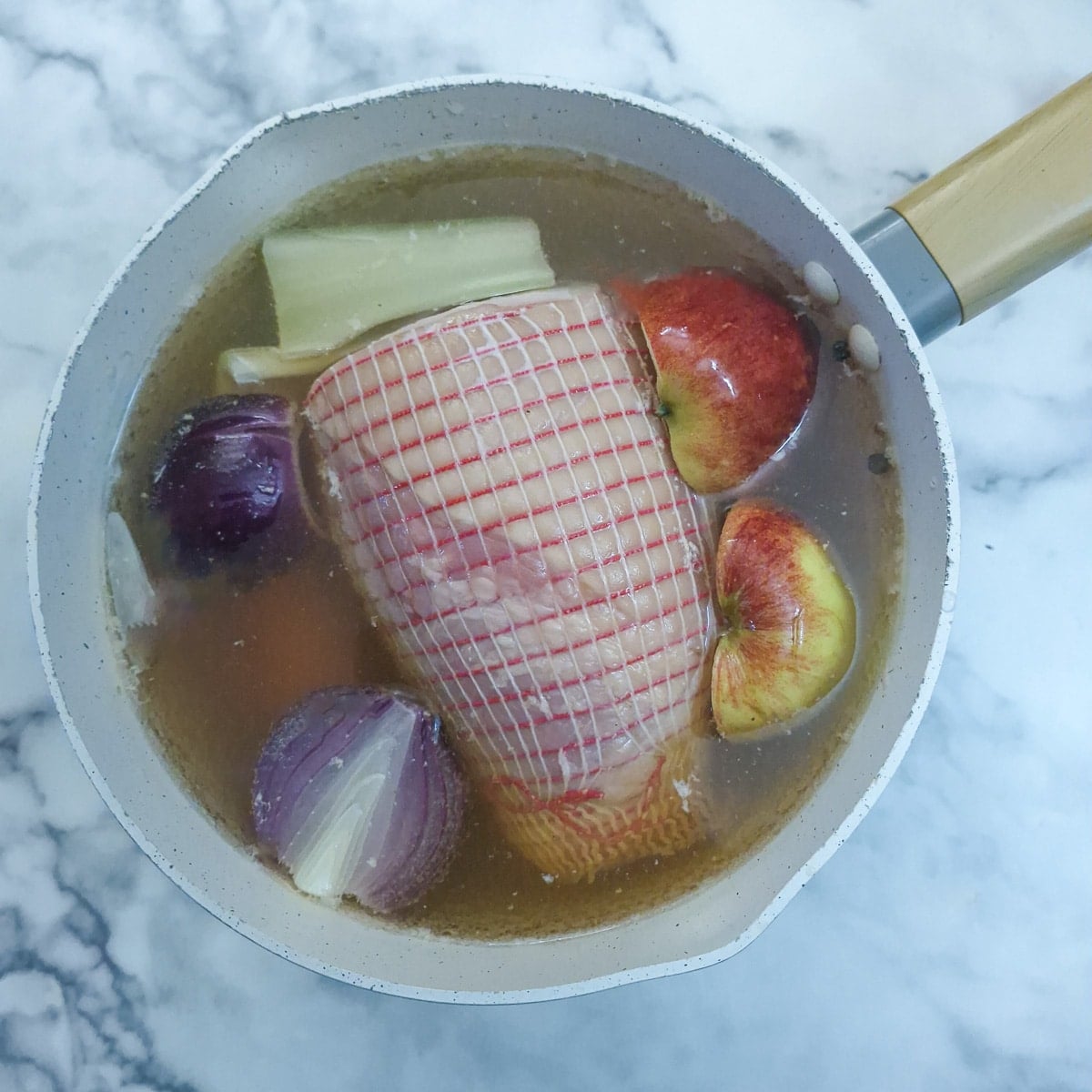
Place the gammon, carrot, onion and apple, celery and peppercorns into a large saucepan and pour in the cider.
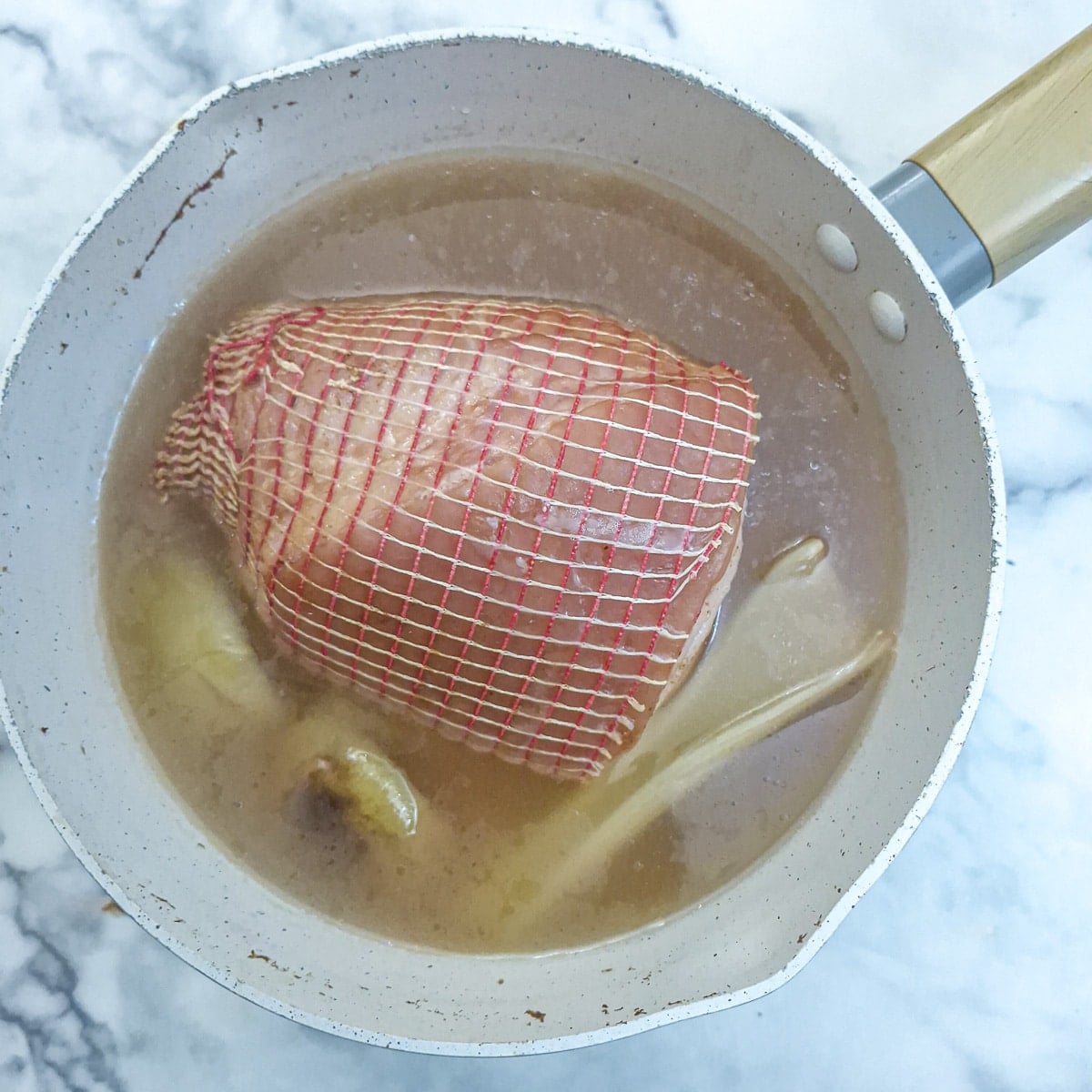
Bring the pan to a boil, then turn the heat down to a simmer. Cover and cook for half the cooking time, then turn the gammon over and continue to simmer.
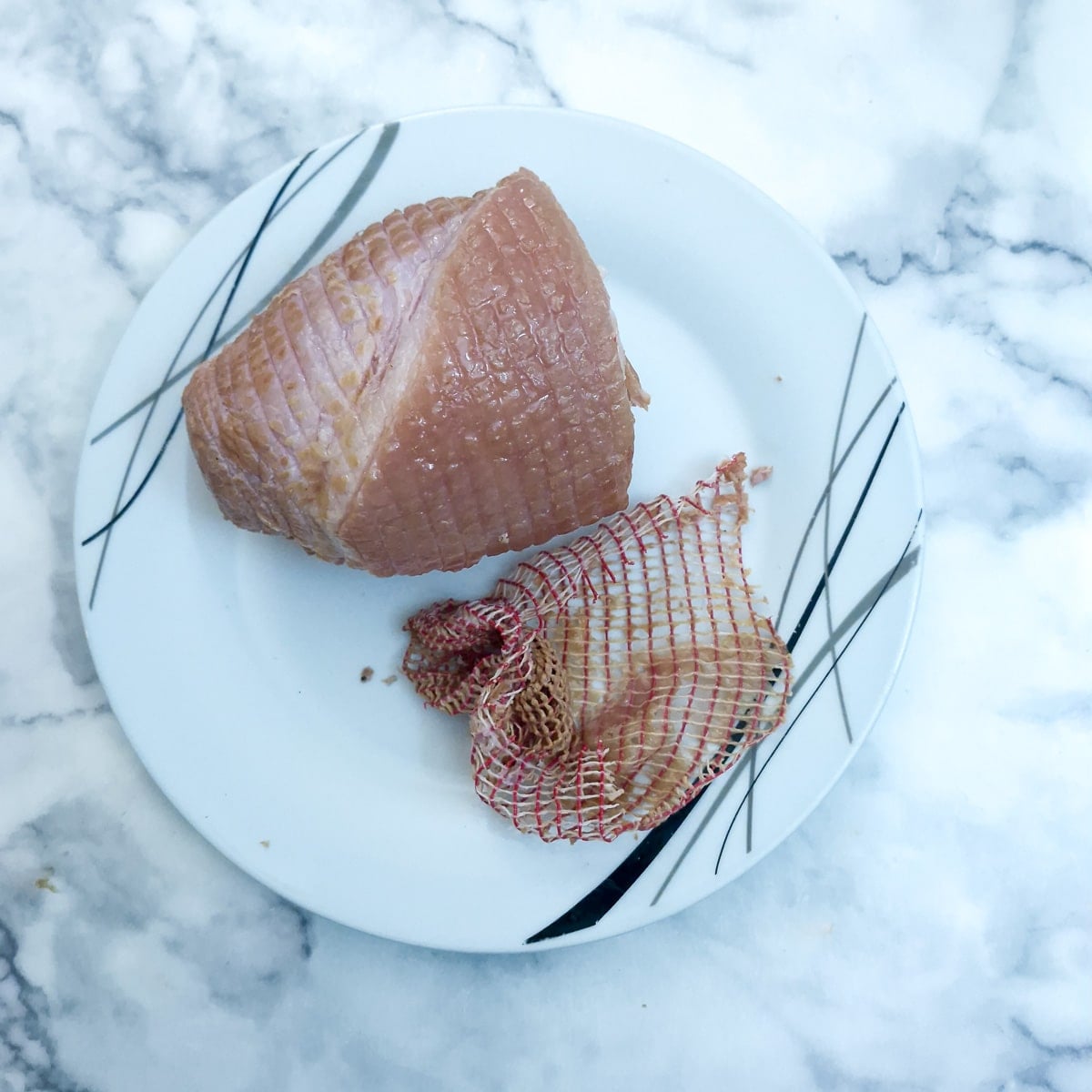
Allow the gammon to rest for 10 minutes in the cooking liquid, then remove it to a plate. Use a pair of scissors to remove the mesh net, then use a sharp knife to remove any skin. The skin will be very soft and will come away easily.
At this point, the gammon will be ready to eat, and you can slice it and serve. If you want to glaze it before serving, see the next section.
How to glaze a gammon (optional)
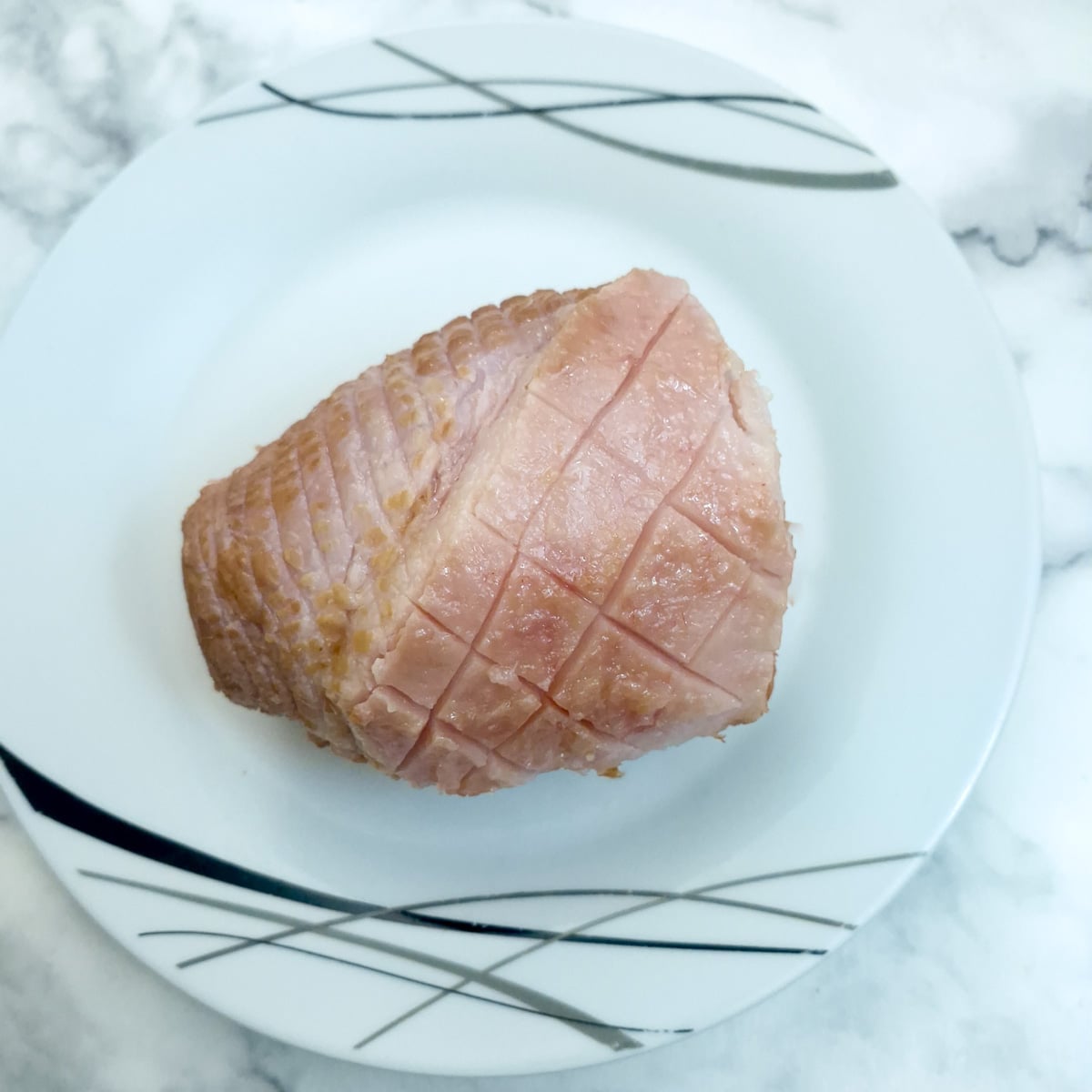
Use a sharp knife to score the fat in a diamond pattern. Try not to cut into the meat.
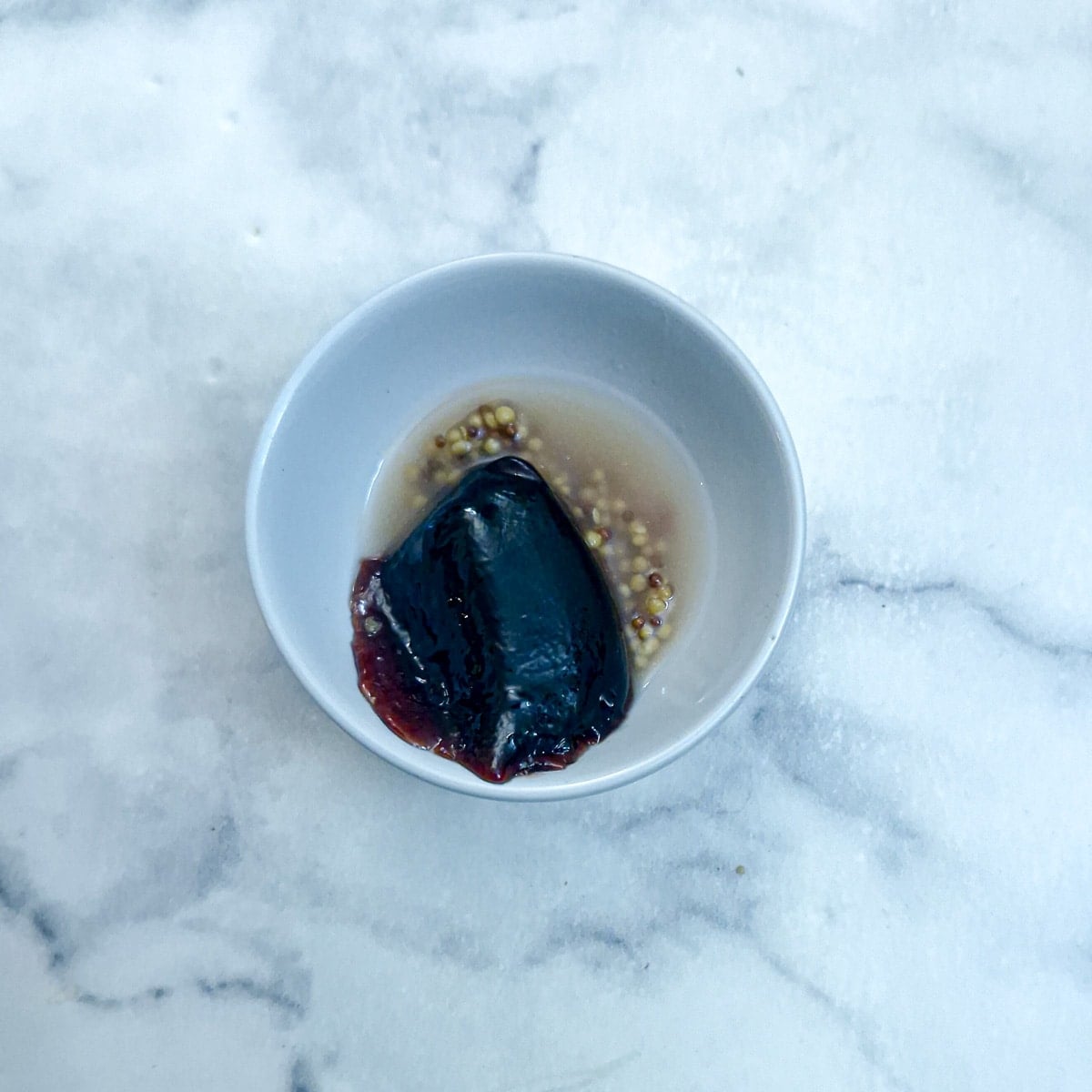
Combine a tablespoon of redcurrant jelly with a teaspoon of whole-grain or Dijon mustard and 1 tablespoon of the liquid in which you cooked the gammon.
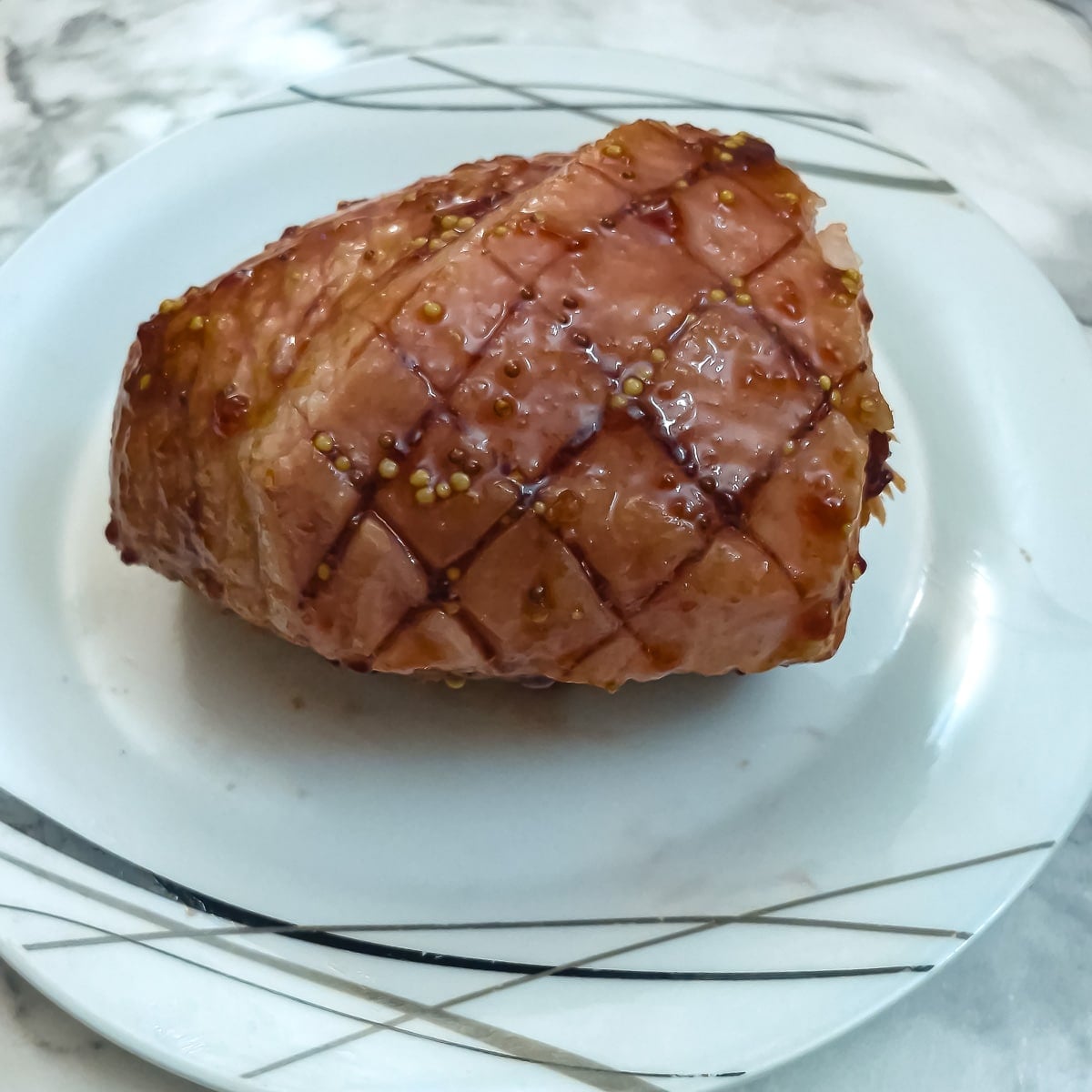
Using a pastry brush, brush the redcurrant glaze liberally over the gammon.
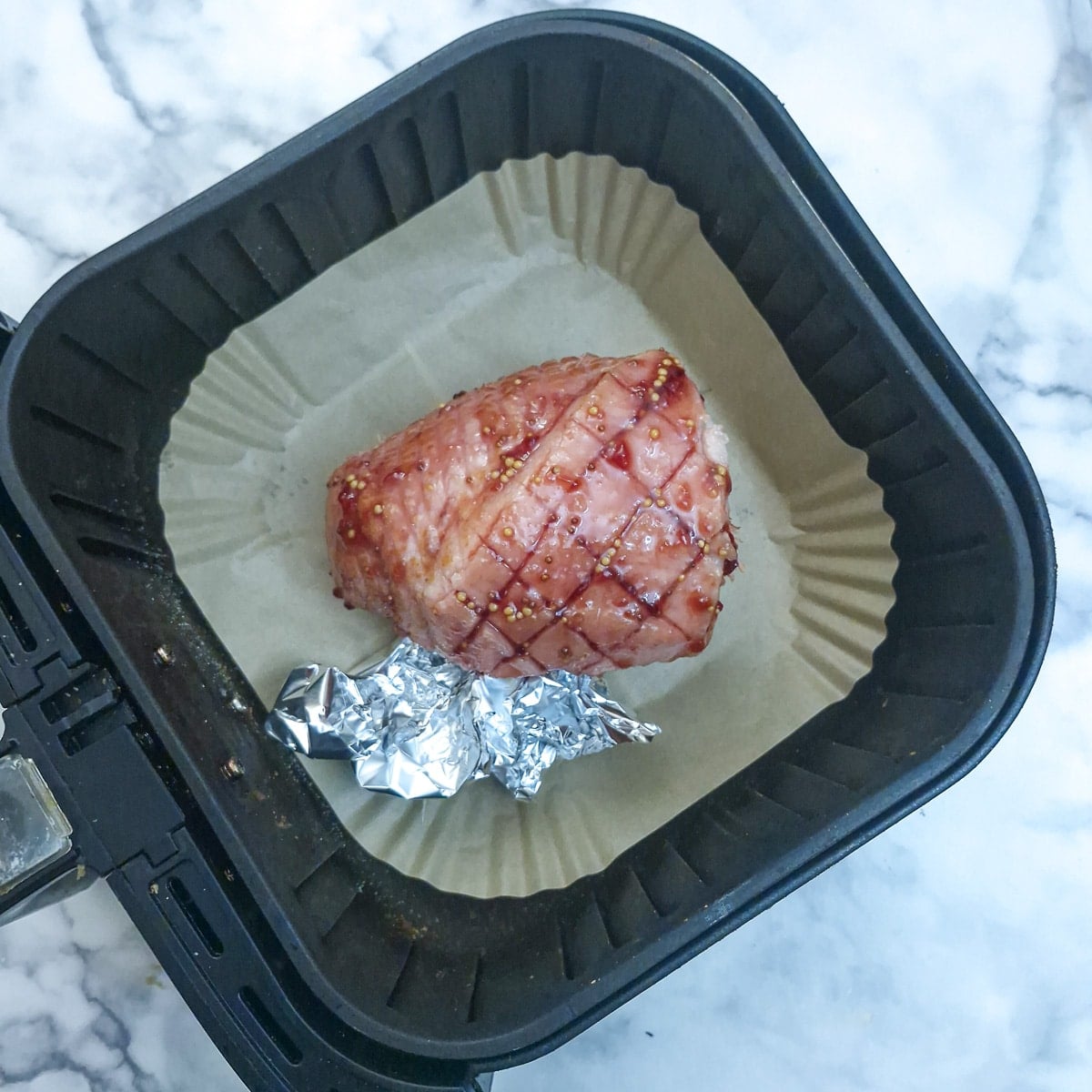
Transfer the glazed gammon to your air fryer basket. I used a liner to catch drips, and scrunched up a piece of foil to help keep the fat at the top.
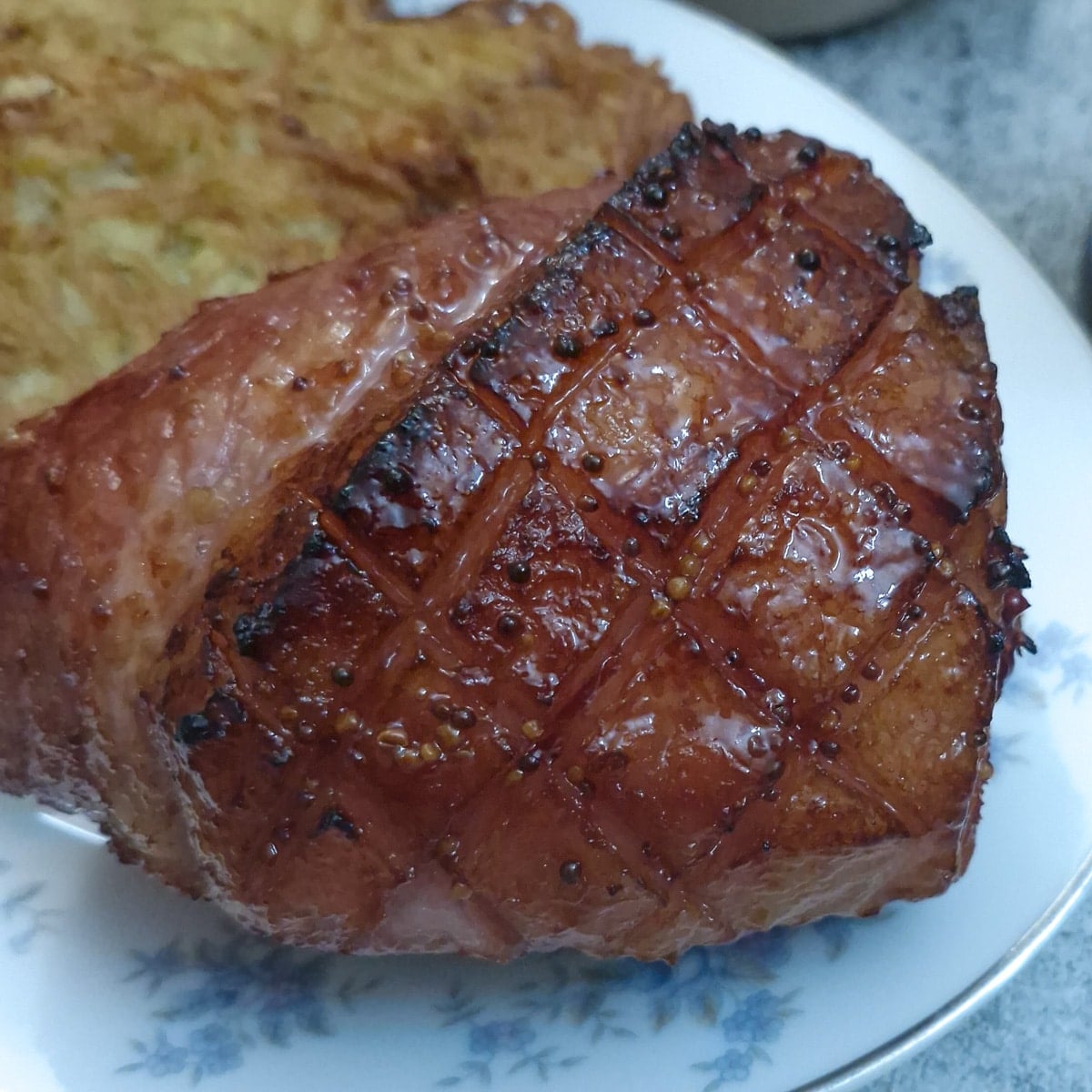
Cook the gammon at 180C / 356F for 5 minutes. You want the glaze to brown and caramelise slightly, so you could cook it for a further minute or two at the same temperature if it isn't quite caramelised enough. Take care not to let it burn.
Don't forget the cider gravy!
One of the best things about this recipe is the delicious gravy you get from the cooking liquid. As the gammon simmers, the cider absorbs all the lovely flavours from the meat, apple and vegetables. Simply strain the liquid and thicken it with a little cornflour mixed with cold water. There's no need to add stock or extra flavourings, and the result is a rich, savoury gravy that's every bit as delicious as the gammon itself.
Foodle Club top tips
Follow these handy tips to ensure your apple cider gammon always turns out perfectly:
- Choose the right gammon. Both smoked and unsmoked gammon work well in this recipe. I've tested both, but I prefer unsmoked because it allows the flavour of the cider to come through more clearly. If you intend to glaze the gammon, choose a joint with a good covering of skin and fat. The skin will be removed after cooking, leaving the fat to be scored and glazed.
- Use the right amount of cider. The cider doesn't need to cover the gammon completely. As long as it comes roughly halfway up the meat, you can keep the lid on the saucepan and turn the joint halfway through cooking. There's no need to add extra liquid.
- Keep the heat low. Once the cider comes to a boil, reduce the heat to a gentle simmer. Avoid boiling the gammon vigorously, as this can make the meat tougher and cause too much liquid to evaporate.
- Check the cooking time. Allow approximately 25 minutes per pound (450 g), plus an additional 20 minutes, counting from when the cider starts to simmer. The exact time will depend on the size and shape of your joint. For best results, use a meat thermometer to check that the centre has reached 74°C / 165°F. If you don't have a thermometer, follow the recommended cooking times, allowing a little longer for a particularly thick joint. A skewer should slide easily into the meat when it's tender, although this isn't a reliable test of its internal temperature.
- Don't add salt too soon. Gammon is cured in brine, and the amount of salt can vary between joints. I don't recommend adding salt to the cider during cooking. Taste the finished gravy first and only add salt if necessary.
- Concentrate the cider if necessary. If you have too much cooking liquid or the flavour seems a little weak, remove the cooked gammon and simmer the cider uncovered for a few minutes before thickening it into gravy. Taste as you go, because reducing the liquid also concentrates the saltiness.
- Make the gravy from the cooking liquid. Strain the cider to remove the vegetables and other solids, then thicken it with a little cornflour mixed with cold water. There's no need to add stock or extra flavourings because the cider has already absorbed the flavours of the gammon, apple and vegetables.
- Glazing is optional. The gammon is delicious served straight from the saucepan with cider gravy. For a special occasion, remove the skin, score the remaining fat and brush with the redcurrant and wholegrain mustard glaze before finishing in the air fryer or oven.
- Let the gammon rest. Allow the cooked gammon to rest for about 10 minutes before carving. This makes it easier to cut into neat slices. It's perfectly fine to leave it to stand in the cooking liquid for those 10 minutes.
What to serve with apple cider gammon
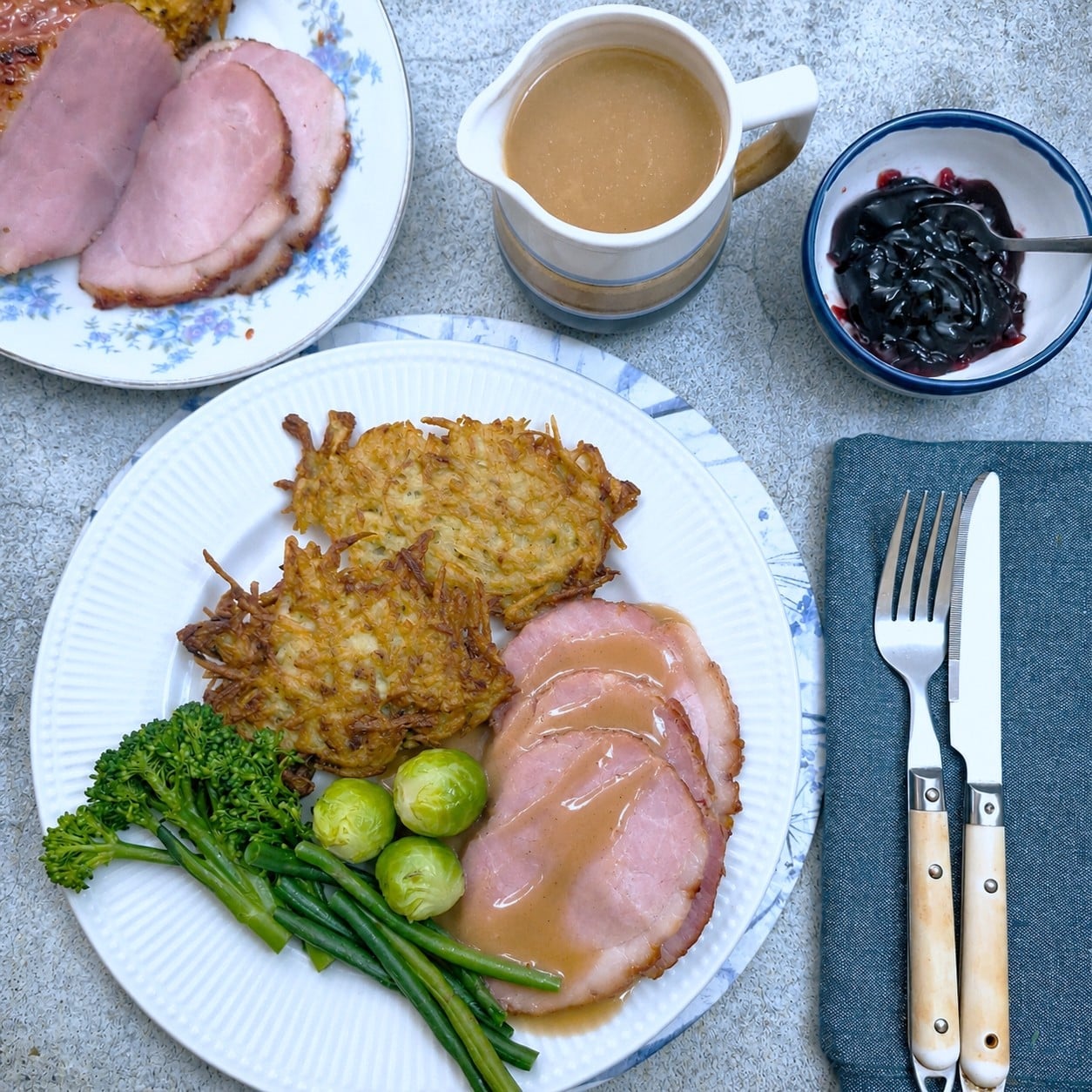
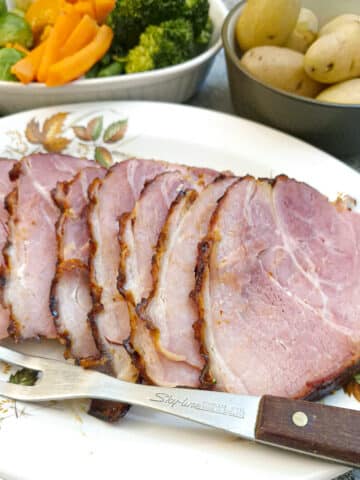
- For a traditional Sunday lunch, serve the gammon with crispy roast potatoes, your favourite vegetables and plenty of cider gravy.
- I didn't feel like making mash or roast potatoes, so I served the gammon with crispy homemade hash browns, which were delicious and went really well with the pork.
- For an easy midweek meal, you can't beat a plate of good old-fashioned gammon, egg and chips, with baked beans or garden peas on the side, and perhaps topped with a pineapple ring.
- It's also lovely with creamy mashed potatoes and gravy.
Equipment tips
- Choose the right saucepan. Use a heavy-based saucepan that's large enough to hold the gammon comfortably, but not so large that you need extra cider to cover the bottom. A snug fit helps keep the amount of cooking liquid to a minimum.
- Make sure you have a well-fitting lid. This helps retain moisture and prevents too much cider from evaporating while the gammon simmers.
- Use kitchen tongs or a cooking fork. A sturdy pair of tongs or a large cooking fork makes it easier to turn the gammon halfway through cooking and lift it out of the hot cider without splashing.
- Use a meat thermometer. Insert the probe into the thickest part of the joint, avoiding any fat, to check that the gammon is cooked through.
- Have a fine-mesh sieve handy. Use it to strain the cooking liquid before making the gravy, removing the vegetables and any small bits of meat.
- Choose a suitable dish for glazing. If finishing the gammon in the oven, use a small roasting dish or baking tray with raised sides to catch any glaze that runs off. For an air fryer, make sure the joint fits comfortably in the basket without touching the heating element. I used an air fryer liner to catch any drips from the glaze and make cleaning up easier. Make sure the liner is suitable for your air fryer and is securely weighed down by the food.
Storage and reheating
- In the fridge - Allow the gammon to cool, then refrigerate within two hours. It will keep for up to 3 days. Leftover gammon is delicious served cold in sandwiches, salads or with pickles. Keep a jar of gravy in the fridge too in case you want to heat up the leftover gammon.
- In the freezer - I've found that sliced ham can develop an unpleasant texture after freezing, so I prefer to dice any leftovers and freeze them in portions for up to 3 months. Defrost overnight in the fridge and use in cooked dishes such as macaroni cheese, ham and mushroom tagliatelle or crustless ham and sweetcorn tart.
- Reheating - Place the gammon in a covered dish with a splash of the reserved cider gravy to prevent it from drying out. Reheat until piping hot throughout, and only reheat once.
Apple cider ham FAQ
Yes! Once the gammon has finished simmering, remove the skin, leaving a layer of fat underneath. Score the fat and brush with the redcurrant and mustard glaze. Place in a preheated oven at 200°C / 180°C fan / 400°F for approximately 10-15 minutes, or until the glaze is glossy and lightly caramelised.
Yes. Dijon mustard is a good alternative and will give you a smoother glaze with a slightly sharper flavour. You could also use English mustard, but it's much stronger, so I'd suggest starting with half the quantity and adjusting to taste.
Yes! You can cook the gammon the day before, with or without the glaze, then allow it to cool and refrigerate within two hours. It's delicious served cold, or you can slice it and reheat it gently in a little of the reserved cider cooking liquid, either in a covered saucepan or in the microwave. Heat until piping hot throughout and only reheat once.
Yes. You could use a dry alcohol-free apple cider instead. Alternatively, try replacing the cider with equal quantities of unsweetened apple juice and water, plus a little cider vinegar to balance the sweetness. The flavour will be slightly different, but it should still work well. I haven't tested this variation myself.
Not at all! The gammon is delicious served straight from the saucepan with the cider gravy. The redcurrant and mustard glaze is completely optional and adds a lovely sweet-sharp flavour and glossy finish if you're making the gammon for a special occasion.
Gammon is simply a pork joint that has been cured in brine. It can be either smoked or unsmoked. Ham, on the other hand, is what we call gammon that has been cooked.
Save for later
If you would like to make this apple cider gammon, why not save the recipe to one of your Pinterest boards so you can find it easily? Just click the image below.
Alternatively, you can save the recipe by clicking on the floating heart icon on the right-hand side of the screen.
Related recipes
Visit my pork recipes page for other tasty recipes. Here are a few you might enjoy:




The recipe
Apple cider gammon with homemade cider gravy
(Click the stars to rate this recipe)
Equipment
- Saucepan with a lid large enough to hold the gammon comfortably
- kitchen tongs to turn the gammon
- Meat thermometer
- Mesh sieve
- Baking dish for glazing the gammon
- Pastry brush for applying the glaze
- Stick blender optional - to blend the gravy with the vegetables.
Ask a Question
If you have a question about this recipe that has not been answered, please use the box below to ask it.
Use this with care. This is an AI-generated result and may contain errors or inaccuracies. I cannot be held responsible for the information returned.
Ingredients
- 1¾ pounds / 790 grams boneless gammon joint
- 1 can apple cider (US: hard cider) (440 ml /14.9 fluid ounces)
- 1 medium carrot scrubbed
- 1 medium onion peeled and quartered
- 1 rib celery washed
- 1 small apple quartered
- 12 whole black peppercorns
- 1 tablespoon cornflour (US: cornstarch) for thickening the gravy (if needed)
Redcurrant glaze (optional)
- 1 tablespoon redcurrant jelly
- 1 teaspoon whole-grain or Dijon mustard
- 1 tablespoon cooking liquid from the gammon. to thin the glaze to a brushable consistency
Instructions
Gammon
- Remove all packaging from the gammon, leaving any cooking-safe netting in place to help the joint retain its shape.1¾ pounds / 790 grams boneless gammon joint
- Place the gammon, carrot, onion and apple, celery and peppercorns into a large saucepan and pour in the cider.1 can apple cider (US: hard cider), 1 medium carrot, 1 medium onion, 1 rib celery, 1 small apple, 12 whole black peppercorns
- Bring the pan to a boil, then turn the heat down to a simmer. Cover and cook for 40 minutes, then turn the gammon over and continue to simmer for the remaining 25 minutes.
- The gammon will be cooked when a digital thermometer registers 74°C / 165°F when inserted into the thickest part of the meat. If you don't have a thermometer, use a skewer or a sharp knife to test; it should slip into the meat with no resistance, and the juices should run clear.
- If you find the meat hasn't cooked sufficiently, leave it to simmer for a few minutes longer.
- Allow the gammon to rest for 10 minutes in the cooking liquid, then remove it to a plate. Use a pair of scissors to remove the mesh net, then slide a sharp knife between the skin and the fat, leaving as much fat as possible on the gammon. The skin will be very soft and will come away easily.
- If you do not intend to glaze the gammon, skip to the Gravy section; otherwise, carry on with the Redcurrant glaze instructions below.
Redcurrant glaze
- Use a sharp knife to score the fat in a diamond pattern. Try not to cut into the meat.
- Combine a tablespoon of redcurrant jelly with half a teaspoon of whole-grain mustard and 1 tablespoon of the liquid in which you cooked the gammon.1 tablespoon redcurrant jelly, 1 teaspoon whole-grain or Dijon mustard, 1 tablespoon cooking liquid from the gammon.
- Using a pastry brush, brush the redcurrant glaze liberally over the gammon.
- Glaze in the air fryer. Transfer the glazed gammon to your air fryer basket. I used a liner to catch drips and scrunched up a piece of foil to help keep the fat at the top. Bake at 180C / 356F for 5 minutes. You want the glaze to brown and caramelise slightly, so you could cook it for a further minute or two at the same temperature if it isn't quite caramelised enough. Take care not to let it burn.
- Glaze in the oven. Alternatively, you can glaze the gammon in a preheated oven at 200°C / 180°C fan / 400°F for approximately 10-15 minutes, or until the glaze is glossy and lightly caramelised.
Gravy
- Strain the gravy through a sieve into a saucepan and place it on a moderate heat. You can either discard the vegetables or add them back to the gravy (without the peppercorns) and blend with a stick-blender.
- Combine the cornflour with 2 or 3 tablespoons of water and drizzle it slowly into the hot gravy, stirring continuously until the gravy starts to thicken. You may not need all the cornflour mixture - it depends on how much liquid you have.1 tablespoon cornflour (US: cornstarch)
Serving
- Serve slices of gammon hot with vegetable sides of your choice and plenty of delicious gravy.
Notes
- Choose the right gammon. Both smoked and unsmoked gammon work well in this recipe. I've tested both, but I prefer unsmoked because it allows the flavour of the cider to come through more clearly. If you intend to glaze the gammon, choose a joint with a good covering of skin and fat. The skin will be removed after cooking, leaving the fat to be scored and glazed.
- Use the right amount of cider. The cider doesn't need to cover the gammon completely. As long as it comes roughly halfway up the meat, you can keep the lid on the saucepan and turn the joint halfway through cooking. There's no need to add extra liquid.
- Keep the heat low. Once the cider comes to a boil, reduce the heat to a gentle simmer. Avoid boiling the gammon vigorously, as this can make the meat tougher and cause too much liquid to evaporate.
- Check the cooking time. Allow approximately 25 minutes per pound (450 g), plus an additional 20 minutes, counting from when the cider starts to simmer. The exact time will depend on the size and shape of your joint. For best results, use a meat thermometer to check that the centre has reached 74°C / 165°F. If you don't have a thermometer, follow the recommended cooking times, allowing a little longer for a particularly thick joint. A skewer should slide easily into the meat when it's tender, although this isn't a reliable test of its internal temperature.
- Don't add salt too soon. Gammon is cured in brine, and the amount of salt can vary between joints. I don't recommend adding salt to the cider during cooking. Taste the finished gravy first and only add salt if necessary.
- Concentrate the cider if necessary. If you have too much cooking liquid or the flavour seems a little weak, remove the cooked gammon and simmer the cider uncovered for a few minutes before thickening it into gravy. Taste as you go, because reducing the liquid also concentrates the saltiness.
- Make the gravy from the cooking liquid. Strain the cider to remove the vegetables and other solids, then thicken it with a little cornflour mixed with cold water. There's no need to add stock or extra flavourings because the cider has already absorbed the flavours of the gammon, apple and vegetables.
- Glazing is optional. The gammon is delicious served straight from the saucepan with cider gravy. For a special occasion, remove the skin, score the remaining fat and brush with the redcurrant and wholegrain mustard glaze before finishing in the air fryer or oven.
- Let the gammon rest. Allow the cooked gammon to rest for about 10 minutes before carving. This makes it easier to cut into neat slices. It's perfectly fine to leave it to stand in the cooking liquid for those 10 minutes.
Nutrition
I am not a nutritionist. The nutrition information has been calculated using an on-line calculator, and is intended for information and guidance purposes only. If the nutrition information is important to you, you should consider calculating it yourself, using your preferred tool.
If you made this recipe and enjoyed it, I'd love it if you could give me a star rating in the comments below. And if you'd like to get in touch, you can email me at veronica@foodleclub.com. I'd love to hear from you. And don't forget to subscribe to my mailing list so you can grab yourself a copy of my FREE COOKBOOK!
If you'd like to continue browsing, just click on this link to all my recipes.



Did you make this recipe? Let me know!