
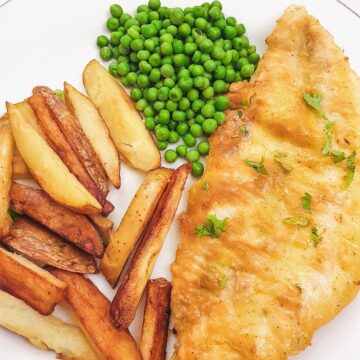
Succulent pan-fried fish fillets take a lot of beating when you are looking for a quick and easy family supper. These pan-fried fish fillets are coated in my special light batter, which is so much healthier than the usual beer batter normally used to coat fried fish. Once you've tried my easy way of frying fish, I'm sure you're going to love it. PS - it's gluten-free too!
This post may contain affiliate links. As an Amazon Associate I earn from qualifying purchases.
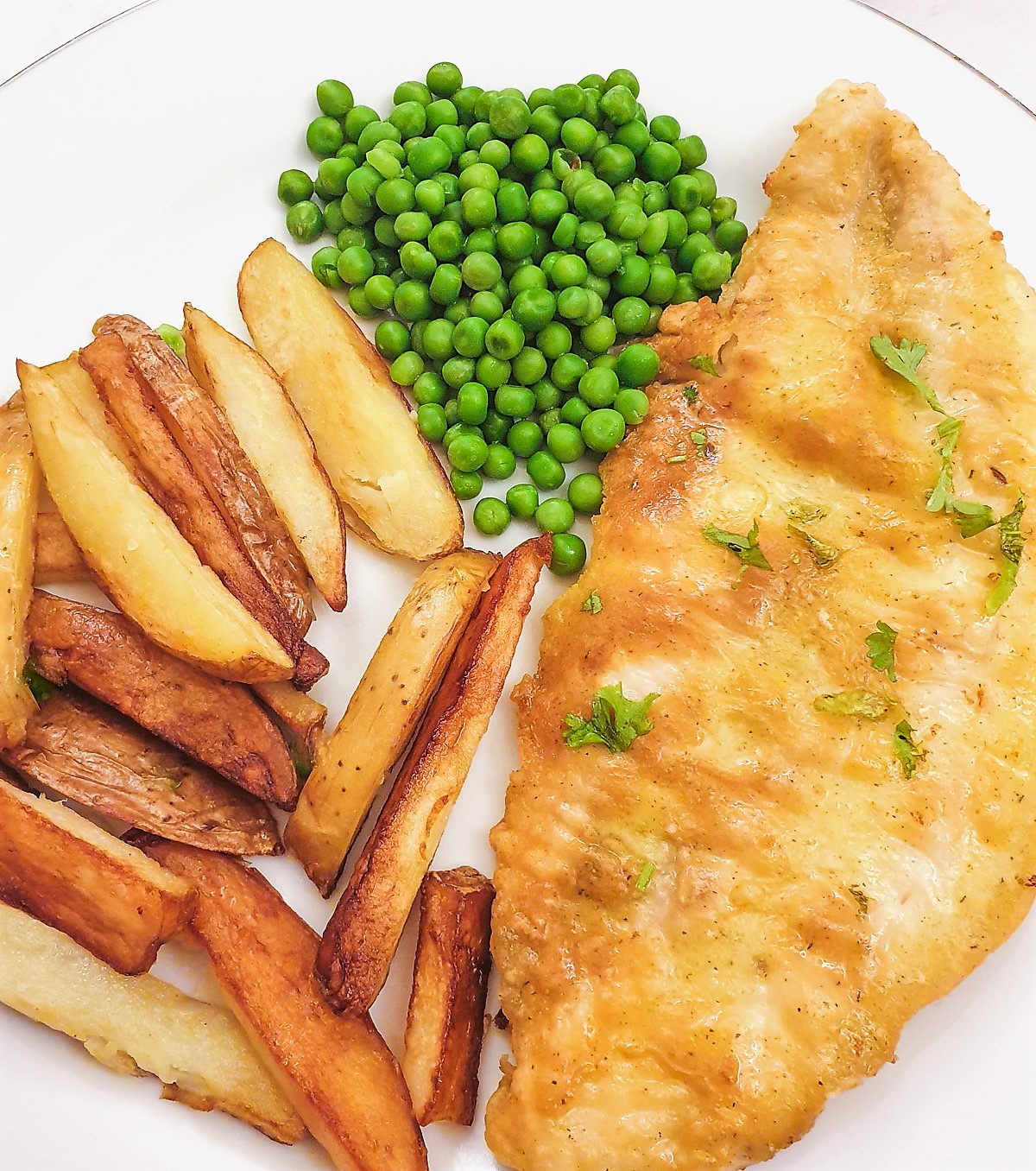
The batter is light and golden and packed with flavour, thanks to the addition of a spoonful of my favourite fish spice. It's Schwartz lemon and dill fish spice (<affiliate link) and you can find it in your supermarket if you live in the UK, otherwise, it's available on Amazon.
You might also like to try this tempura-battered cod with sumac which uses a similar batter, but with Middle Eastern spices.
Jump to:
The best fish batter
I have to admit it, I do love a plate of good old British fish and chips from the local chippie, but only very occasionally. I don't think that all the oil that gets absorbed into the batter can be very good for you.
So I've devised this recipe for pan-fried fish fillets in a light and crispy batter that I can enjoy any time I feel like it, but without the guilt trip.
The batter is made with eggs and cornflour - so it's extra light and crispy, and as a bonus, it happens to be gluten-free.
What's more, if you follow my tips a little further down the post, I'll show you how to get the batter to stick to the fish, and not to the pan.
Ingredients for lightly battered fish
**This is just an overview to explain why I used a particular ingredient. The complete list of ingredients and the exact measurements are on the printable recipe card at the end of this post.**
- Skinless fish fillets. This recipe is intended to be made with firm white fish. You can use basa, cod, haddock, Alaskan pollock, or indeed any firm white fish.
- A typical serving of fish is between 3 and 4 ounces per person (or 85 to 110 grams), so take this into account when deciding how much fish you need to cook.
For the batter
This batter will coat sufficient fish for 4 people. You can double up on the ingredients if you are cooking for more.
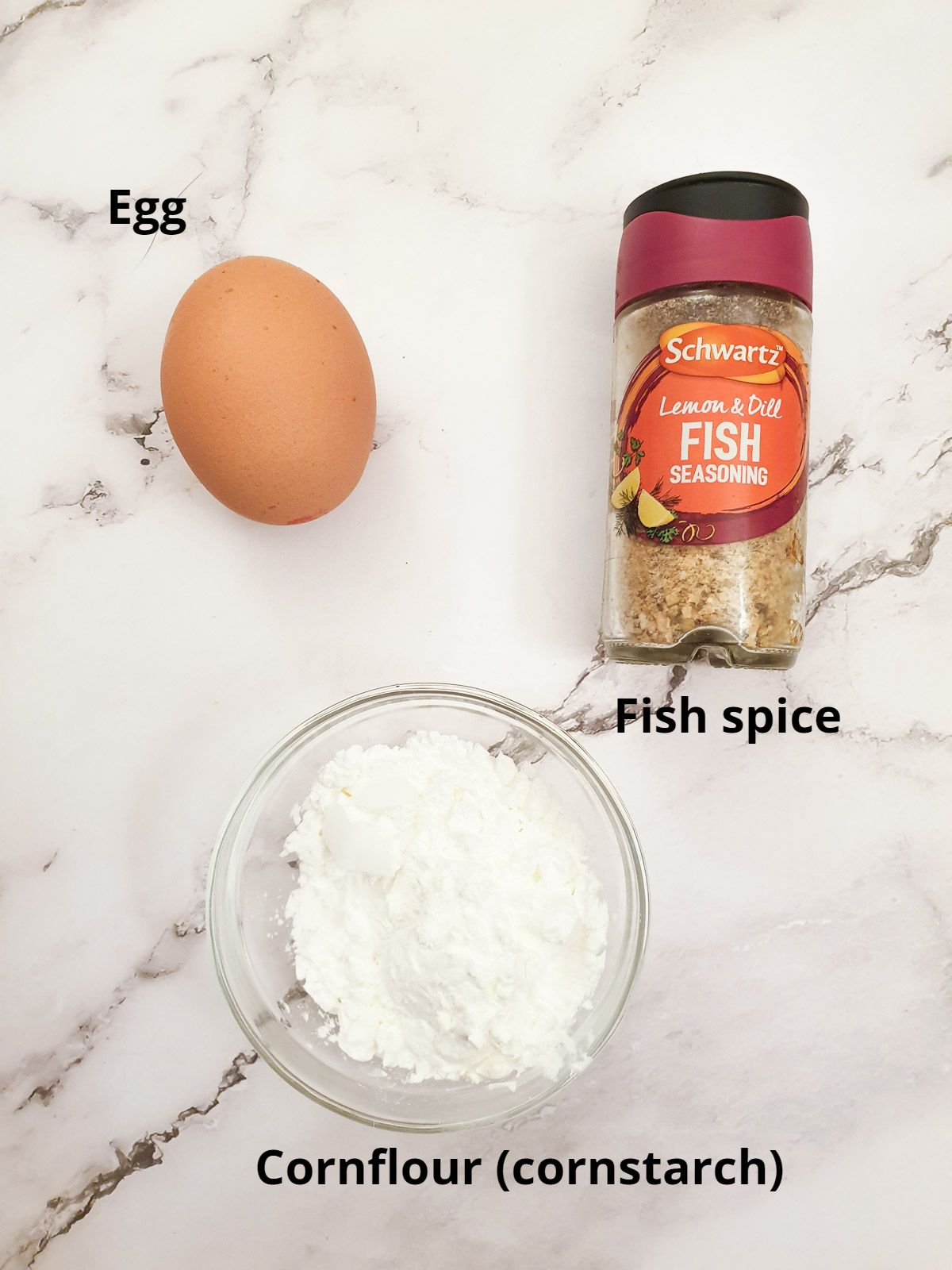
- Egg. I used a (UK-sized) large egg, which weighs between 63g and 73g (or 2.2 to 2.5 ounces). For some reason, a large egg in the UK weighs more than a large egg in other countries. If you live in the US, Australia or South Africa, I would advise you to use an extra large egg for this recipe.
- Fish spice. I love this lemon and dill fish spice from Schwartz, but you can use your favourite fish spice. I also like to add a small amount of salt to the batter, but this is optional and to your own taste.
- Cornflour. This is white cornflour (you may know it as cornstarch - Argo in the US or Maizena in SA). You will need roughly the same weight of cornflour as that of the egg. This is where a set of kitchen scales would come in handy!
How to make the batter
After receiving comments about the batter being too thick, I've created this sequence of process shots to help you achieve the correct consistency. I've left the original ingredient measurements in the recipe card (because they work for me and some of my readers), but you may not need all the cornflour, depending on the size of the egg you use. I hope this helps.
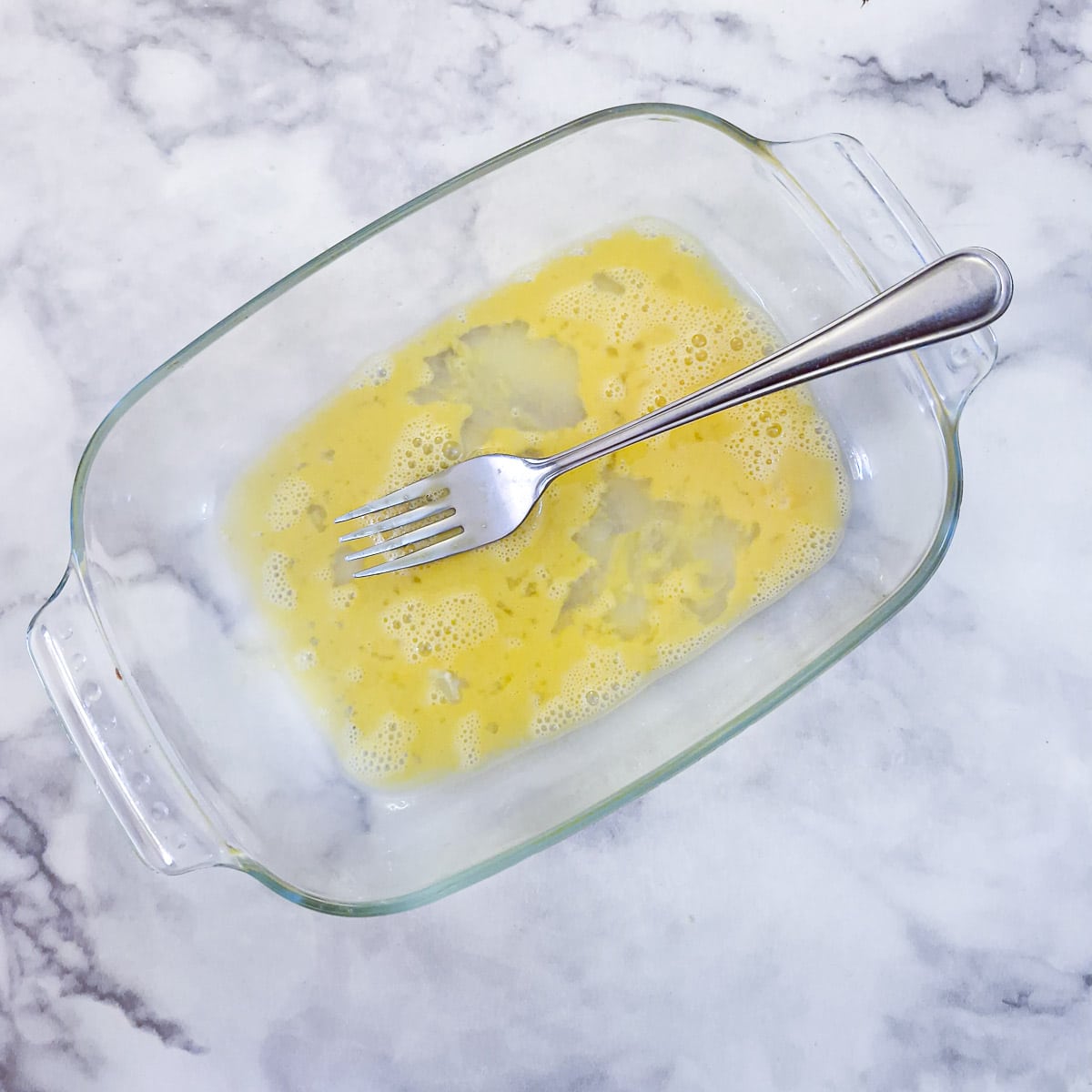
Step 1: Beat the egg in a shallow bowl.
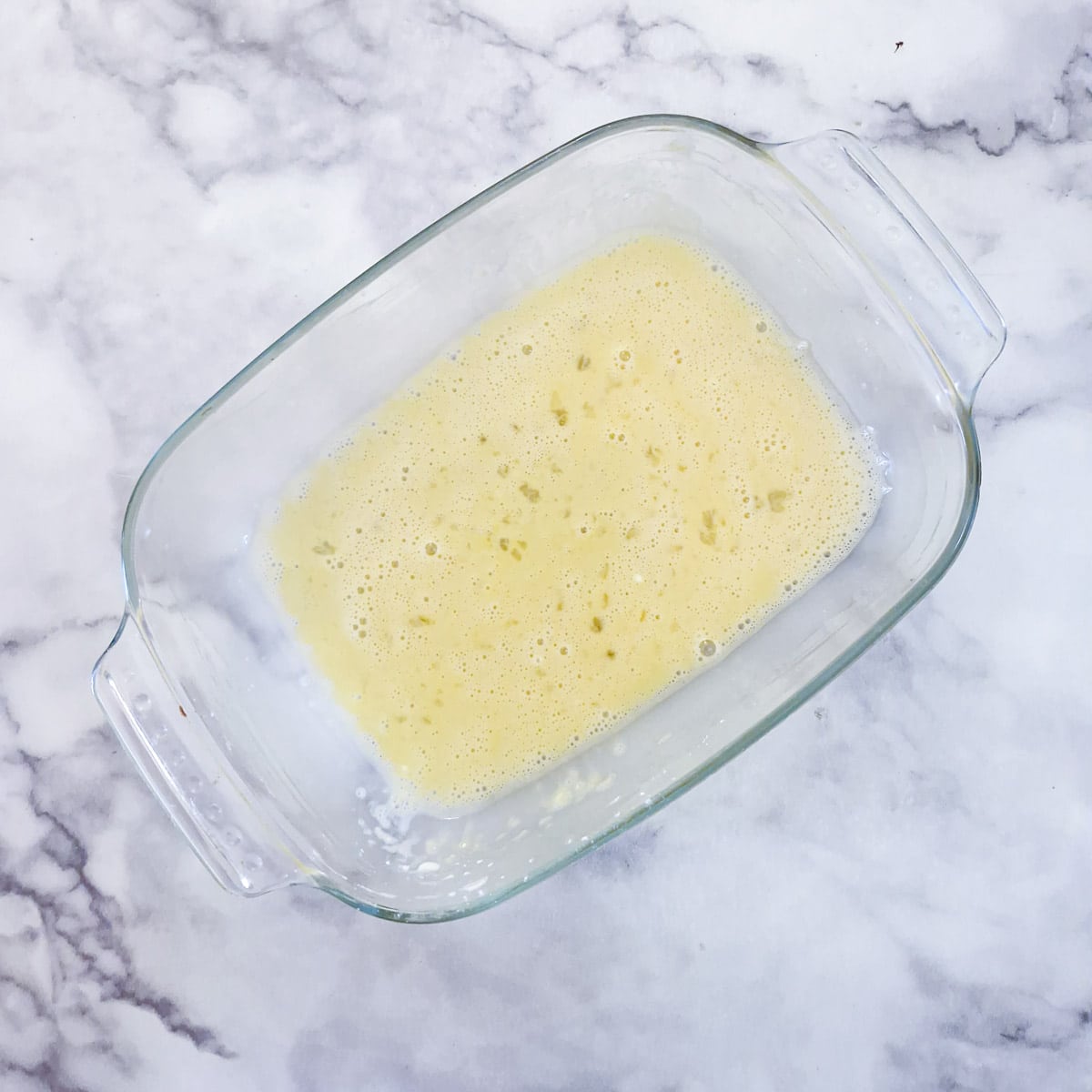
Step 2: Add half of the cornflour and use a fork or a balloon whisk to mix it into the egg until there are no lumps.
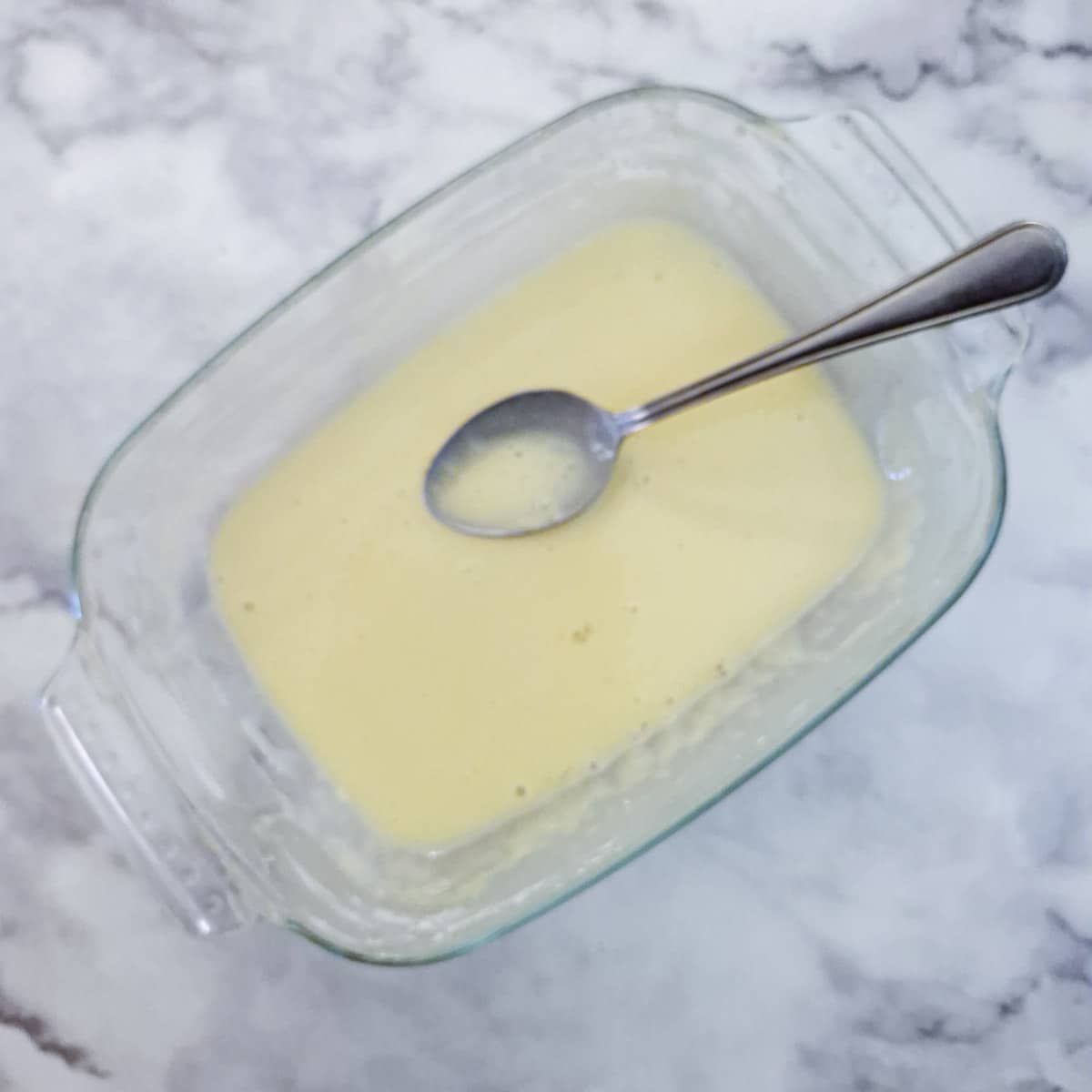
Step 3: Gradually whisk in as much of the remaining cornflour as needed to make a thin pouring batter.
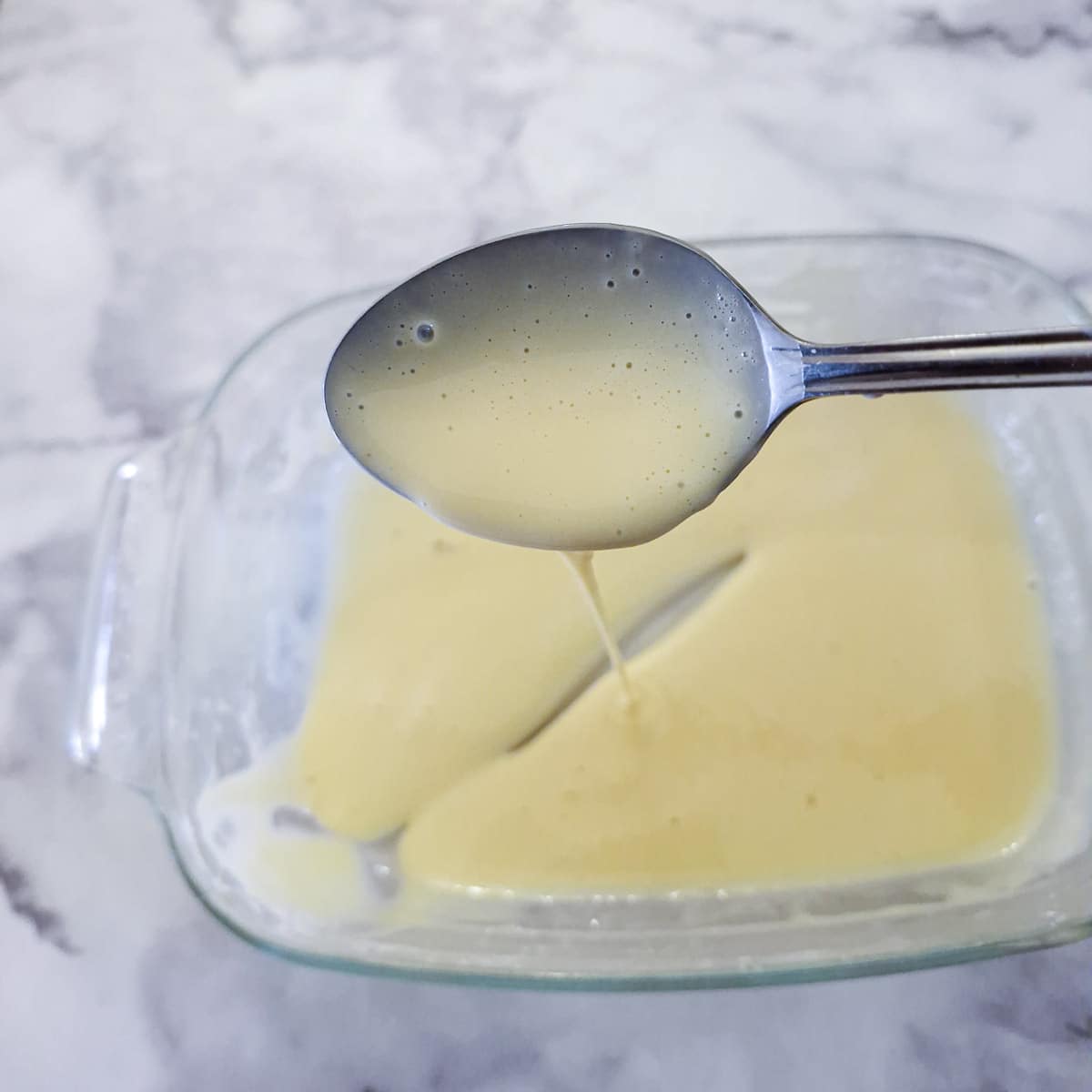
Step 4: This is the consistency you are looking for. The batter should cling to the spoon, and pour off slowly in a thin stream.
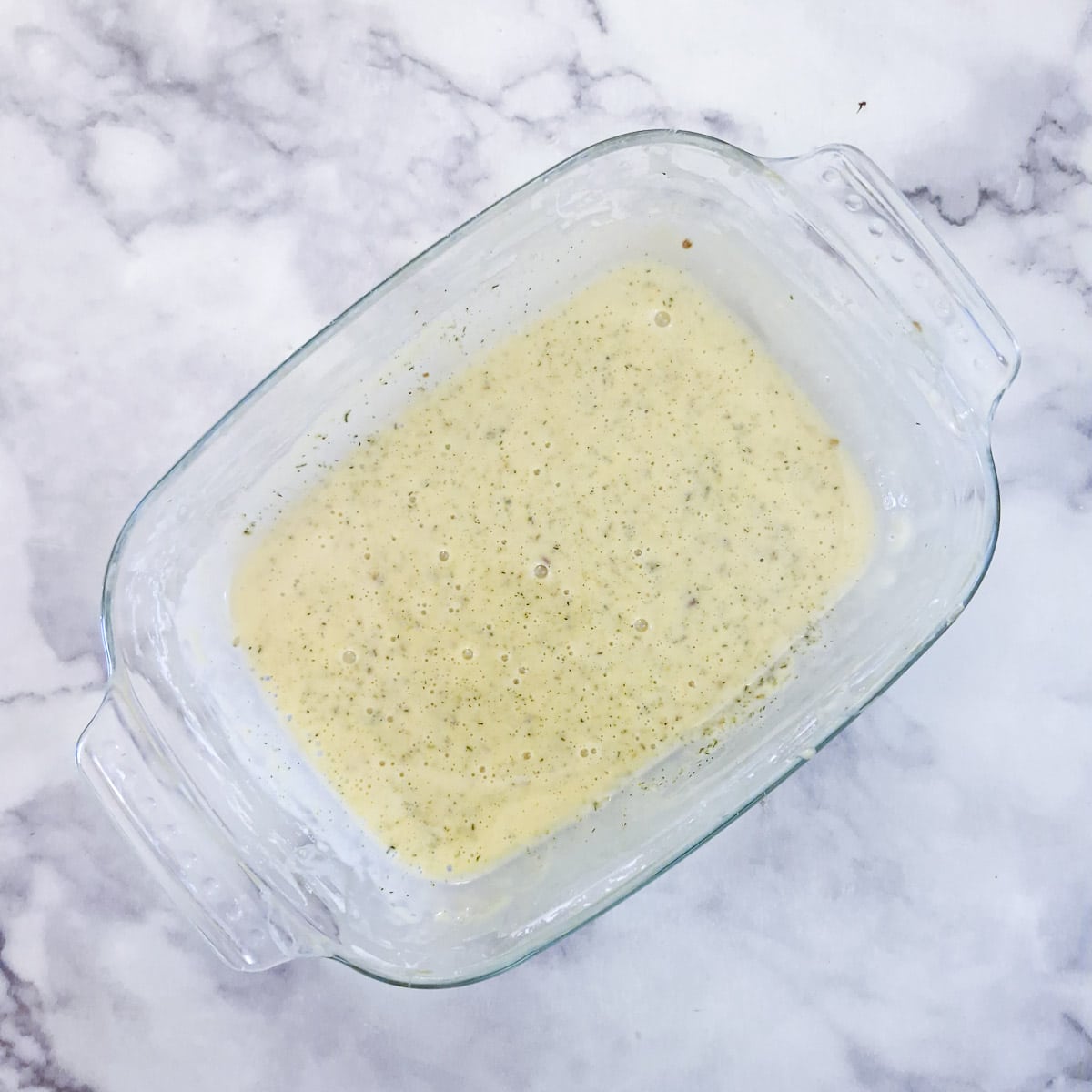
Step 5: Once the correct consistency has been achieved, stir in the salt and the spices.
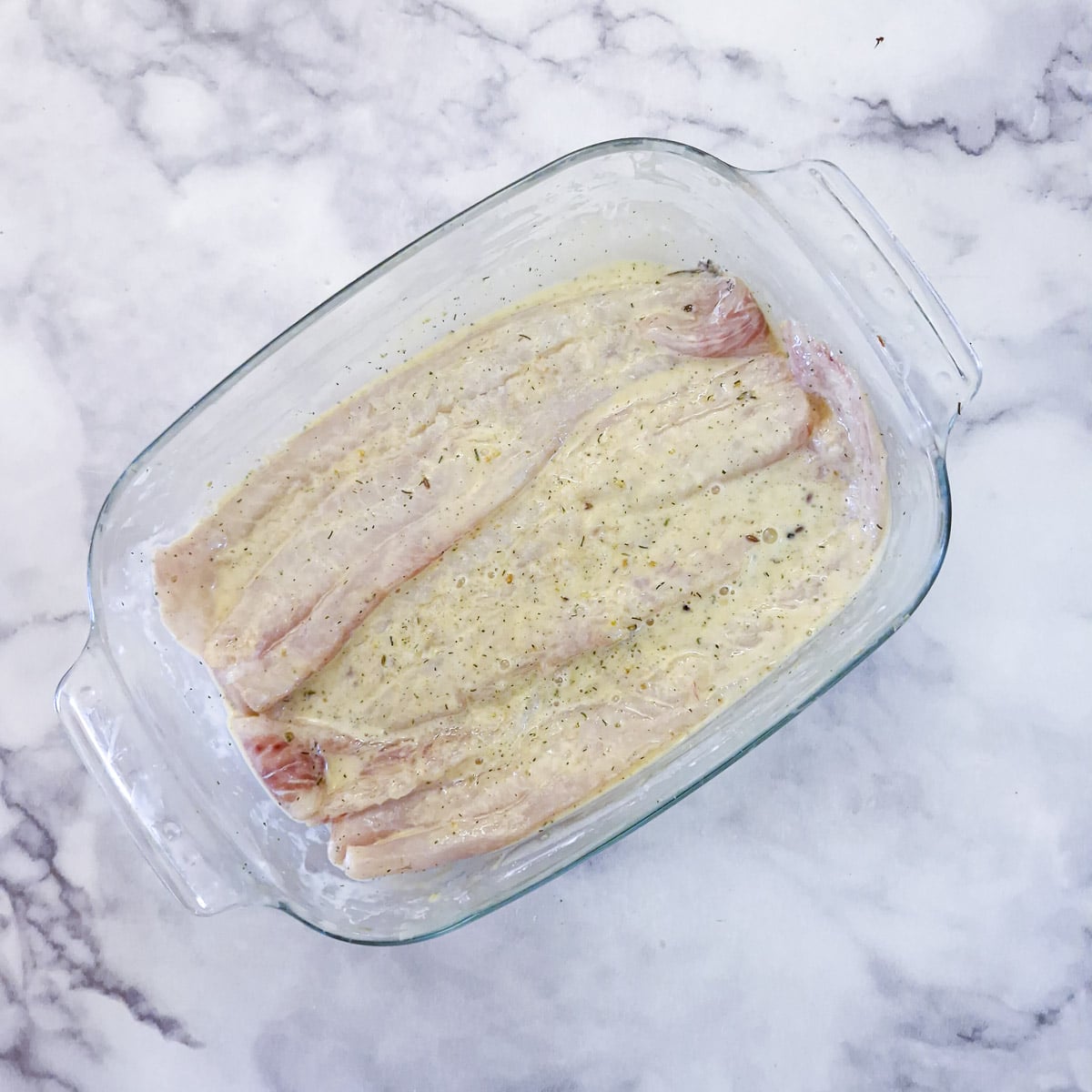
Step 6: Submerge the fish fillets in the batter. Do this either all at once or one at a time. Either way, let the excess batter drain away before transferring the fish to the pan.
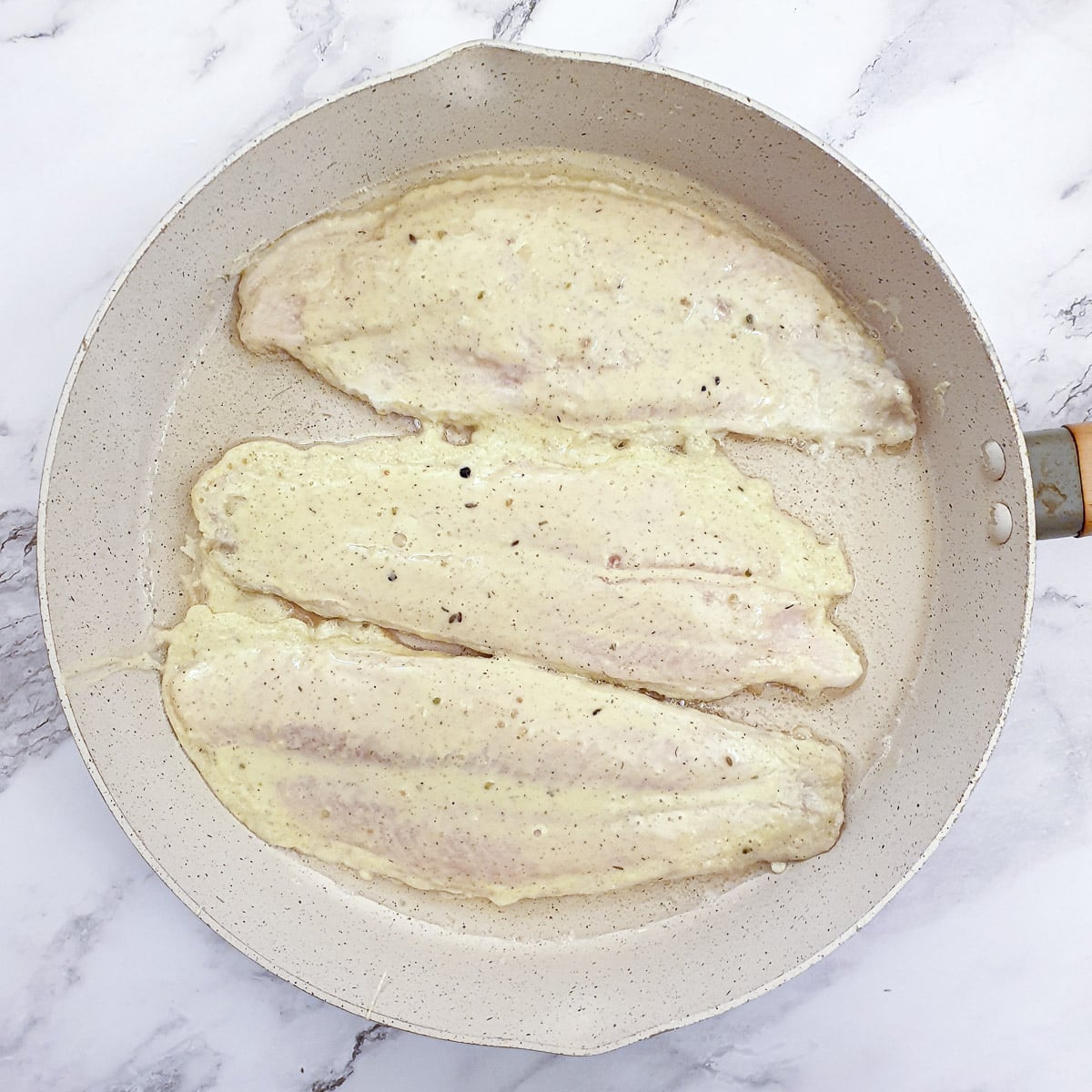
Step 7: Heat the oil over moderate heat until it sizzles when a few drops of batter are dropped in. Add the fish and cook for about 3 before turning carefully with a spatula.
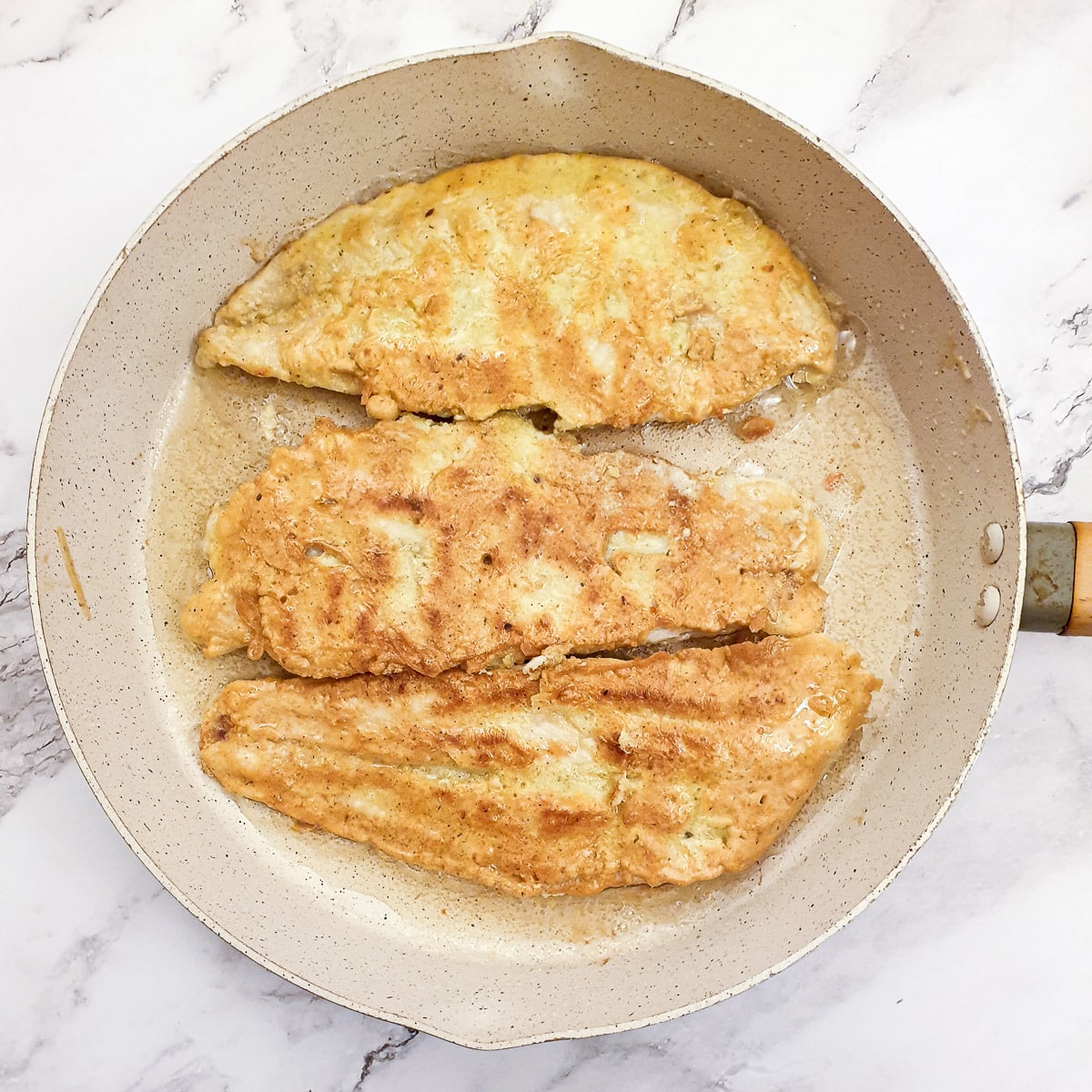
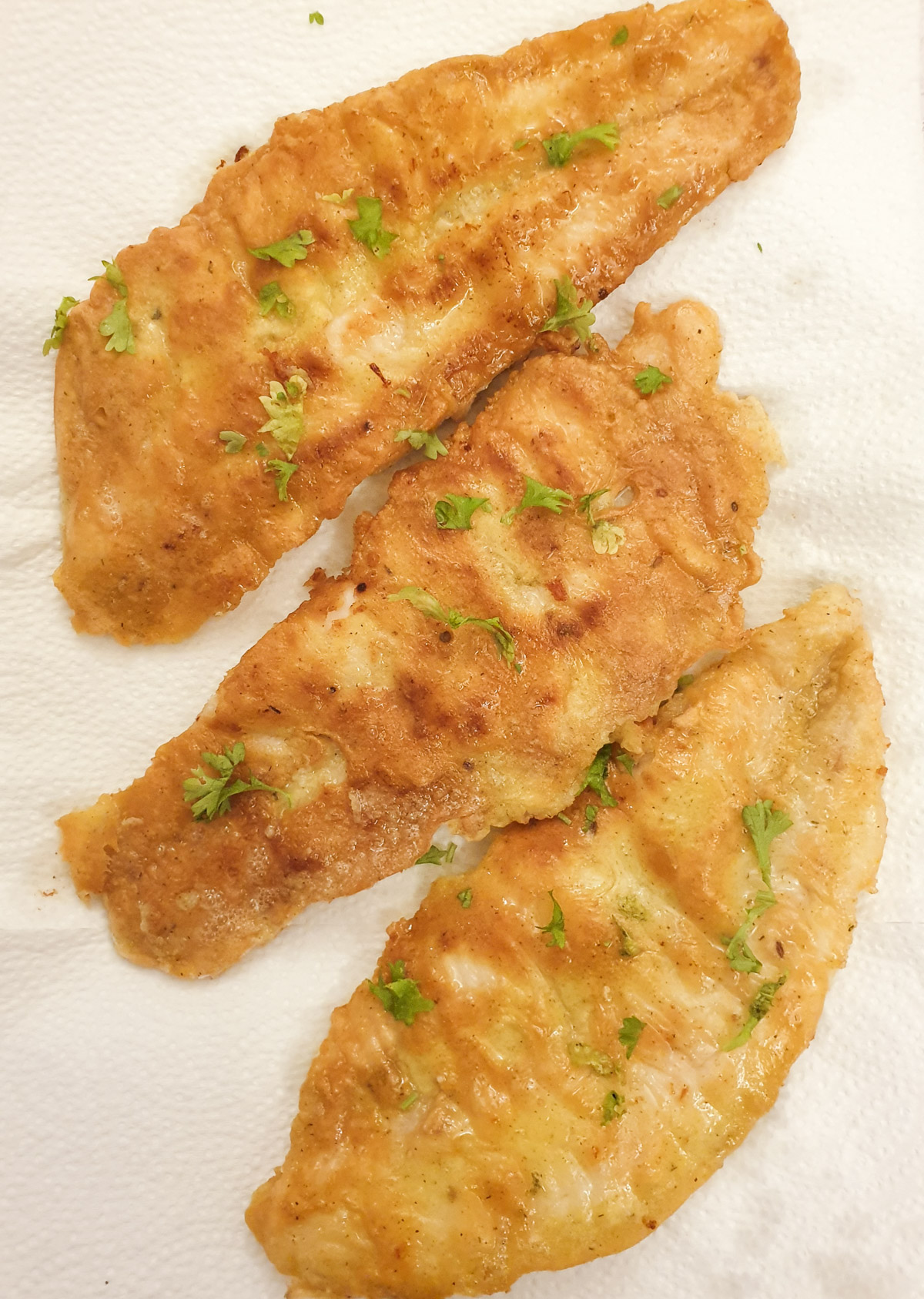
Step 8: Cook the other side for another 3 minutes, or until the fish is golden brown. Transfer to a sheet of paper towel to absorb any excess oil, then garnish with fresh chopped parsley and serve immediately.
Tips for frying fish
- Use a frying pan with a heavy base. This distributes the heat evenly without creating any hot spots and will allow the fish to brown evenly.
- The fish should be completely dry before you coat it in batter. I like to place my fish fillets between a double layer of paper towel and then press them gently to absorb any excess moisture.
- The oil should be hot before you add the fish. If you add the fish to cold oil, the oil will just get absorbed into the batter, resulting in greasy fish. Heat the oil in the pan until the oil is just shimmering, then test it by dropping a teaspoonful of batter into the oil. It should start to turn brown in 40 seconds. (You can do the same test with a small cube of bread).
- You should hear a gentle sizzle when you add the fish. If it doesn't sizzle, then the pan is not hot enough, and you should let it heat a few seconds longer.
- The fish should be at room temperature. If you fry fish directly from the refrigerator, it will cool the temperature of the oil, and the oil will get absorbed into the batter.
- Don't turn the fish too early. Allow the fish to brown before turning. Give it a gentle nudge - if it moves on the pan, it is ready to turn. If it sticks, give it a few seconds longer.
- Use a flat spatula olr fish slice to turn the fish. You need to support the fish as you turn it. Trying to turn the fish with a fork or a pair of tongs is an invitation for the fish to break up.
- Use fillets of fish of an even thickness. This ensures the fish will cook evenly. Cod especially is much thicker around the loin area than the tail. Rather cut the fillets in half before frying as the thicker loin pieces will need a slightly longer cooking time than the thinner tail pieces. As a rule of thumb, you will need to fry the fish for between 3 and 4 minutes per side.
- Don't overcrowd the pan. Leave enough room around the fish fillets so that you can turn them easily. I normally fry fish in two batches and keep the first batch warm in the oven (100C / 212F) in a dish lined with kitchen paper towels. (Keep the kitchen towel away from the heating element or bring the oven up to temperature and then switch it off before putting the dish in the oven).
Egg sizes in different countries
This handy table compares the different sizes of eggs (in grams) in the UK, US, Australia and South Africa.
| Size | United Kingdon | United States | Australia | South Africa |
|---|---|---|---|---|
| Small | 42-53g | 42.5-49.5g | 33-41.6g | 33-42.9g |
| Medium | 53-63g | 49.6-56.7g | 41.7-49.9g | 43-50.9 |
| Large | 63-73g | 56.863.7gg | 50-58.2g | 51-58.9g |
| Extra large | 73g+ | 63.8g+ | 58.3g+ | 59g+ |
Serving suggestions
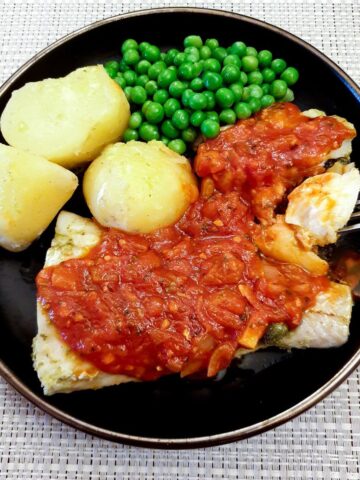
It goes without saying that in the UK, fish is normally served with chips and either garden peas or mushy peas.
However, that said, there are lots of ways to serve a perfectly fried piece of fish. Here are some of my suggestions:
- Place the fish on top of a bed of spicy mushroom fried rice and serve with a fresh green salad.
- Serve with potatoes romanoff, alongside a helping of peas.
- Instead of chips, why not try serving this pan-fried fish with either German fried potatoes or crispy smashed potatoes with rosemary
- Make it a lighter meal by serving the fish with creamy coleslaw salad.
- And of course, you could make a delicious fish burger by sandwiching the fish in a Portuguese roll and topping with sliced gherkins and a spoonful of homemade mayonnaise.
FAQ
Yes. Just make sure the fish is completely thawed before using and patted dry with paper towel before coating it in the batter. Any excess moisture in the batter will thin the batter down so it doesn't coat the fish properly, and also cause excess splattering as it cooks.
After much research, I discovered that large eggs other countries are smaller than large eggs in the UK. I have updated the post with clearer instructions. If you find the batter is still too thick after following those steps, whisk in a splash of water to thin it down slightly.
Yes. You can make the batter an hour or two ahead and keep it covered in the refrigerator. Cornflour settles as it stands to whisk it before using it to coat the fish. The fish should be dipped into the batter just before frying.
This could be caused by a few factors:
- you didn't use a non-stick pan;
- the oil wasn't hot enough;
- the fish was still damp; or
- the fish was turned too soon.
Make sure the oil sizzles before adding the fish, pat the fish completely dry and don't try to flip it for the first 3 minutes or until a golden crust has forned on the underside.
Yes, this light batter works well with strips of chicken breast, prawns or even vegetables. Cooking times will vary depending on what you are frying.
Save for later
If you'd like to try these pan-fried fish fillets yourself, why not pin the recipe to one of your Pinterest boards so you can find it again easily? Just click on the image below.
Related recipes
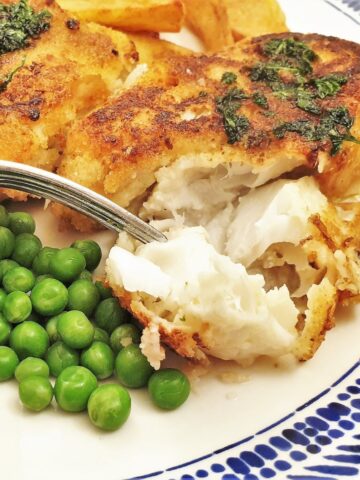
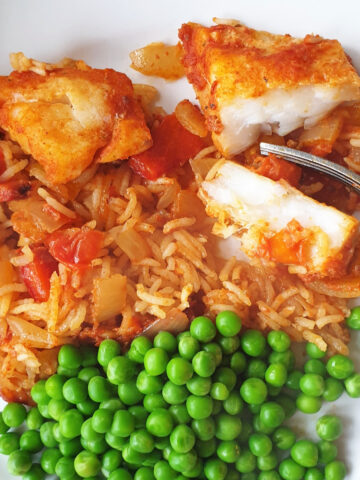
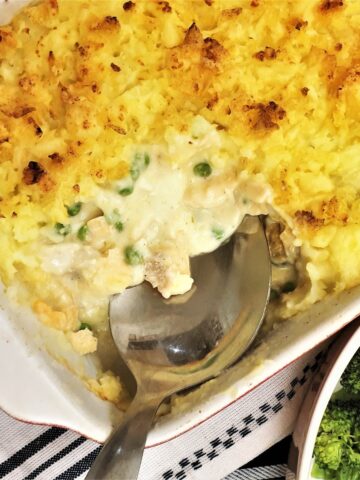
You can find other similar recipes on my fish and seafood recipes page. Here are a few you might enjoy:
📋The recipe
Pan-fried fish fillets with a light batter
(Click the stars to rate this recipe)
Equipment
- 1 Mixing bowl
- 1 Balloon whisk
- 1 Large frying pan
Ask a Question
If you have a question about this recipe that has not been answered, please use the box below to ask it.
Use this with care. This is an AI-generated result and may contain errors or inaccuracies. I cannot be held responsible for the information returned.
Ingredients
- 4 fish fillets approximately 4oz or 110 grams each
- 1 large egg
- 6 tablespoons / 60 grams cornflour you may need extra depending on the size of the egg
- 1 teaspoon fish spice add extra to your own taste
- ½ teaspoon salt optional
- sunflower oil for frying
Instructions
- Place the fish between 2 layers of kitchen towel and press lightly to remove any moisture.4 fish fillets
- Place the remaining ingredients in a mixing bowl and whisk with a balloon whisk to remove any lumps. The consistency should be that of thick cream. Add extra cornflour a teaspoon at a time until the desired consistency is reached.1 large egg, 6 tablespoons / 60 grams cornflour, 1 teaspoon fish spice, ½ teaspoon salt
- Heat the oil in a heavy-based frying pan until it starts to shimmer. You will nee sufficient oil to coat the bottom of the pan to a depth of about ⅛". Test that it is hot enough by dropping a few drops of batter into the oil. They should start to turn brown within 40 seconds.sunflower oil
- Dip the fish fillets in the batter and let any excess batter run off back into the bowl.
- Carefully lay the fish into the frying pan. If the oil is hot enough, you should hear a gentle sizzle.
- Fry for 3 to 4 minutes per side. Thicker pieces of fish will take longer than thinner pieces.
- Once the first side has browned, turn the fish carefully with a spatula and fry the other side for the same length of time.
- Remove the fish from the frying pan and place it on paper towels to absorb any excess oil.
- Garnish with chopped parsley and serve immediately.
Notes
- This dish is best eaten freshly cooked and is not suitable for freezing.
- You can mix the batter one or two hours ahead of time and let it stand in the refrigerator. Whisk the batter well before using it.
- Once coated in batter, the fish should be fried immediately.
- You can store any leftover fish in a covered container in the refrigerator overnight. It makes delicious sandwiches (perhaps with a smear of mayonnaise) for lunch the next day.
Nutrition
I am not a nutritionist. The nutrition information has been calculated using an on-line calculator, and is intended for information and guidance purposes only. If the nutrition information is important to you, you should consider calculating it yourself, using your preferred tool.
If you made this recipe and enjoyed it, I'd love it if you could give me a star rating in the comments below. And if you'd like to get in touch, you can email me at [email protected]. I'd love to hear from you. And don't forget to subscribe to my mailing list so you can grab yourself a copy of my FREE COOKBOOK!
If you'd like to continue browsing, just click on this link to all my recipes.


Jennifer says
I tried this recipe out on some Alaskan pollock and it turned out quite well. I'm in the US and I did have an issue with it being too thick as others have mentioned. I was already making a double batch, and adding a third egg helped thin it out to a consistency like a runny custard, or pancake batter. (We don't have double cream here so I'm not sure how it compares.) I don't have a scale for weight, but ended up with 1 egg per 1/4 cup cornstarch. I might even use a little less cornstarch next time.
Instead of the fish spice I used salt, black pepper, garlic powder, and onion powder. I kept the seasoning light, but would probably use more next time, especially salt. I fried it in avocado oil.
I followed all the directions, including keeping the first batches warm in the oven (at 170F) and everything worked out well. My fish portions were roughly 1/2-3/4" thick and 3 minutes per side was about right.
I served this alongside spaghetti with Rao's Roasted Garlic sauce on the first night and it was great together. I warmed the leftovers the next day for about 10 minutes in a 350F oven and served it with a sauce of white wine vinegar, butter and capers, which also worked very well. Overall I was very pleased with this recipe and will be using it again.
VJ says
Thank you for your very constructive and positive criticism. I was very concerned when people started telling me that their batter turned out too thick. I make this all the time - one egg and as much cornflour as necessary to make a coating batter. So I purposely looked at the recipe measurements the other day, and according to the ingredients available to me in the UK they are spot on. I can only think that cornstarch and cornflour must be different in texture and absorbancy.
I'm going to have to do more research into American cornstarch. If you see this reply I'd love it if you could let me know the brand of cornstarch you are using. I use white cornflour, which is very powdery. In South Africa it's called Maizena - which is exactly the same as what we get in the UK.
FYI - I believe double cream here is the equivalent of heavy cream in your part of the world (but who knows, I could be wrong on that one too 😁).
Anyway, I'm delighted it turned out well for you and that you'll be making it again!
I live in a country that adores its fish and chips - unfortunately I'm not a lover of deep fried beer batter from the local chippie, so I developed this recipe to get away from that!
Jennifer says
Thanks for your reply. Looking into it further, I think the mismatch lies in our eggs. From what I've found, US large eggs are only about 50g out of the shell, which seems to be closer to a UK medium egg. As for the cornstarch, I used Argo, which lists as 8g/T, but we do have Maizena (9g/T) here and they are pretty much the same.
Our heavy cream is about 36% fat, but your double cream should be about 48%, so I imagine it's a bit thicker. My batter ended up a bit thicker than heavy cream so I think it was about where it should be.
I do love British fish and chips, but I was looking for something lighter and this definitely fit that. Thank you for the recipe 🙂
VJ says
Jennifer, thank you so much for getting back to me on this. I actually asked ChatGPT about American cornflour and it came back with exactly what you told me, even mentioned Argo! It also mentioned the difference in size of the eggs. I weigh all my ingredients so it's possibly due to a combination of things - the different sizes of the eggs and using tablespoons / cups to measure the cornflour.This is one of my favourite recipes, and I'm devastated that it doesn't work as intended. ChatGPT suggested a few changes to the wording to try and remove any ambiguity, so I'll be implementing (and testing) that next week. I'll send you an update when I've done it
Sam says
Did not go over very well at all. To make sure I had it right, I weighed the ingredients so same egg to cornstarch. It was super thick and fried up not like a batter at all, but rather like a solid coating. Second batch I added water which helped a bit. Underseasoned otherwise (used lemon pepper seasoning and dill). Will not try this one again.
VJ says
I'm sorry your fish didn't turn out well - I've been making it this way for years and it's never failed me yet. I do mention in the post that the consistancy of the batter should be that of double cream. I'm not sure what country you are from, but perhaps your cornstarch is thicker than the UK cornflour. As for the seasoning, sorry - can't help with that one. I always suggest seasoning your food to your own taste.
Brenda says
With your perfect directions and great tips, I was able to make this wonderful fish. We loved the light batter instead of the way I usually do fish, (ale batter and deep fry). I will be making this much more often. This light batter is a game changer for us! I'm thinking it could be used on chicken too!! Thank you Veronica from your neighbor across the pond!!
VJ says
Thanks for the lovely comment Brenda. I'm delighted you like the recipe. It's the only way I fry fish these days - and it works beautifully with prawns and pieces of chicken (as you thought).
Mike Calder says
Not sure what I did wrong, followed the recipe, but I ended up with an unusable paste. I had to add milk to make it into a batter.
VJ says
I'm sorry the batter didn't turn out well for you. It sounds as though you added too much cornflour. Did you use a measuring spoon which should be levelled or did you heap the cornflour on the spoon? I tend to measure everything by weight - as I mentioned in the post you need the same weight of cornflour as that of the egg, and that should give you a thin coating batter - about the consistency of double cream.
Debs says
The batter was quite think and gloomy for me. Not sure where it went wrong?
VJ says
Sorry to hear that - I've been making this for years and the batter always turns out perfectly. Did you use corn starch (we know it in the UK as cornflour) or the thicker corn flour as used in the US which we would probably refer to as polenta>
M'Lisa Mitchell says
Thank you fit this wonderful recipe! Been looking for an easy battered fish recipe that doesn't need to be deep fried. This method is excellent.
Didn't have the fish seasoning listed. So I substituted it with Old Bay seasoning. Next time I won't add the salt though. Old bay already has it and some of my thinner pieces were a touch too salty for me. Only because I have pretty much halved my salt intake. This is definitely a keeper recipe.
VJ says
Glad you enjoyed it M'Lisa - thanks for taking the time to comment!
Yasmin says
Can I fry the fish and freeze it till needed and the put it in oven?
VJ says
Hi Yasmin - to be perfectly honest I've never tried to do that. If I was going to freeze the cooked fish I would drain it on kitchen paper and allow it to come to room temperature. Then I would layer it in between pieces of baking parchment in a freezer container before freezing. Cooked fish can be safely stored in the freezer for up to 3 months. I'd also let it defrost in the refrigerator before putting it in the oven to warm up so that it doesn't have to be in the oven too long (or it might dry out). I'd love to know how it turns out if you try it!
Angie says
Yes; I just made them, this batter is light, crisp and way less messier than the traditional batter. The seasoning was perfection. The batter would be excellent for onion rings.
VJ says
Glad the fish turned out nicely for you. I like your idea of using the batter for onion rings - I'll have to give that a try. Thank you for commenting!
Zee says
Made it tonight. Deelish!
VJ says
It's one of my favourite ways to cook fish. Glad you enjoyed it!
Zelda says
What is "fish spice?"
VJ says
Fish spice is a condiment that you can buy in supermarkets in the UK and in South Africa in the spice aisle and is normally a blend of lemon, dill and parsley.