
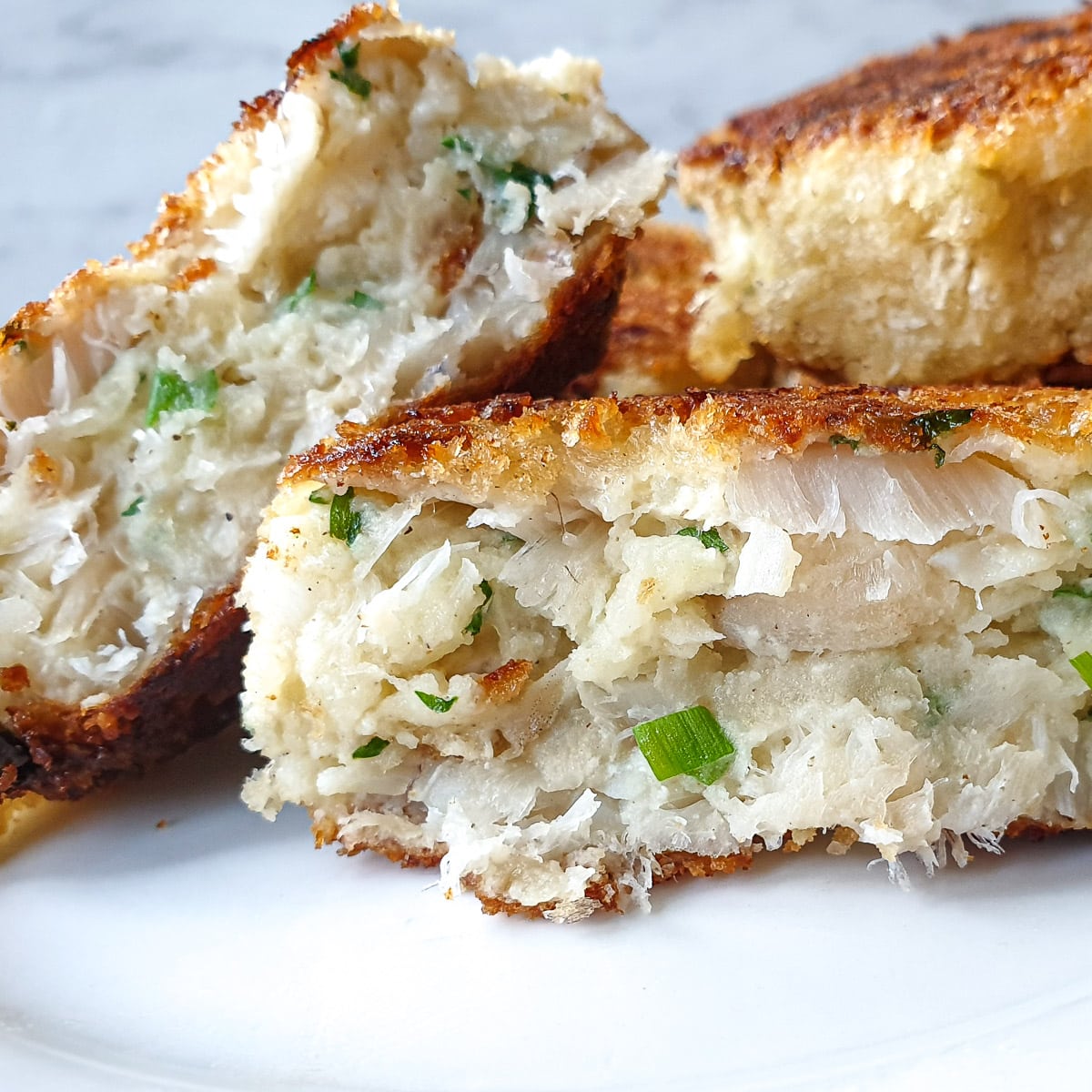
You can't go wrong with a meal of easy homemade fish cakes! Everyone loves them, even the fussiest eater. And what's not to love? Chunks of flaky fish mixed with creamy mashed potatoes, in a crispy, crunchy coating. If you're wondering how to make homemade fish cakes that stay crispy on the outside and soft in the middle, this easy recipe is for you!
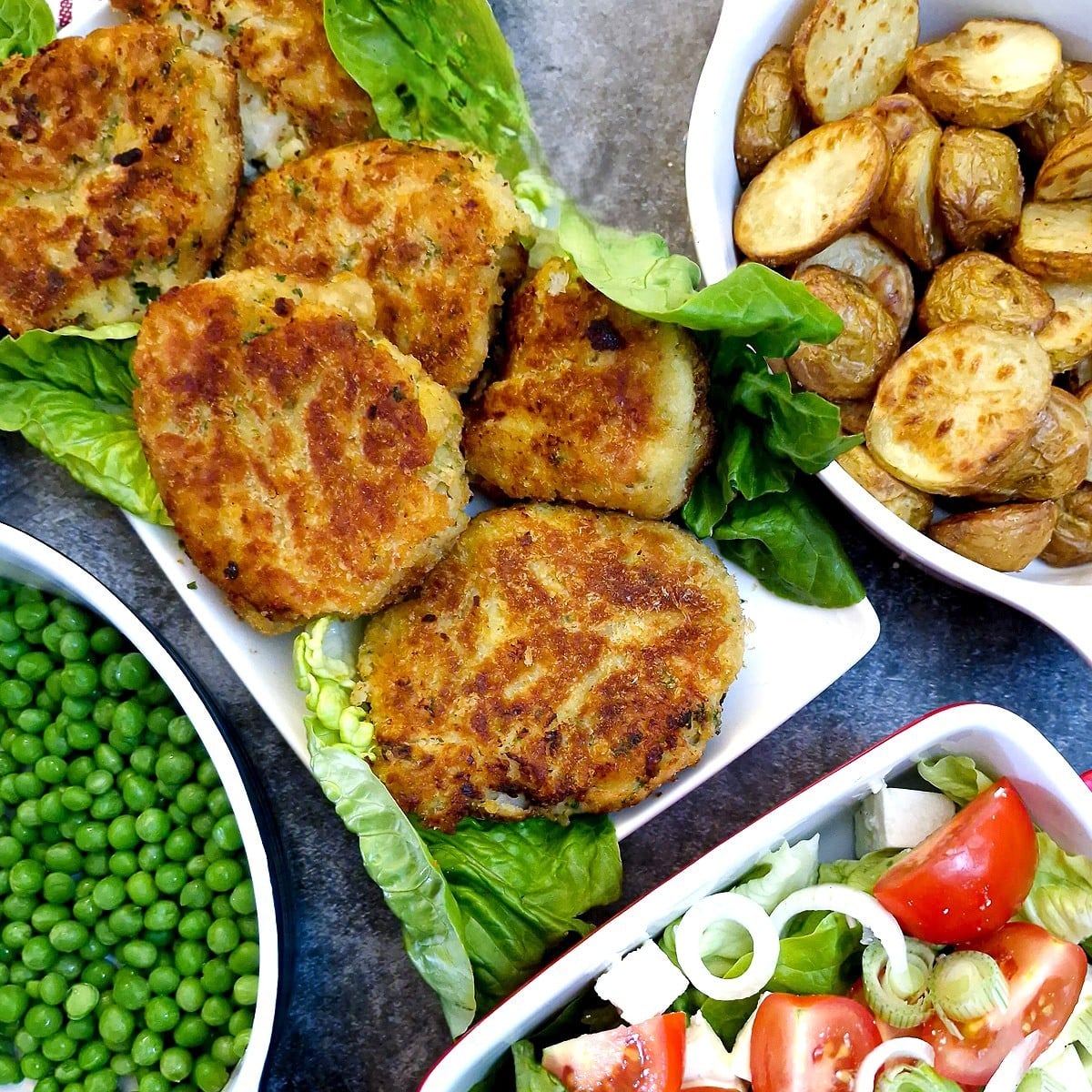
These easy homemade fish cakes are proof that simple ingredients can make the most satisfying meals. Flaked fish, creamy mashed potatoes and a handful of pantry staples are combined and fried to create deliciously crisp fish cakes that are way better than anything you could buy ready-made.
Fishcakes have been a favourite in British kitchens for generations, and it's easy to see why. They're economical, filling and endlessly adaptable. Whether you make this family-friendly fish cake recipe with fresh fish (you might like to try these salmon fish cakes), tinned fish or even leftovers from a previous meal, these golden fish cakes are always guaranteed to disappear quickly at the dinner table.
A good fishcake should contain pieces of flaky fish - minced fish just doesn't taste the same! The big secret to cooking the perfect fish cake is to make sure you get a really crispy coating. You can achieve this by using Panko breadcrumbs, which are crispier than ordinary breadcrumbs. If you can't find Panko, just toast your own breadcrumbs lightly in the oven or a dry frying pan before using them.
To make the fish and potato mixture easier to handle, chill it in the refrigerator for half an hour before shaping the fish cakes. This helps them firm up and makes them much easier to coat and fry without falling apart. Take this extra time into account if you intend to make these crispy fish cakes for supper!
Jump to:
Fishcakes at a glance
- Quick overview: Poach the fish in milk, then combine it with mashed potato, egg, chopped parsley and spring onion. Shape into patties, coat in flour, egg and breadcrumbs, then fry until crisp and golden on both sides.
- Main ingredients: Fish, mashed potatoes, eggs and breadcrumbs
- Prep time: 20 minutes if you have leftover mashed potatoes. If making the mash from scratch, allow an extra 15 minutes.
- Chilling time: 30 minutes
- Cooking time: 15 minutes
- Yield: 6 fishcakes
- Difficulty: Easy - although coating the fishcakes can be a little messy!
Why I think you'll love these fish cakes
- These crispy homemade fish cakes are wonderfully crispy on the outside but soft and full of flavour in the middle.
- My fish cakes with mashed potatoes recipe is a great way to use up leftover mash and/or cooked fish, so nothing goes to waste.
- This easy family fish cake recipe can be made ahead of time and chilled or frozen until needed, making them perfect for busy weeknight meals.
- You can use a cheaper white fish (such as pollock or basa) and keep the more expensive cod or haddock for a fancier meal.
Ingredients for proper British fish cakes
**This is just an overview to explain why I used a particular ingredient. The complete list of ingredients and the exact measurements are on the printable recipe card at the end of this post.**
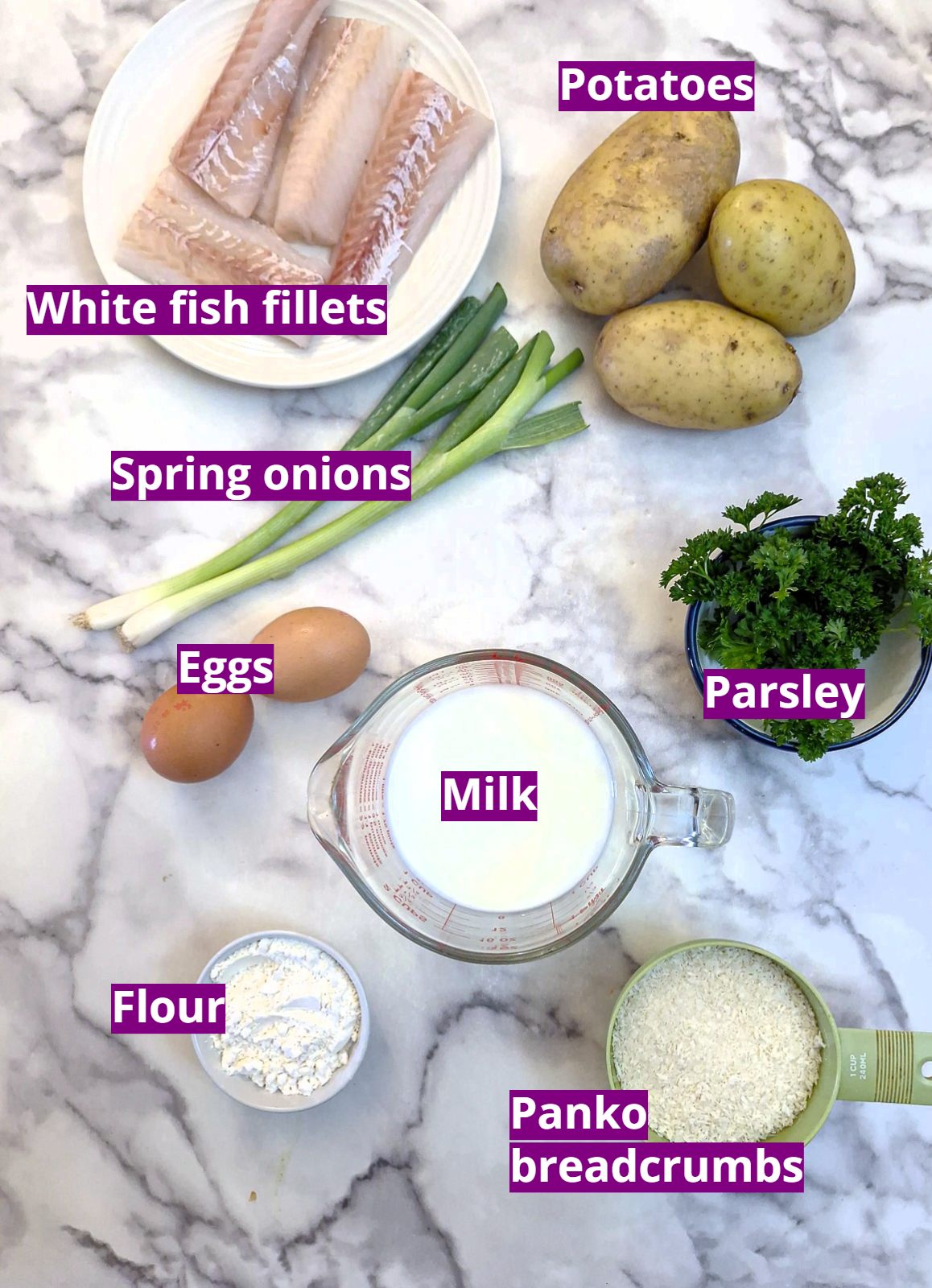
- White fish fillets. Use any white fish fillets. Cheaper pollock, hake or basa are perfectly fine to use; in fact, I used pollock to make these fish cakes. You can use the more expensive cod or haddock if you prefer.
- Potatoes. If you have leftover mashed potatoes, you can use those; otherwise, just boil up a couple of potatoes, mash them and let them cool before mixing with the fish.
- Parsley and spring onions. These are used for extra flavour and should be very finely chopped.
- Eggs. One egg will be mixed into the fish cake mixture, and is used to bind the fish cakes so they don't fall apart as they cook. The other egg will be lightly beaten and used to coat the fish cakes to help the Panko stick.
- Milk. The milk is used to poach the fish. I call for one cup of milk in the recipe, but it depends on the size of the pan you use. You will probably find that you need less than a cup. The milk should just come halfway up the sides of the fish.
- Flour. The fish cakes will be coated according to the dry-wet-dry method. First dipped into something dry (flour), then something wet (beaten egg), and finally something dry (Panko).
- Panko. These breadcrumbs are ultra crispy and add an amazing crunch to the fish cake coating.
- Vegetable oil (not pictured). This is used for frying the fish cakes. The amount you need will depend on the size of your pan. You will need sufficient oil for shallow-frying, i.e., the oil should come about one-quarter way up the side of the fish cakes.
- Salt and black pepper (not pictured). I use the salt and pepper to lightly season the milk when I'm poaching the fish, and also to season the flour that coats the fishcakes. I also added it to the water the potatoes were boiled in.
How to make crispy fish cakes
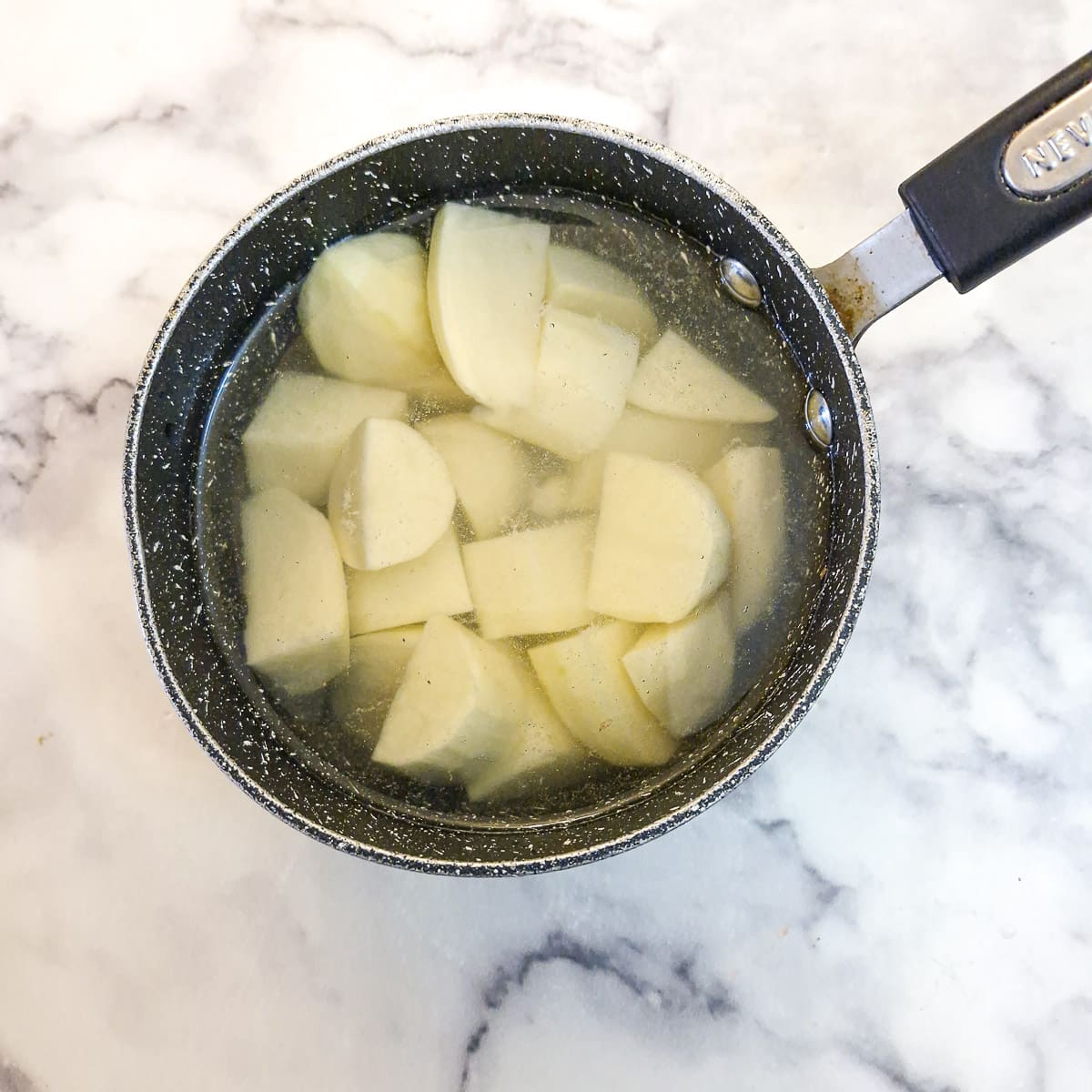
Step 1: If you're using leftover mash, skip this step. Boil the potatoes in lightly salted water until they are soft enough to mash. Drain the potatoes and mash them with a knob of butter and a couple of tablespoons of milk.
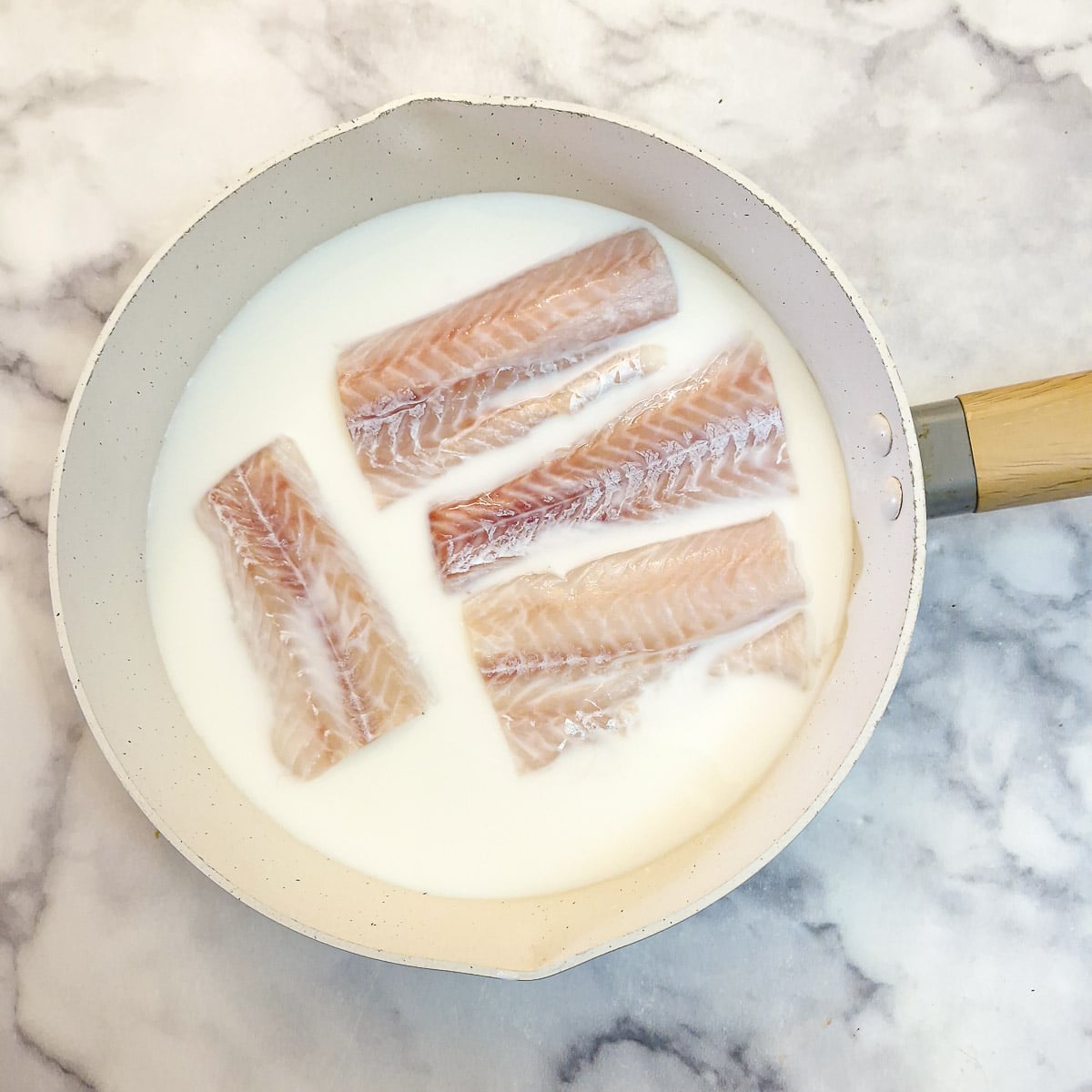
Step 2: Poach the fish in milk over moderate heat for 5 to 6 minutes, or until it can be flaked with a fork.
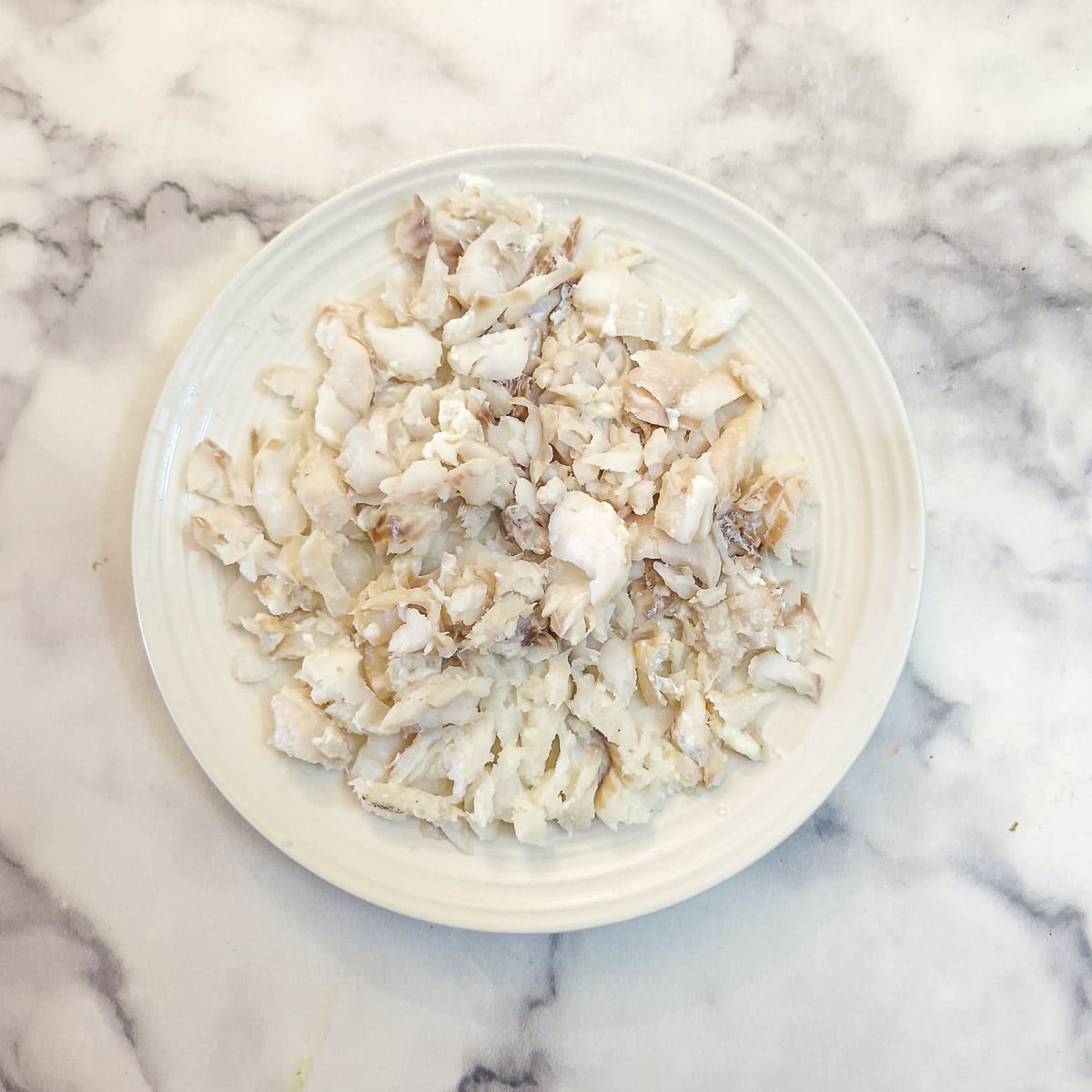
Step 3: Remove the fish from the milk and use a fork to flake it. Fillets of fish shouldn't have any bones, but this is a good time to check - you don't want anyone choking on a stray fish bone.
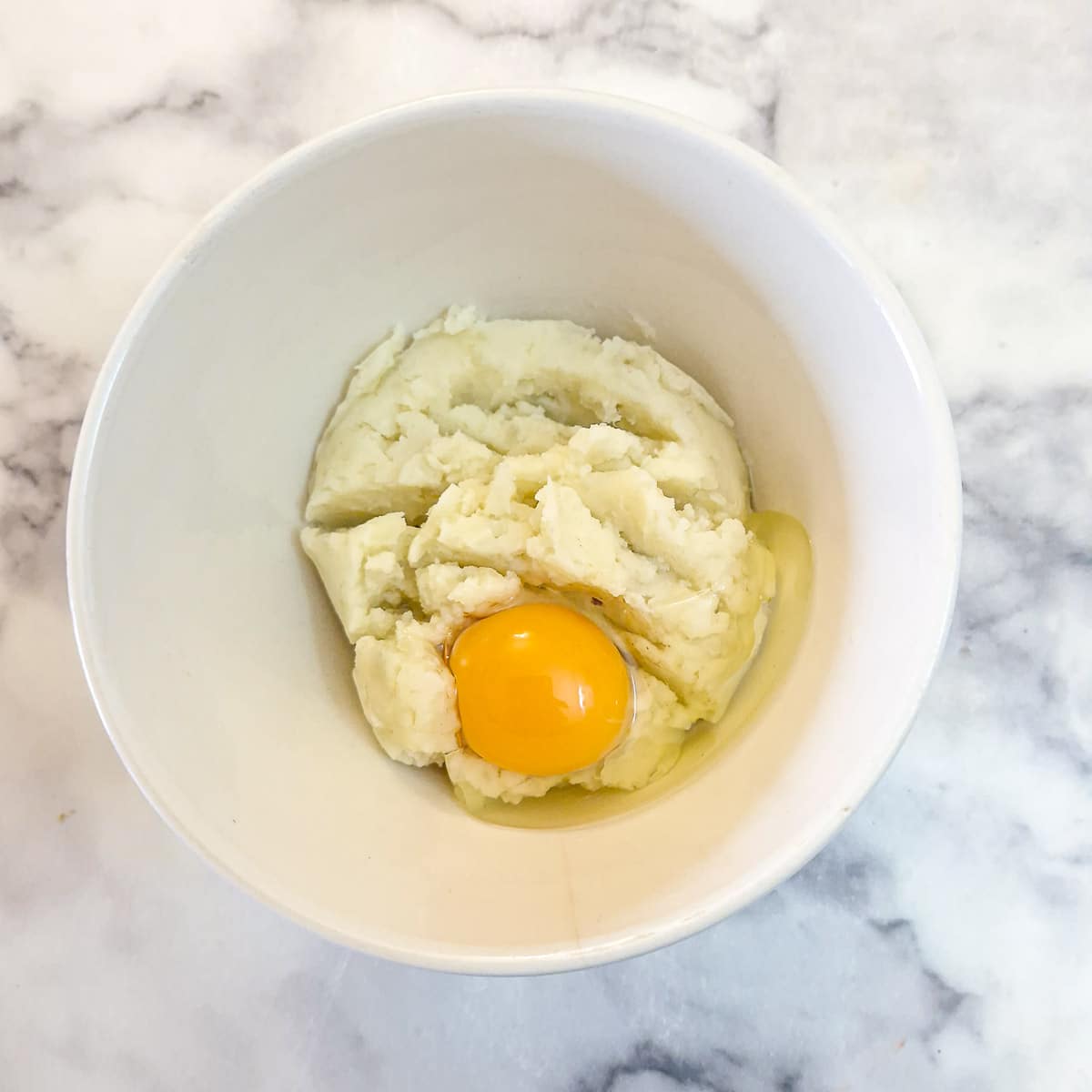
Step 4: Place the mashed potato in a mixing bowl and combine it with the egg. Mix well until the egg is completely incorporated into the potato.
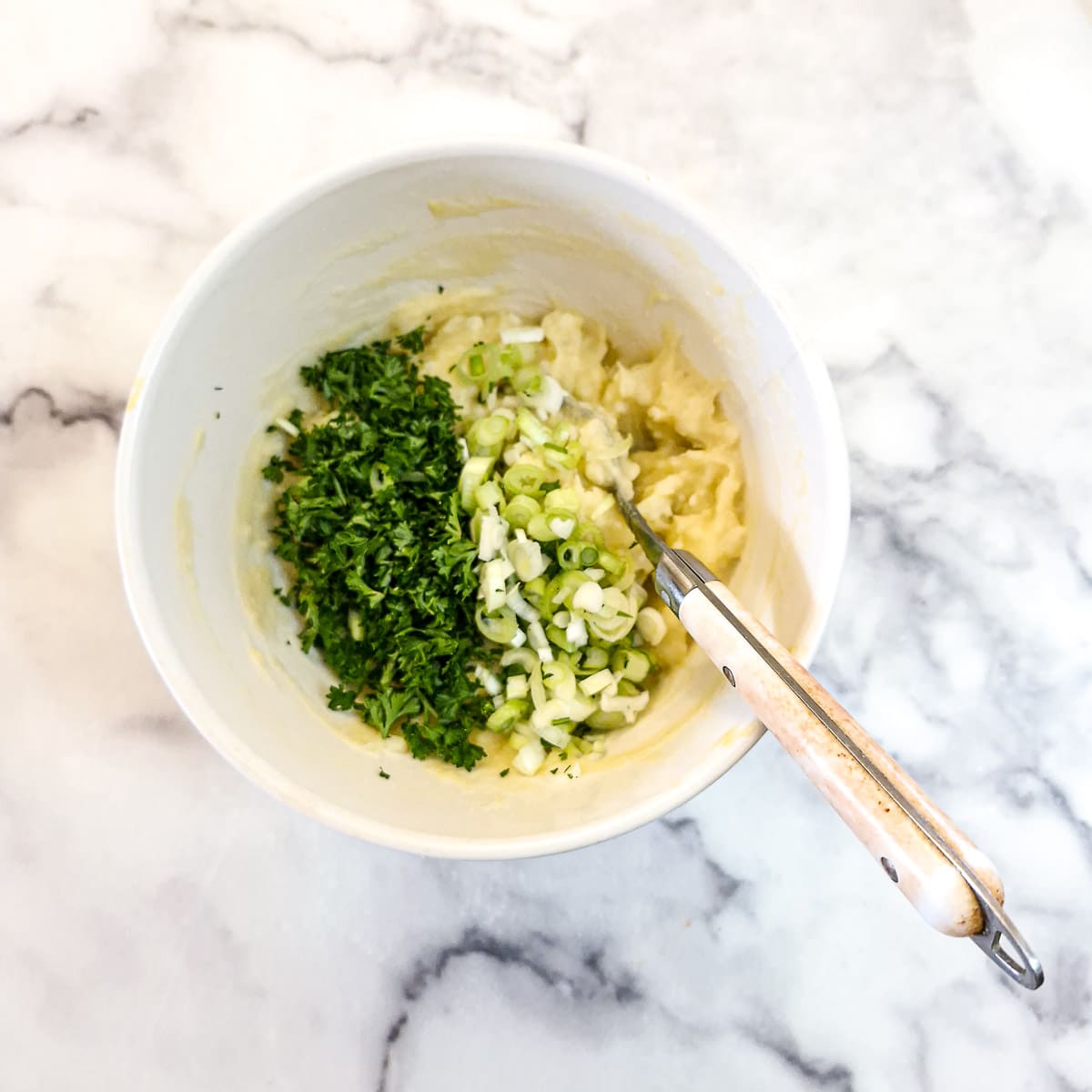
Step 5: Stir in the chopped parsley and spring onions.
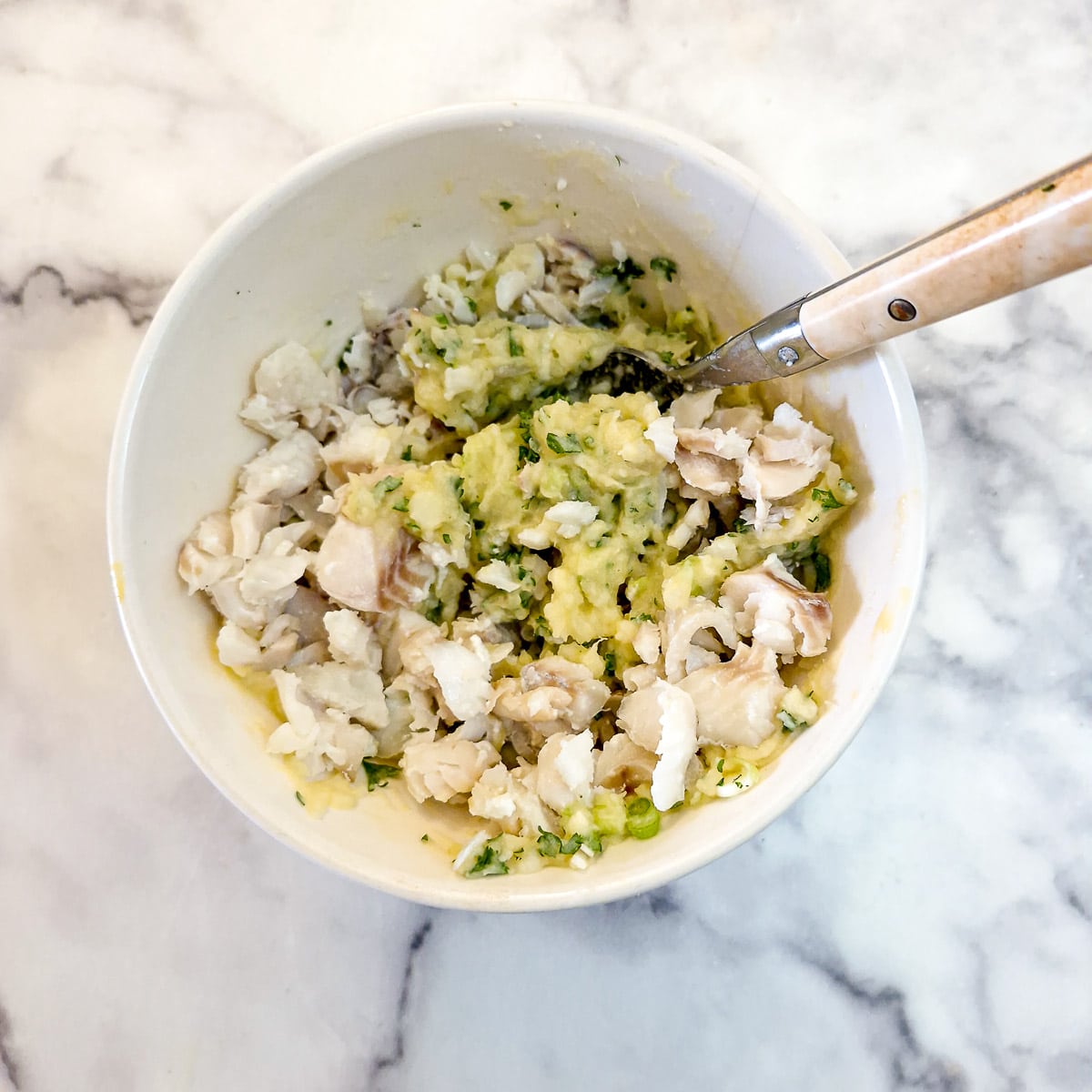
Step 6: Fold the fish gently into the mixture, taking care not to break it up too much. Place the mixture in the refrigerator for half an hour. This will firm it up and make it easier to form into fish cakes.
Form and coat the fish cakes
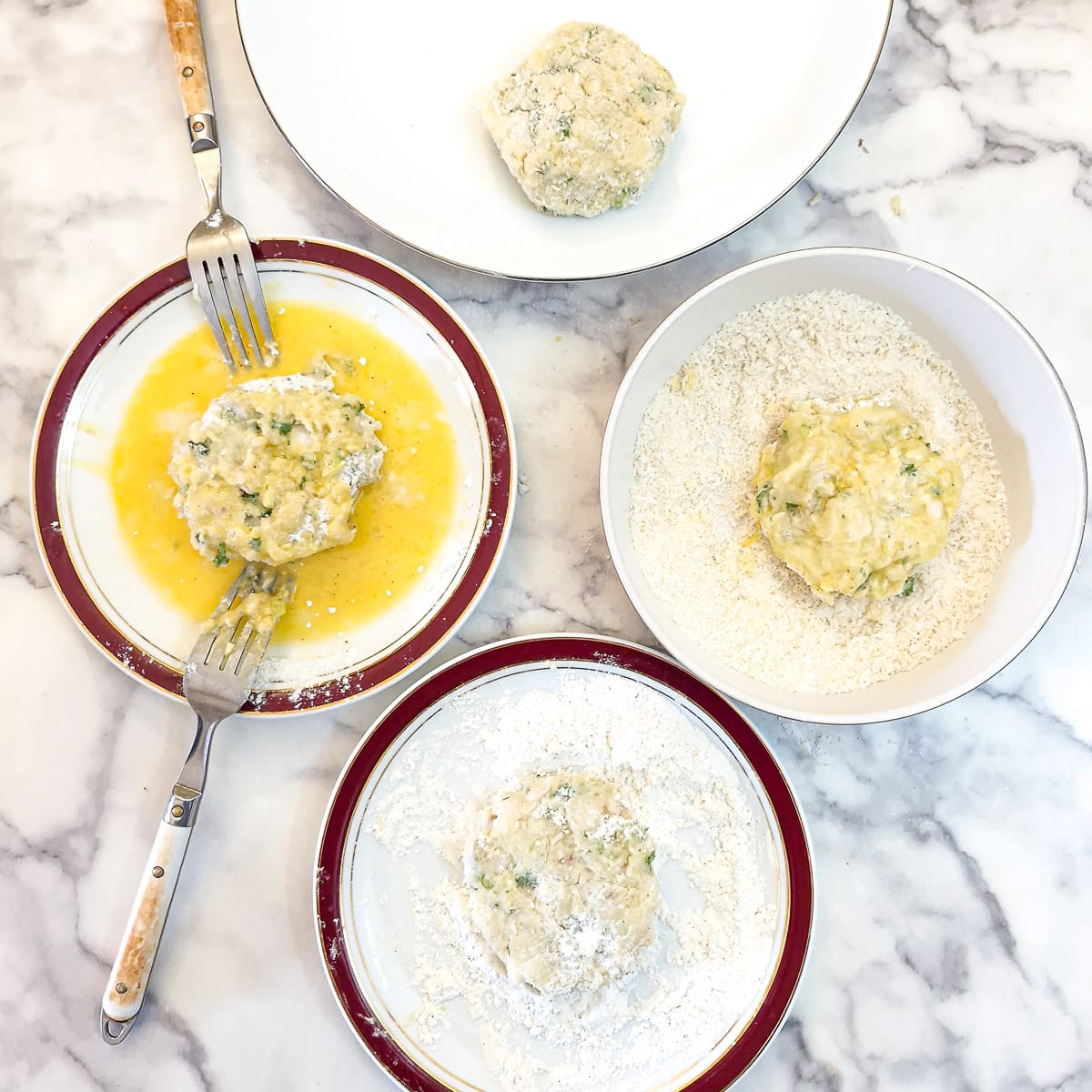
Step 7: Take one-sixth of the mixture and form it into a patty shape. Coat it first in seasoned flour, then in lightly beaten egg, and finally in panko breadcrumbs. You might need 2 forks to help you.
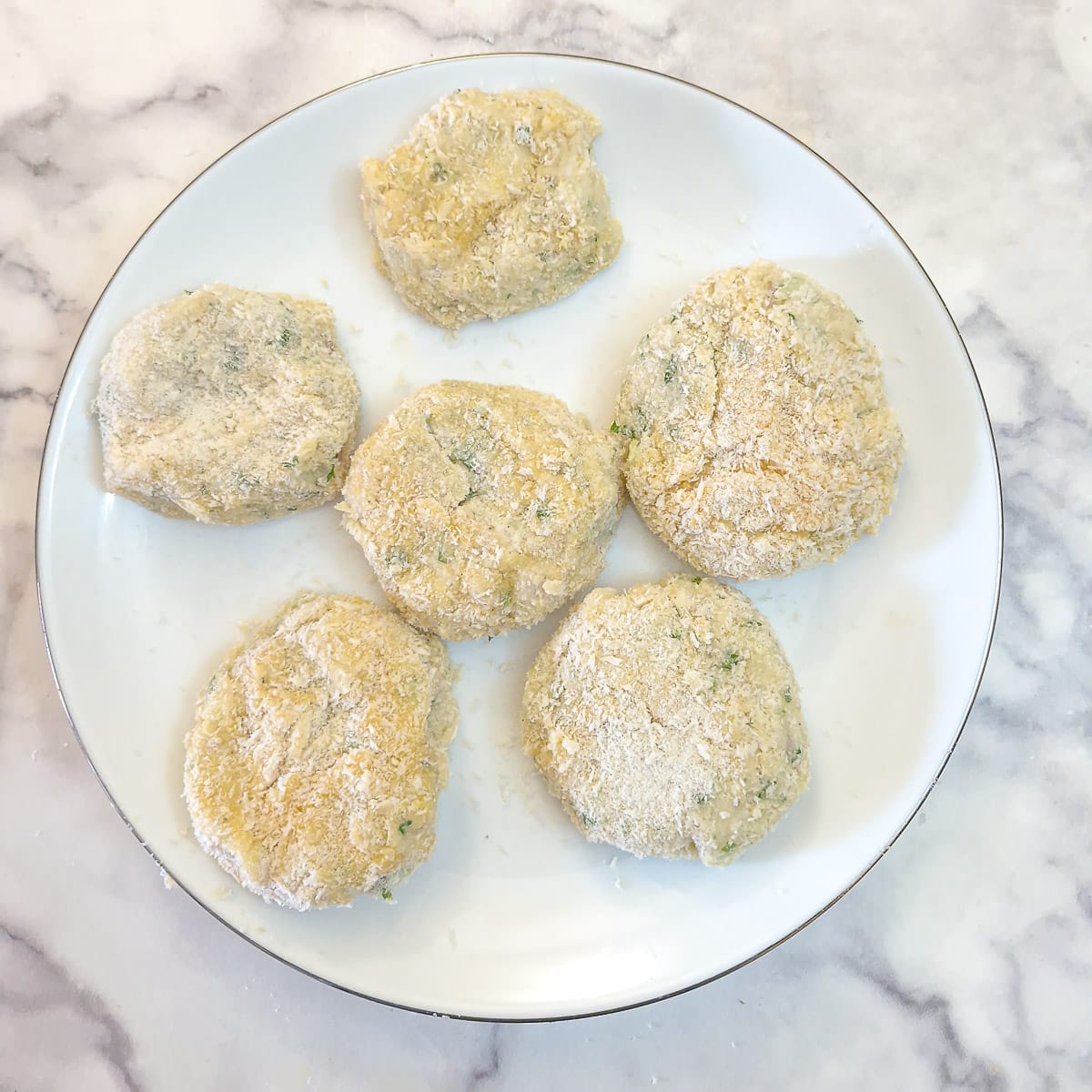
Step 8: Place the coated fish cakes on a plate. Leave them in the refrigerator until you are ready to fry them.
Fry the fish cakes
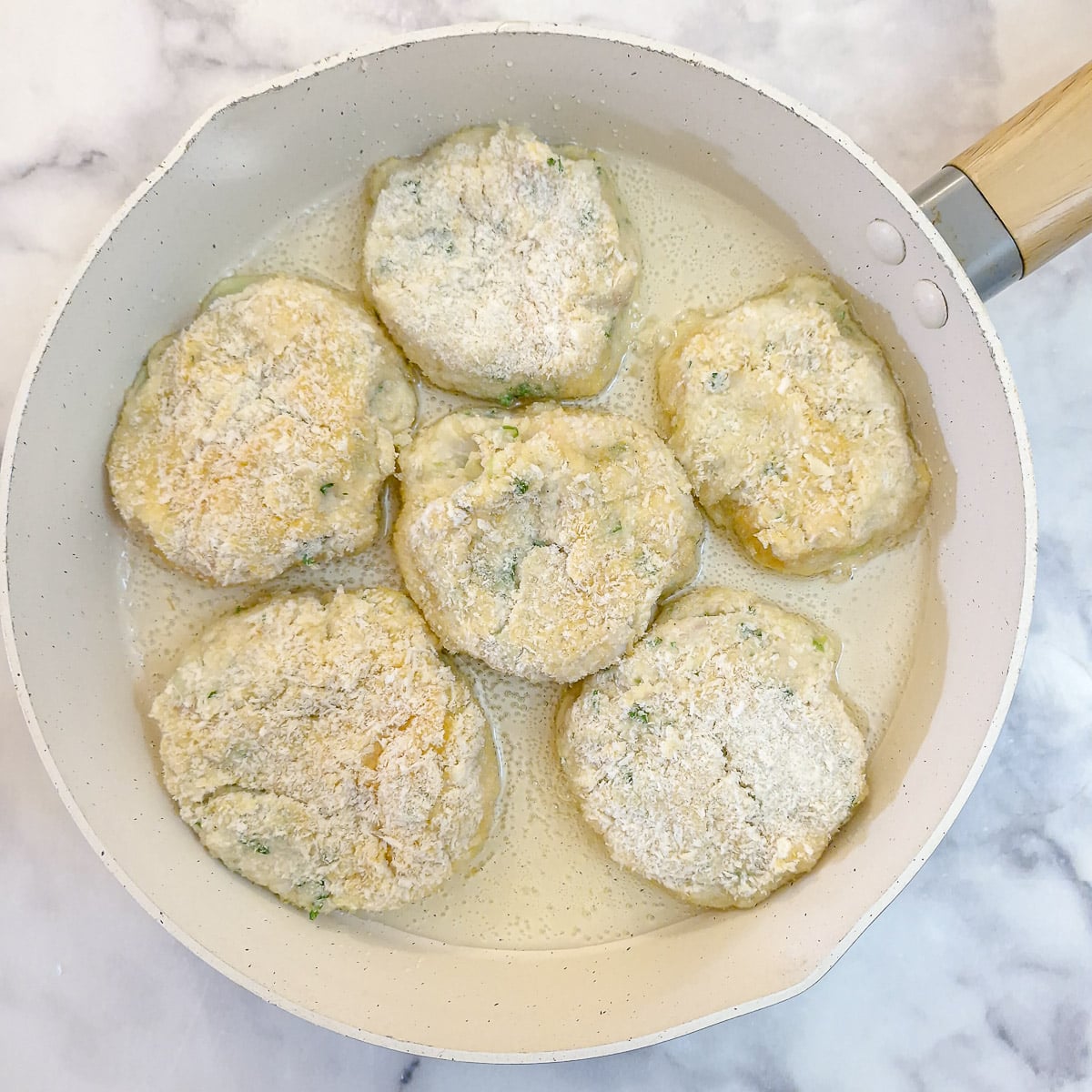
Step 9: Heat enough vegetable oil over moderate heat in a frying pan to come one-quarter of the way up the sides of the fish cakes. Use a spatula to help you transfer the fish cakes to the oil (it should sizzle lightly) and fry for 3 to 4 minutes or until the fish cakes are golden brown on the underside.
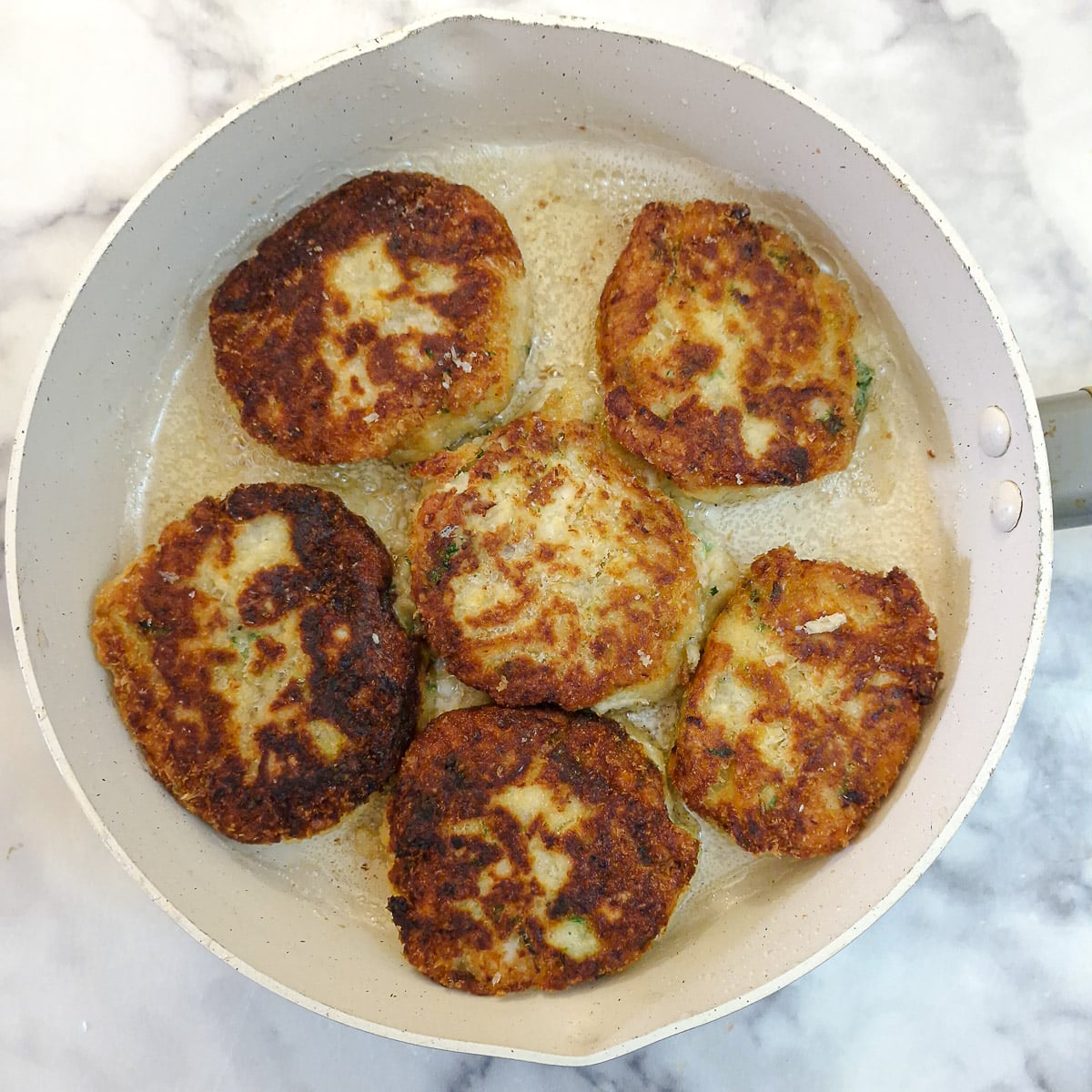
Step 10: Turn the fish cakes carefully and fry for a further 3 to 4 minutes.
Tips for making perfect fish cakes
Here are my top tips to ensure your fish and potato cakes always turn out perfectly:
- Use floury potatoes for the mash - they give a lighter texture and help the fish cakes hold together.
- Make sure the mashed potato is fairly dry - if the mash is too soft or buttery, the fish cakes will be difficult to shape and may fall apart during cooking.
- Take care when mixing in the egg - you may not need it all. If your eggs are on the large side, you may not need the entire egg in the fish cake mixture. Too much egg will make the mixture difficult to handle. Beat the egg lightly and add about three-quarters of it - the remaining egg can be added to the egg used to coat the fish cakes.
- Chill the fish cake mixture for at least 30 minutes before shaping and coating. Cold fish cakes are much easier to handle and less likely to break apart in the frying pan.
- For the crispiest coating, use Panko breadcrumbs rather than ordinary breadcrumbs. If you don't have Panko, lightly toasting normal breadcrumbs beforehand helps make them crispy.
- Use a medium heat when frying. If the heat is too high, the outside will brown before the middle is heated through.
- Turn the fish cakes carefully, and only once if possible. They will become firmer as they cook, making them easier to handle - moving them too early may cause them to break.
- And finally, most important! The fish cake mixture is quite soft, so coating them can be a bit fiddly. Chilling the mixture first makes the job much easier and also helps the fish cakes keep their shape while frying. You might find it easier to use 2 forks to turn the fish cakes in the coating ingredients.
Serving suggestions
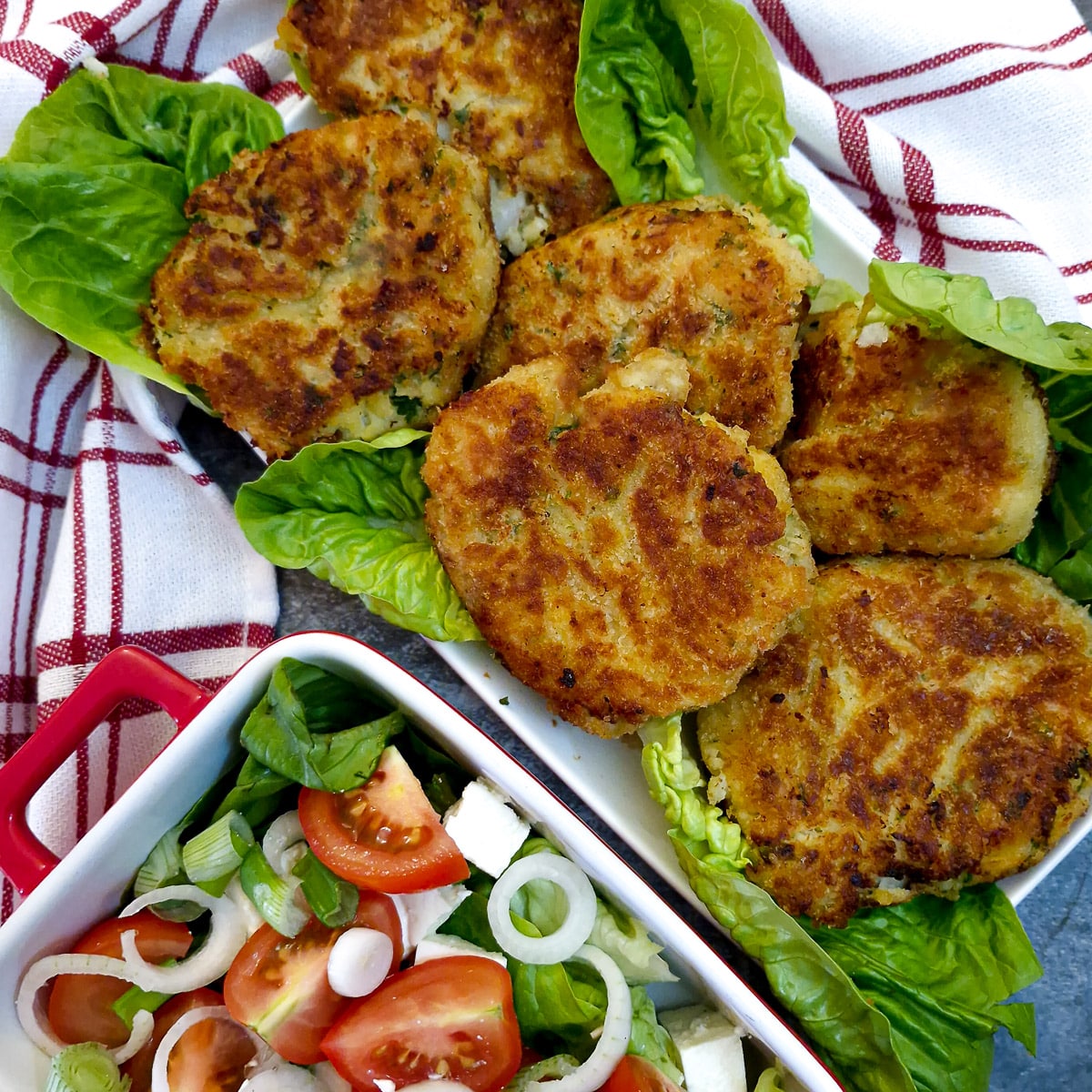
- Serve the fishcakes with chips or air-fried potatoes, with green peas and a crisp salad.
- A fish cake in a breadroll, topped with sliced tomato, lettuce and a smear of tartare sauce, makes a delicious fish burger.
- I eat leftover fish cakes for breakfast between 2 slices of wholewheat bread, smeared with a mixture of equal quantities of tomato sauce and mayonnaise (don't knock it til you've tried it 😁).
Variations
Here are a few ideas to vary the recipe to suit your own taste:
- Swap the white fish for salmon or tinned salmon.
- Use smoked haddock for extra flavour and a slightly richer taste.
- Stir in grated cheese for a creamier filling.
- Add a spoonful of wholegrain mustard or creamed horseradish sauce for extra zing.
- Replace the parsley with fresh dill or chives for a different herby flavour. Dill would go particularly well with salmon.
- Use sweet potato instead of a normal potato for a slightly different flavour.
- Add a handful of peas or sweetcorn to sneak in extra vegetables.
Equipment
These are the main items you will need to make these fish and potato cakes:
- Saucepan - to boil the potatoes
- Potato masher - to mash the potatoes
- Frying pan - to poach the fish and also to fry the fish cakes
- Mixing bowl - to combine the fish cake mixture
- Three small bowls - to coat the fish cakes
- Spatula - to turn the fishcakes as they fry.
Storage and freezing
- Refrigerator. Store leftover cooked fish cakes in a covered container in the refrigerator for up to 3 days.
- Make ahead. Form and coat the fish cakes and refrigerate them overnight before cooking. Alternatively, prepare the fish and potato mixture ahead of time and assemble the fish cakes the following day.
- Reheating. Cooked leftover fish cakes can be reheated in a dry frying pan over low heat until warmed through. They can also be reheated in the microwave for a few seconds, although the coating may lose some of its crispness.
- Freezing. Uncooked fish cakes freeze well. Arrange them on a baking tray and freeze until solid, then transfer them to a suitable freezer container once solid. Cook from frozen over medium-low heat so the centres have time to thaw and heat through before the outside becomes too brown.
FAQ
This recipe for fish cakes was first published by Mrs Beeton in her Book of Household Management in 1861. (I think my recipe is a lot easier to make 😁).
INGREDIENTS.-The remains of any cold fish, 1 onion, 1 faggot of sweet herbs; salt and pepper to taste, 1 pint of water, equal quantities of bread crumbs and cold potatoes, ½ teaspoonful of parsley, 1 egg, bread crumbs.
MODE .- Pick the meat from the bones of the fish, which latter put, with the head and fins, into a stewpan with the water; add pepper and salt, the onion and herbs, and stew slowly for gravy about 2 hours; chop the fish fine, and mix it well with bread crumbs and cold potatoes, adding the parsley and seasoning; make the whole into a cake with the white of an egg, brush it over with egg, cover with bread crumbs, and fry of a light brown; strain the gravy, pour it over, and stew gently for ¼ hour, stirring it carefully once or twice. Serve hot, and garnish with slices of lemon and parsley.
This recipe is easy to scale. You will need approximately the same amount of potatoes and fish. One egg will be sufficient to bind enough potatoes for 6 - 8 fish cakes. The quantities of coating ingredients given in the recipe will coat at least 6 fish cakes. Adjust the parsley and spring onions to suit your own taste.
The short answer is, you can use any fish!
The longer answer is you can use tinned, fresh or leftover cooked fish.
Any white fish that flakes easily will be suitable. I'd steer clear of monkfish, though - that's too expensive to turn into fishcakes, it deserves something much better.
Oh yes. Make them the day before and leave them in the refrigerator overnight. That helps firm the fish cakes and ensures the coating stays on.
You could also freeze the assembled fish cakes on a baking tray, and when solid, transfer them to a suitable freezer container. Fry them from frozen or leave them in the refrigerator until thawed. If cooking from frozen, cook over low to moderate heat to give the fish cakes time to defrost and become piping hot.
Yes, the egg helps bind the ingredients and prevents the fish cakes from falling apart as they fry.
Technically, you can add a little flour or cornflour to the mixture, and it will make the fish patties drier and therefore easier to shape.
Practically, I think that adding flour detracts from the texture of the fish and potato mixture and makes them a little 'claggy'.
These tips might make it easier to shape them:
- Leave the mixture in the refrigerator for a little longer.
- Shape the fish cakes with wet hands to avoid the mixture sticking to your fingers.
- Add a little less beaten egg to the mixture.
Save for later
If you'd like to make these fish cakes with leftover mashed potatoes, why not save the recipe to one of your Pinterest boards so you can find it easily? Just click the image below.
Alternatively, you can save the recipe by clicking on the floating heart icon on the right-hand side of the screen.
Related recipes
Visit my fish and seafood recipes page for more delicious recipes using fish. Here are a few you might enjoy:
**This recipe has been updated (22 May 2026) to add new photos, more information and a more descriptive 'how to make it' section. I've also added an extra quarter-cup of mashed potato to make the filling a little firmer. Other than that, the recipe remains the same.
📋The recipe

Easy homemade fish cakes with a crispy coating
(Click the stars to rate this recipe)
Equipment
- Saucepan to boil potatoes
- Potato masher
- Frying Pan to poach the fish and fry the fish cakes
- Mixing bowl
- 3 Flat dishes to hold coating
- Spatula
Ask a Question
If you have a question about this recipe that has not been answered, please use the box below to ask it.
Use this with care. This is an AI-generated result and may contain errors or inaccuracies. I cannot be held responsible for the information returned.
Ingredients
- 8 ounce / 225 grams white fish fillets (cod, haddock, pollock, hake)
- 1 cup milk approximately
- 1 pound / 450 grams potatoes or 1¼ cups leftover mashed potatoes
- salt to taste
- 2 tablespoons spring onion finely chopped
- 2 tablespoons parsley finely chopped
- 1 small egg
- ¼ cup sunflower oil for frying the fish cakes
For the coating
- 4 tablespoons plain flour
- 1 large egg
- 1 cup panko breadcrumbs (or grated bread,toasted)
Instructions
- If you're using leftover mash, skip this step. Boil the potatoes in lightly salted water until they are soft enough to mash. Drain the potatoes and mash them with a knob of butter and a couple of tablespoons of milk.1 pound / 450 grams potatoes, salt to taste
- Place the milk in a frying pan and add the fish fillets. You may want to add a little salt for extra flavour.8 ounce / 225 grams white fish fillets (cod, haddock, pollock, hake), 1 cup milk, salt to taste
- Poach gently for between 5 and 10 minutes until the fish starts to flake and is cooked through
- Remove the fish from the milk and use a fork to flake it. Fillets of fish shouldn't have any bones, but this is a good time to check - you don't want anyone choking on a stray fish bone.
- Place the mashed potato in a mixing bowl and combine it with the egg. Mix well until the egg is completely incorporated into the potato.1 small egg
- Stir in the chopped parsley and spring onions.2 tablespoons spring onion, 2 tablespoons parsley
- Fold the fish gently into the mixture, taking care not to break it up too much. Place the mixture in the refrigerator for half an hour. This will firm it up and make it easier to form into fish cakes.
- Take one-sixth of the mixture and form it into a patty shape. Coat it first in seasoned flour, then in lightly beaten egg, and finally in panko breadcrumbs. You might need 2 forks to help you.4 tablespoons plain flour, 1 large egg, 1 cup panko breadcrumbs (or grated bread,toasted)
- Heat enough vegetable oil over moderate heat in a frying pan to come one-quarter of the way up the sides of the fish cakes. Use a spatula to help you transfer the fish cakes to the oil (it should sizzle lightly) and fry for 3 to 4 minutes or until the fish cakes are golden brown on the underside.¼ cup sunflower oil
- Turn the fish cakes carefully and fry for a further 3 to 4 minutes. Remove from the pan and allow to drain on kitchen paper.
Notes
- Use floury potatoes for the mash - they give a lighter texture and help the fish cakes hold together.
- Make sure the mashed potato is fairly dry - if the mash is too soft or buttery, the fish cakes will be difficult to shape and may fall apart during cooking.
- Take care when mixing in the egg - you may not need it all. If your eggs are on the large side, you may not need the entire egg in the fish cake mixture. Too much egg will make the mixture difficult to handle. Beat the egg lightly and add about three-quarters of it - the remaining egg can be added to the egg used to coat the fish cakes.
- Chill the fish cake mixture for at least 30 minutes before shaping and coating. Cold fish cakes are much easier to handle and less likely to break apart in the frying pan.
- For the crispiest coating, use Panko breadcrumbs rather than ordinary breadcrumbs. If you don't have Panko, lightly toasting normal breadcrumbs beforehand helps make them crispy.
- Use a medium heat when frying. If the heat is too high, the outside will brown before the middle is heated through.
- Turn the fish cakes carefully, and only once if possible. They will become firmer as they cook, making them easier to handle - moving them too early may cause them to break.
- And finally, most important! The fish cake mixture is quite soft, so coating them can be a bit fiddly. Chilling the mixture first makes the job much easier and also helps the fish cakes keep their shape while frying. You might find it easier to use 2 forks to turn the fish cakes in the coating ingredients.
- Refrigerator. Store leftover cooked fish cakes in a covered container in the refrigerator for up to 3 days.
- Make ahead. Form and coat the fish cakes and refrigerate them overnight before cooking. Alternatively, prepare the fish and potato mixture ahead of time and assemble the fish cakes the following day.
- Reheating. Cooked leftover fish cakes can be reheated in a dry frying pan over low heat until warmed through. They can also be reheated in the microwave for a few seconds, although the coating may lose some of its crispness.
- Freezing. Uncooked fish cakes freeze well. Arrange them on a baking tray and freeze until solid, then transfer them to a suitable freezer container once solid. Cook from frozen over medium-low heat so the centres have time to thaw and heat through before the outside becomes too brown.
Nutrition
I am not a nutritionist. The nutrition information has been calculated using an on-line calculator, and is intended for information and guidance purposes only. If the nutrition information is important to you, you should consider calculating it yourself, using your preferred tool.
If you made this recipe and enjoyed it, I'd love it if you could give me a star rating in the comments below. And if you'd like to get in touch, you can email me at [email protected]. I'd love to hear from you. And don't forget to subscribe to my mailing list so you can grab yourself a copy of my FREE COOKBOOK!
If you'd like to continue browsing, just click on this link to all my recipes.


Gwynn Atkinson says
Why did no one else have a problem? I followed the recipe but it was just a wet, gloopy mixture.
VJ says
Hi Gwynne
I'm sorry the recipe didn't turn out well for you. I've been making these fishcakes for years with no problem. Let's try and see what could have gone wrong.
Did you drain the poaching liquid from the fish and discard it? If you added it to the mixture then it would definitely cause the mixture to turn gloopy. The other problem might be that your potatoes were mashed with a lot of milk which would have made them soft, and finally perhaps the egg was jumbo-sized which might have caused the mixture to become too wet.
I can't see how combining mashed potatoes with flakes of poached fish would turn into a wet gloopy mixture.
Gwynn Atkinson says
Thanks for your comprehensive answer. I followed your recipe to the letter and can only assume that the culprit was the egg. It WAS huge and it was when I added it that I thought ”oops!” So I’ll definitely try this again, adding egg slowly.
VJ says
Thanks for letting me know. I hope they turn out well next time - I hate to think that my recipes don't work! If that happens again, I'd add some mashed potato to thicken it up a bit more.
Georgina Lynch says
Lovely easy to follow recipe
VJ says
Thank you!
Sherrie says
I have made this recipe several times. Over time I have put my own spin on it. Couple things I have done that have brought out flavour, but not taken over the beautiful fish. I cook my potato s in the left over milk stock from cooking the fish and I add chopped onion also in the stock with the potatoes. I also recommend as suggested in the recipe to toast your breadcrumb. It adds a great nutty flavour. I love this recipe! Thanks
VJ says
Thanks Sherrie, cooking the potatoes in the leftover milk is a great tip!
elaine Sahady says
I doubled the recipe and put half in the freezer. My family all enjoyed them, and it's nice to have enough for another meal in the freezer.
VJ says
They're a good standby to have on hand. Glad you enjoyed them!
Linda says
Added some frozen peas and a pinch of garlic pepper and pinch of chilli. Delicious, served with Parmesan roasties and green veg
VJ says
That sounds lovely - I like the sound of the parmesan roasties!
Emily says
Wow! I didn’t know what to expect from these, but I happened to have some pollack that needed using and all the other ingredients on hand. They were easy to assemble and absolutely delightful! I will definitely make these again. (The single serving pre-made mashed potatoes from the deli are perfect for this!)
VJ says
So pleased you enjoyed them. Thanks for letting me know!
Ellendra says
I tried a variation on this, using canned chicken instead of fish, 2 tablespoons of cream of chicken soup mixed in with the potatoes, and mixed 3 parts breadcrumbs with one part ground pecans. I also use ghee for the frying, because it was what I had on hand.
It was FREAKING AWESOME!!!!!
That's my new favorite food. I'm now thinking of ways to streamline the process so I can make mega-batches to keep in the freezer.
(If you fry them before freezing, just enough to "set" the breading, you can reheat them in an oven for an even crispier coating.)
VJ says
Haha - you changed my fish cake recipe into chicken fritters. Sounds good. I think that's what cooking is all about - getting inspiration from a recipe and changing it to suit yourself.
Louisa Hissey says
My 7 year old made these with me tonight, they were perfect.
VJ says
Brilliant - nothing like teaching them young 🙂
Maureen says
I will definitely be using this recipe. I really like how you list the ingredients right with the instructions. Sure beats a lot of hopping back and forth. This is the first time I’ve come across this. Thanks.
VJ says
I hope you enjoy them when you make them. It's one of my most popular recipes.
Thanks for letting me know you like the way I've included the instructions. I've been doing it for a while, but I've still got a couple of hundred older posts to update. You've just given me the incentive to get stuck in and add the ingredients to all of them 🙂
Paula says
I loved this! My family went deep sea fishing and brought home a ton of fish. We had so many leftovers and I didn't know what to do with them all. This recipe was perfect to use up all the fish leftover from that trip. It completely renewed the fish and allowed the delicate flavors to come through SC shine once again. And it was super easy to make, too!
VJ says
Thank you - I'm delighted you enjoyed it!!!!
MARY says
I have been making and buying Fish Cakes for years, but these, Yes THESE are the finest I have ever eaten, thank you so much for this recipe.
I'm now going to try some of your other lunch and dinner meals x
Mary from Durham, England x
VJ says
That's great - I'm so pleased - thank you for letting me know. Hope you enjoy my other recipes too 🙂
Lisa says
Prep time suggested is very misleading and doesn't account for prepared mashed potatoes or the 30 mins chill in the fridge. Hungry family had to have a completely different meal and wait to have these as leftovers the next day since they weren't close to ready at suppertime.
VJ says
Thank you for your comments Lisa. I've updated the recipe card to include the chilling time and also mentioned in the recipe notes that you will need extra time if you are making mashed potatoes from scratch. I do specify in the recipe that this is for leftover mashed potatoes.
The body of the post does mention the chilling time - I unfortunately forgot to add it into the prep time on the recipe card, and I'm grateful to you for pointing it out.