
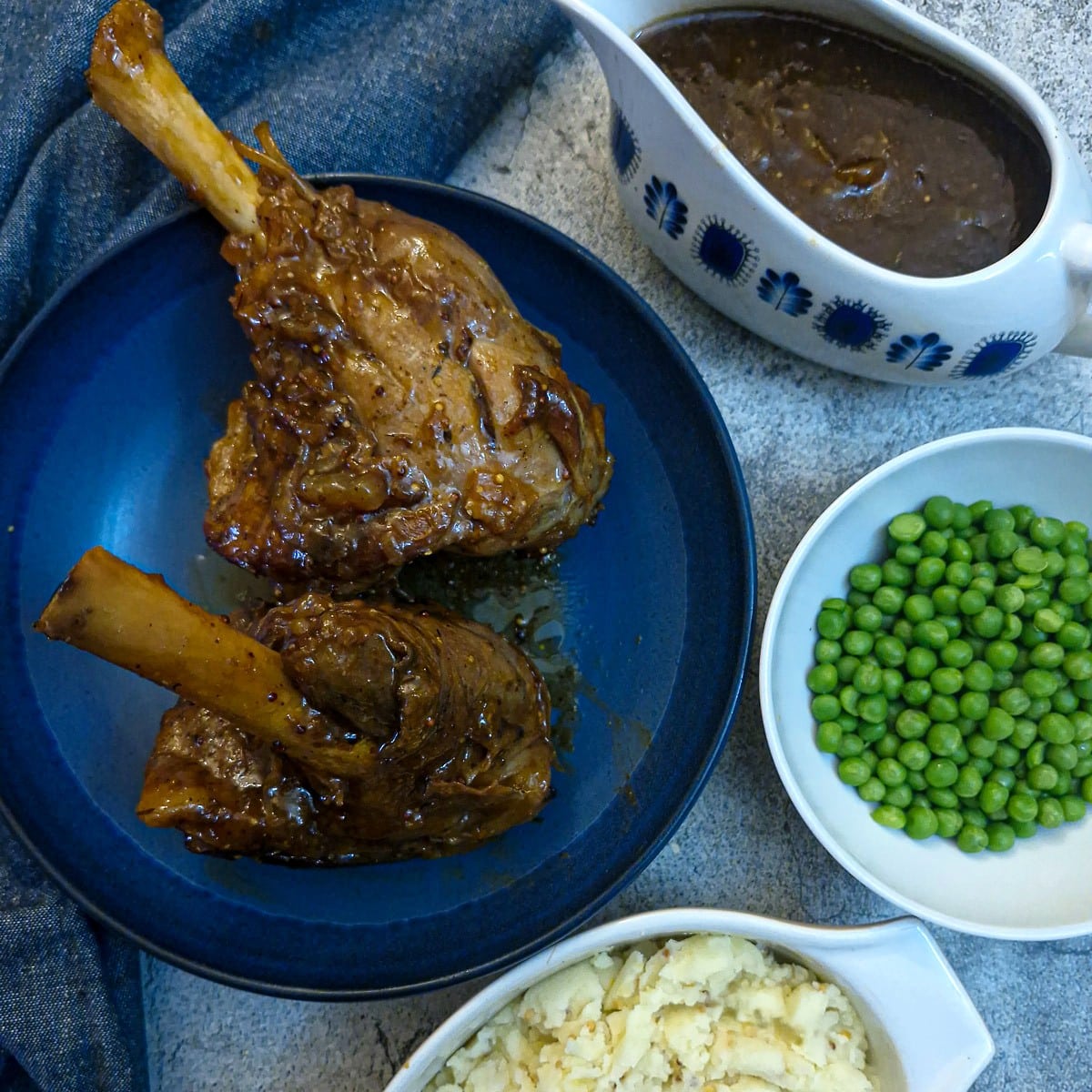
Fall-off-the-bone oven-braised honey-mustard lamb shanks are served on a bed of creamy mustard mashed potatoes and smothered in lashings of honey mustard gravy. This is one of those indulgent meals that takes hardly any time to prepare, yet tastes as though you've been cooking all day.
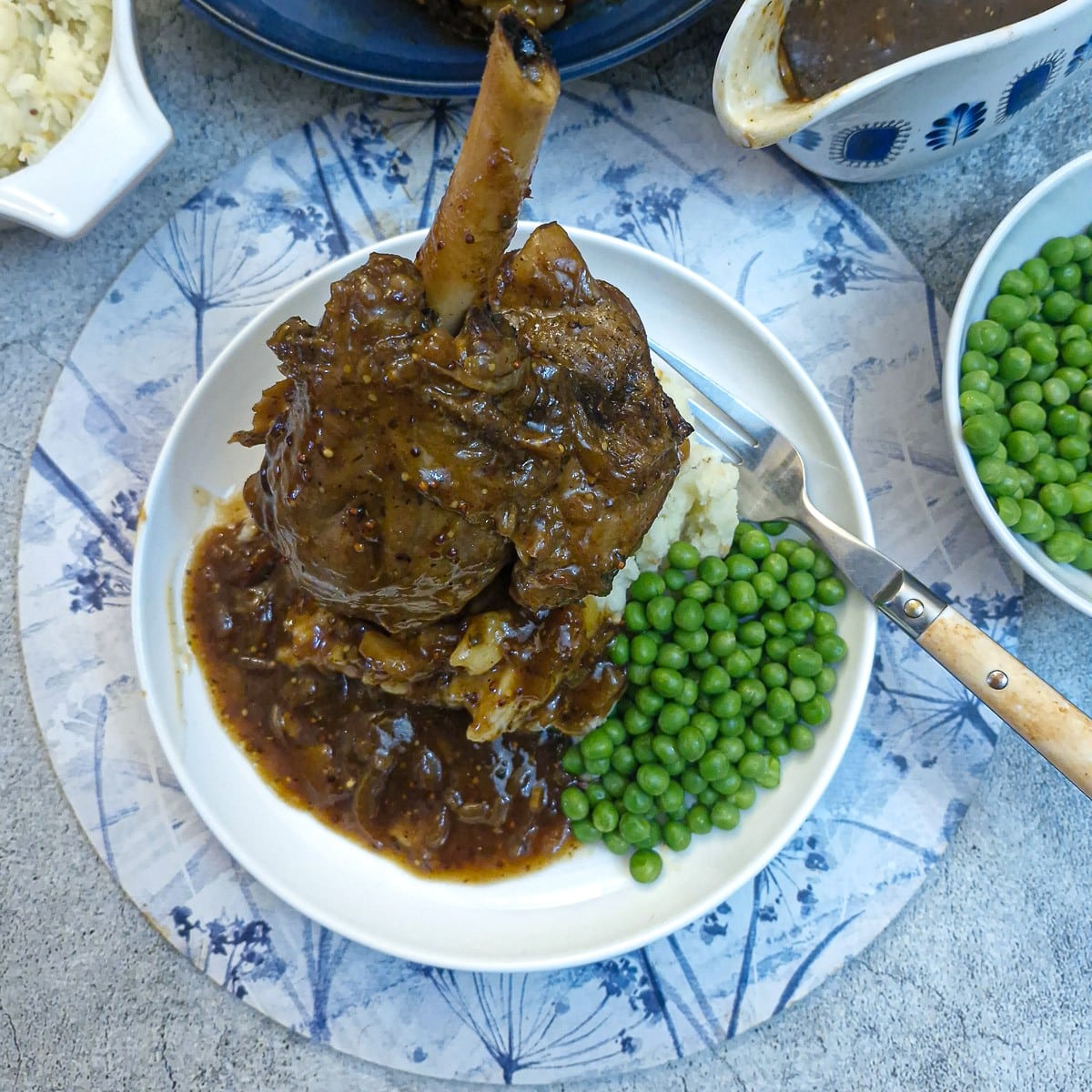
I love meals like this - where the oven does all the work, and you take all the credit. These honey and mustard oven-braised lamb shanks are such an easy meal to throw together.
- Brown the lamb shanks in oil and set aside on a plate.
- Brown onions and garlic in the same pan.
- Pour in my amazing homemade honey mustard sauce (all instructions further down the post) and add the meat back to the pan.
- Cover with a lid, pop it into the oven for a couple of hours and forget about it.
- Make an easy side dish of mustard mashed potatoes (and perhaps a dish of frozen peas) while the lamb is in the oven.
- Serve and wait for compliments!
I absolutely love lamb shanks, cooked to perfection, where the meat simply falls off the bone. Here are a few different ways to cook them:
- Garlic-braised lamb shanks
- Pressure cooker lamb shanks in a rich tomato gravy
- Slow-cooker lamb shanks in red wine gravy
- Lamb shanks with minted gravy
Jump to:
Lamb shanks at a glance
- Main ingredients: Lamb shanks, onions, garlic, wholegrain mustard, honey, thyme
- Prep time: 20 minutes - to slice the onions and garlic, then brown the lamb shanks, soften the onions, combine the stock ingredients and get the dish into the oven.
- Cooking time: 2 hours in the oven
- Yield: The recipe as given serves 2 people; add extra lamb shanks to serve more - the cooking time remains the same.
- Difficulty: Easy
What I love about these honey-mustard lamb shanks
- The taste! The honey mustard onion gravy imparts amazing flavour into the lamb, and I'd quite happily eat a dish of it on its own, over a bowl of mustard mash!
- So juicy and succulent. The long, slow cooking time, in a covered casserole dish, transforms the lamb shanks into meltingly tender meat that almost falls off the bone.
- Mostly hands off. Once everything is in the oven, the hard work is done, leaving you free to get on with other things while dinner cooks itself.
- Simple ingredients, big flavour! This is my type of cooking: simple, everyday ingredients that turn into something that tastes amazing, and you'd be happy to pay good money for in a restaurant, but you made it yourself!
- Great for entertaining. It looks impressive when served at the table, but it's surprisingly easy to prepare ahead of time.
Ingredients
**This is just an overview to explain why I used a particular ingredient. The complete list of ingredients and the exact measurements are on the printable recipe card at the end of this post.**
Lamb
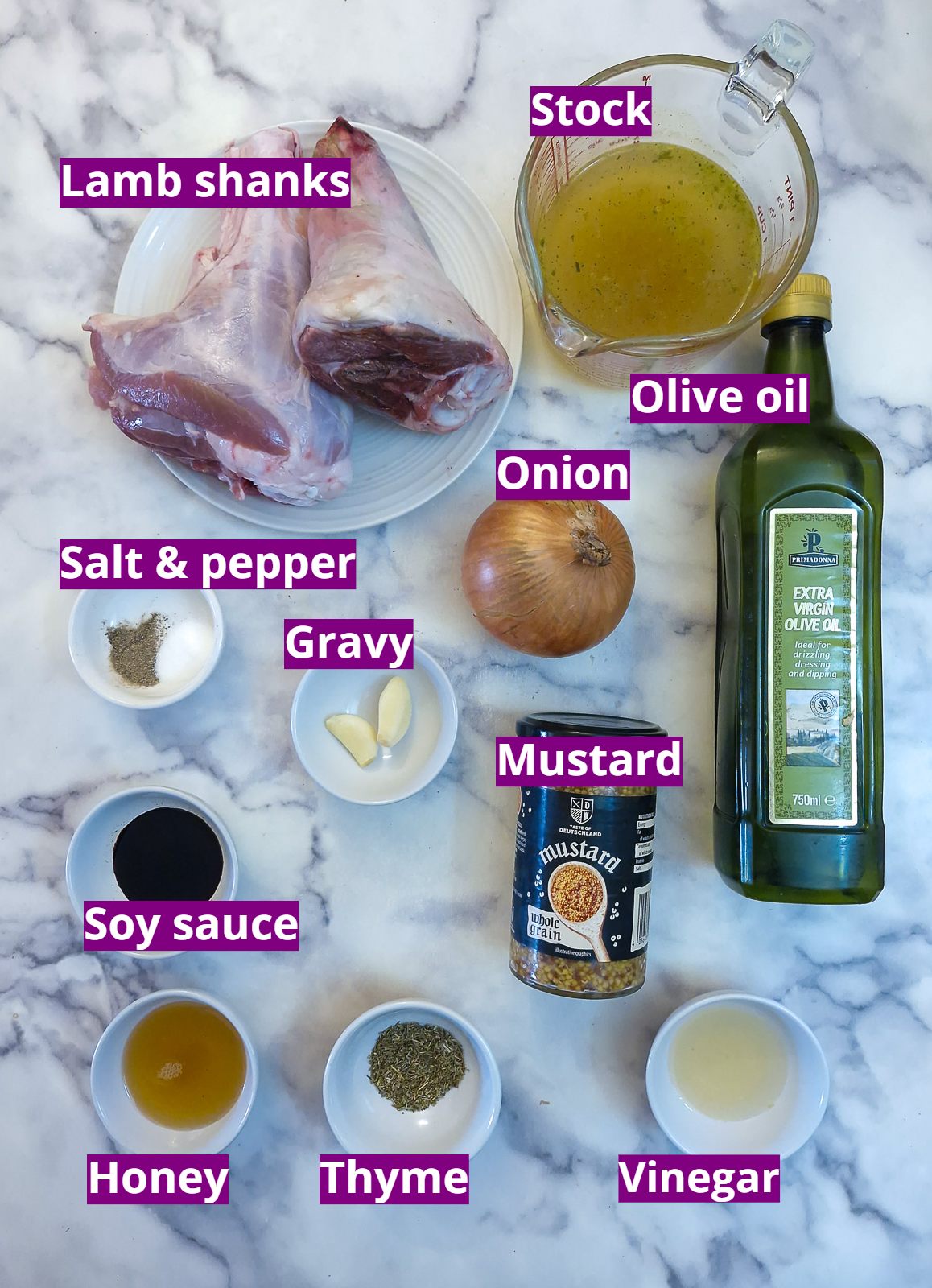
- Lamb shanks. A lamb shank contains a surprisingly large amount of bone for its size. As an example, a 500-gram lamb shank contains about 35% to 40% bone, with maybe 5% fat and connective tissue. So you'll probably end up with 275 to 325 grams (4 to 6 ounces) of edible meat after stripping it from the bone. So even though a lamb shank looks large on the plate, it actually yields a sensible serving of meat once cooked. Allow one lamb shank per person. Leftovers make delicious sandwiches for lunch the next day, or could even be turned into tasty lamb pies.
- Salt and pepper. This is used to season the lamb shanks before they are browned.
- Olive oil. Used to brown the lamb shanks before they go into the casserole dish with the gravy.
Honey mustard gravy
- Onion and garlic. These are the base ingredients of the gravy, and will be softened in the juices leftover from browning the lamb shanks.
- Stock. If you have lamb stock, by all means use that. I didn't have any, so I used a vegetable stock cube dissolved in a cup of boiling water. You could use chicken stock instead. I'd tend to steer clear of beef stock as the strong flavour might mask the flavour of the lamb.
- Mustard. I love the taste of wholegrain mustard, so that's what I tend to cook with. You could substitute it with Dijon mustard, or for more sharpness, use English mustard.
- Soy sauce. This seems a strange ingredient to add, but trust me, it works. It adds a richness to the stock and doesn't taste 'Chinesey' at all. Substitute with Worcestershire sauce.
- Honey. This adds sweetness to the gravy, but don't overdo it - you don't want the gravy to be too sweet.
- Thyme. I used dried thyme, but you could use fresh if you have it. You will need approximately 3 times the amount of fresh thyme as dried. Substitute with fresh or dried rosemary.
- Apple cider vinegar. This helps cut through the sweetness of the honey and balances the flavour of the gravy. Substitute with any mild fruity vinegar, but do try to add a little acidity. It makes all the difference in the taste. You could even add a squeeze of lemon juice instead of vinegar.
- Cornflour (or cornstarch). Used to thicken the gravy before serving.
How to make oven-braised honey mustard lamb shanks
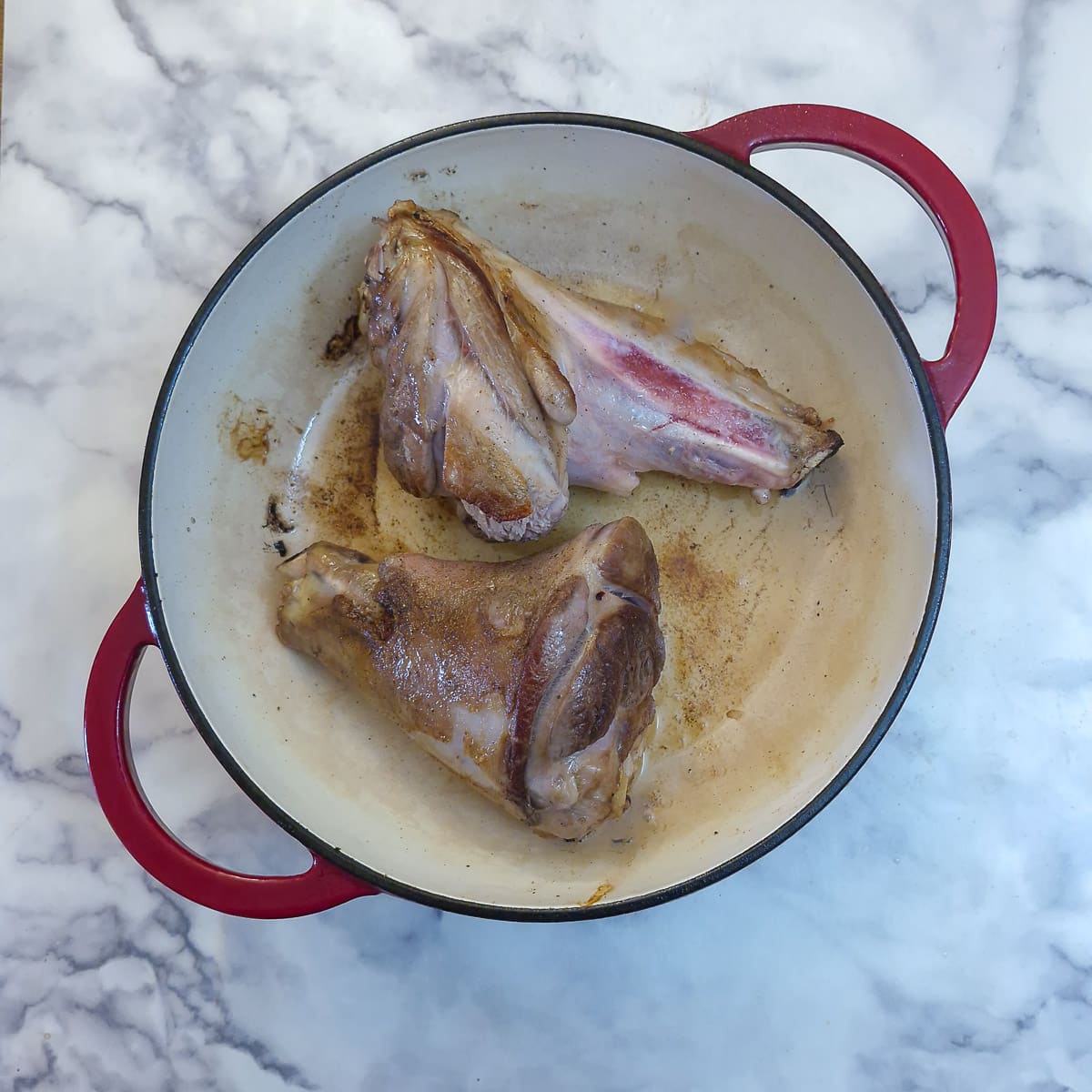
Step 1: Season the lamb shanks with a mixture of salt and black pepper. Heat the oil in an oven-proof casserole dish and sear the lamb shanks on moderate to high heat on all sides. Remove the lamb shanks to a plate.
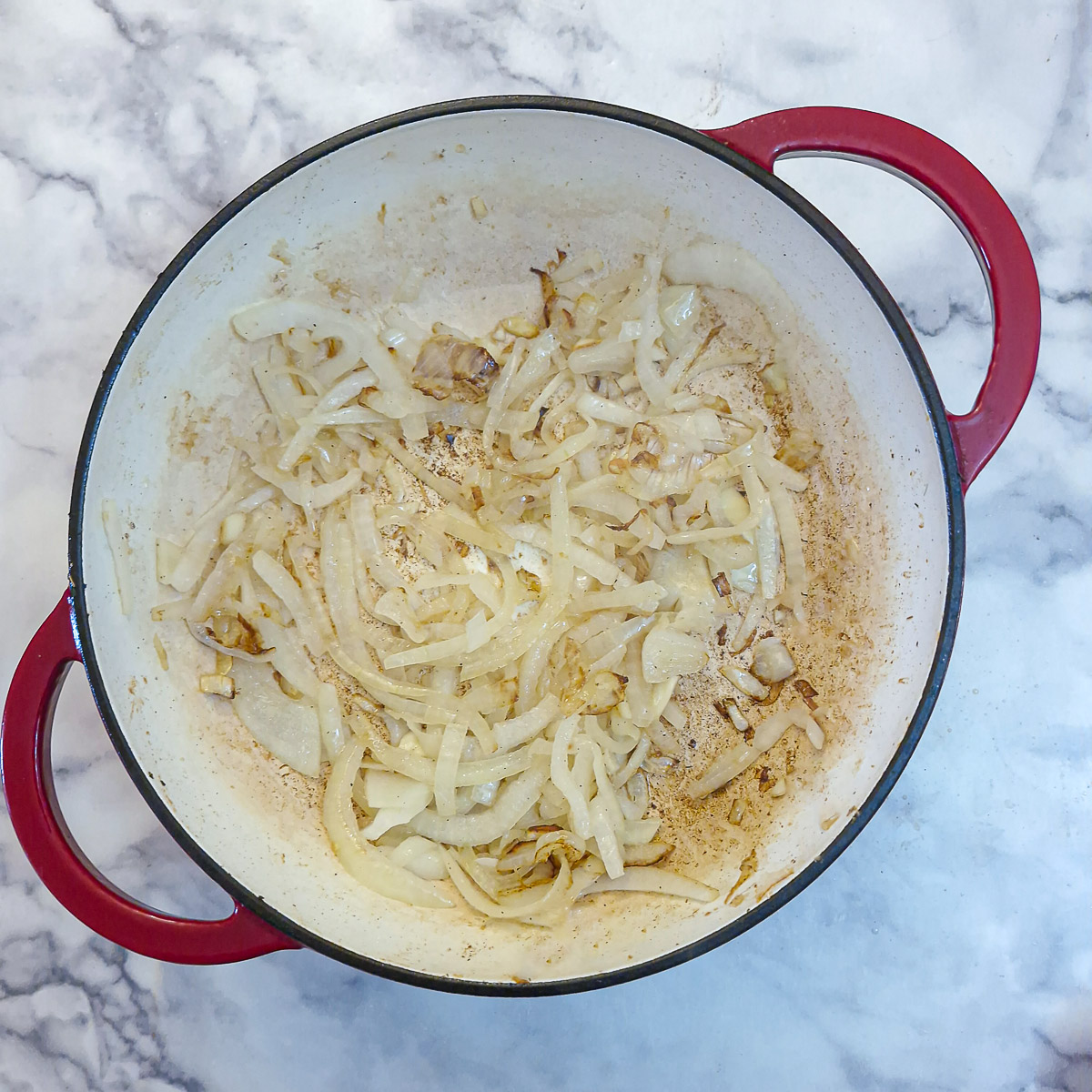
Step 2: Turn the heat to moderate and add another splash of oil if necessary. Add the sliced onions and garlic and stir for 3 to 4 minutes until the onions turn translucent and start to take on a little colour.
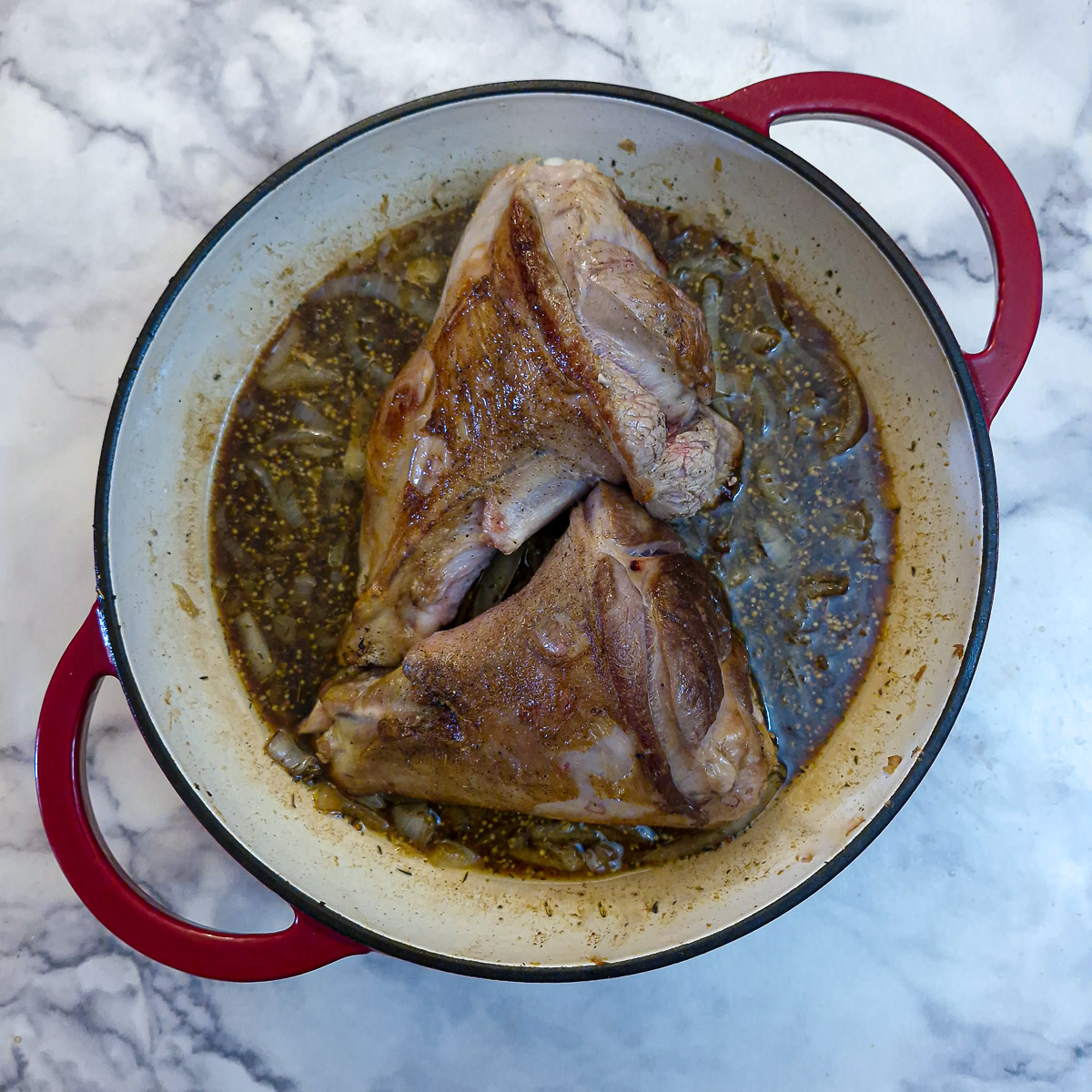
Step 3: Combine all the ingredients for the gravy (except the cornflour) in a jug and stir it into the onions, then return the meat to the pan.
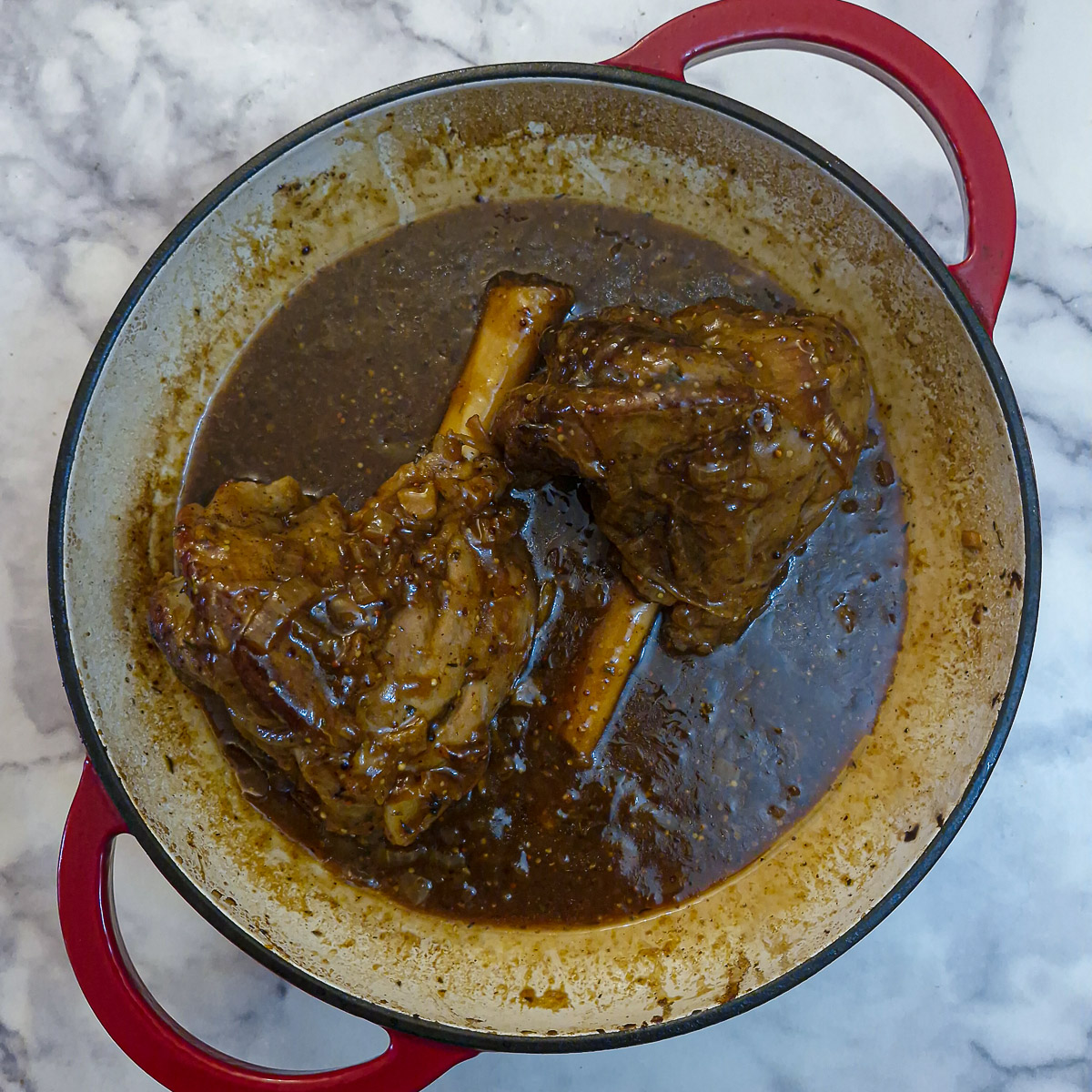
Step 4: Spoon some of the gravy over the shanks, then cover the pan with a lid and place the casserole in a preheated oven (170°C/350°F) for 2 hours.
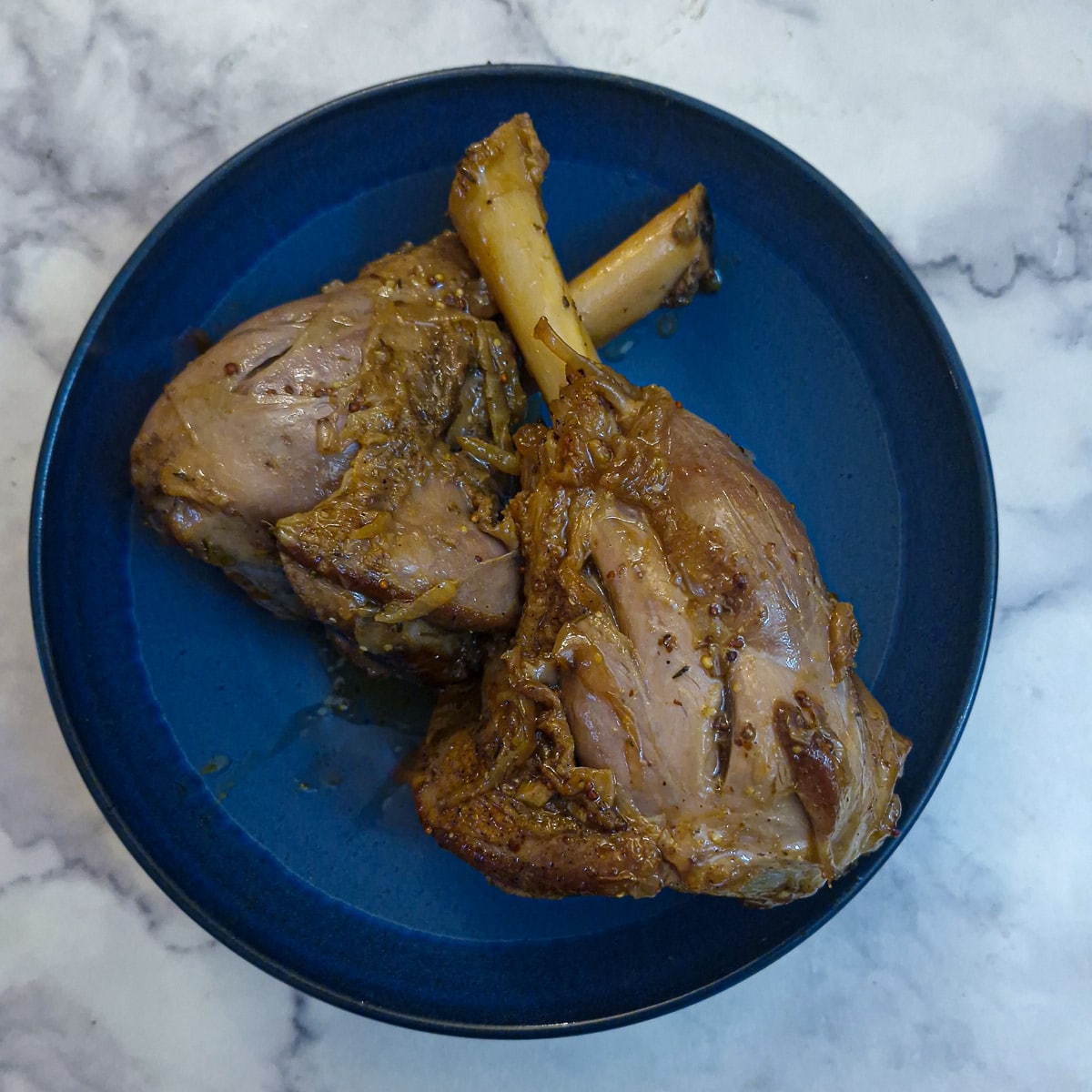
Step 5: Remove the lamb shanks, place them onto a serving dish and keep warm.
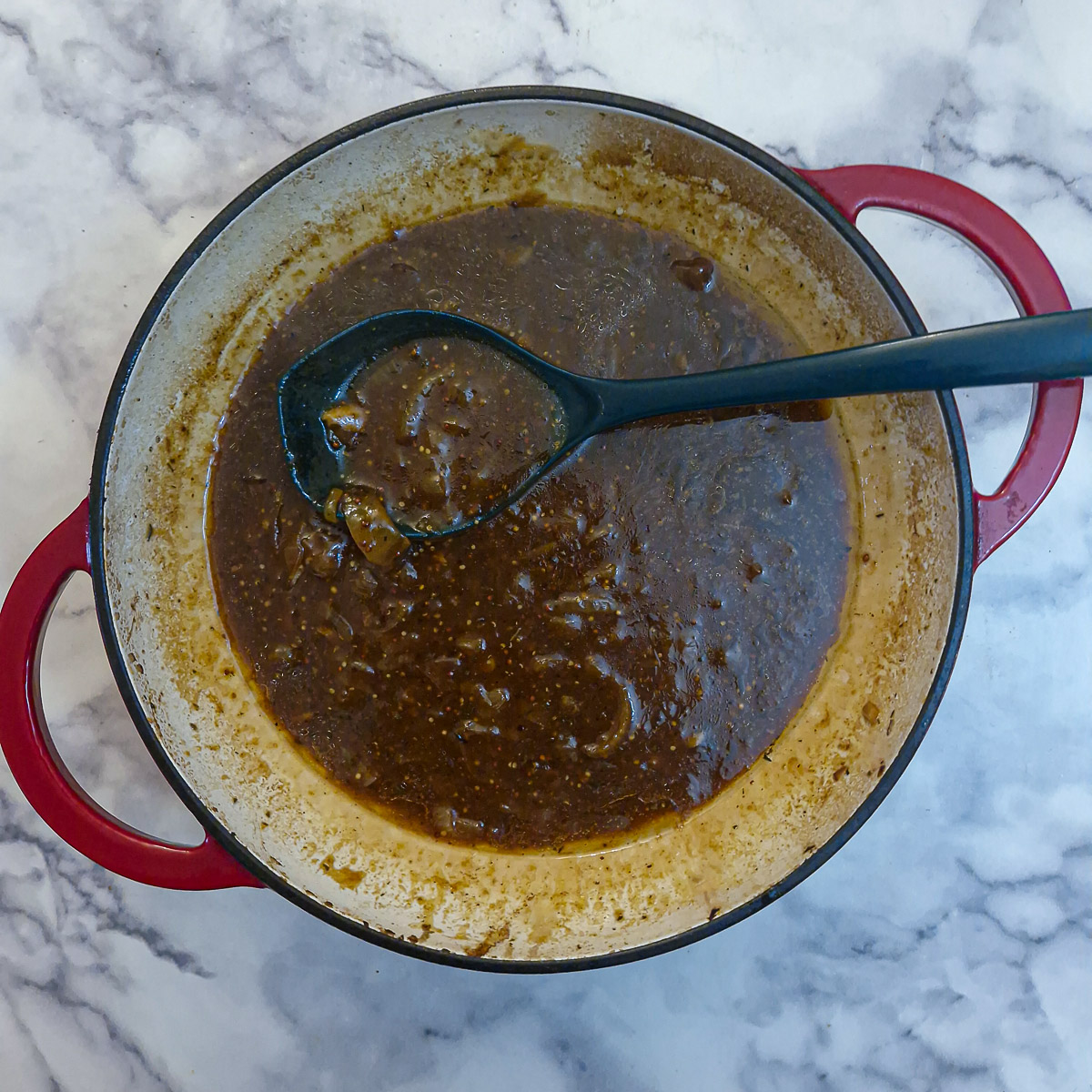
Step 6: Stir a slurry of cornflour and water into the gravy over low heat and allow it to thicken.
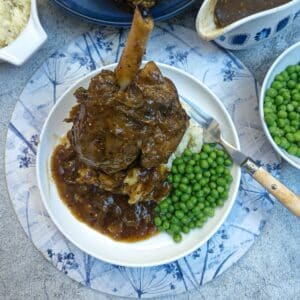
Serve the lamb shanks on a mound of mushroom mash and pour over a generous amount of gravy.
For contrast, add a green vegetable such as peas, broccoli, or green beans on the side.
How to make mustard mash
To make mustard mash, you will need these ingredients:
- Potatoes, peeled and cut into large chunks
- Salted water (for cooking the potatoes)
- Butter
- Splash of milk or cream
- Mustard - preferably wholegrain, but you could substitute with Dijon.
And this is how you make it (it's as easy as making mashed potatoes):
- Place the potatoes in a pan of cold, lightly salted water, bring to a boil and cook until soft enough to mash.
- Drain the potatoes.
- Mash with butter and a splash of milk until smooth.
- Stir in the mustard.
- Taste for seasoning and adjust if necessary.
Tips for a successful outcome
Here are my top tips to ensure your honey mustard lamb shanks always turn out perfectly:
- When searing the lamb shanks, use a pair of tongs to hold the meat in place. The idea is to sear the entire surface of the lamb shanks. This not only adds flavour, but it ensures the juices stay in the meat, where they belong, keeping the lamb succulent.
- Take care not to allow the onions to burn, or they may add a bitter taste to the dish.
- I used a cast-iron Dutch oven with a tightly fitting, heavy lid, and there was hardly any evaporation of the gravy. If you use a ceramic dish with a lid that doesn't fit as tightly, you may need to top up the gravy with stock. Check every half hour or so to make sure it's not drying out.
- Thicken the gravy with 2 teaspoons of cornflour (or cornstarch) mixed to a smooth slurry with 2 tablespoons of cold water. Stir this into the gravy over low heat until the gravy thickens. You may not need all the slurry.
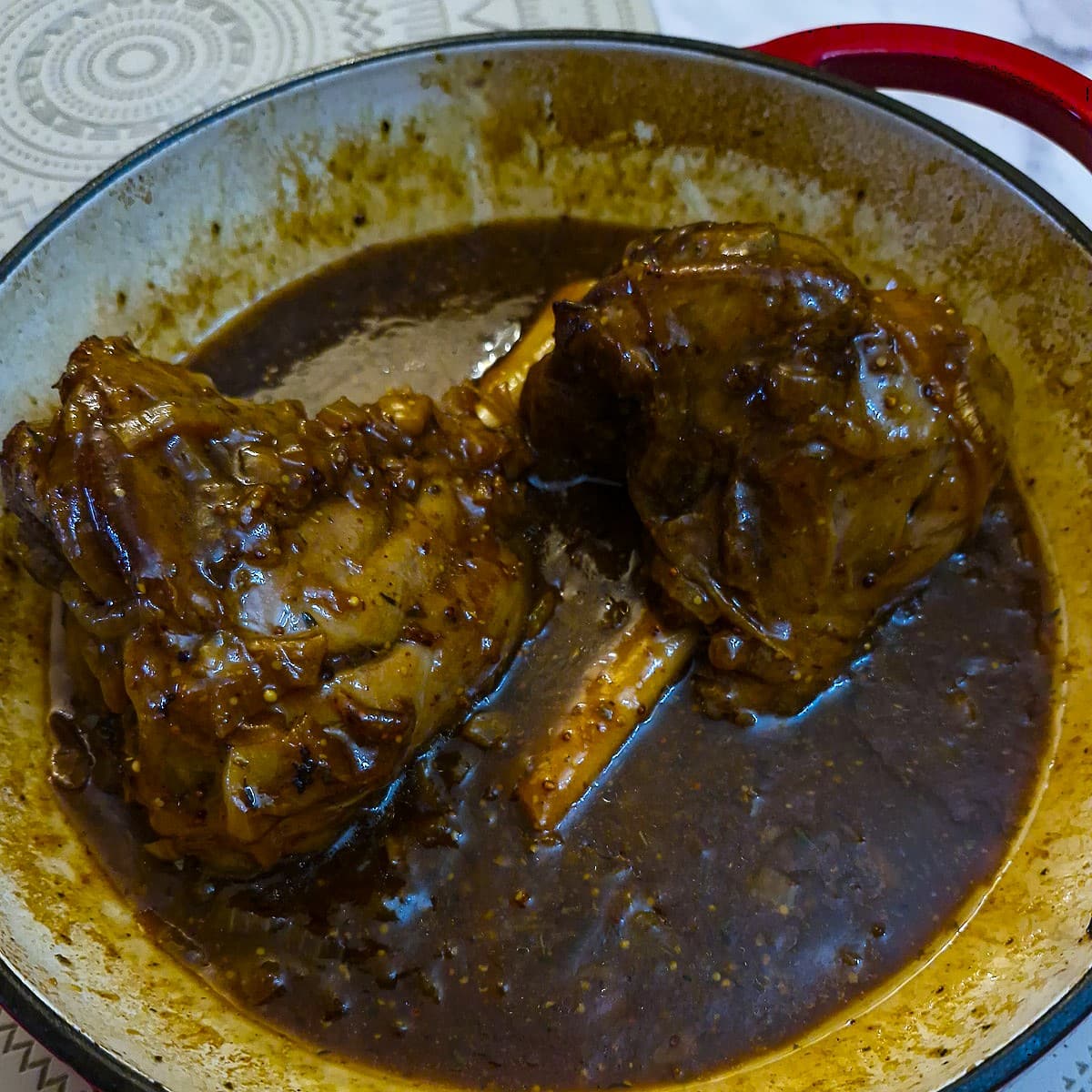
- You'll know the lamb is done when the meat has pulled down the shank and is almost falling from the bone.
Variations
For a few easy variations, try some of these suggestions:
- Red wine. For a richer, more full-bodied gravy, replace half a cup of stock with red wine.
- Add root vegetables. Turn this into a complete one-pan meal by adding chunks of carrots, parsnips and/or swedes to the gravy, so they cook slowly alongside the lamb. If you do this, add an extra cup of stock to allow the vegetables to soften.
- Swap the mash. Instead of mustard mash, serve the lamb shanks with creamy polenta, mashed sweet potatoes or even just crusty bread to soak up the juices (try these crusty German rolls). If you're feeling particularly energetic, you may like to make a dish of rumbledethumps or Irish colcannon and serve the lamb shanks on top.
Equipment
Equipment can have a big impact on how a recipe turns out. For these oven-braised lamb shanks, you ideally need a heavy cast-iron dish (or Dutch oven) that can be used on the hob and in the oven. The dish should have a tightly fitting lid to minimise evaporation.
You can purchase a cast-iron Dutch oven quite cheaply on Amazon (affiliate link), or wait for Lidl or Aldi to have a special and buy one there.
Of course, if you don't have a cast-iron dish, it's not the end of the world. You can use any casserole dish with a lid, or even cover the dish tightly with tin foil to keep the moisture in. If you cook the shanks in this way, you will probably have to check every now and then to make sure they're not drying out.
Storage and freezing
Leftover lamb shanks make great sandwiches. My husband normally layers it in a crusty roll and takes it with him to his allotment for lunch. If I can rescue any before he eats it all, I tend to turn it into lamb pies.
- Refrigerator. Store leftover lamb in a covered container in the refrigerator for up to 3 days.
- Freezer. You could also cut the leftover lamb shanks into cubes and freeze them in a ziploc bag for up to 3 months. Defrost the lamb and use it to make a stew, a lamb curry or a pie filling.
- Defrosting. Defrost frozen lamb pieces overnight in the refrigerator before using.
- Reheating. If you want to reheat leftover lamb shanks with the gravy, transfer it to a saucepan and heat gently on the stove until piping hot. Alternatively, reheat it in the microwave.
FAQ
Yes - this recipe is very easy to adapt for a gluten-free diet. Simply replace the soy sauce with a gluten-free soy sauce or tamari. Make sure your mustard and stock cubes are labelled gluten-free too, as some brands may contain wheat or gluten-based additives. Also, use cornflour to thicken the gravy rather than normal wheat flour.
The lamb shanks are ready when the meat pulls down, exposing the bone, and can be pierced with a fork with no resistance. If the shanks still feel a little tough or don't pull away from the bone easily, return them to the oven for a little longer.
Yes, you can. After browning the lamb and onions, transfer everything to a slow cooker and cook on low for 7 to 8 hours or on high for 4 to 5 hours until tender.
Lamb shanks need long, slow cooking to break down the connective tissue. If they still seem a little tough, they just need extra time in the oven.
This recipe is very easy to scale. As a rule of thumb, allow one lamb shank per person and scale the remaining ingredients accordingly. Make sure you have a dish large enough to hold all the lamb shanks in a single layer so they braise evenly in the gravy. The cooking time should stay roughly the same, although larger batches may require an extra 10 to 15 minutes in the oven.
Save for later
If you would like to make these oven-braised honey mustard lamb shanks, why not save the recipe to one of your Pinterest boards, so you can find it easily? Just click the image below.
Alternatively, you can save the recipe by clicking on the floating heart icon on the right-hand side of the screen.
Related recipes
Visit my lamb recipes page for other tasty ideas using lamb. Here are a few you might enjoy:
📋The recipe
Oven-braised honey-mustard lamb shanks
(Click the stars to rate this recipe)
Equipment
- Cast iron dutch oven OR
- Casserole dish with a lid
- Sharp Knife
- Chopping Board
- Jug to combine the stock ingredients
- Spatula
Ask a Question
If you have a question about this recipe that has not been answered, please use the box below to ask it.
Use this with care. This is an AI-generated result and may contain errors or inaccuracies. I cannot be held responsible for the information returned.
Ingredients
Lamb
- 2 medium lamb shanks on the bone 12 - 14 oz or 350 - 400 grams each
- ½ teaspoon salt
- ¼ teaspoon black pepper
- 3 - 4 tablespoons olive oil
Gravy
- 1 medium to large onion peeled and sliced
- 2 large cloves garlic finely chopped
- 1 cup / 240 ml chicken, vegetable or lamb stock make it with a stock cube if you don't have fresh stock
- 1½ tablespoons wholegrain mustard
- 2 tablespoons honey
- 1 teaspoon dried thyme
- 1 tablespoon dark soy sauce optional
- 1 tablespoon apple cider vinegar or lemon juice
- 1 tablespoon cornflour (or cornstarch)
- 2 tablespoons cold water
Mustard mash
- 1 pound / 450 grams potatoes
- Cold water sufficient to cover the potatoes
- 1 teaspoon salt
- 1 tablespoon / 15 grams butter
- 2 tablespoons milk or cream
- 1 tablespoon wholegrain mustard
Instructions
Lamb shanks
- Season the lamb shanks with a mixture of salt and black pepper. Heat the oil in an oven-proof casserole dish and sear the lamb shanks on moderate to high heat on all sides. Remove the lamb shanks to a plate.2 medium lamb shanks on the bone, ½ teaspoon salt, ¼ teaspoon black pepper, 3 - 4 tablespoons olive oil
- Turn the heat to moderate and add another splash of oil if necessary. Add the sliced onions and garlic and stir for 3 to 4 minutes until the onions turn translucent and start to take on a little colour.1 medium to large onion, 2 large cloves garlic
- Combine all the ingredients for the gravy (except the cornflour) in a jug and stir it into the onions, then return the meat to the pan.1 cup / 240 ml chicken, vegetable or lamb stock, 1½ tablespoons wholegrain mustard, 2 tablespoons honey, 1 teaspoon dried thyme, 1 tablespoon dark soy sauce, 1 tablespoon apple cider vinegar or lemon juice
- Spoon some of the gravy over the shanks, then cover the pan with a lid and place the casserole in a preheated oven (170°C/350°F) for 2 hours.
- Remove the lamb shanks, place them onto a serving dish and keep warm.
- Make a slurry with the cornflour and water, stir it into the gravy over low heat and allow it to thicken. You may not need all the cornflour mixture.1 tablespoon cornflour (or cornstarch), 2 tablespoons cold water
Mustard mash
- Place the potatoes in a pan of cold, lightly salted water, bring to a boil and cook until soft enough to mash (10 to 12 minutes).1 pound / 450 grams potatoes, Cold water, 1 teaspoon salt
- Drain the potatoes.
- Mash the potatoes with butter and a splash of milk until smooth.1 tablespoon / 15 grams butter, 2 tablespoons milk or cream
- Stir in the mustard.1 tablespoon wholegrain mustard
- Taste for seasoning and adjust if necessary.
Notes
Nutrition
I am not a nutritionist. The nutrition information has been calculated using an on-line calculator, and is intended for information and guidance purposes only. If the nutrition information is important to you, you should consider calculating it yourself, using your preferred tool.
If you made this recipe and enjoyed it, I'd love it if you could give me a star rating in the comments below. And if you'd like to get in touch, you can email me at [email protected]. I'd love to hear from you. And don't forget to subscribe to my mailing list so you can grab yourself a copy of my FREE COOKBOOK!
If you'd like to continue browsing, just click on this link to all my recipes.

Did you make this recipe? Let me know!