
This easy lamb rib curry is a one-pan wonder that's hearty, comforting, and full of flavour. The lamb cooks slowly until it falls off the bone, while a grated potato naturally thickens the sauce into a rich, glossy gravy. Carrots, potatoes, onions, and a handful of cabbage add texture and sweetness, all balanced with my homemade curry powder (or your favourite shop-bought mix). The result is a family-friendly curry that's warming without being too spicy - perfect with rice or naan for a satisfying meal.
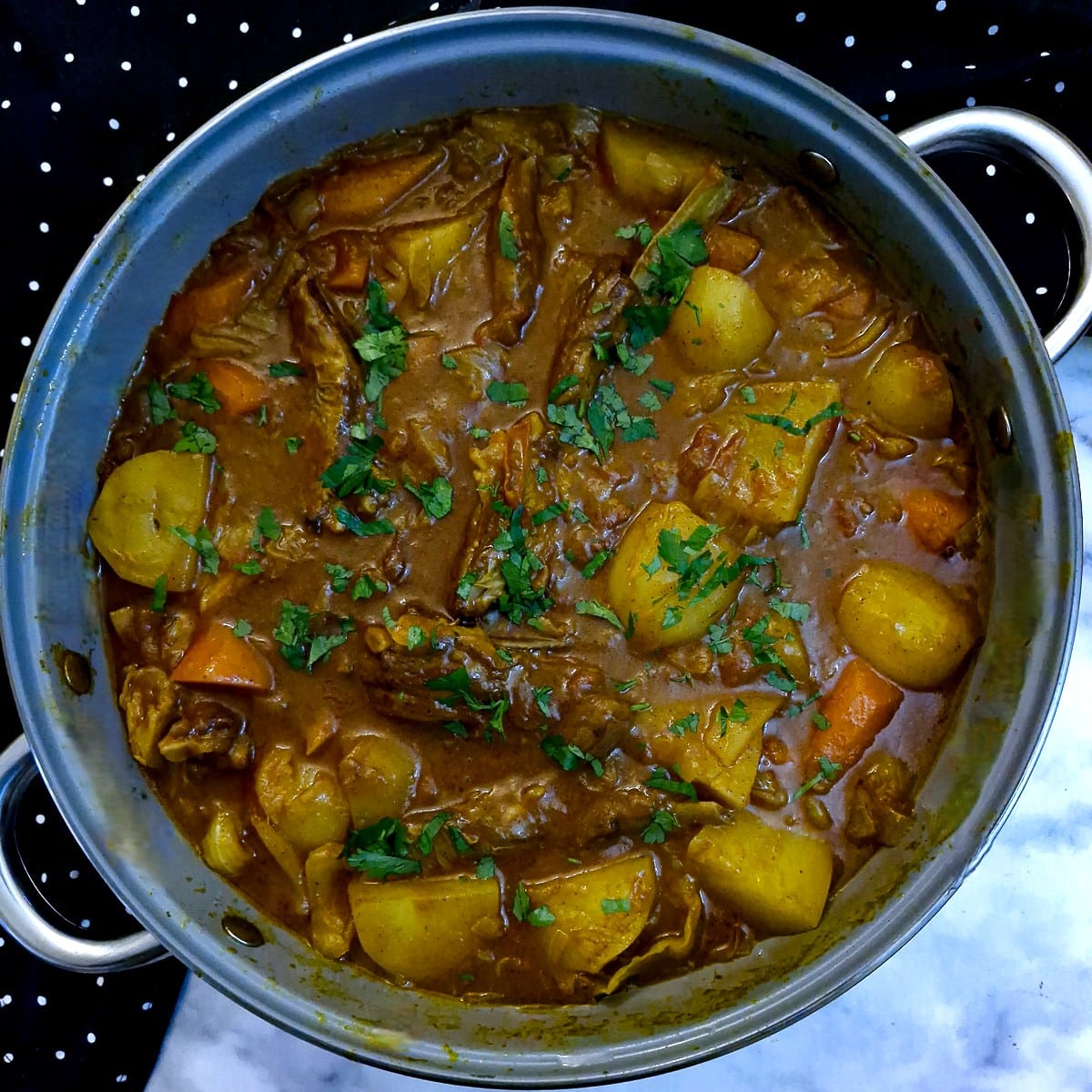
Nothing beats a hearty lamb rib curry bubbling away in one pan! The meat cooks to fall-off-the-bone softness, and the sauce is thick and rich, thanks to my secret ingredient - a grated potato stirred in at the beginning. It naturally thickens the sauce, giving it a lovely glossy texture without the need for any extra thickeners.
I also like to add a cupful of shredded cabbage right at the start. Even cabbage haters won't notice it's there once the lamb curry has finished cooking. The cabbage breaks down completely, melting into the gravy and adding an extra layer of flavour.
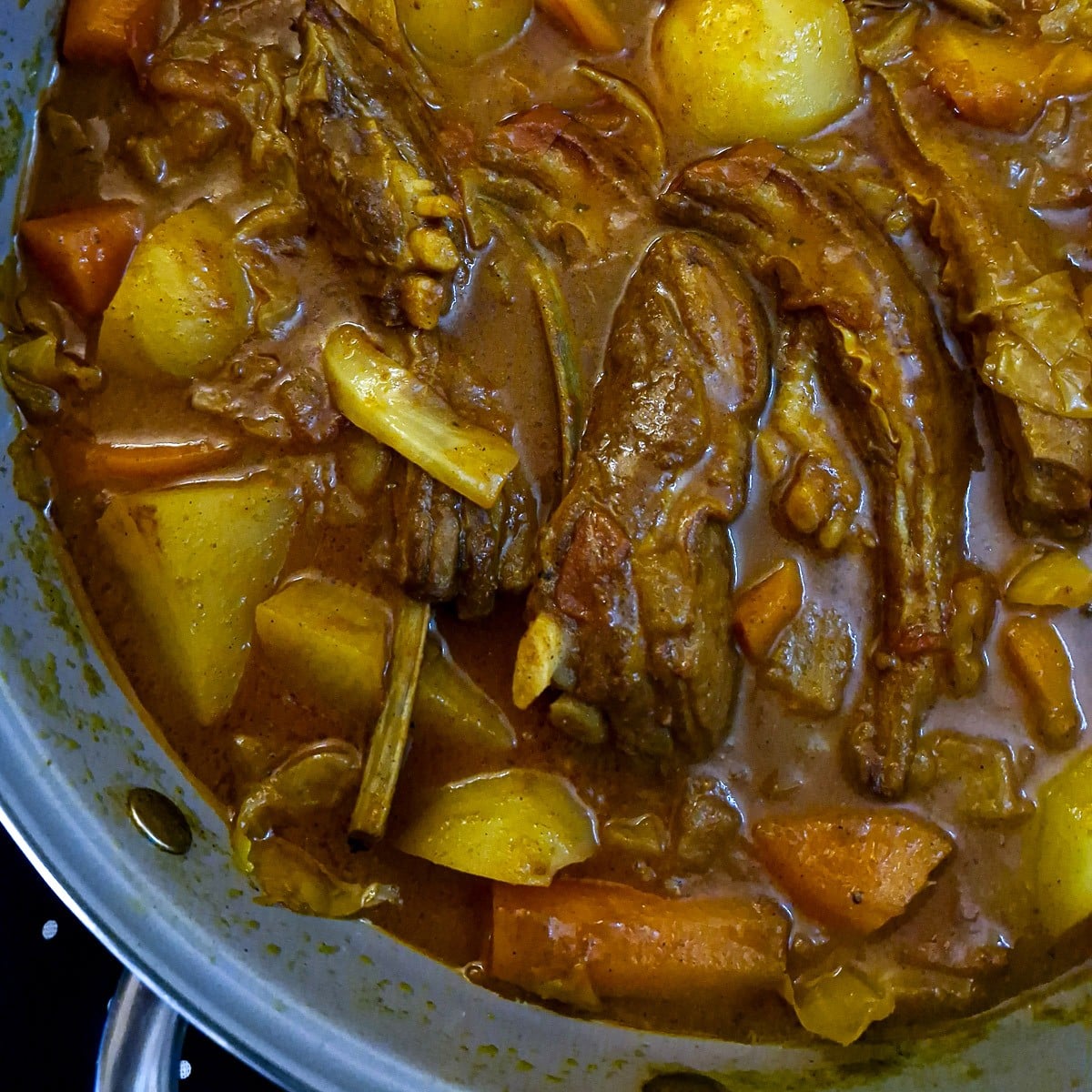
Lamb ribs are such an underrated cut of meat, but when cooked slowly, they really shine. Left to simmer gently, the connective tissue and sinews soften and break down, releasing rich, meaty flavour into the sauce, and leaving the lamb tender and succulent. The bones can be pulled out with ease, and the meat is melt-in-the-mouth delicious.
To get the best results, I allow the lamb ribs to simmer for about an hour before adding the potatoes and carrots. This way, the meat has time to tenderise, without the vegetables turning mushy, and they cook perfectly in the remaining half hour.
For this lamb rib curry, I've used my homemade curry powder, a blend that's full of flavour without being overly hot, and which pairs beautifully with the lamb. The recipe makes a large batch of around 3 cups of curry powder, which you can store in your pantry with your other spices. If you'd like to try it first, there are instructions for making just enough for one pot of curry, too. And of course, if you have a favourite shop-bought curry powder, you could use that instead.
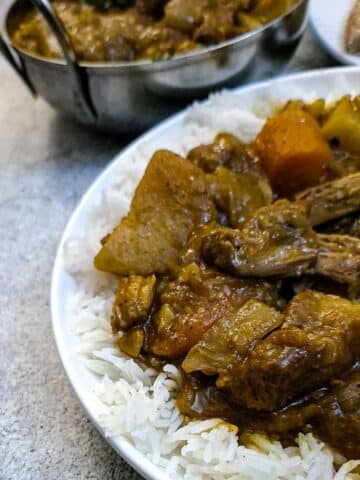
The end result is a delicious lamb rib curry, with tender meat and chunky vegetables in a rich, flavourful sauce. It's hearty without being too spicy, and because everything is cooked in one pan, it's as easy to make as it is to clear up afterwards. All you need on the side is some fluffy rice or warm naan to scoop up the sauce, and you've got a super easy meal the whole family will love.
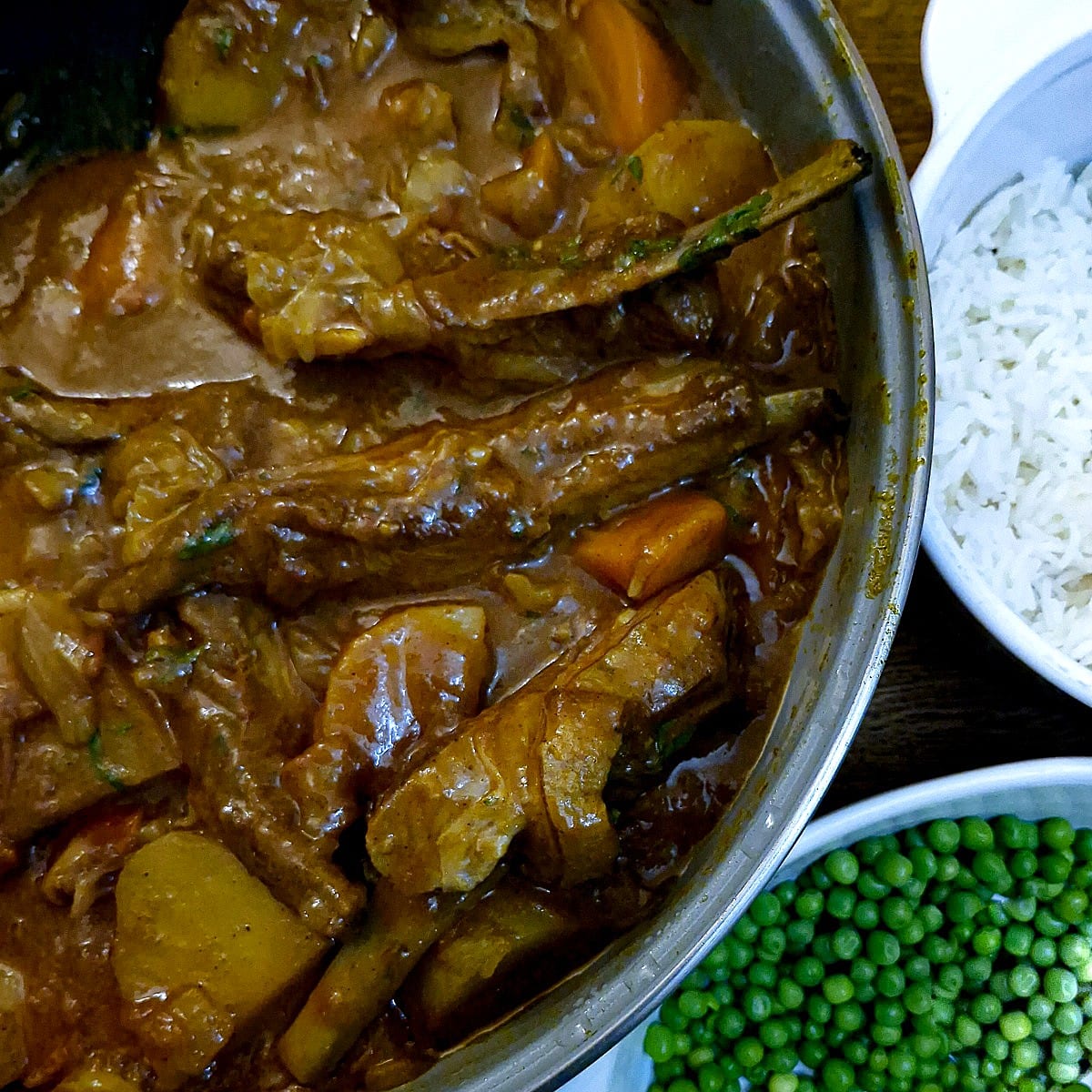
Table of Contents
Why you should try this easy lamb rib curry
- ⭐It's an easy no-fuss meal. Once the curry is in the pan, apart from adding the vegetables for the last half hour, you leave it alone to simmer.
- ⭐Tender slow-cooked lamb ribs. The long, slow cooking process transforms this underrated cut into juicy, succulent meat.
- ⭐Rich, thick curry sauce. Some people (myself included) think this is the best part. Naturally thickened with grated potato and packed with all the lovely flavours released by the lamb, it practically begs to be scooped up with a piece of naan bread.
- ⭐Packed with vegetables. With tomatoes, onions, cabbage, carrots and potatoes, you don't need any other vegetables to serve with it. (Unless, of course, you are like me, and don't believe a curry is complete without a few sweet green peas!)
- ⭐Family-friendly curry recipe. This curry is mild enough for everyone, old or young, to enjoy. And if you fancy a bit more heat, it's easy enough to fry a chopped chilli with the onions.
Recipe information
- ⌚Prep time: 30 minutes, but this includes preparing the vegetables, browning the meat and onions, and getting the curry to the state where you can start it simmering.
- ⌛Cooking time: 1 hour and 30 minutes. Most of this time is hands off, while the curry simmers.
- 🍚Yield: Serves 4.
Ingredients for easy lamb rib curry
**You can find the exact ingredient measurements on the printable recipe card at the end of this post.**
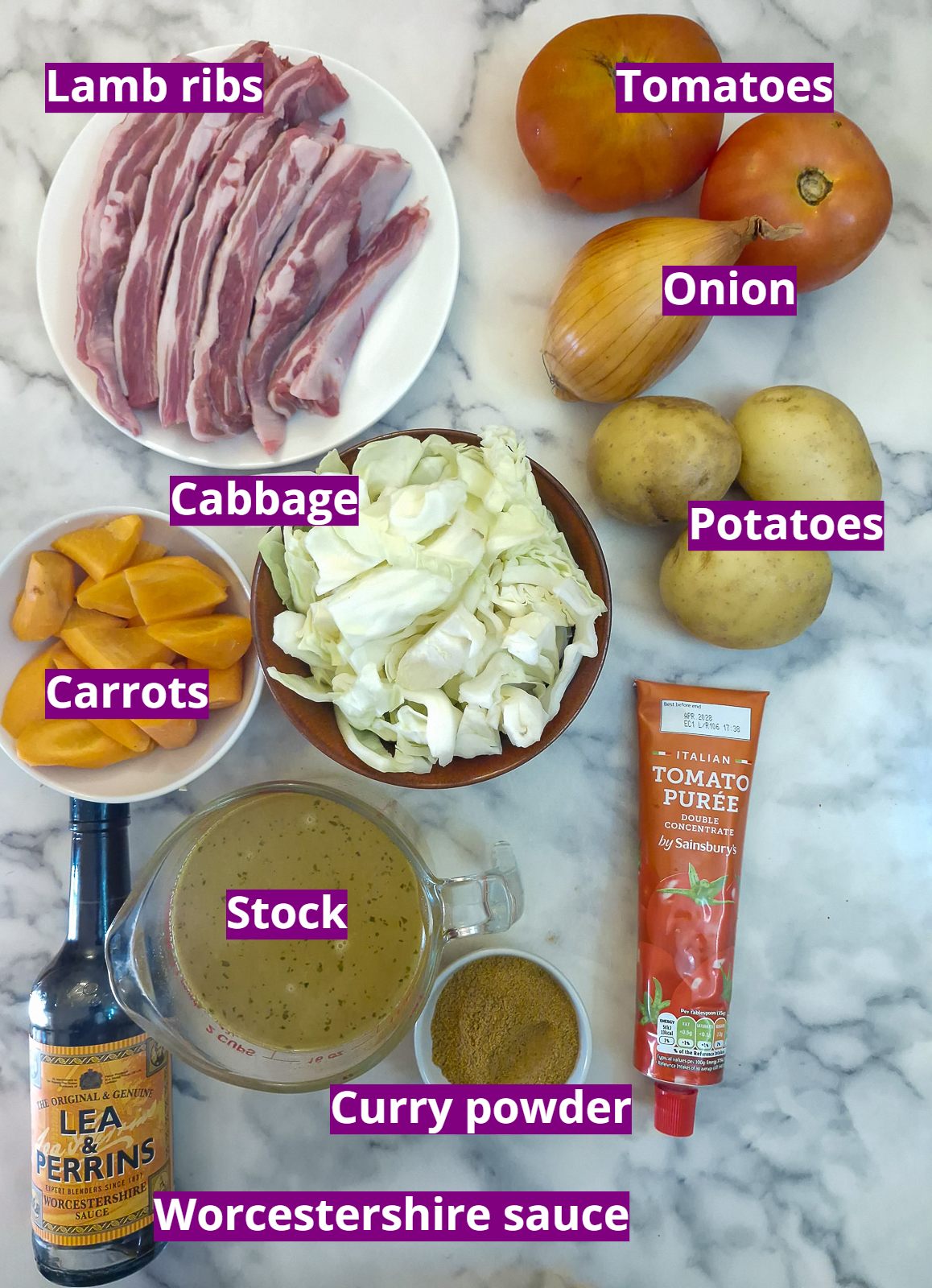
- Lamb ribs. I buy ribs (either from the butcher or the supermarket) that have already been trimmed and separated into individual riblets. You could buy a rack of lamb ribs and separate them yourself, but that's just giving yourself extra work to do! I've allowed 200 grams or 7 ounces of lamb ribs per person, as there is quite a large amount of bone in the ribs.
- Tomatoes. These should be washed and diced. There's no need to remove the skin unless you really want to.
- Potatoes. In addition to adding chunks of potatoes to the curry, you will need an additional potato that has been grated. This will go in at the beginning so that it can cook away, leaving just its starch to thicken the gravy.
- Onion. I used a white onion; you could use red instead. It should be peeled and diced or sliced.
- Carrots. These should be peeled and sliced.
- Cabbage. Please trust me on this one! A cupful of shredded cabbage makes all the difference to this curry. Even if you hate cabbage, you won't taste it in the curry - it cooks away to almost nothing, but adds tons of flavour. I like to use white cabbage for this recipe. I'd be inclined to avoid Savoy cabbage, as it can have quite a bitter taste.
- Stock. Lamb stock can be difficult to come by, so I tend to use either chicken or vegetable stock, which I make by dissolving stock cubes in boiling water.
- Curry powder. This is my homemade curry powder, but you could use your favourite shop-bought blend.
- Tomato puree or tomato paste. Highly concentrated tomatoes, which add an extra layer of flavour to the gravy. Not to be confused with tomato ketchup, which would be too sweet.
- Worcestershire sauce. This adds a savoury, slightly salty element. You can leave it out if you prefer.
- Salt (not pictured). You may or may not need salt. It depends on how much seasoning is in the stock and Worcestershire sauce as to whether you need to add any. I normally just salt the lamb ribs lightly before browning them and then taste the curry at the end and adjust the seasoning if necessary.
- Oil. Any neutral-flavoured cooking oil will be fine. It is used to brown the lamb ribs and soften the onions.
Instructions
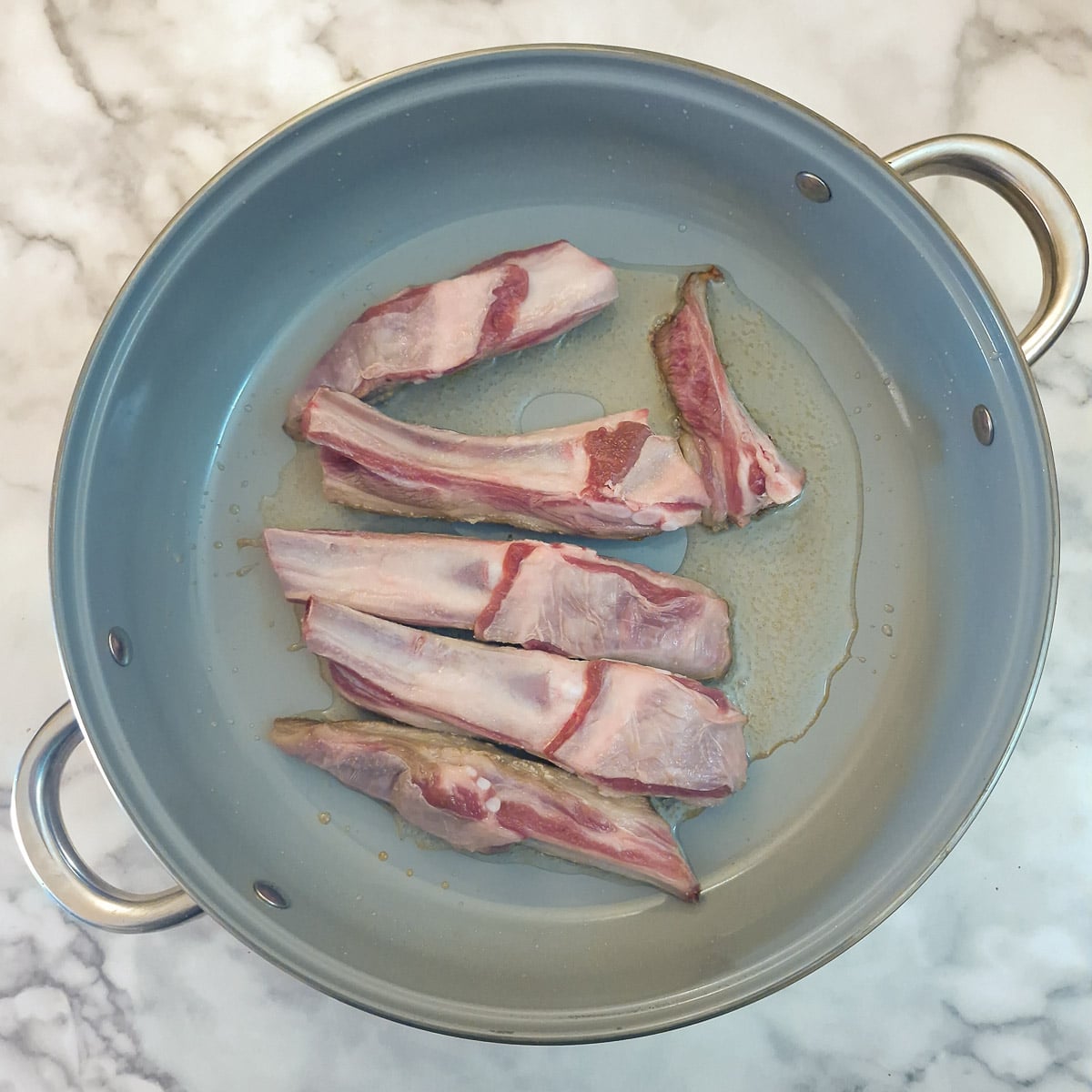
Step 1: Heat the oil to medium-high heat, then add the lightly salted lamb ribs skin-side down.
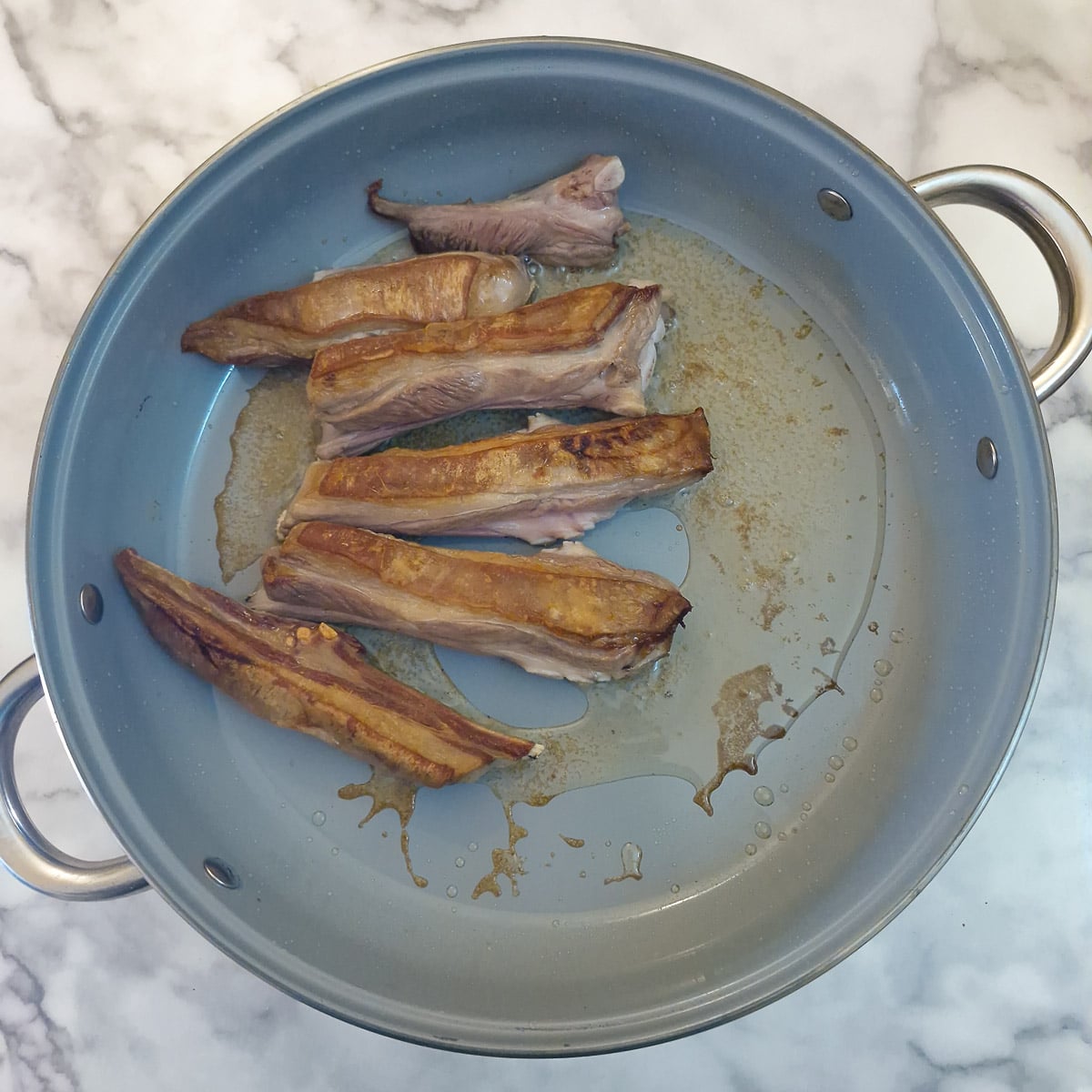
Step 2: Leave the lamb to brown for 3 to 4 minutes, then turn and brown the other side. Use a pair of tongs to help you turn the lamb over so it browns on all sides. Once browned, remove the lamb to a plate and set aside.
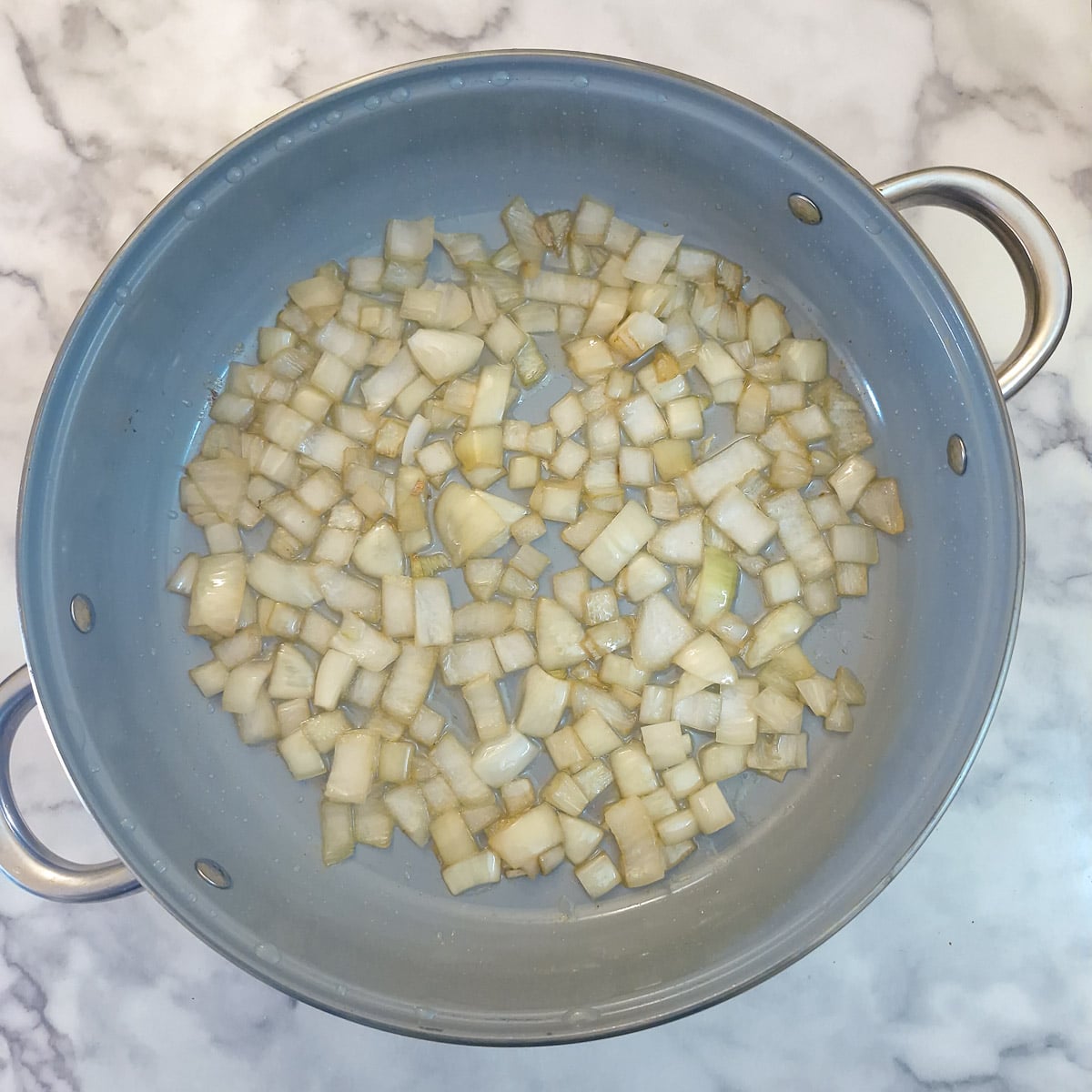
Step 3: Add the onions to the pan (with an extra splash of oil if necessary) and stir them until they start to brown slightly and turn translucent.
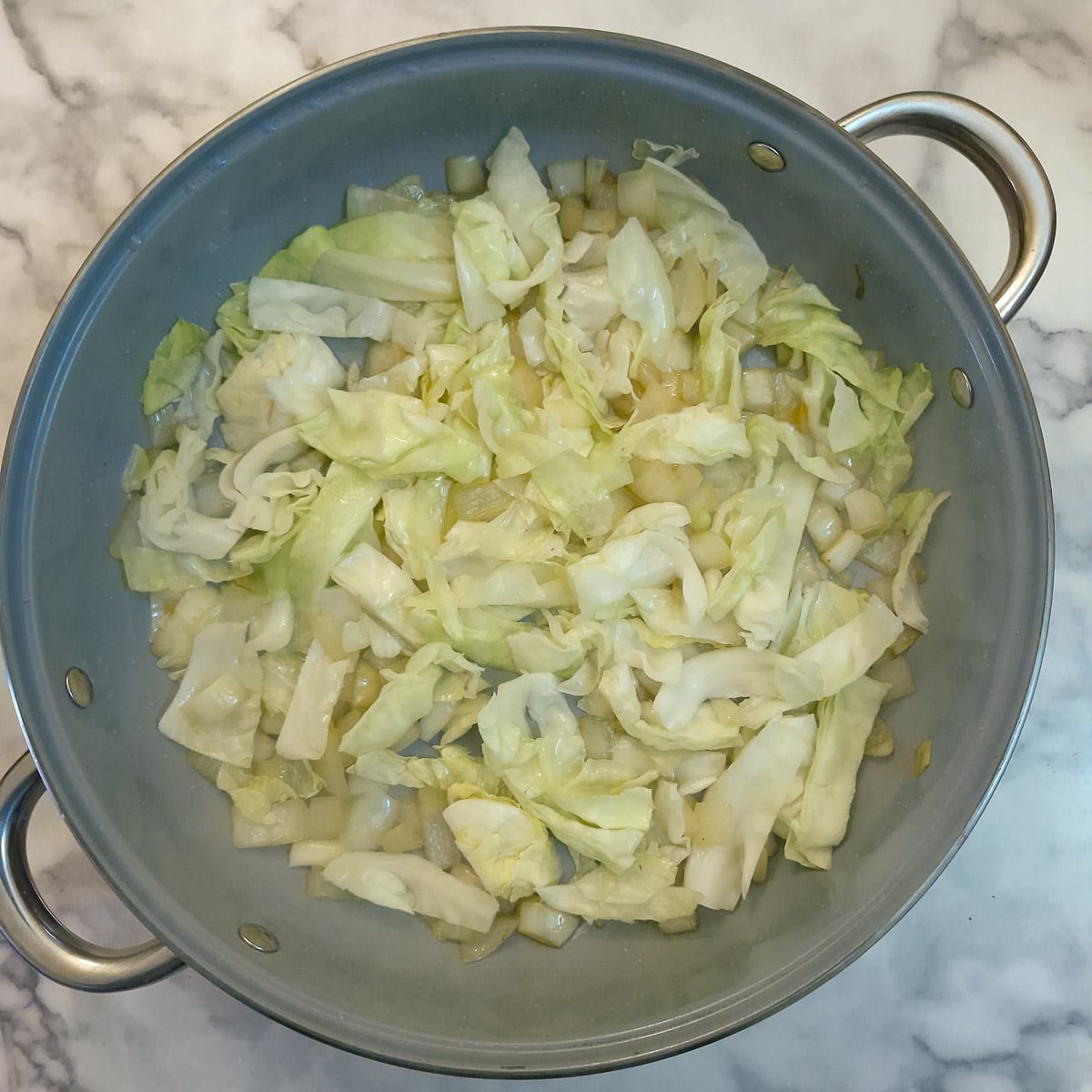
Step 4: Add the cabbage and grated potato and stir to coat with oil. Stir-fry for a further 2 to 3 minutes until the cabbage starts to wilt.
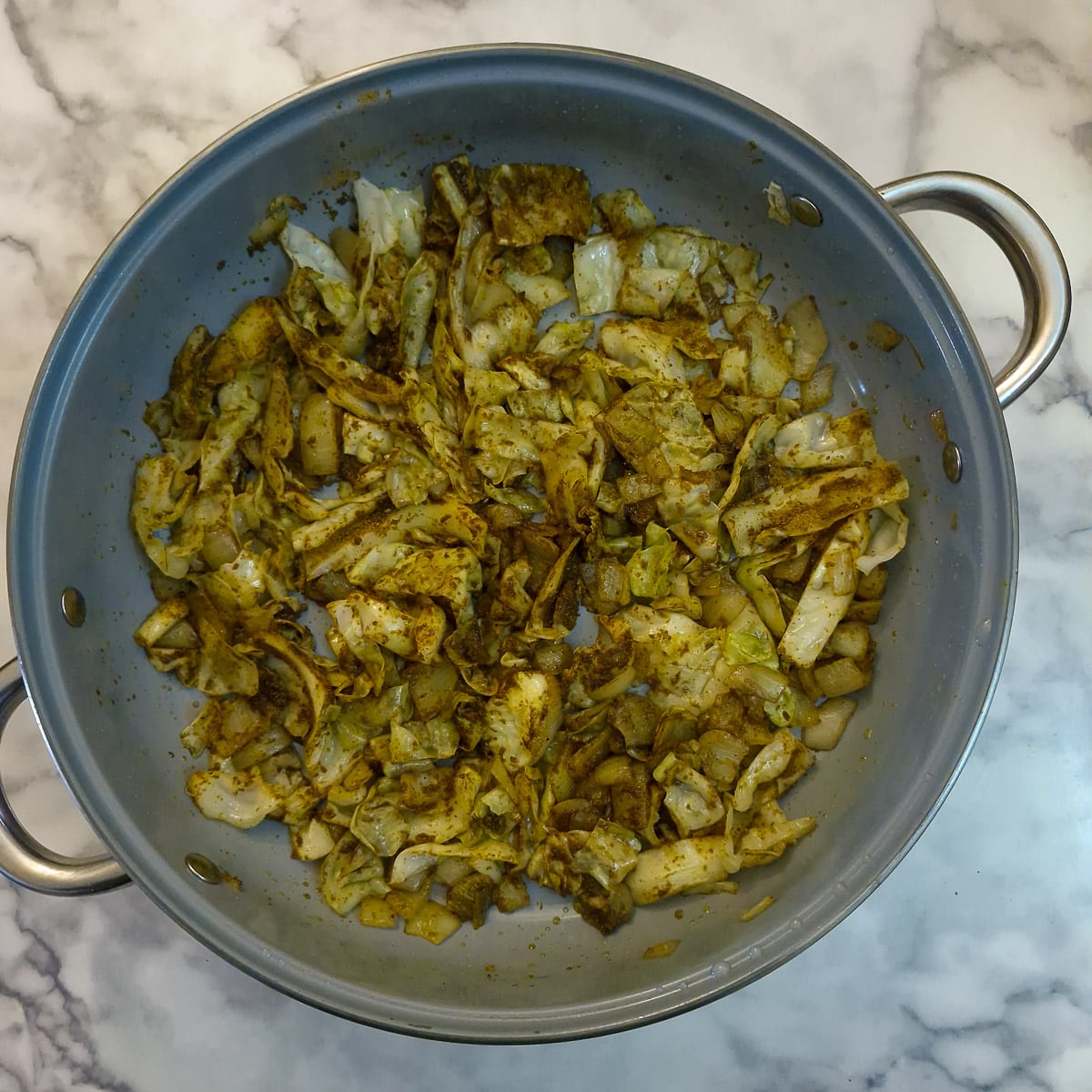
Step 5: Stir in the curry powder and fry for one minute longer.
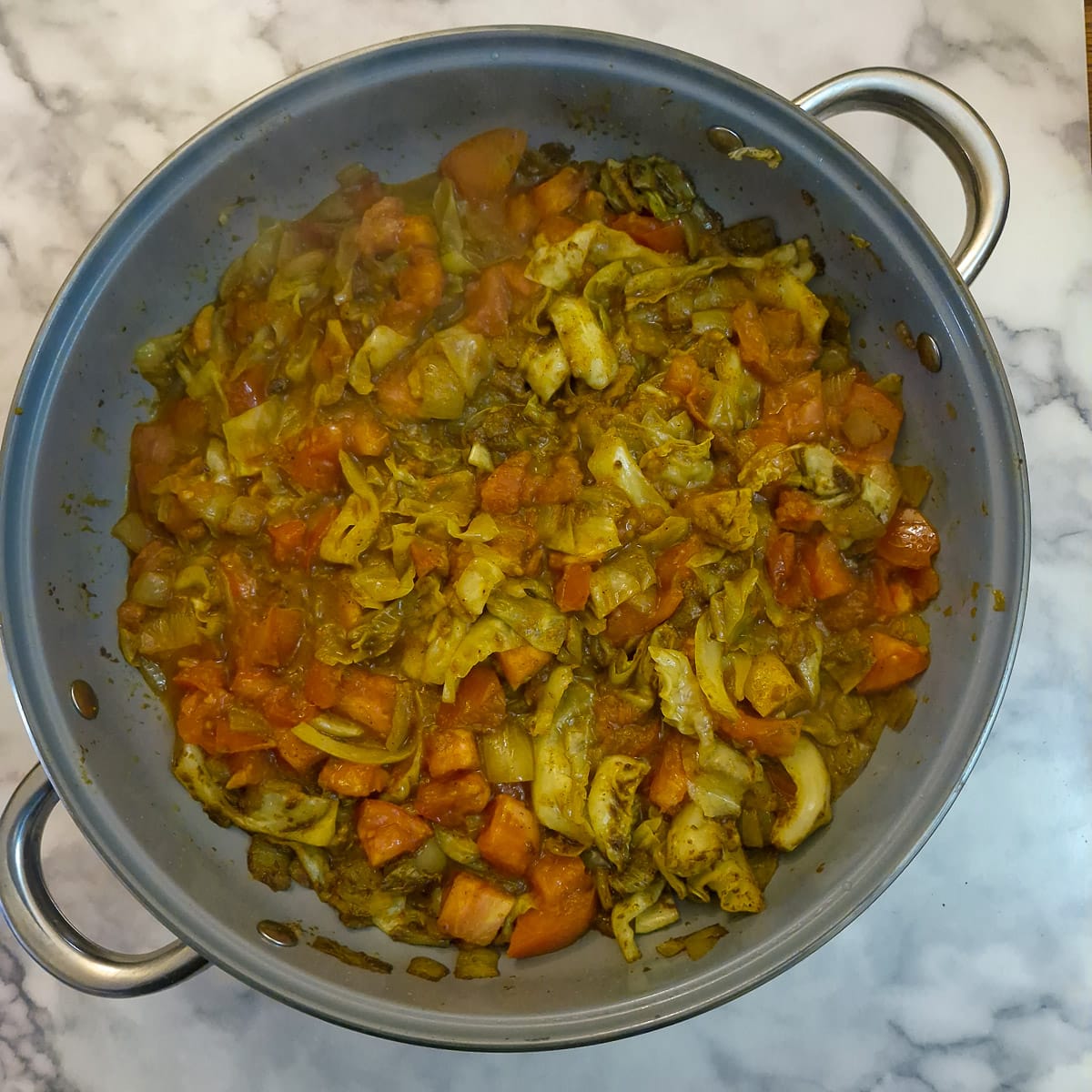
Step 6: Add the tomatoes and continue to stir until the tomatoes start to break down.
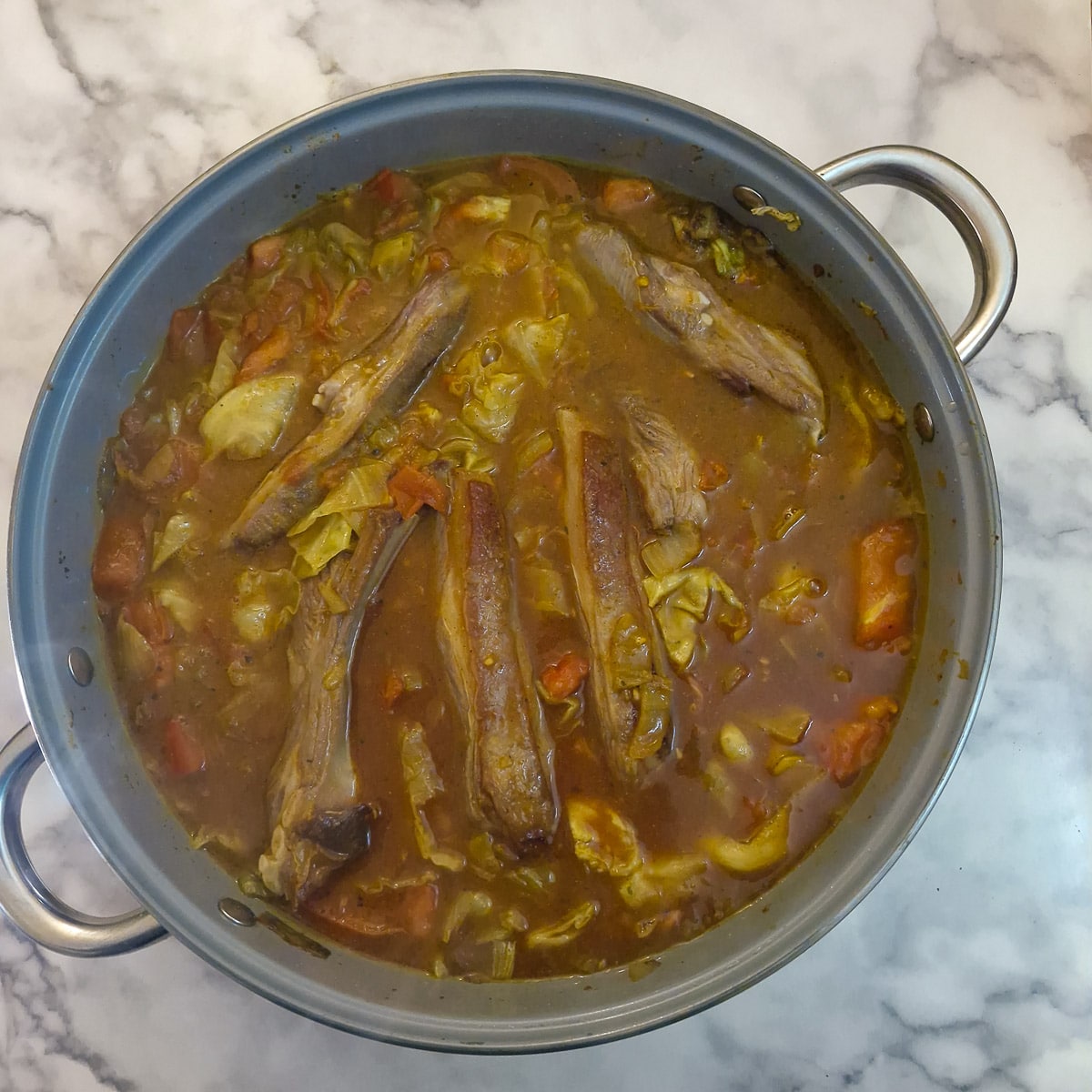
Step 7: Return the lamb ribs to the pan. Pour in the stock, and add the Worcestershire sauce and the tomato paste. Bring to a boil.
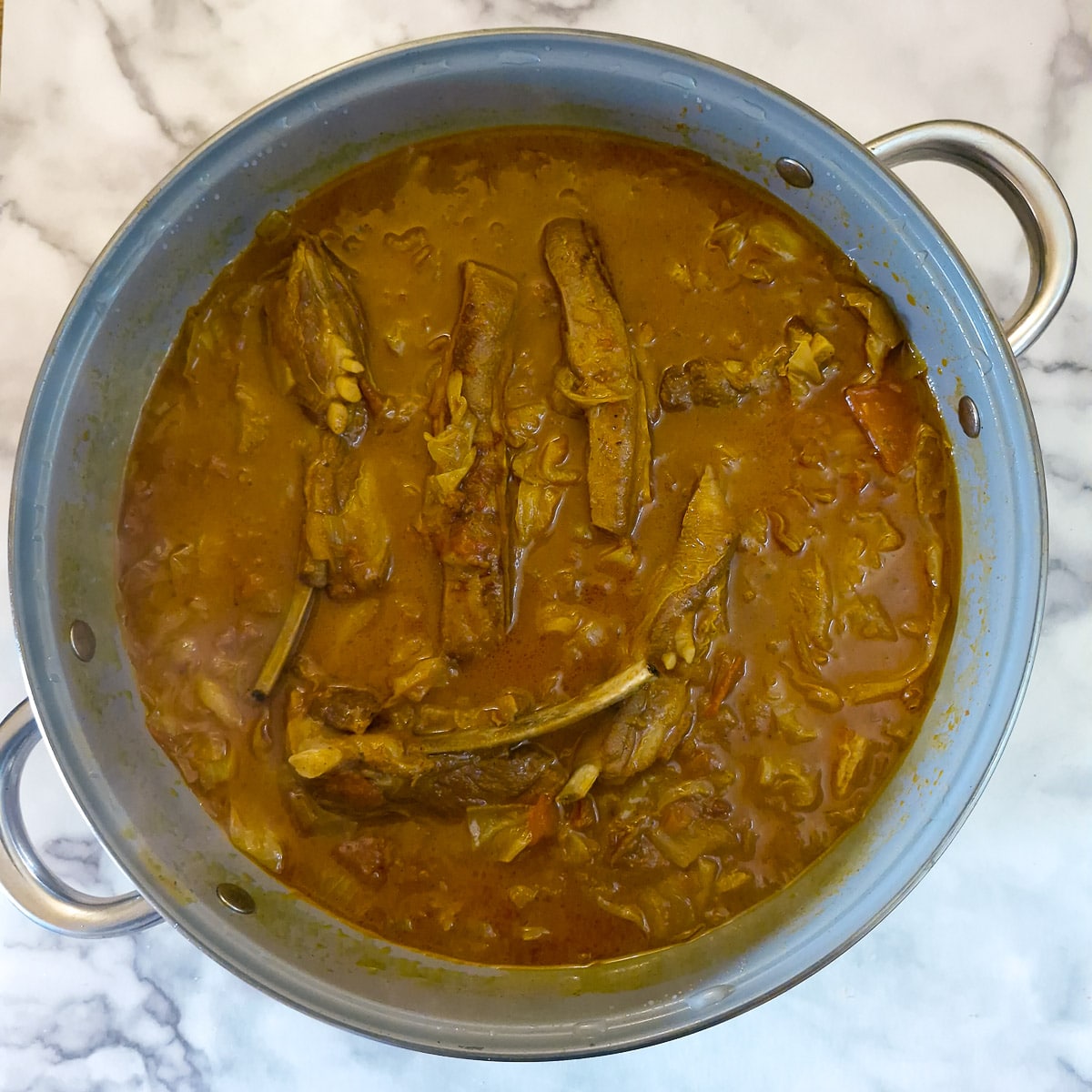
Step 8: Cover the pan with a lid, turn the heat down to simmer and leave for 1 hour or until the lamb is pulling away from the rib bones.
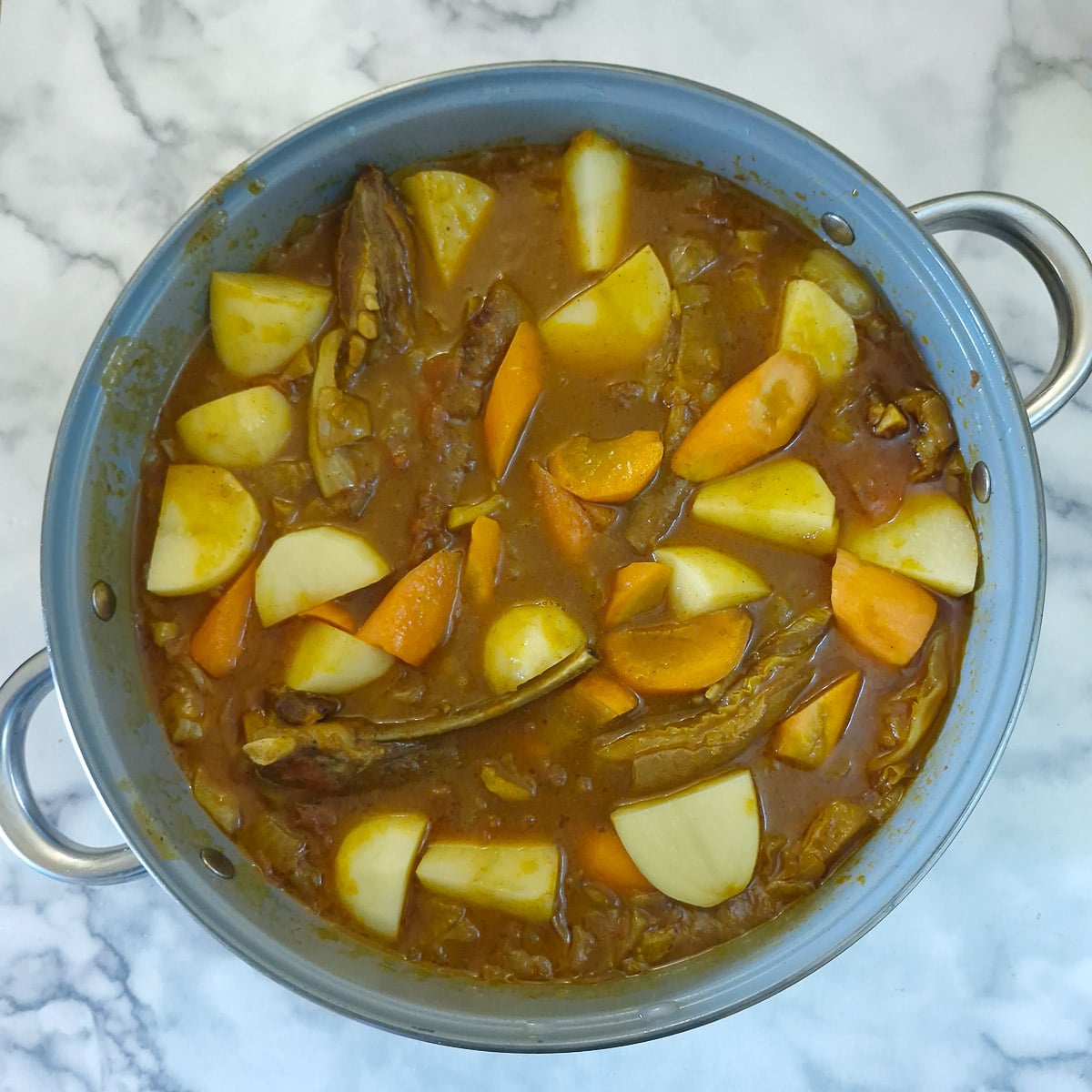
Step 9: Add the potatoes and carrots.
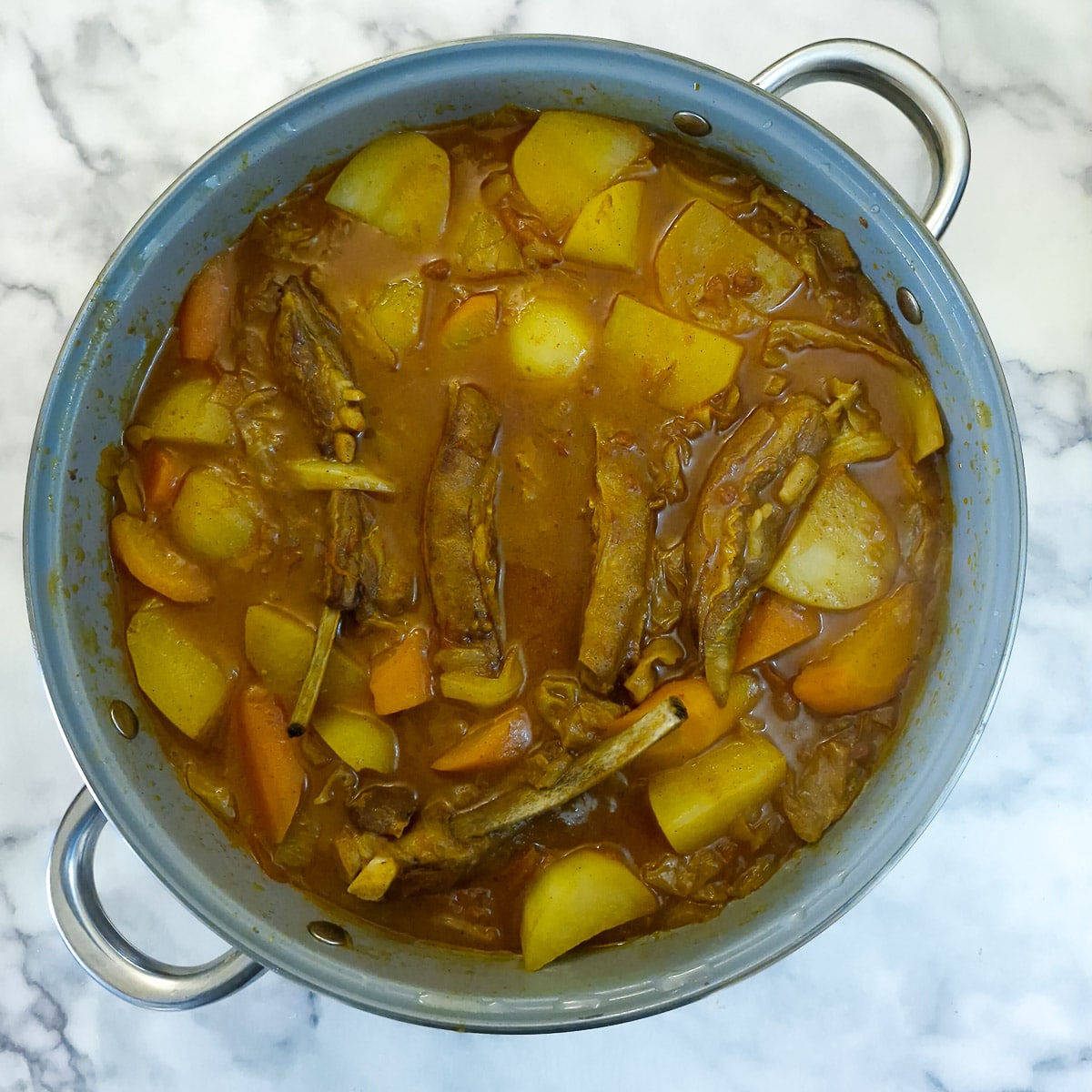
Step 10: Cover and cook for a further 30 minutes until the gravy has thickened and the vegetables are cooked and soft.
Allow the lamb rib curry to rest for 5 to 10 minutes before serving.
Serve spooned over rice, and optionally add a side of naan bread and/or a green vegetable such as peas or Indian-style green beans.
Tips for a successful outcome
Here are my top tips to ensure your curried lamb ribs always turn out perfectly:
- Brown the meat well. Not only does this add flavour to the lamb rib curry, but it also gives the fat in the meat a head start in the rendering process.
- Cook the curry slowly. This gives the lamb ribs plenty of time to tenderise. Cooking them too quickly will leave them tough.
- Add the vegetables at the right time. Only add the carrots and potatoes for the last half hour, otherwise, they will turn mushy.
- Don't skip the grated potato. The potato starch thickens the gravy naturally.
- Taste and adjust seasoning. Check for curry flavour once the ribs have simmered for an hour. Add a little extra curry powder or a touch of cayenne pepper if necessary. Check for salt once the potatoes have cooked and adjust if necessary.
- Rest before serving. Allow the curry to rest off the heat for 5 to 10 minutes before serving; it will thicken slightly more and allow the flavours to settle.
Serving suggestions
You can serve the lamb rib curry either with the meat left on the bone or with the bones removed before serving for easier eating.
I like to serve it spooned over a pile of white rice, with a tomato sambal on the side. The tangy, fresh taste of the sambal goes beautifully with the curry.
- Combine a finely sliced small onion (or shallot) with a diced tomato. Optionally add a chopped chilli. Stir in 1 -2 tablespoons white vinegar and a teaspoon of sugar. Add salt and black pepper to taste. Optionally stir in a tablespoon of freshly chopped coriander.
Add a side of naan bread to soak up the delicious gravy, or serve the lamb curry (bones removed) inside a pocket of pita bread.
Variations
- Spicy - for more heat, fry one or two finely sliced red or green chillis with the onions.
- Vegetables - swap or add to the carrots and cabbage with green beans, diced butternut squash, or sweet potatoes. Swap out the onions for leeks. or add a sliced red bell pepper when frying the onions.
- Creamy - stir in one or 2 tablespoons of yoghurt or cream before serving for a creamier taste.
Equipment
These are the main items of equipment you will need to make these curried lamb ribs:
- Large pan with a lid. You can use whatever pan you feel most comfortable with. The main thing is that it must be large enough to hold all the meat, stock and vegetables.
- Vegetable peeler for peeling the vegetables.
- Cheese grater for grating the potato.
- Sharp knife and chopping board for cutting up the vegetables.
- Spatula for stirring.
- You may (or may not) prefer to transfer the lamb rib curry to a serving bowl for placing on the table.
Storage and freezing
- ⭐Refrigerator. Allow the curry to cool completely, then transfer it to an airtight container. You can store it in the refrigerator for up to 3 days.
- ⭐Freezing. Once cooled, transfer to freezer-safe containers and freeze for up to 3 months.
- ⭐Defrosting. Thaw in the refrigerator overnight, or use the defrost function on your microwave if you are in a hurry.
- ⭐Reheating. Reheat gently on the stove (or in the microwave) until piping hot.
- ⭐Reheating tip. Add a splash of water or stock when reheating if the sauce has thickened too much on standing.
Top Tip
Lamb ribs are naturally fatty. Once you have browned the lamb ribs, there may be an excessive amount of fat in the pan. Remove all but 2 or 3 tablespoons before frying the onions.
FAQ
Yes, this recipe was specifically developed for using lamb ribs, but you could substitute with lamb shoulder or stewing lamb. Test the lamb for doneness after the first hour (before adding the vegetables). If it still seems a little tough, simmer it for a few minutes longer.
No, it is not overly spicy. I would say it is a mild to medium strength. If you want more heat, you can add extra cayenne pepper or fry one or two chopped chillies with the onions.
Definitely, in fact, it tastes even better the next day as the flavours have had time to deepen.
Yes. Brown the ribs and onions first, then transfer everything to the slow cooker. Cook on low for 6 - 8 hours or on high for 4 to 5 hours.
Save for later
If you would like to make this lamb rib curry, why not save the recipe to one of your Pinterest boards so you can find it easily? Just click the image below.
Alternatively, you can save the recipe by clicking on the floating heart icon on the right-hand side of the screen.
Related recipes
Visit my curry recipes page for more tasty curries. Here are a few curries that you might enjoy:
The recipe

Easy lamb rib curry with vegetables
(Click the stars to rate this recipe)
Equipment
- Large pan with a lid
- Vegetable peeler
- Cheese grater
- Sharp Knife
- Chopping Board
- Spatula
- Serving bowl optional
Ask a Question
If you have a question about this recipe that has not been answered, please use the box below to ask it.
Use this with care. This is an AI-generated result and may contain errors or inaccuracies. I cannot be held responsible for the information returned.
Ingredients
- 1¾ pounds / 800 grams lamb ribs separated into riblets.
- 2 large tomatoes washed and diced
- 1 large onion peeled and diced
- 1 pound / 450 grams potatoes peeled and diced
- 1 medium potato (grated)
- 2 - 3 medium carrots peeled and sliced
- ¼ small head cabbage finely sliced
- 1 - 2 cups chicken or vegetable stock use stock cubes if necessary
- 2 - 3 tablespoons curry powder
- 2 tablespoons tomato puree
- 2 tablespoons Worcestershire sauce
- Salt to taste
- 1 - 2 tablespoons sunflower oil for browning the lamb ribs
Instructions
- Heat the oil to medium-high heat, then add the lightly salted lamb ribs skin-side down.1¾ pounds / 800 grams lamb ribs, Salt to taste, 1 - 2 tablespoons sunflower oil
- Leave the lamb to brown for 3 to 4 minutes then turn and brown the other side. Use a pair of tongs to help you turn the lamb over so it browns on all sides. Once browned, remove the lamb to a plate and set aside.
- Add the onions to the pan (with an extra splash of oil if necessary) and stir them until they start to brown slightly and turn translucent.1 large onion
- Add the cabbage and grated potato and stir to coat with oil. Stirfry for a further 2 to 3 minutes until the cabbage starts to wilt.1 medium potato (grated), ¼ small head cabbage
- Stir in the curry powder and fry for one minute longer.2 - 3 tablespoons curry powder
- Add the tomatoes and continue to stir until the tomatoes start to break down.2 large tomatoes
- Return the lamb ribs to the pan. Pour in the stock, and add the Worcestershire sauce and the tomato paste. Bring to a boil.1 - 2 cups chicken or vegetable stock, 2 tablespoons Worcestershire sauce, 2 tablespoons tomato puree
- Cover the pan with a lid, turn the heat down to simmer and leave for 1 hour or until the lamb is pulling away from the rib bones.
- Add the potatoes and carrots.1 pound / 450 grams potatoes, 2 - 3 medium carrots
- Cover and cook for a further 30 minutes until the gravy has thickened and the vegetables are cooked and soft.
- You can serve immediately, but for best result, allow the lamb rib curry to rest for 5 to 10 minutes before serving.
- Serve spooned over rice, and optionally add a side of naan bread and/or a green vegetable such as peas or Indian-style green beans. Note, you can serve the lamb rib curry either with the meat left on the bone or remove the bones before serving for easier eating.
Notes
- Brown the meat well. Not only does this add flavour to the lamb rib curry, but it also gives the fat in the meat a head start in the rendering process.
- Cook the curry slowly. This gives the lamb ribs plenty of time to tenderise. Cooking them too quickly will leave them tough.
- Add the vegetables at the right time. Only add the carrots and potatoes for the last half hour, otherwise, they will turn mushy.
- Don't skip the grated potato. The potato starch thickens the gravy naturally.
- Taste and adjust seasoning. Check for curry flavour once the ribs have simmered for an hour. Add a little extra curry powder or a touch of cayenne pepper if necessary. Check for salt once the potatoes have cooked and adjust if necessary.
- Rest before serving. Allow the curry to rest off the heat for 5 to 10 minutes before serving; it will thicken slightly more and allow the flavours to settle.
- Refrigerator. Allow the curry to cool completely, then transfer it to an airtight container. You can store it in the refrigerator for up to 3 days.
- Freezing. Once cooled, transfer to freezer-safe containers and freeze for up to 3 months.
- Defrosting. Thaw in the refrigerator overnight, or use the defrost function on your microwave if you are in a hurry.
- Reheating. Reheat gently on the stove (or in the microwave) until piping hot.
- Reheating tip. Add a splash of water or stock when reheating if the sauce has thickened too much on standing.
Nutrition
I am not a nutritionist. The nutrition information has been calculated using an on-line calculator, and is intended for information and guidance purposes only. If the nutrition information is important to you, you should consider calculating it yourself, using your preferred tool.
If you made this recipe and enjoyed it, I'd love it if you could give me a star rating in the comments below. And if you'd like to get in touch, you can email me at veronica@foodleclub.com. I'd love to hear from you. And don't forget to subscribe to my mailing list so you can grab yourself a copy of my FREE COOKBOOK!
If you'd like to continue browsing, just click on this link to all my recipes.

Did you make this recipe? Let me know!