
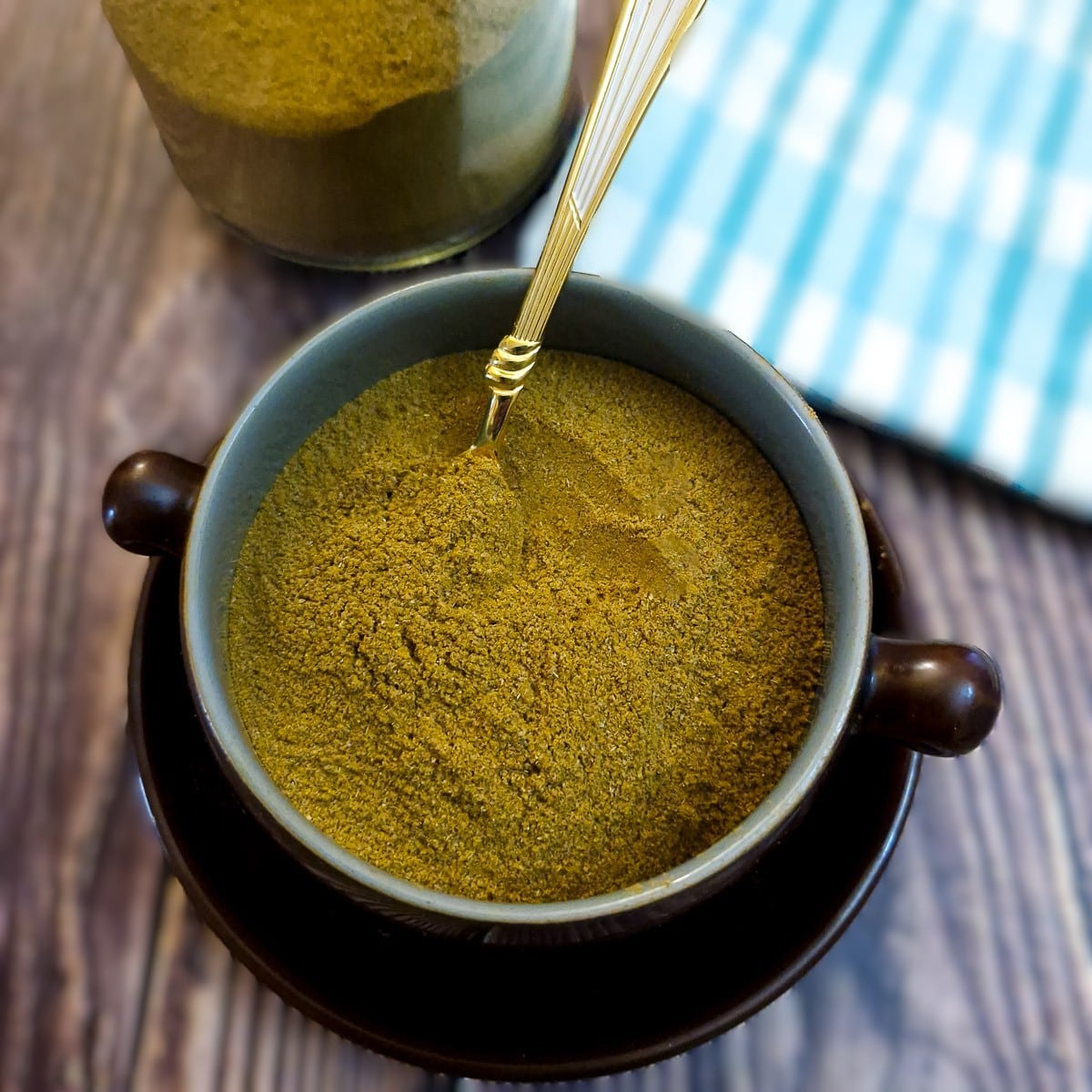
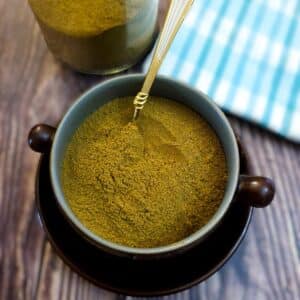
This homemade curry powder is a mild, balanced blend of warm spices that adds depth and fragrance to everyday curries. It works beautifully with beef, lamb, chicken or vegetables, and you can easily scale it to make just one meal or an entire jar that you can keep in your cupboard. What's more, you can adjust the chilli to suit your own taste!
Other than cooking with my Granny in the UK (until the age of about 12), most of my culinary skills were learned later in South Africa.
Apart from a braai (barbecue), another thing I loved there was the tasty Cape Malay-style curries. Not too hot, but full of flavour - often made with a simple box of curry powder. In fact, I think every South African family has at least one box of Rajah curry powder (if you're South African, you'll recognise the name) in their cupboard - either mild, medium or hot (and quite possibly all three!).
Since moving back to the UK, I've struggled to find a curry spice blend that has the same balance. They are either too spicy, too bland or simply wrong! For a while, I resorted to mixing lots of different spices each time I cooked a curry, which was both time-consuming and error-prone. Like the time I forgot to add chilli powder to my beef curry and we ended up with a stew instead!
These days, I like to keep life simple: I mix my own homemade curry powder in advance and store it in a jar in the pantry with all my other spices. It can be stored for months - the shelf-life is the same as any other spice - and it's so convenient to use. My rule of thumb is one tablespoon of curry powder per cup of stock, and the flavour is perfect! Why not try it for yourself with this easy curry in a hurry recipe?
This curry spice blend that I'm sharing today uses twelve different spices in carefully balanced amounts. That might sound like a lot, but they are easy to find. You can buy things like ground coriander, turmeric and cumin very cheaply in larger packs in the 'World Foods' section of the supermarket. Other spices like cinnamon, nutmeg and cloves can all be used in a wide variety of dishes, while black pepper, mustard powder and garlic granules are pantry staples in most homes.
This curry spice blend is what I would class as medium - it doesn't blow your head off, but there's a subtle warmth that builds as you eat. Of course, you can increase the heat by adding extra cayenne pepper to the blend, but that's obviously to your own taste.
I've provided instructions below for 3 sizes:
- a large batch (about 3 cups),
- a medium batch (about 1.5 cups),
- a single meal serving (so you can try it first without committing to a big jar).
Use this curry powder exactly as you would use shop-bought curry powder. My recommendation is one tablespoon of curry powder for each cup of liquid, but use your own discretion. Add a lesser amount if you are unsure, and once the curry has simmered for a while, taste and add more if necessary.
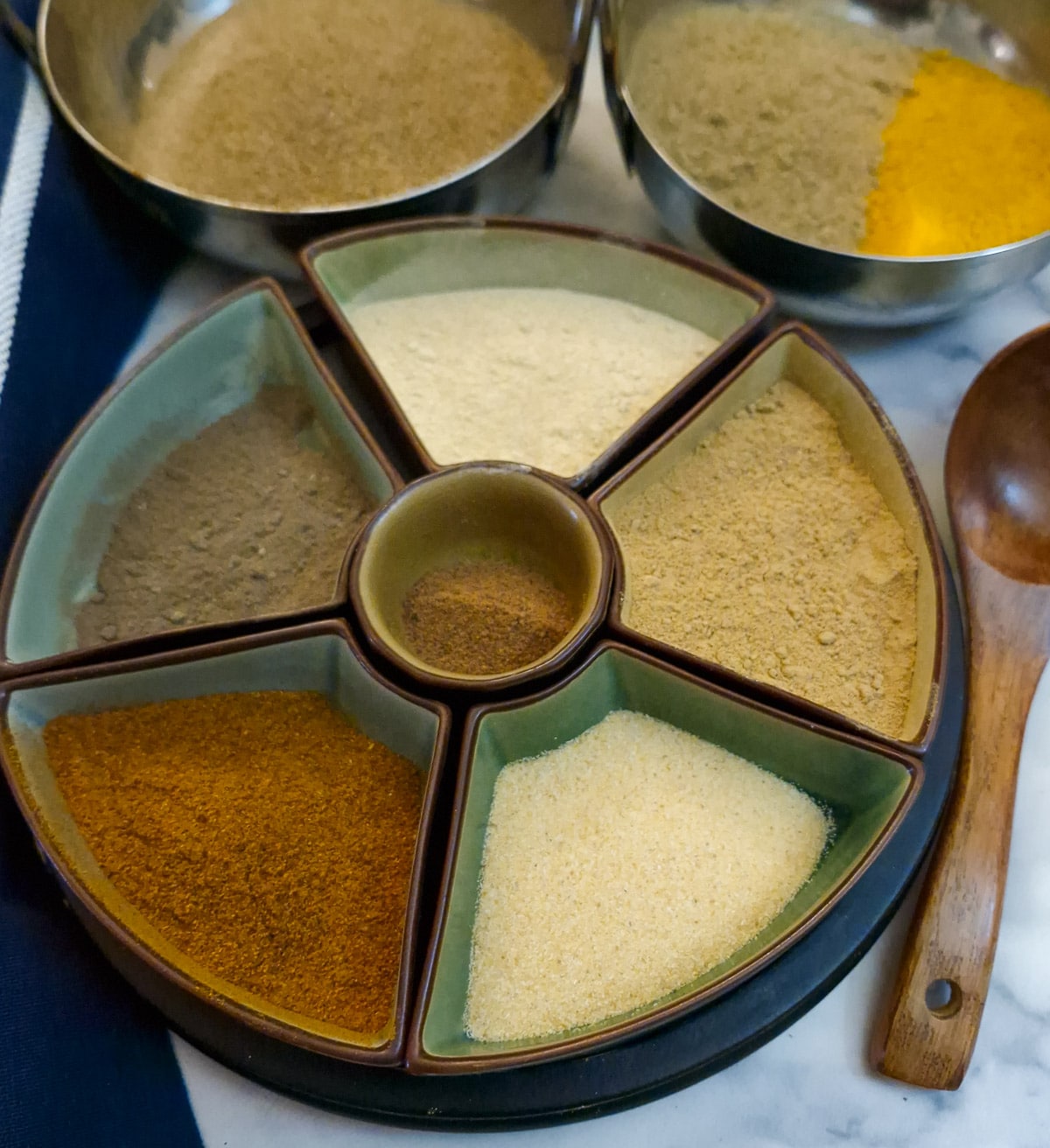
Table of Contents
Why you should try this homemade curry powder
- 🌶️Better flavour - you can tweak the ingredients to suit your own taste.
- 🌶️Customisable - adjust the cayenne pepper to suit your own heat tolerance.
- 🌶️Convenient - no need to measure out 10 or more different spices each time you want to make a curry.
- 🌶️Cost-effective - buying in bulk (especially coriander, cumin and turmeric) is much cheaper than small jars of curry powder.
- 🌶️Versatile - works well with beef, lamb, chicken or even vegetables. You can also use the curry powder as a 'base' and add different spices to alter the flavour profile.
- 🌶️No additives - pure spice blend, no fillers, salt or preservatives.
Recipe information
- ⌚Prep time: About 20 minutes - just to measure out the spices and mix them all together.
- 🫙Yield: The recipe as written will yield about 3 cups of curry powder, but I've provided details for making smaller batches.
Ingredients
**You can find the exact measurements for a large batch of homemade curry powder on the printable recipe card at the end of this post. For a smaller batch, see the section titled 'Make a small batch'.**
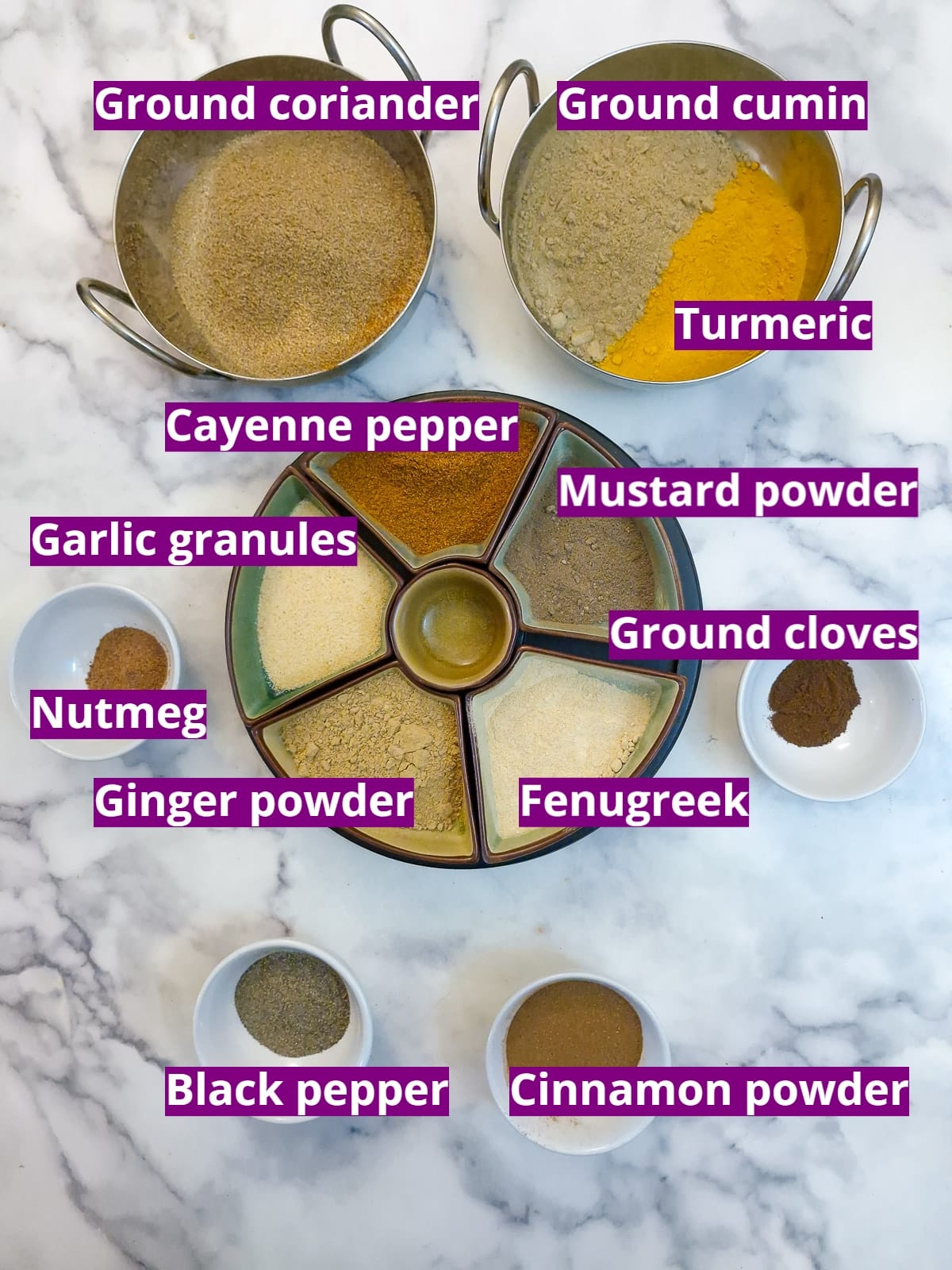
The ingredients are a mixture of earthy, warming and spicy flavours, with a little bittersweet or balancing flavour thrown in for good measure.
- Earthy
- Coriander - nutty, citrusy-earthy base notes
- Cumin - deep musty earthiness, adds body
- Turmeric - warm, bitter-earthy, slightly pungent, and of course, the yellow colour that we associate with curry powder.
- Spicy (heat and pungency)
- Cayenne pepper - direct heat, sharp bite
- Black pepper - sharp, hot, pungent
- Mustard powder - pungent but less fiery once cooked
- Warming (sweet spice warmth)
- Ginger - warm, zesty heat that lingers
- Garlic granules - savoury, slightly sweet, mellow warmth
- Cinnamon - sweet warmth, fragrant and woody
- Nutmeg - nutty, sweet warmth with a slight bitterness
- Cloves - strong, sweet warmth, almost medicinal
- Bittersweet
- Fenugreek - butter-sweet, nutty, maple-like undertones (helps balance the flavours)
Instructions
This couldn't be easier! There are only 2 steps involved.
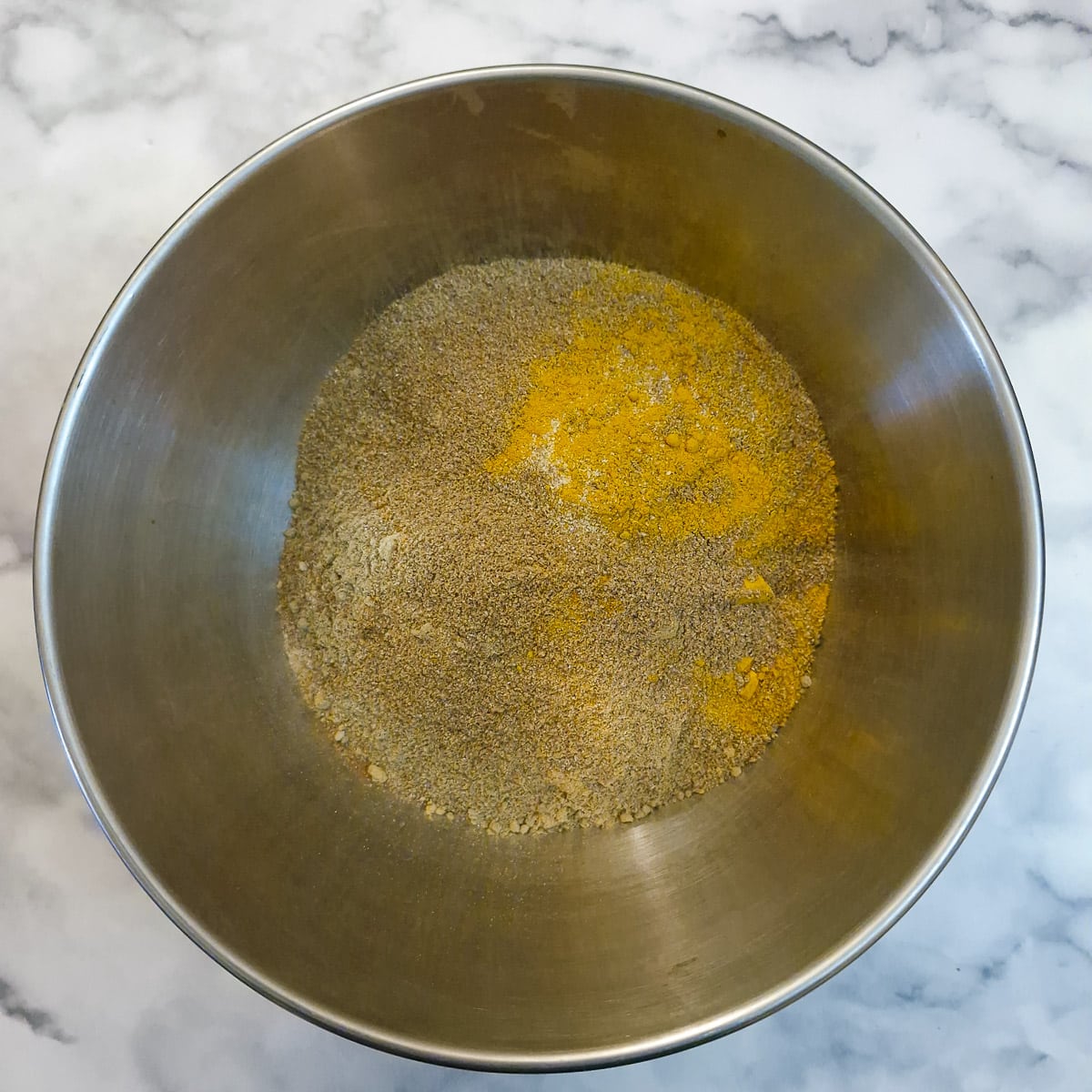
Step 1: Measure out all the spices and tip them into a large bowl.
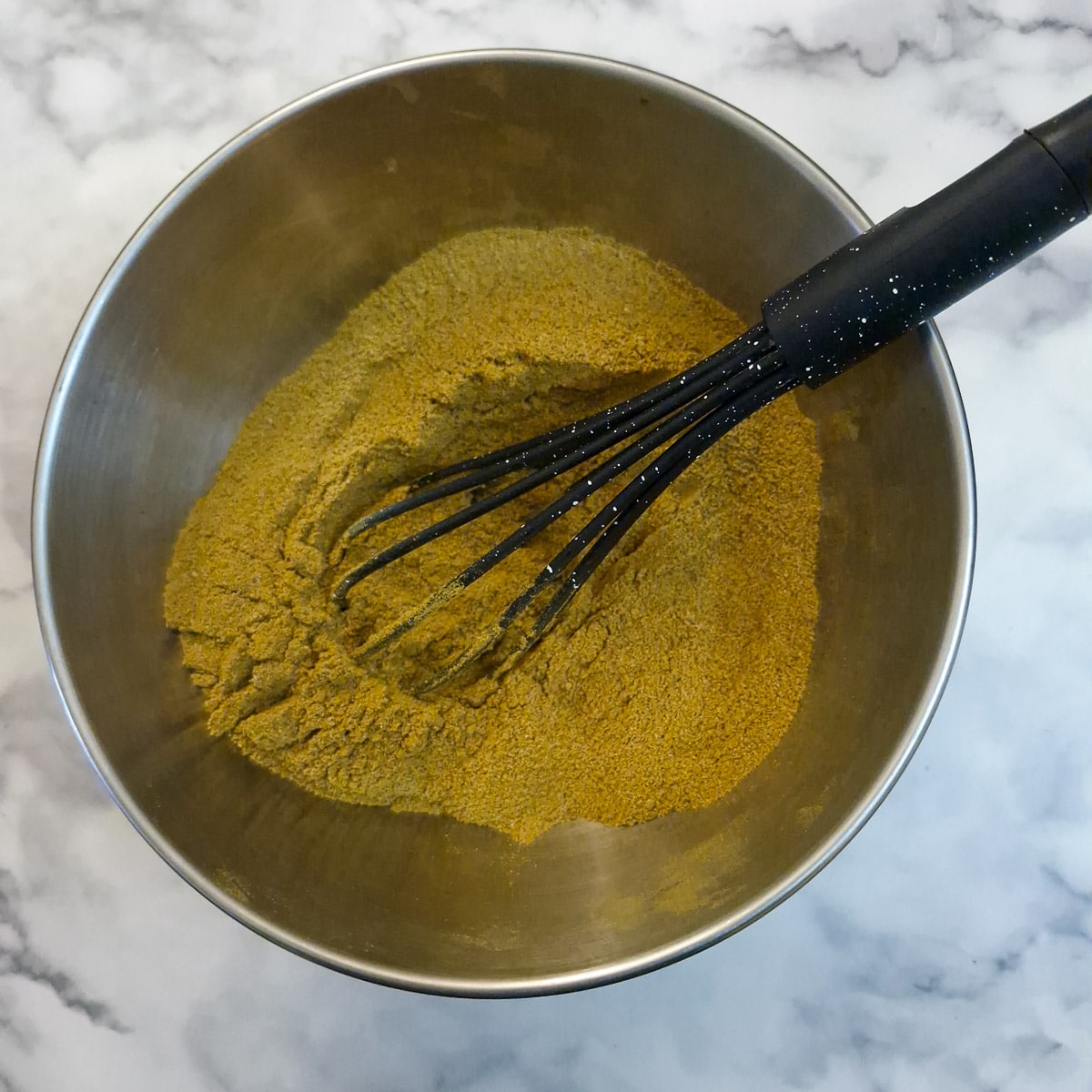
Step 2: Use a balloon whisk to mix the spices thoroughly.
Transfer the curry powder to a clean screw top jar and store in a cool place in your pantry.
Tips for a successful outcome
- Make sure your bowl and whisk are completely dry. If you introduce the slightest drop of moisture to the spices, they will clump together and ruin the blend.
- Measure the spices accurately. Use a set of measuring cups and measuring spoons to measure the ingredients. I use a US standard measuring cup that holds 240 ml of liquid, and a set of US measuring spoons that gives 16 tablespoons to the cup. A UK measuring cup holds 250 ml, which is slightly larger but should not make any difference to the final outcome. Don't use a teacup or spoons from your cutlery drawer.
- Combine the spices thoroughly. This sounds obvious, but the spices must be thoroughly combined. Mix them with a balloon whisk until you think they have been combined sufficiently ... then mix them a little bit longer - just to be sure!
- Use fresh spices. Ground spices lose flavour over time. For the best possible flavour, use fresh spices so your curry powder stays flavourful as long as possible.
- Store correctly. Keep in an airtight (screw-top) jar, away from heat and light to preserve the flavour.
Make a smaller batch
If you'd like to 'try before you buy' as it were, here's how you can make a smaller batch of homemade curry powder.
Please note: The measurements are based on measuring cups and measuring spoons - not teacups and spoons from your drawer.
| Spice | 3 cups (full recipe) | 1.5 cups (half-size) | Single serving (2 tablespoons) |
|---|---|---|---|
| Coriander | 1 cup (16 tbsp) | ½ cup (8 tbsp) | 2 teaspoons |
| Turmeric | ½ cup (8 tbsp) | ¼ cup (4 tbsp) | 1 teaspoon |
| Cumin | ½ cup (8 tbsp) | ¼ cup (4 tbsp) | 1 teaspoon |
| Ginger powder | ¼ cup (4 tbsp) | 2 tablespoons | ½ teaspoon |
| Garlic granules | ¼ cup (4 tbsp) | 2 tablespoons | ½ teaspoon |
| Fenugreek | 2 ½ tablespoons | 1 ¼ tablespoons | ⅓ teaspoon |
| Mustard powder | 2 ½ tablespoons | 1 ¼ tablespoons | ⅓ teaspoon |
| Cinnamon | 2 tablespoons | 1 tablespoon | ¼ teaspoon |
| Black pepper | 2 tablespoons | 1 tablespoon | ¼ teaspoon |
| Cayenne pepper | 2 tablespoons | 1 tablespoon | ¼ teaspoon |
| Cloves | 1 tablespoon | ½ tablespoon | ⅛ teaspoon |
| Nutmeg | 1 tablespoon | ½ tablespoon | ⅛ teaspoon |
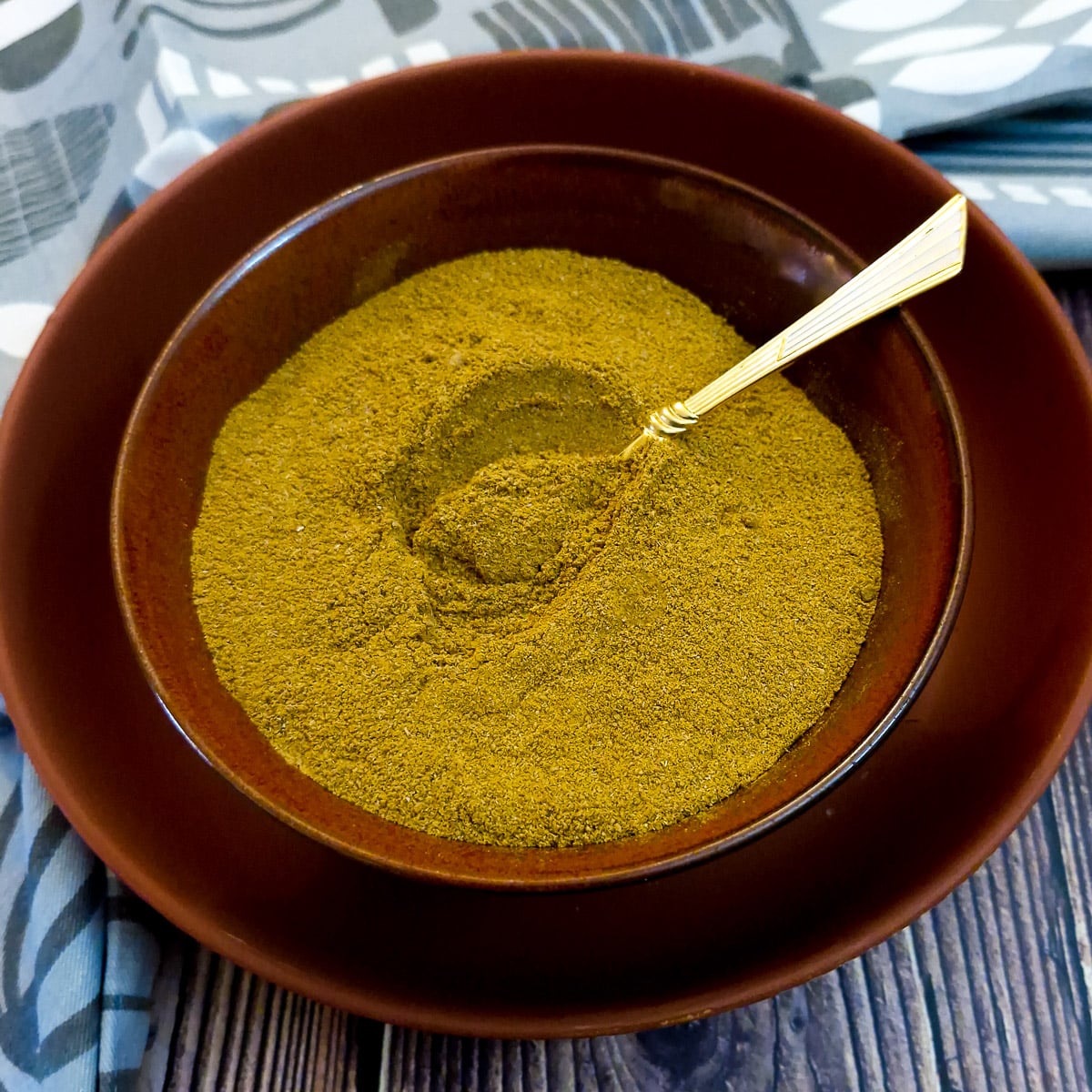
Variations
This is the base recipe, which will provide plenty of flavourful dishes. Here are a few ways to vary the flavour of the curry powder when you are using it in your recipes:
- Hot and spicy - add extra cayenne pepper to the original blend, or add a touch more to cayenne when using this curry powder in your dishes. You could also add a touch of smoked paprika. Works well with robust flavoured meats such as lamb or beef.
- Fragrant and aromatic - add a little cardamom, star anise or fennel for a sweeter fragrance. This works well with chicken curries or biryanis.
- Cape Malay-inspired sweetness - add extra cinnamon or a touch of allspice. A spoon of brown sugar or a handful of raisins adds extra sweetness, or my favourite - a dollop of fruit chutney.
- Fresh and citrusy - Add dried orange or lemon peel or a little sumac. Finish with fresh coriander or a squeeze of lemon juice. Perfect for lighter curries or fish.
- North Indian style - stir in more cloves, cardamom, or nutmeg.
Equipment
As I've mentioned, use the correct measuring cups and spoons. Scoop the spices into the spoon, then level the spoon with a leveller or the back of a knife. Don't use heaped spoonfuls of the spices.
You will also need a mixing bowl and a balloon whisk to combine the spices.
A large screw-top jar (or other air-tight container) to store the curry powder. The jar should be scrupulously clean and dry before you store the curry powder. You could even sterilise the jar before using - see below.
How to sterilise jars
To sterilise jars in the oven:
- Wash the jars and the lids in hot soapy water, rinse, but do not dry them.
- Stand them upside down on a baking tray while they're still wet.
- Place the tray of clean, wet jars and lids into a preheated oven at 180ºC / 350ºF for 15 mins.
- Don't put a plastic lid into the oven - boil them in a pot of water for 5 minutes instead.
To sterilise jars in the microwave:
- Wash the jars and the lids in hot soapy water, rinse, but do not dry them.
- Place them in the microwave whilst still wet.
- Microwave on full power for 2 minutes
- If the lids are made of metal, DO NOT MICROWAVE. Instead, place the lids in a pot of boiling water and boil for 5 minutes.
Storage
- ⭐Store in a glass jar with an air-tight lid. Avoid plastic, which can absorb oils and smells.
- ⭐Location. Store in a cool, dark cupboard, away from light, heat and moisture.
- ⭐Shelf-life. Best flavour within 6 months, but safe to use after that if it still smells aromatic. Spices tend to lose their pungency when stored for a long time.
- ⭐Avoid moisture. Always use a dry spoon to remove curry powder from the jar. Moisture can cause clumping or spoilage.
- ⭐Label the jar. Add the date and a note on the heat level, especially if you make other blends.
Top Tip
Instead of adding the curry powder straight into stock or tomatoes, fry it gently in oil (or with onions/garlic) for 30 to 60 seconds. This 'blooms' the spices - releasing their essential oils, and deepening the flavours. It turns a good curry into a great one!
FAQ
No, this recipe is designed to be quick and easy, using only dried, pre-ground spices.
No, this curry powder is made to my taste, and is intended to be medium heat. For a milder curry, decrease the amount of cayenne pepper, and for a more fiery taste, add extra.
A good rule of thumb is one tablespoon of curry powder for each cup of stock or liquid. But you can always adjust to taste.
Yes, I purposely didn't add any salt - you can add salt to your recipe according to your own taste, giving you complete control.
I haven't included it, but you can experiment and add either sweet or smoked paprika, depending on taste. I didn't include it because I don't always want paprika flavour in my curry - I add it separately if that's the taste I'm going for.
Homemade staples
This recipe is part of my Homemade Staples collection - a growing collection of homemade sauces, condiments, spice mixes, pantry and freezer staples designed to help make everyday cooking easier. Browse the collection for more make-ahead recipes, kitchen staples and meal-building ideas.
Save for later
If you would like to try this homemade curry powder, why not save the recipe to one of your Pinterest boards so you can find it easily? Just click the image below.
Alternatively, you can save the recipe by clicking on the floating heart icon on the right-hand side of the screen.
Related recipes
For more ideas on making your own pantry staples, visit my How to guides page. Here is a small selection:
The recipe
Homemade curry powder
(Click the stars to rate this recipe)
Equipment
- Measuring spoons
- Measuring cups
- Mixing bowl
- Balloon whisk
- Glass jar for storage
Ask a Question
If you have a question about this recipe that has not been answered, please use the box below to ask it.
Use this with care. This is an AI-generated result and may contain errors or inaccuracies. I cannot be held responsible for the information returned.
Ingredients
- 16 tablespoons ground coriander 1 cup
- 8 tablespoons ground cumin ½ cup
- 8 tablespoons ground turmeric ½ cup
- 4 tablespoons ginger powder ¼ cup
- 4 tablespoons garlic powder or garlic granules ¼ cup
- 2½ tablespoons fenugreek
- 2½ tablespoons mustard powder
- 2 tablespoons ground cinnamon
- 2 tablespoons ground black pepper
- 2 tablespoons cayenne pepper adjust to your own heat tolerance
- 1 tablespoon ground cloves
- 1 tablespoon ground nutmeg
Instructions
- Measure all the ingredients into a mixing bowl and mix well (with a balloon whisk) until the spices are completely combined.
- Transfer to a screw-top jar and store in a cool place in the pantry with your other spices.
Notes
- Make sure your bowl and whisk are completely dry. If you introduce the slightest drop of moisture to the spices, they will clump together and ruin the blend.
- Measure the spices accurately. Use a set of measuring cups and measuring spoons to measure the ingredients. I use a US standard measuring cup that holds 240 ml of liquid, and a set of US measuring spoons that gives 16 tablespoons to the cup. A UK measuring cup holds 250 ml, which is slightly larger but should not make any difference to the final outcome. Don't use a teacup or spoons from your cutlery drawer.
- Combine the spices thoroughly. This sounds obvious, but the spices must be thoroughly combined. Mix them with a balloon whisk until you think they have been combined sufficiently ... then mix them a little bit longer - just to be sure!
- Use fresh spices. Ground spices lose flavour over time. For the best possible flavour use fresh spices so your curry powder stays flavourful as long as possible.
- Store correctly. Keep in an airtight (screw-top) jar, away from heat and light to preserve the flavour.
- Coriander - 2 teaspoons
- Turmeric - 1 teaspoon
- Cumin - 1 teaspoon
- Ginger powder - ½ teaspoon
- Garlic powder/ granules - ½ teaspoon
- Fenugreek - ⅓ teaspoon
- Mustard powder - ⅓ teaspoon
- Cinnamon - ¼ teaspoon
- Black pepper - ¼ teaspoon
- Cayenne pepper - ¼ teaspoon (adjust to taste for heat)
- Cloves - ⅛ teaspoon
- Nutmeg - ⅛ teaspoon
I am not a nutritionist. The nutrition information has been calculated using an on-line calculator, and is intended for information and guidance purposes only. If the nutrition information is important to you, you should consider calculating it yourself, using your preferred tool.
If you made this recipe and enjoyed it, I'd love it if you could give me a star rating in the comments below. And if you'd like to get in touch, you can email me at veronica@foodleclub.com. I'd love to hear from you. And don't forget to subscribe to my mailing list so you can grab yourself a copy of my FREE COOKBOOK!
If you'd like to continue browsing, just click on this link to all my recipes.





Did you make this recipe? Let me know!