
This old-fashioned lemon coconut walnut biscuit cake is made with crushed biscuits instead of flour, giving it a surprisingly light texture and wonderful flavour.
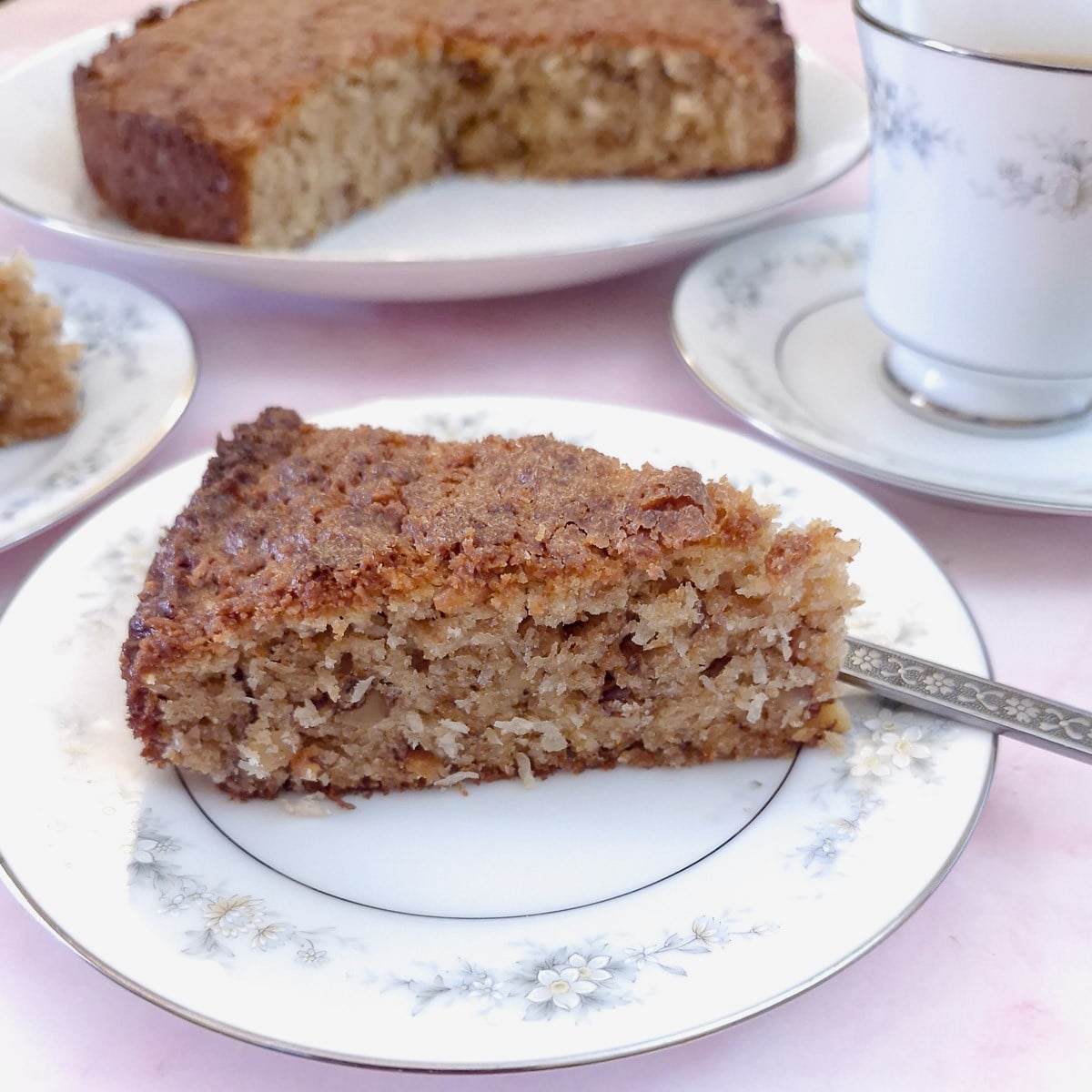
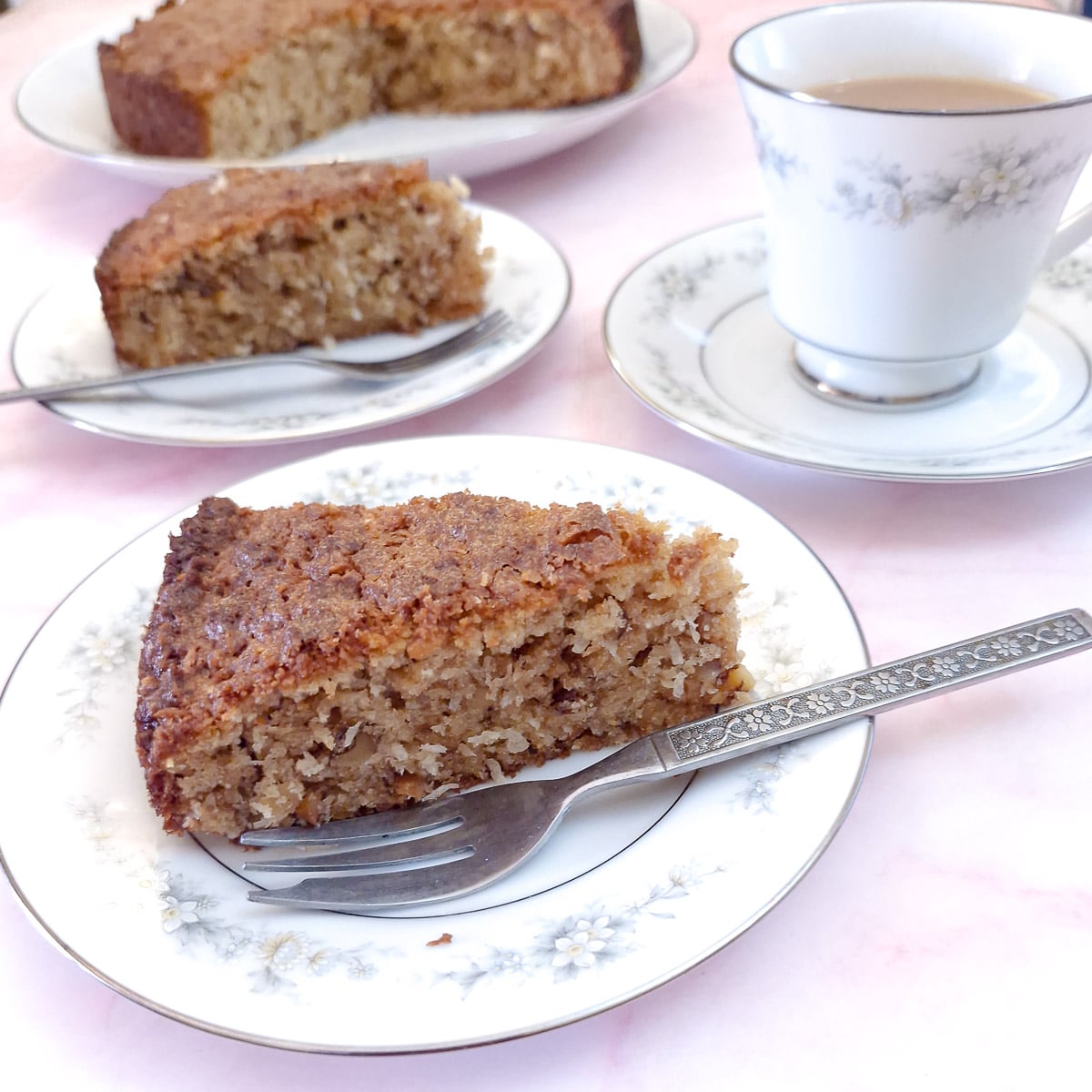
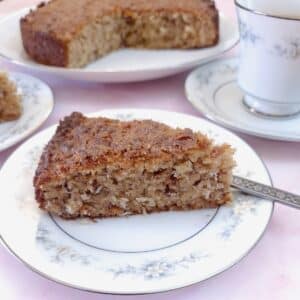
This lemon coconut walnut biscuit cake is one of those recipes that surprises you from the very first slice. Made with crushed biscuits instead of flour, you might expect it to be dense and heavy, but as you can see in the image above, the texture is remarkably light and moist.
The combination of lemon, coconut and walnuts works beautifully together. The lemon adds freshness, the coconut provides a subtle sweetness, and the walnuts bring a little crunch and texture to every bite.
Perfect for afternoon tea or a simple family dessert, this easy flourless cake is made with everyday ingredients and doesn't need any fancy decoration. Serve it plain, dusted with icing sugar, or (my favourite) with a simple lemon glaze for an extra burst of citrus flavour.
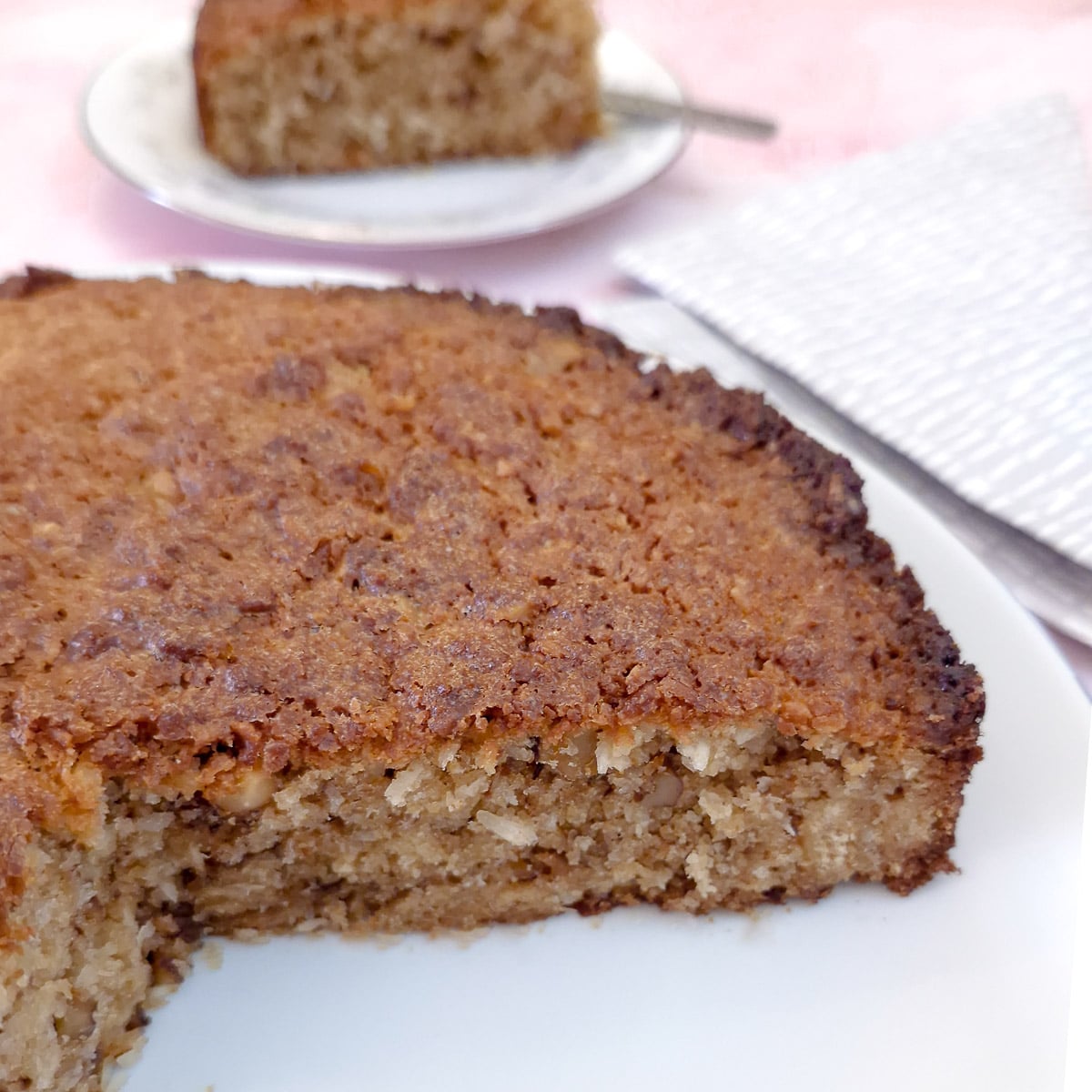
Looking at the image below, you can see it doesn't rise to great heights, but when you cut into it, you'll be surprised by how light it actually is.
Jump to:
- Coconut walnut biscuit cake at a glance
- Why I think you'll love this crushed biscuit cake
- Ingredients for a flourless coconut walnut cake
- How to make a lemon, coconut and walnut biscuit cake
- Tips for the perfect flourless biscuit cake
- Variations
- Equipment
- Storage and Freezing
- FAQ
- Save for later
- Related recipes
- 📋The recipe
Coconut walnut biscuit cake at a glance
- Crushed biscuit cake recipe overview: Make a normal cake batter with butter, sugar and eggs, using crushed biscuits instead of flour. Stir in coconut and walnuts and bake until firm and golden.
- Main ingredients: Rich Tea biscuits, sugar, butter, eggs, coconut, walnuts, lemon
- Prep time: 15 minutes
- Cooking time: 40 minutes
- Yield: 9" - round cake - 10 - 12 slices.
- Difficulty: Easy
Why I think you'll love this crushed biscuit cake
- Something different. I always like trying new recipes, and this unusual cake recipe is both new and different.
- Amazing texture. I thought the texture of this flourless cake was going to be thick and dense, but I was pleasantly surprised at how light it actually was. If you didn't know it, you'd swear it was made with flour.
- No flour needed. This flourless cake is the perfect cake to make when your child announces, 'Mum - I need a cake for school tomorrow', and you've run out of flour!
- Perfect with a cup of tea. This lemon coconut walnut cake isn't overly sweet, making it ideal for afternoon tea, coffee mornings, or as a simple treat when you feel like something tasty.
- No icing required (unless you want to). The easy one-bowl cake is moist and flavourful enough to stand on its own without the need for extra icing. The most I would add would be a simple lemon glaze to enhance the citrus flavour.
- A great talking point. Nobody will believe this unusual cake is made with crushed biscuits rather than flour - unless you tell them!
- Even non-cake lovers enjoy it. When I asked my husband, who normally turns down cake, he surprised me by saying, 'Oh, I like this,' and promptly finished the whole slice. High praise indeed!
Ingredients for a flourless coconut walnut cake
**This is just an overview to explain why I used a particular ingredient. The complete list of ingredients and the exact measurements are on the printable recipe card at the end of this post.**
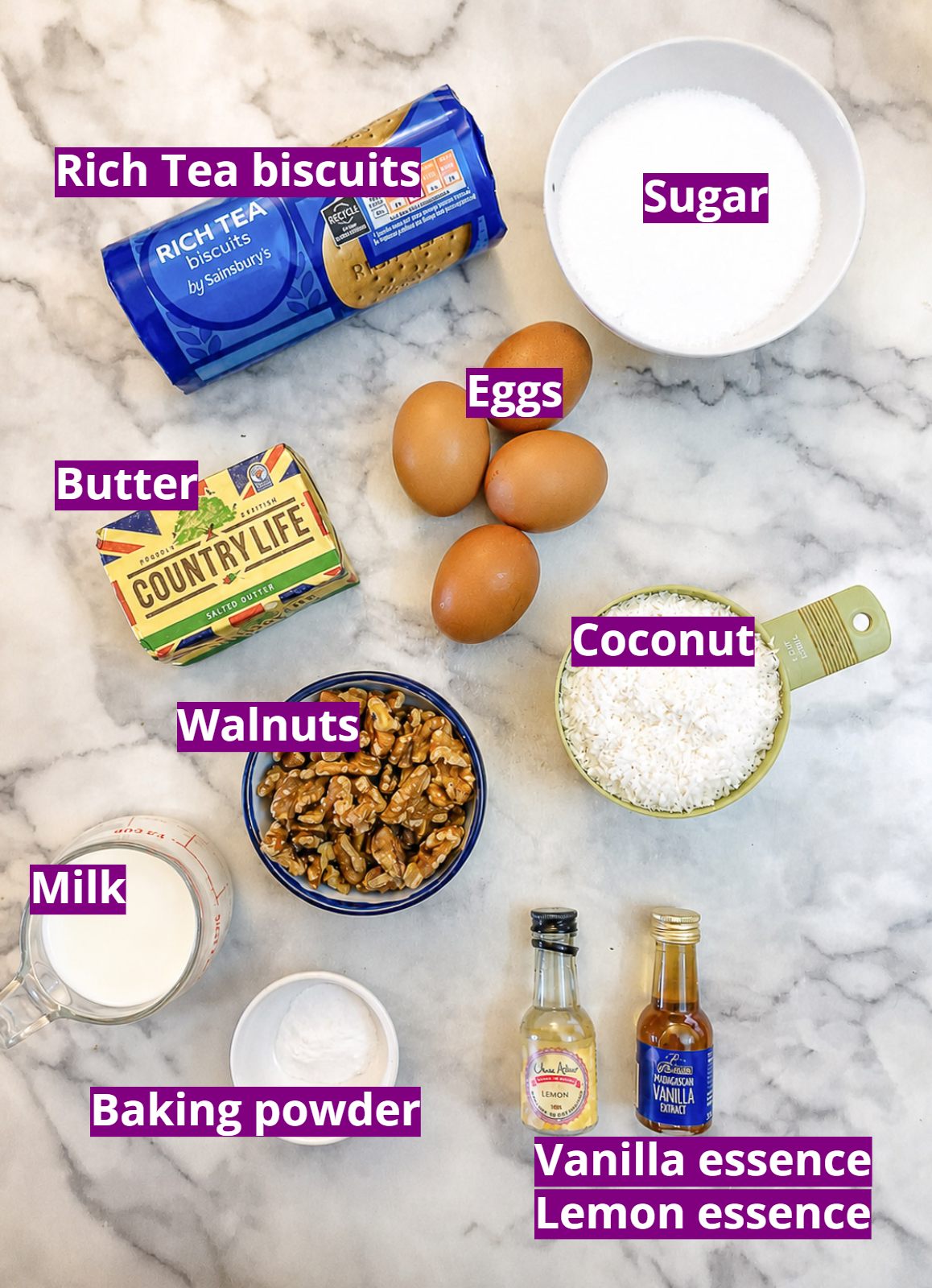
- Rich Tea biscuits. You need quite a plain biscuit - nothing too sweet or strongly flavoured. Rich Tea biscuits are ideal because they provide structure without overpowering the taste of the other ingredients, but you could also use Marie biscuits (sometimes called Maria biscuits). US readers can substitute Nilla wafers.
- Sugar. Plain old white granulated sugar. I would normally use caster sugar, but I'd run out. Either will work, although caster sugar will probably combine more easily with the butter.
- Butter. Salted or unsalted is fine. If using unsalted butter, you might like to add a small pinch of salt to the cake batter. For easier mixing, ensure your butter is at room temperature.
- Eggs. 4 eggs might seem a lot, but they are what give the cake its structure and surprisingly light texture. Don't be tempted to reduce the quantity.
- Baking powder. The baking powder helps keep the crumb light and open. The cake isn't meant to rise dramatically, but the extra lift from the baking powder helps prevent it from becoming too dense.
- Milk. Full-fat or semi-skimmed will be fine.
- Coconut. This is unsweetened, desiccated coconut with no added sugar. In the UK, it is simply labelled 'desiccated coconut'.
- Walnuts. These should be finely chopped so they distribute evenly throughout the cake. They don't need to be uniform, but avoid leaving large chunks.
- Essences. I used lemon essence and vanilla essence because that's what I had in the cupboard. Add a teaspoon of finely grated lemon zest for an extra citrus burst.
How to make a lemon, coconut and walnut biscuit cake
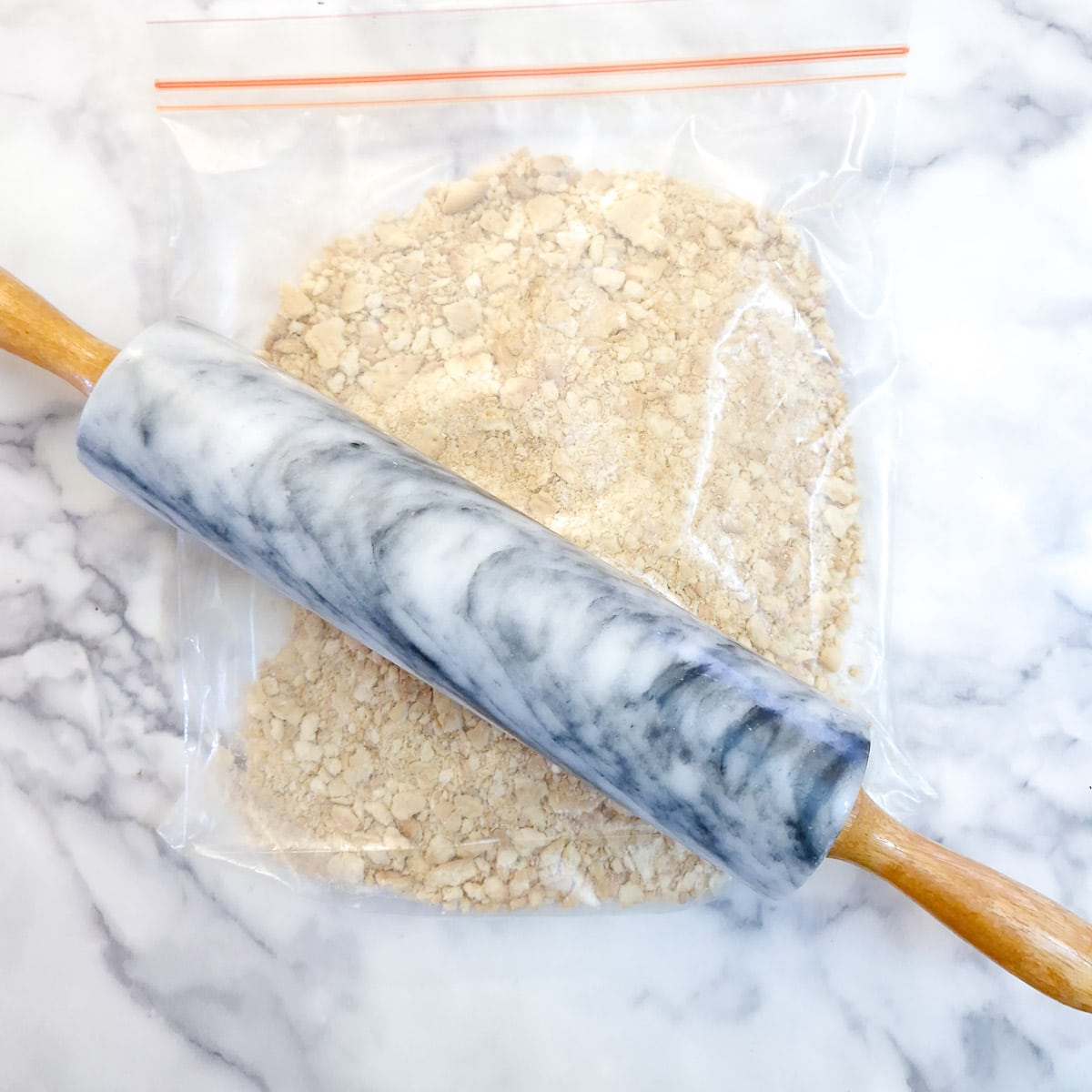
Step 1: Place the biscuits into a large plastic bag and roll them gently with a rolling pin to crush them. Don't worry if you still have a few small lumps - it all adds to the texture.
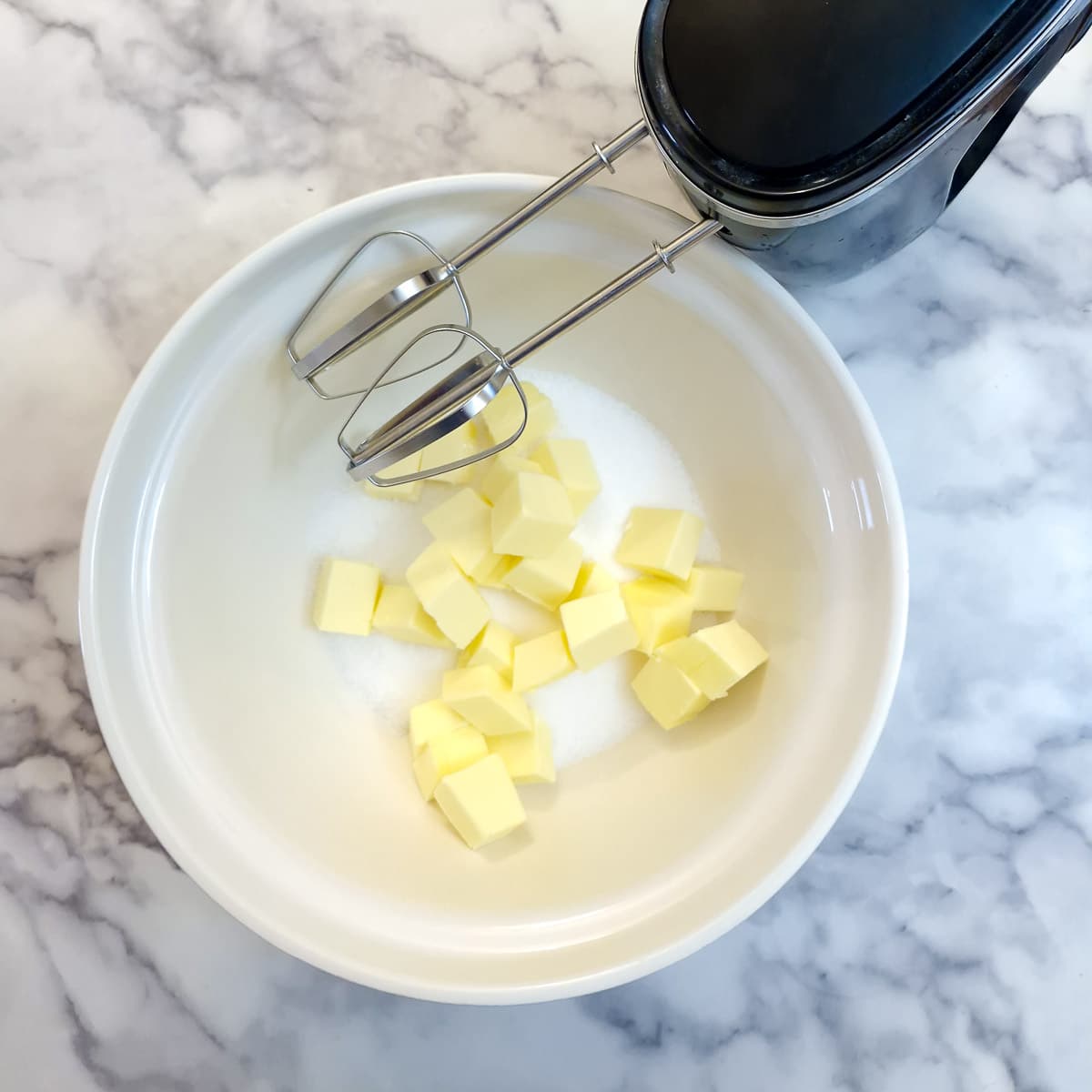
Step 2: Cut the butter into cubes and place it along with the sugar into a mixing bowl.
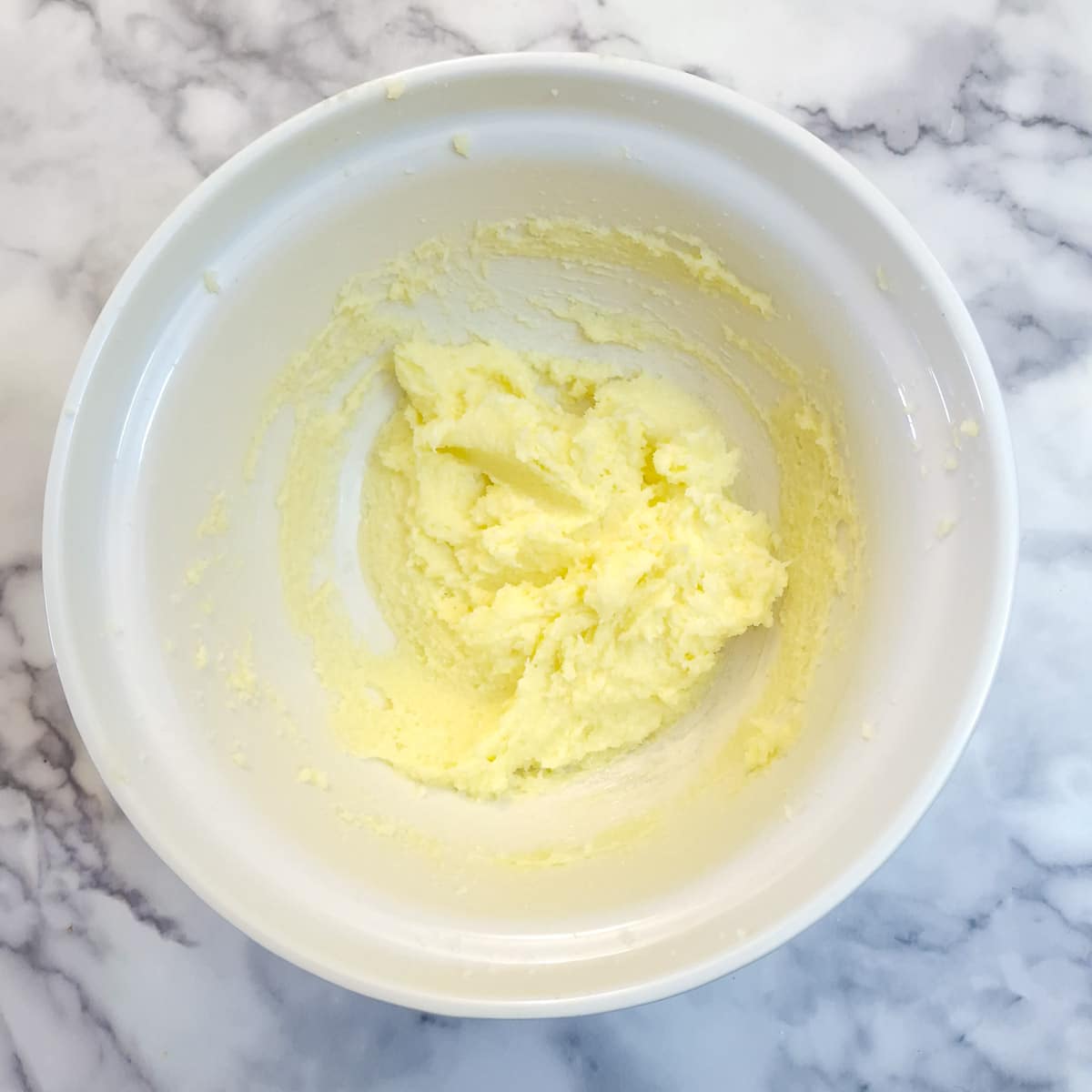
Step 3: Use an electric hand mixer to beat the sugar and butter until they are well combined and creamy. Use a wooden spoon if you don't have an electric hand mixer.
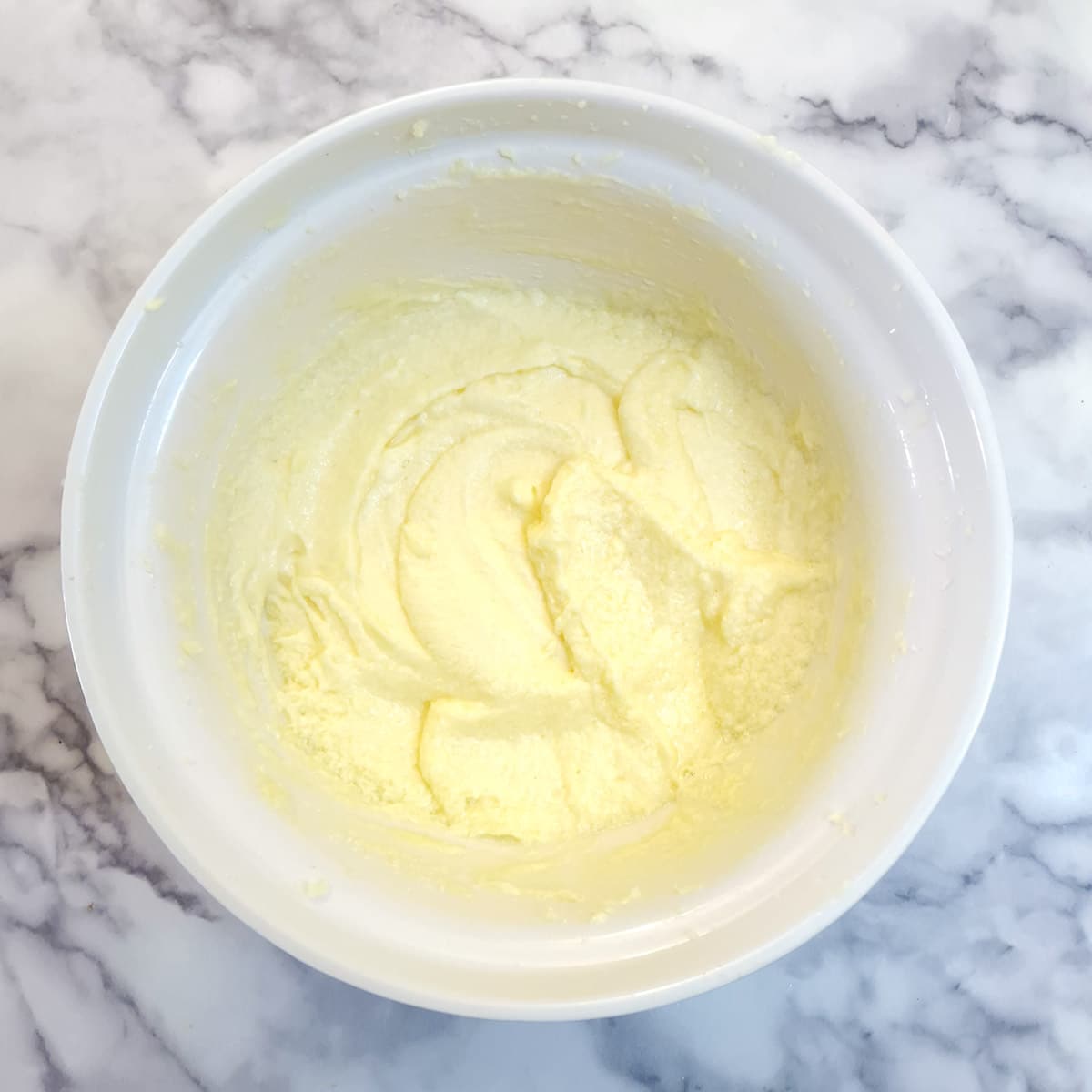
Step 4: Add the eggs, one at a time, beating well after each one.
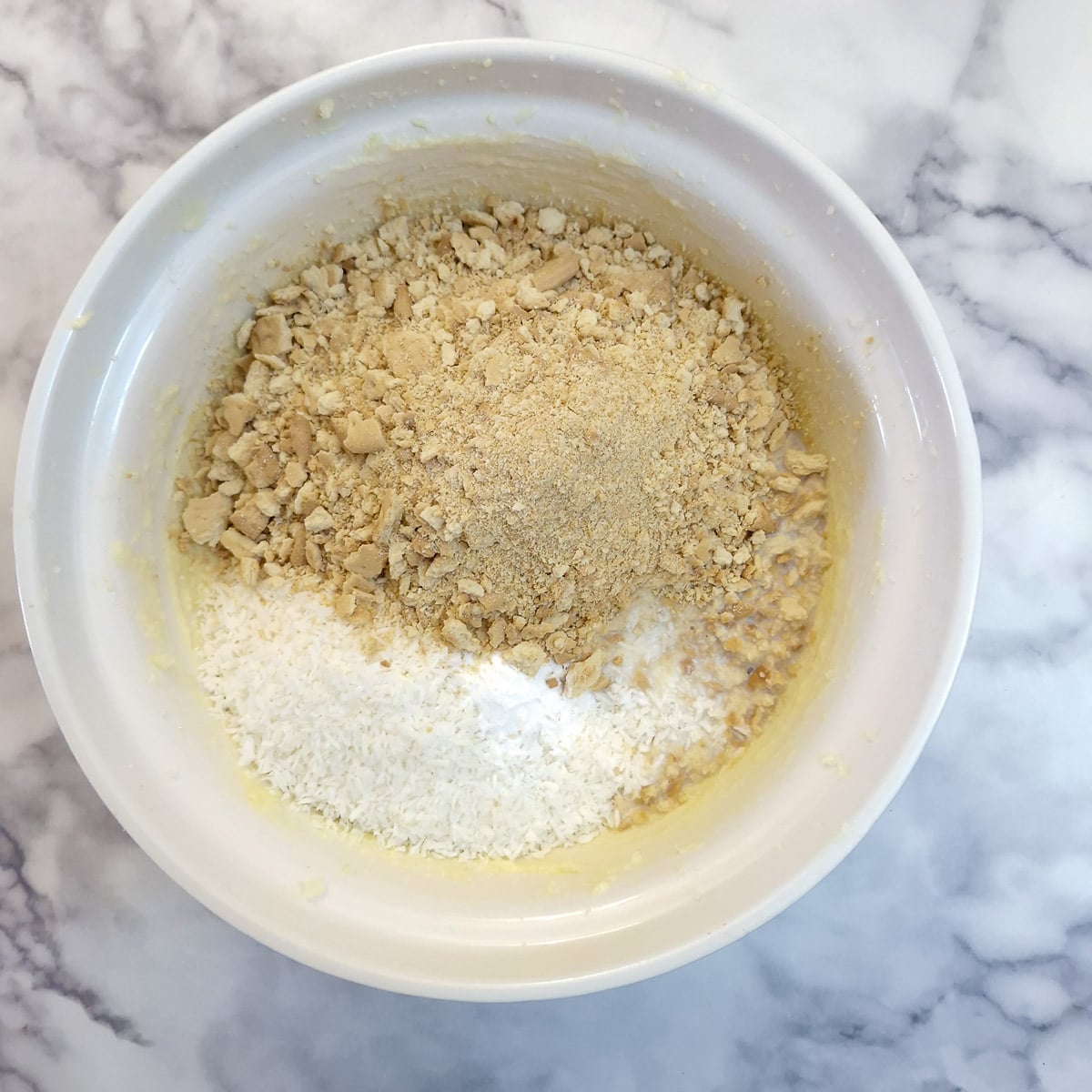
Step 5: Tip the coconut and the crushed biscuits into the egg and sugar mixture, and add the milk, essences (and lemon zest if using) and the baking powder. If you want to add a little salt, this is the time to do it.
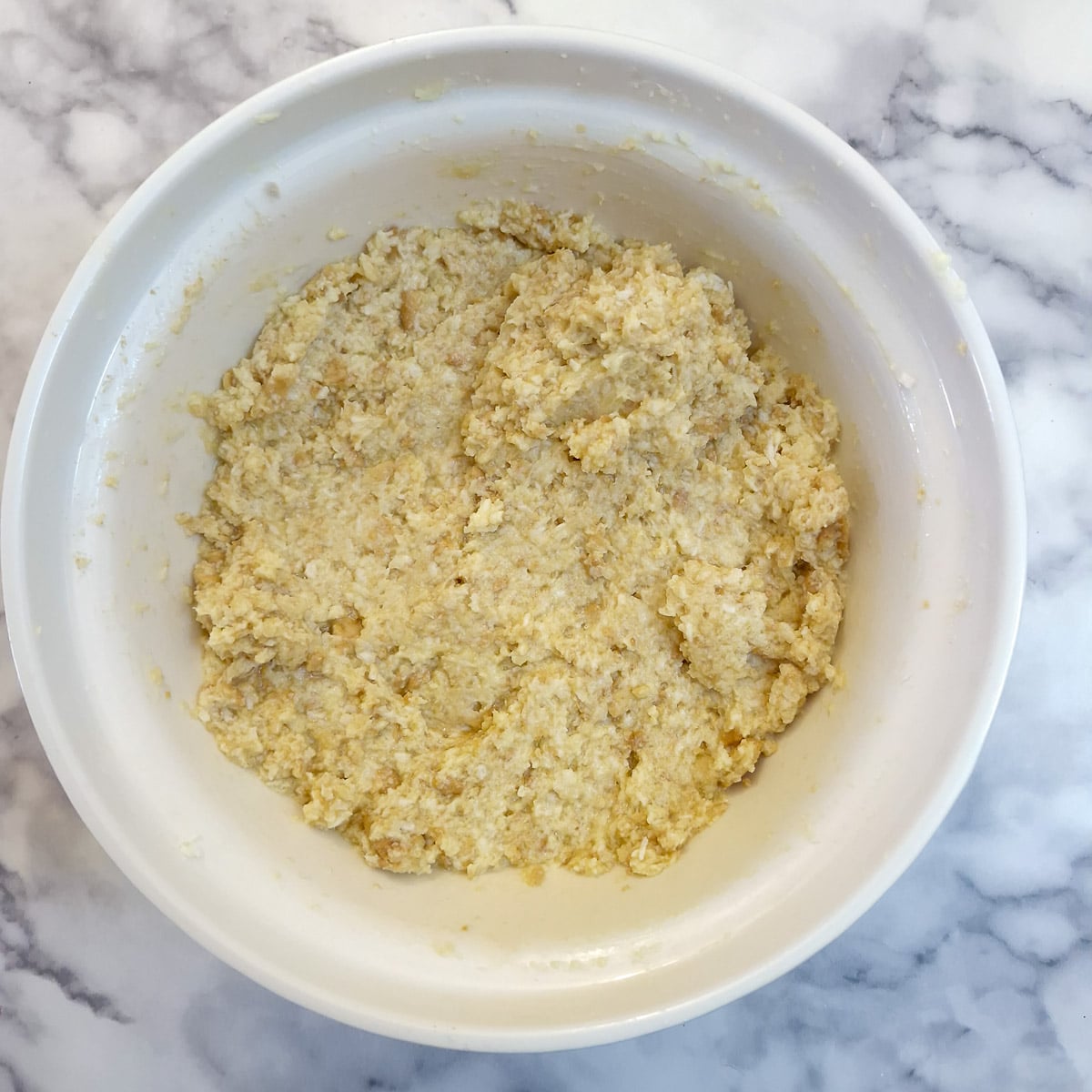
Step 6: Mix with a spatula until well combined. I'd avoid using the hand mixer at this stage as the mixture will splatter everywhere.
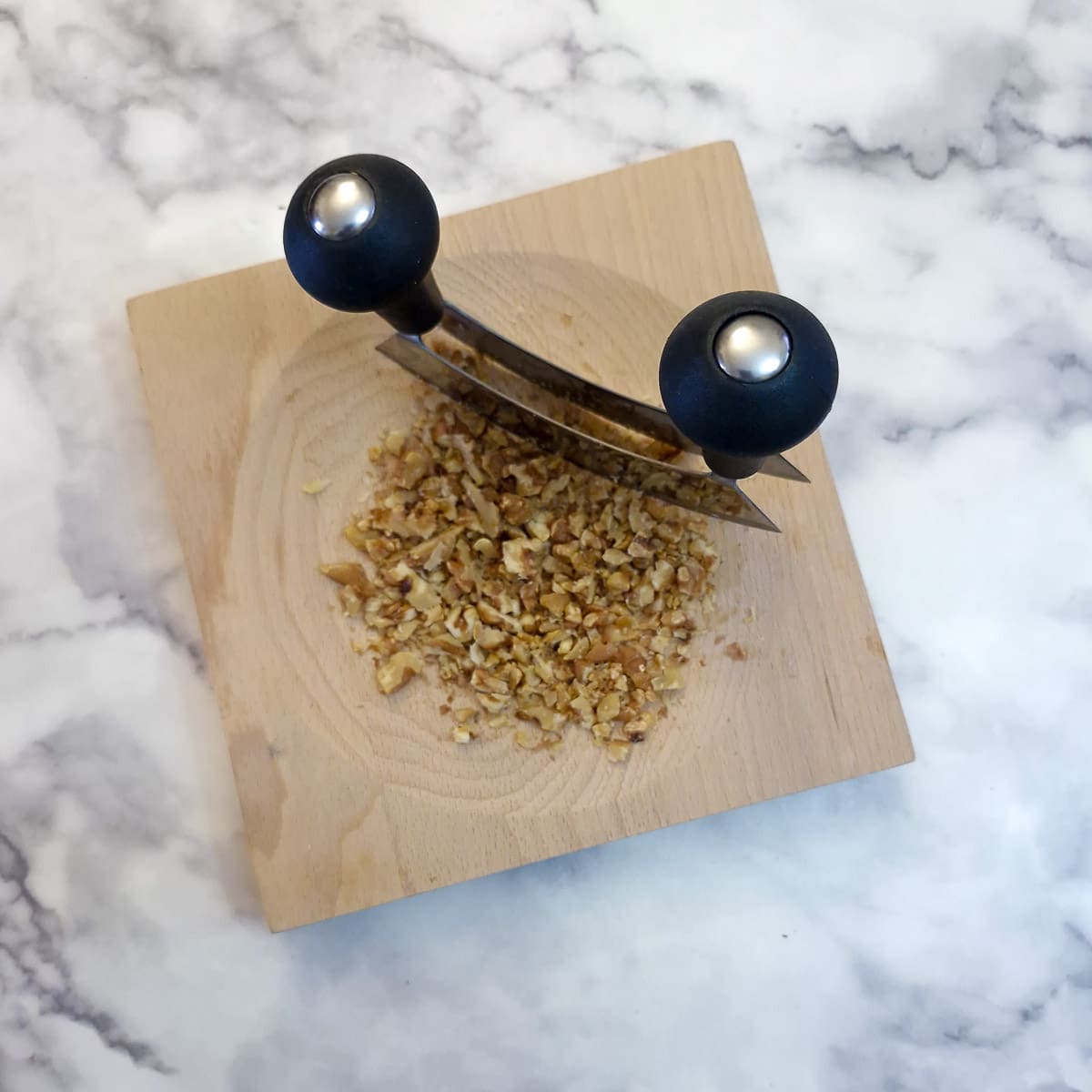
Step 7: Chop the walnuts. I find a herb cutter is brilliant at chopping nuts without them jumping all over the counter.
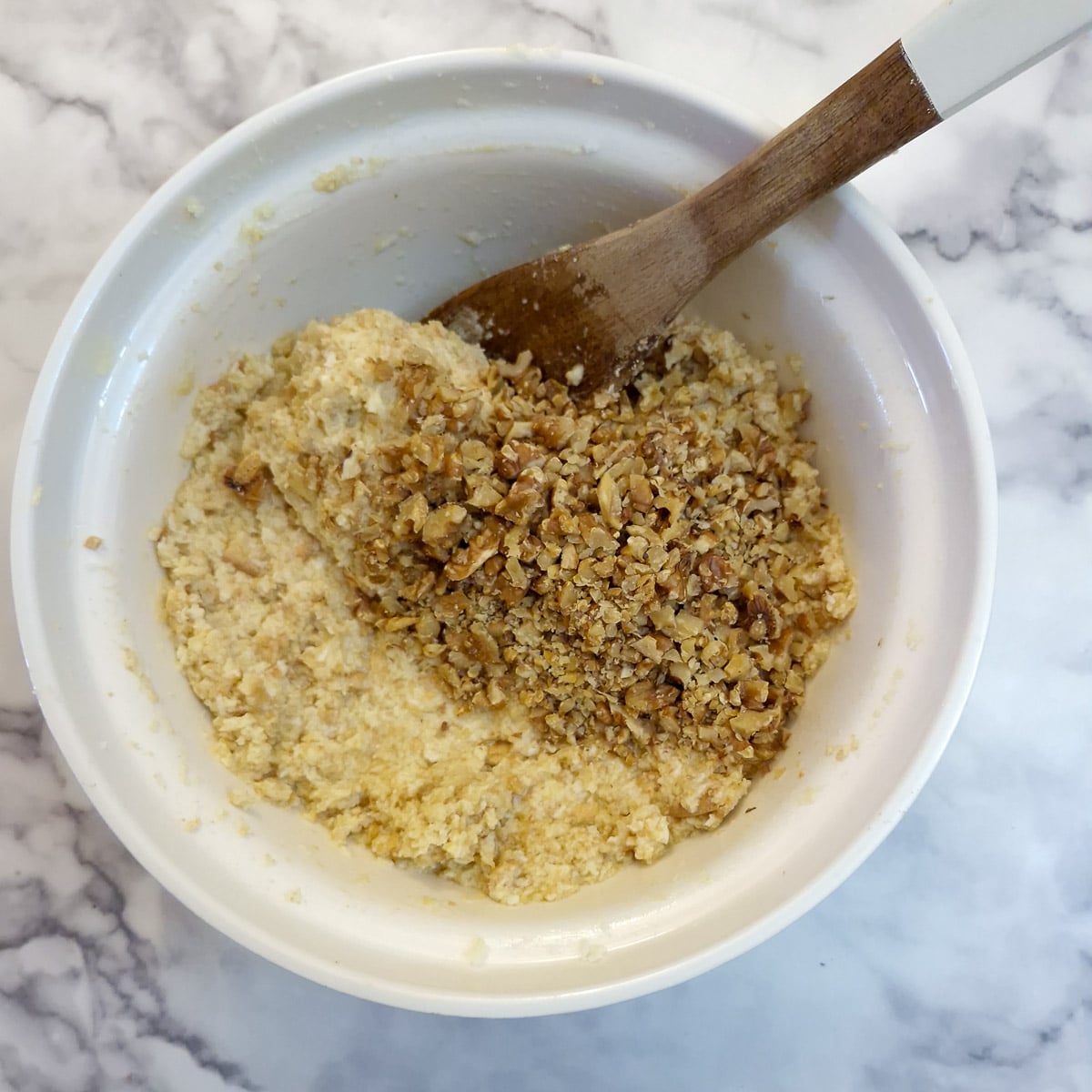
Step 8: Add the nuts to the batter and stir them in. Leave the mixture to stand while you prepare the cake tin. As it stands, the crushed biscuits absorb the milk, and the batter thickens up slightly.
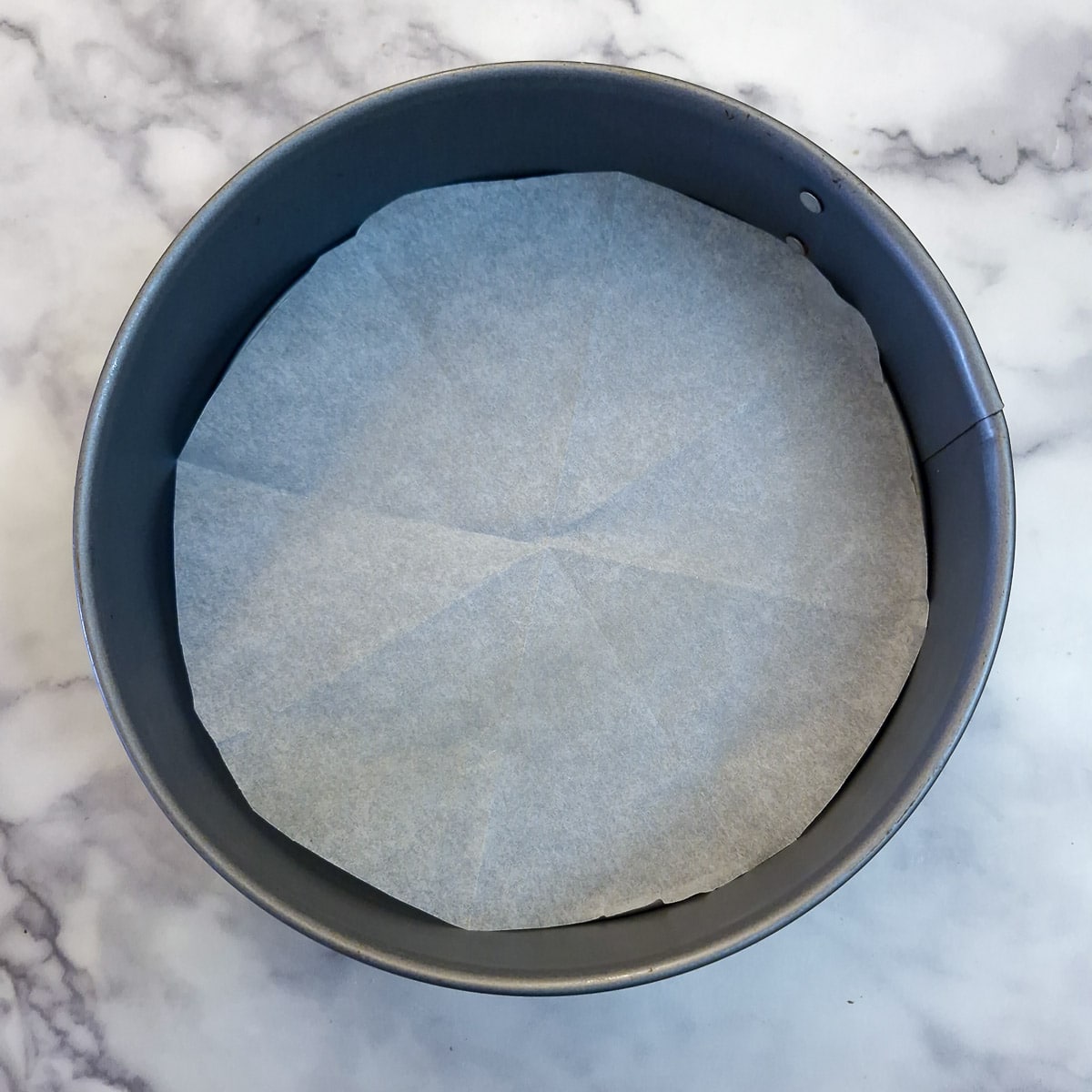
Step 9: Grease the sides of a 9-inch springform cake pan and line the base with baking parchment.
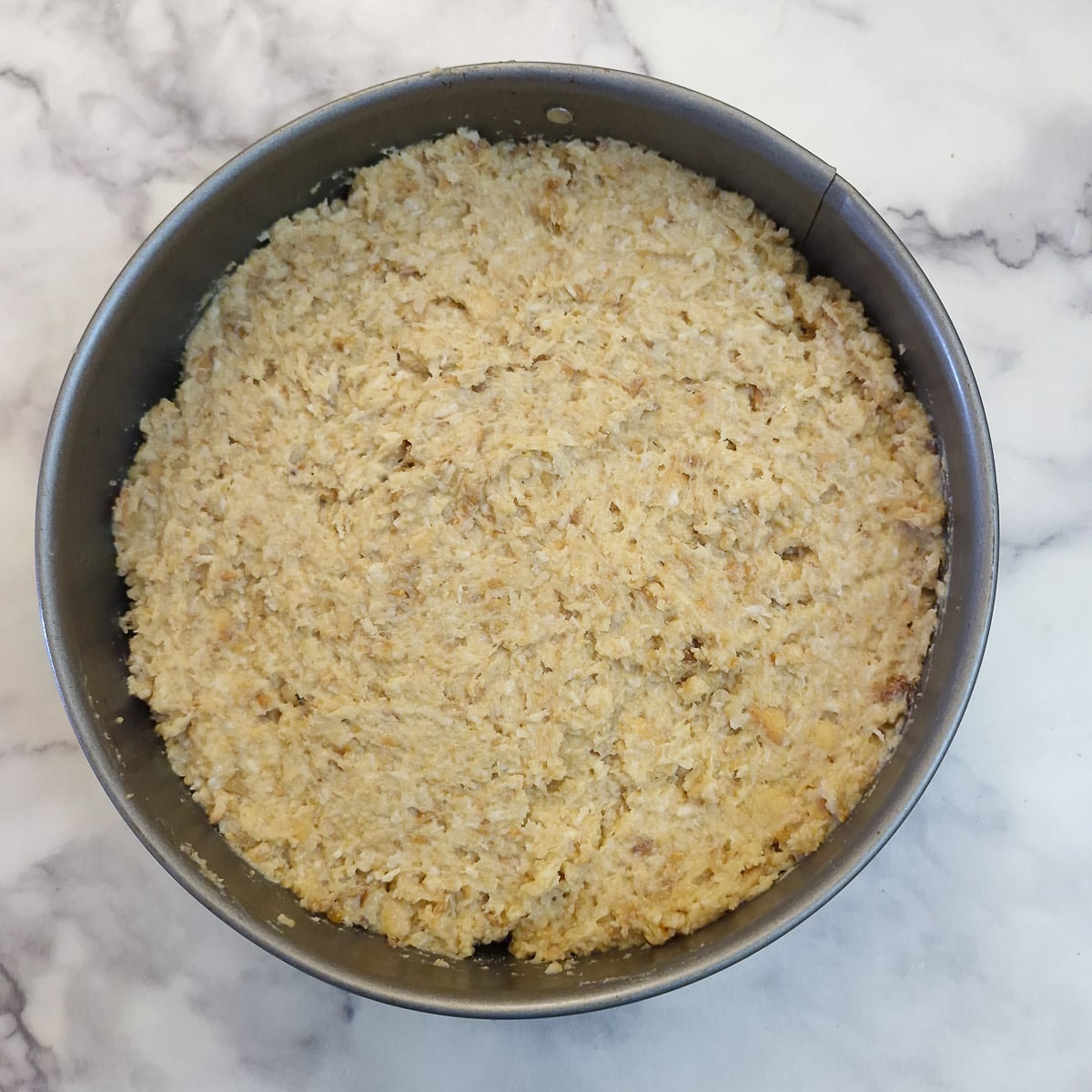
Step 10: Spread the mixture evenly into the pan. It should be just over an inch deep. Use a spoon or a flat knife to level the top.
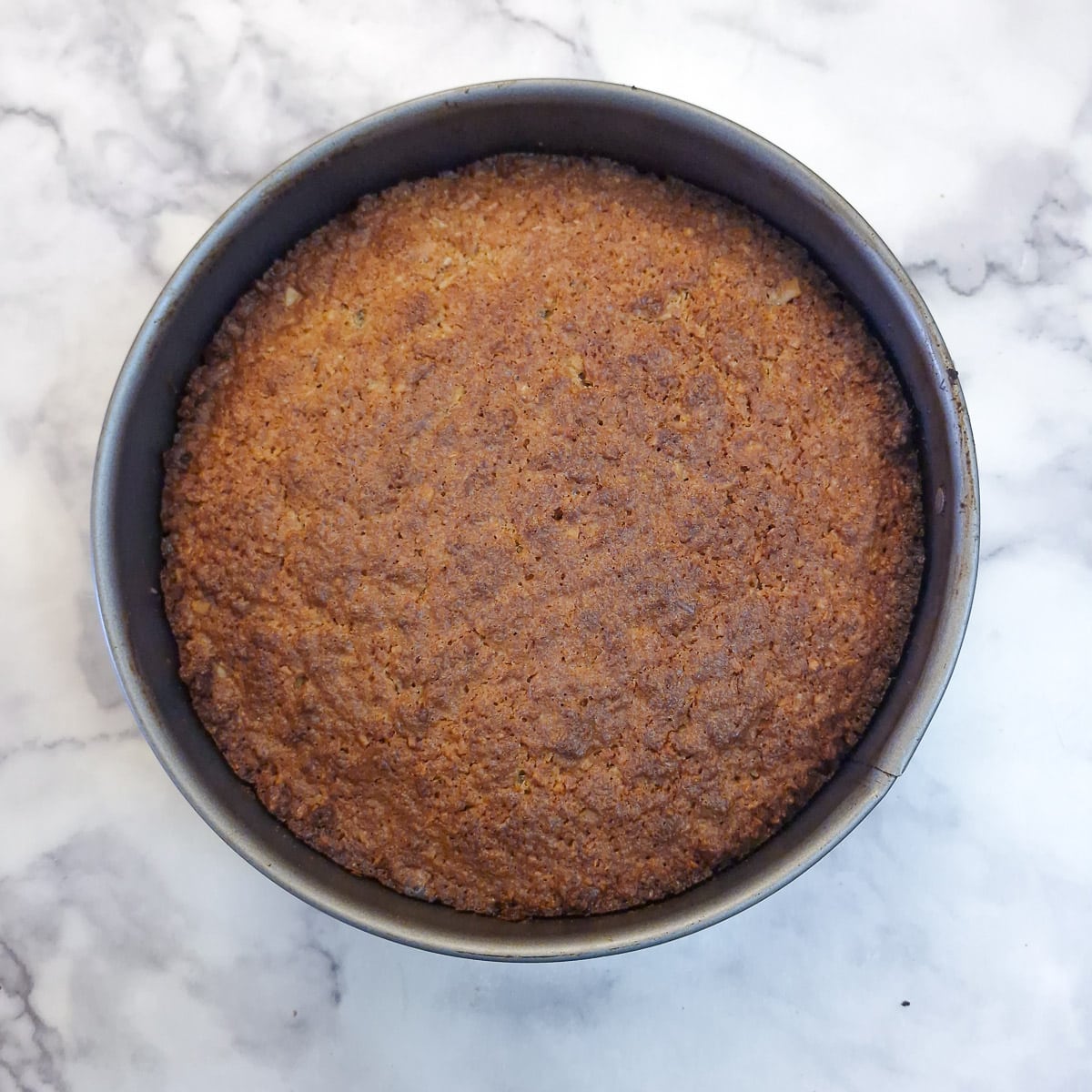
Step 11: Bake in a preheated oven (175C / 160C (fan) or 350F / 320F (fan)) for 40 minutes.
Tips for the perfect flourless biscuit cake
Here are my top tips to ensure that this cake made with crushed biscuits instead of flour always turns out perfectly:
- Don't crush the biscuits too finely - there's no need to pulse them in a food processor. We're not trying to turn them back into flour. A coarse breadcrumb texture with a few larger lumps is perfect.
- Cream the butter and sugar, then add the eggs just as you would for a normal cake. The only difference between this recipe nd a normal cake recipe is that we're replacing the flour with crushed biscuits.
- Allow the cake to stand for a few minutes while you chop the walnuts and/or prepare the baking pan. Those few minutes allow the biscuits to soften as they absorb the milk.
- Use a 9" springform pan. The batter fills this pan to a depth of 1 inch, and the time allowed for cooking has been tested on this. An 8" pan or a deep loaf tin may take longer to cook. The cake will be cooked when a wooden toothpick or skewer inserted into the cake comes out with no batter attached. Lay a sheet of tinfoil over the cake if it seems to be browning too much.
Variations
This cake is delicious in its own right - so I'm not going to waste too much time talking about ways to change the recipe.
However, that said, here are a few ideas:
- Use different nuts. Replace the walnuts with pecans, hazelnuts, cashews or even shelled pistachios for a slightly different flavour and texture.
- Add a lemon glaze. This cake is delicious served plain, but a simple drizzle made with icing sugar and lemon juice adds an extra burst of citrus flavour.
- Try a different biscuit. Stick to fairly plain biscuits rather than anything too strongly flavoured (sorry, Biscoff (not this time)!). Marie biscuits, Nice biscuits or South African Tennis biscuits would all work well. The coconut in the Nice and Tennis biscuits would strengthen the coconut flavour. Avoid sandwich biscuits or biscuits with a cream filling, as they can make the cake overly sweet and may affect the texture.
Equipment
This recipe has been tested using a round 9-inch diameter springform pan. This gives you a batter depth of just over one inch or about 2.75 cm.
You can use other pan sizes too, or even a loaf tin - but I haven't tested anything other than the 9" pan. If you do use a different pan size, keep your eye on it. The cake will be done when a thin wooden skewer comes out with no batter sticking to it. The depth of the batter is the most important factor; a deeper batter will take longer. If you need to increase the cooking time, lay a sheet of tin foil over the top of the pan to prevent over-browning.
For mixing the cake, you will need a large mixing bowl, and if possible, an electric hand beater, or, failing that, a wooden spoon.
To crush the biscuits, you'll need a plastic bag (leave it open at the top so it doesn't pop from trapped air when you roll it) and a rolling pin. If you don't have a rolling pin, use an empty wine bottle or a jam jar to roll over the biscuits to crush them.
And finally, for chopping the nuts, I find it easiest to use a herb chopper. You could also use a sharp knife. Don't put the nuts in a food processor; it will chop them too finely.
Storage and Freezing
- Kitchen. Store the cake in an airtight container in a cool place in the kitchen or pantry. There's no need to refrigerate, and it tastes best when eaten at room temperature. It will stay fresh for 3 days; after that, it will still be edible for a day or 2, but might be a little stale.
- Freezing. Wrap the cake in aluminium foil and then in cling wrap. You can freeze for up to 4 months. Individual slices can be frozen in the same way.
- Defrosting. Allow to defrost on the counter, then transfer to an airtight container and store in the kitchen.
FAQ
Yes. Replace the Rich Tea biscuits with your favourite gluten-free plain biscuits, such as gluten-free digestives or vanilla biscuits. The rest of the ingredients are naturally gluten-free, but always check the labels on flavourings and baking powder to be sure. The texture may vary slightly depending on the biscuits used, but the cake should still be light and delicious.
Gluten-free biscuits may absorb liquid differently, so you may need to adjust the amount of milk you add to achieve the correct consistency.
For UK readers, I've Googled it, and it appears you can buy Schar gluten-free Rich Tea biscuits at most large supermarkets for under £2 a pack.
Disclaimer: I haven't tested this with gluten-free biscuits, so I can't guarantee the results.
The crushed biscuits replace the flour and provide structure. Combined with the eggs, the biscuits create a surprisingly light texture that nobody would guess is made without flour.
Not at all. The biscuits blend into the batter and help provide structure to the cake. The final result tastes of lemon, coconut and walnuts rather than biscuits.
No. The cake is moist and flavourful enough to be served plain. However, a simple lemon glaze made with a mixture of half a cup of icing sugar and sufficient lemon juice to form a runny mixture will add an extra burst of citrus flavour.
No. Despite being made without flour, the cake is surprisingly light, with an open crumb. If you didn't know it was made with crushed biscuits, you'd think it was a traditional cake mix.
The original inspiration for this cake came from a Vanilla Wafer Cake recipe that used Nilla wafers, a popular American biscuit that isn't readily available in the UK.
For that reason, I adapted the recipe to use Rich Tea biscuits. I also reduced the sugar and made a few other changes based on my own testing.
The finished cake is lighter than I expected and has a lovely lemon, coconut and walnut flavour. While it was inspired by the original recipe, this version has been developed and tested using ingredients that are readily available in the UK.
Save for later
If you would like to try this lemon coconut walnut biscuit cake, why not save the recipe to one of your Pinterest boards so you can find it easily? Just click the image below.
Alternatively, you can save the recipe by clicking on the floating heart icon on the right-hand side of the screen.
Related recipes
Visit my cake, biscuit and dessert recipes page for other tasty bakes. Here are a few using similar ingredients that you might enjoy:
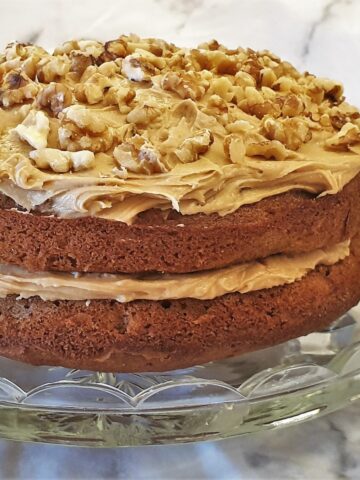
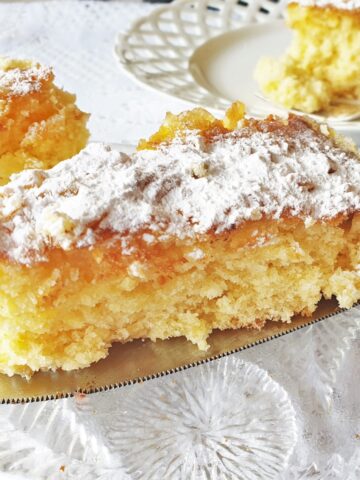
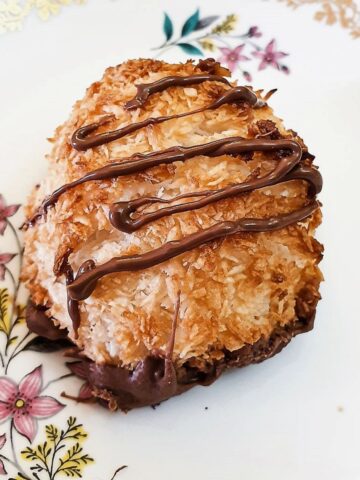
📋The recipe
Lemon coconut walnut biscuit cake
(Click the stars to rate this recipe)
Equipment
- 9-inch diameter round springform pan (23 cm)
- Large mixing bowl
- Electric hand mixer OR
- Wooden spoon
- Plastic bag for crushing the biscuits
- Rolling Pin
- Sharp Knife
- Chopping Board
Ask a Question
If you have a question about this recipe that has not been answered, please use the box below to ask it.
Use this with care. This is an AI-generated result and may contain errors or inaccuracies. I cannot be held responsible for the information returned.
Ingredients
- 1 cup / 200 grams white granulated sugar
- 5½ ounces / 160 grams butter cubed and at room temperature
- 4 large eggs
- 7 ounces / 200 grams Rich Tea biscuits
- ⅓ cup / 80 ml milk
- 1 cup / 80 grams walnuts
- 1 cup / 80 grams unsweetened desiccated coconut
- 1 teaspoon lemon essence
- 1 teaspoon vanilla essence
- 1 teaspoon baking powder
- Zest of half a lemon optional for more citrus flavour.
- ¼ teaspoon salt optional
Lemon glaze (optional)
- ¾ cup / 90 grams icing sugar
- Lemon juice to make a pourable glaze 2 - 3 tablespoons
Instructions
- Preheat the oven to 175C / 160C (fan) or 350F / 320F (fan).
- Place the biscuits into a large plastic bag and roll them gently with a rolling pin to crush them. Don't worry if you still have a few small lumps - it all adds to the texture.7 ounces / 200 grams Rich Tea biscuits
- Cut the butter into cubes and place it along with the sugar into a mixing bowl.1 cup / 200 grams white granulated sugar, 5½ ounces / 160 grams butter
- Use an electric hand mixer to beat the sugar and butter until they are well combined and creamy. Use a wooden spoon if you don't have an electric hand mixer.
- Add the eggs, one at a time, beating well after each one.4 large eggs
- Tip the coconut and the crushed biscuits into the egg and sugar mixture, and add the milk, essences (and lemon zest if using) and the baking powder. If you want to add a little salt, this is the time to do it.⅓ cup / 80 ml milk, 1 cup / 80 grams unsweetened desiccated coconut, 1 teaspoon lemon essence, 1 teaspoon vanilla essence, 1 teaspoon baking powder, Zest of half a lemon, ¼ teaspoon salt
- Mix with a spatula until well combined. I'd avoid using the hand mixer at this stage as the mixture will splatter everywhere.
- Chop the walnuts. I find a herb cutter is brilliant at chopping nuts without them jumping all over the counter.1 cup / 80 grams walnuts
- Add the nuts to the batter and stir them in. Leave the mixture to stand while you prepare the cake tin. As it stands, the crushed biscuits absorb the milk, and the batter thickens up slightly.
- Grease the sides of a 9-inch springform cake pan and line the base with baking parchment.
- Spread the mixture evenly into the pan. It should be just over an inch deep. Use a spoon or a flat knife to level the top.
- Bake in a preheated oven (175C / 160C (fan) or 350F / 320F (fan)) for 40 minutes.
- Remove the cake from the oven and if using the lemon glaze, drizzle it over the cake while it is still warm.
Lemon glaze
- Place the icing sugar into a bowl.¾ cup / 90 grams icing sugar
- Mix the lemon juice in slowly, until you have a thin pourable glaze. Take care - you may not need all the lemon juice. If you've added too much lemon juice and the glaze is too thin, add an extra spoonful of icing sugar to thicken it slightly.Lemon juice to make a pourable glaze
- The glaze should soak in slightly, leaving a delicate lemony sheen rather than leaving a thick coating of icing on the cake.
Notes
- Don't crush the biscuits too finely - there's no need to pulse them in a food processor. We're not trying to turn them back into flour. A coarse breadcrumb texture with a few larger lumps is perfect.
- Cream the butter and sugar, then add the eggs just as you would for a normal cake. The only difference between this recipe nd a normal cake recipe is that we're replacing the flour with crushed biscuits.
- Allow the cake to stand for a few minutes while you chop the walnuts and/or prepare the baking pan. Those few minutes allow the biscuits to soften as they absorb the milk.
- Use a 9" springform pan. The batter fills this pan to a depth of 1 inch, and the time allowed for cooking has been tested on this. An 8" pan or a deep loaf tin may take longer to cook. The cake will be cooked when a wooden toothpick or skewer inserted into the cake comes out with no batter attached. Lay a sheet of tinfoil over the cake if it seems to be browning too much.
Nutrition
I am not a nutritionist. The nutrition information has been calculated using an on-line calculator, and is intended for information and guidance purposes only. If the nutrition information is important to you, you should consider calculating it yourself, using your preferred tool.
If you made this recipe and enjoyed it, I'd love it if you could give me a star rating in the comments below. And if you'd like to get in touch, you can email me at [email protected]. I'd love to hear from you. And don't forget to subscribe to my mailing list so you can grab yourself a copy of my FREE COOKBOOK!
If you'd like to continue browsing, just click on this link to all my recipes.

Maureen says
Hi Veronica , we really enjoyed your biscuit cake,very moist ,it will be added to my favourites.
Maureen
VJ says
Lovely Maureen. Thank you for letting me know. I thought it was something a little bit different!