
Learn how to make pizza dough at home with this easy homemade pizza dough recipe. Made with just a handful of basic ingredients, the dough makes two 12-inch pizzas with a crisp base and a soft, chewy crust. Knead it by hand or use a stand mixer, then simply leave it to rise, roll it out and add your favourite toppings.
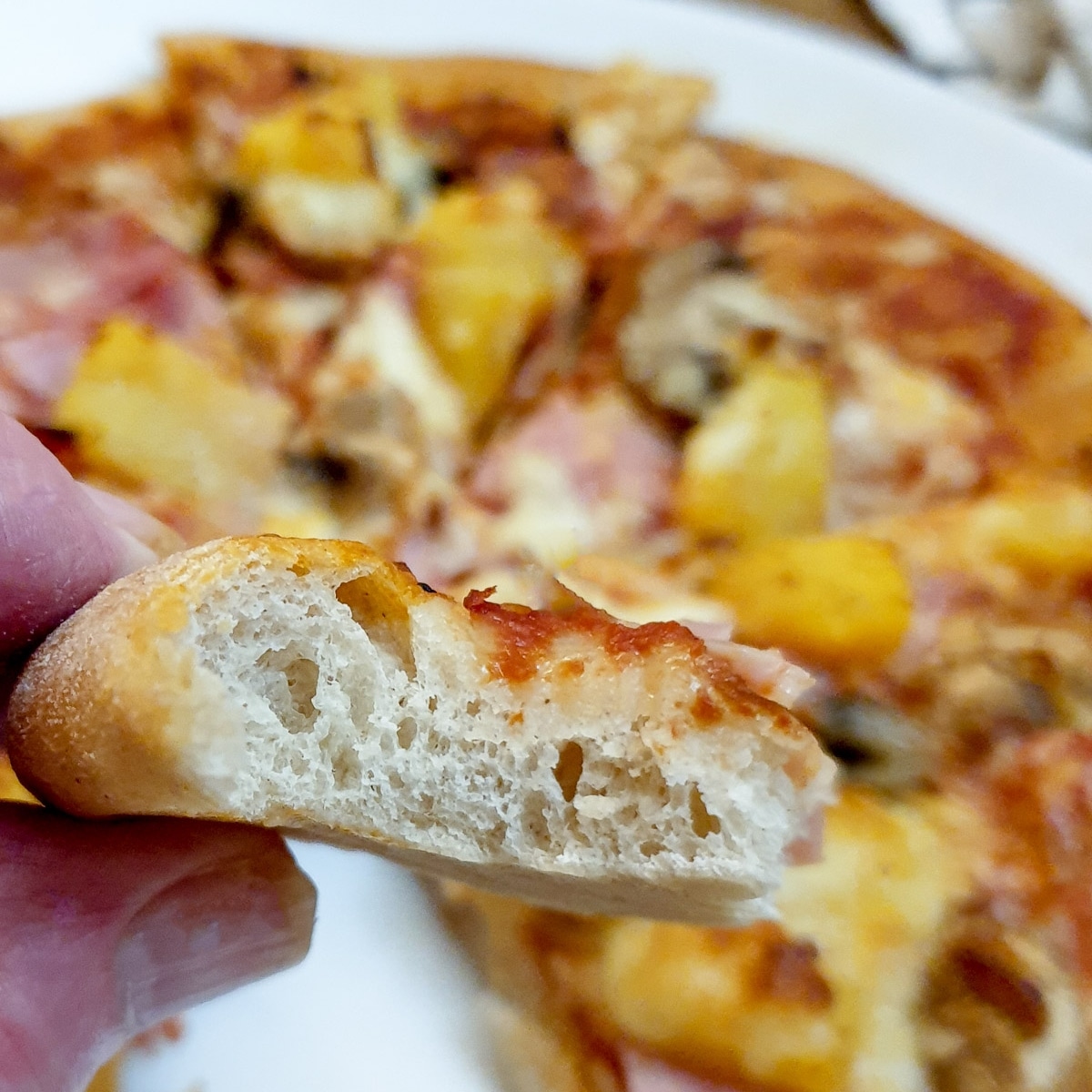
If you've never made pizza dough from scratch before, you'll be surprised at how easy it is. The dough takes only about 10 minutes to mix and knead, then all you have to do is leave it to rise before rolling it out and adding your favourite toppings.
Of course, you can buy ready-made pizza bases from the supermarket, but I find they can be quite thin and hard once baked. This homemade pizza dough recipe gives you a much nicer base that's crisp on the outside and soft and chewy inside. You can also roll the dough as thick or thin as you like, so everyone gets their pizza just the way they prefer it.
The only thing you do need to allow for is the rising time. The dough takes around 60 to 90 minutes to double in size, depending on how warm your kitchen is. If you're making pizza for supper, remember to factor this in. Alternatively, mix the dough the day before and leave it in a covered container in the refrigerator to rise overnight.
And then comes the best bit - the toppings!
My favourite pizza is Hawaiian, with lots of pineapple. I know that's a controversial choice - there seems to be quite a difference of opinion about whether pineapple belongs on pizza. But that's one of the advantages of making your own pizzas at home: it doesn't matter what anyone else thinks. You can add whatever you like, and everyone can have their favourite.
The last time I made these, I had Hawaiian (of course), while hubby had sausage, caramelised onions and lots of cheese. I have to say, there wasn't much left over!

Jump to:
Why I love making pizza dough
- Everyone gets exactly the pizza they want. Make one batch of dough, divide it up and let everyone choose their own toppings.
- I can make the crust just how I like it. Roll it thin for a crisp base or leave it a little thicker for a softer, chewier crust.
- It uses simple ingredients. Flour, yeast, water, olive oil, sugar and salt are all you need for these homemade pizza bases.
- It's easier than you might think. The actual hands-on work takes only about 10 minutes; most of the time is simply waiting for the dough to rise.
- I can make it ahead. Mix the dough the night before and let it rise slowly in the refrigerator, ready to roll and top the next day.
- It's much nicer than a ready-made base. You get a freshly baked crust that's crisp on the outside and soft and chewy inside.
Ingredients for pizza dough
**This is just an overview to explain why I used a particular ingredient. The complete list of ingredients and the exact measurements are on the printable recipe card at the end of this post.**
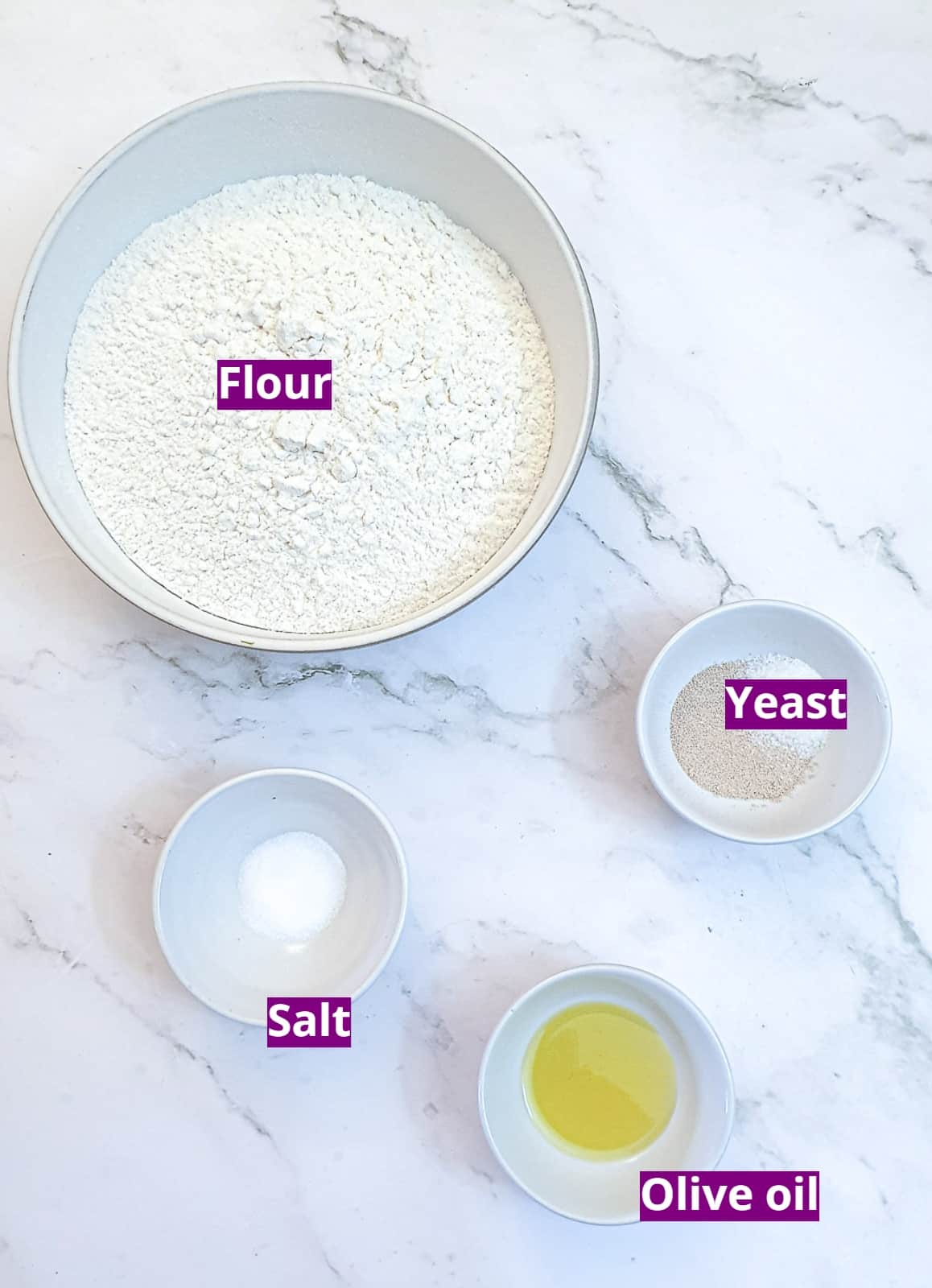
You only need 4 basic ingredients for this easy pizza dough recipe, plus water and salt.
- Flour - I use strong white bread flour because its higher gluten content gives the pizza dough its characteristic chewy texture. You can use all-purpose flour instead, but the finished crust may not have quite the same chewiness.
- Salt - optional, but even a small amount of salt improves the flavour of the dough.
- Yeast and sugar - I always use instant yeast granules because they are convenient and have a longer shelf-life than fresh yeast. I've included instructions below to test that your yeast is still active - there's nothing worse than making a batch of dough only to find it doesn't rise because your yeast has expired! The small amount of sugar (half a teaspoon) gives the yeast a quick source of food and helps get it working.
- Olive oil - adds a little softness to the dough and helps give the baked crust a tender texture.
- Water (not pictured) - you will also need lukewarm water for mixing the dough.
You will also need some pizza toppings of your own choice. I've described 2 pizza toppings below, but you could grab a take-away menu from your local pizza shop and use that for inspiration.
How to make pizza dough
Mix the ingredients
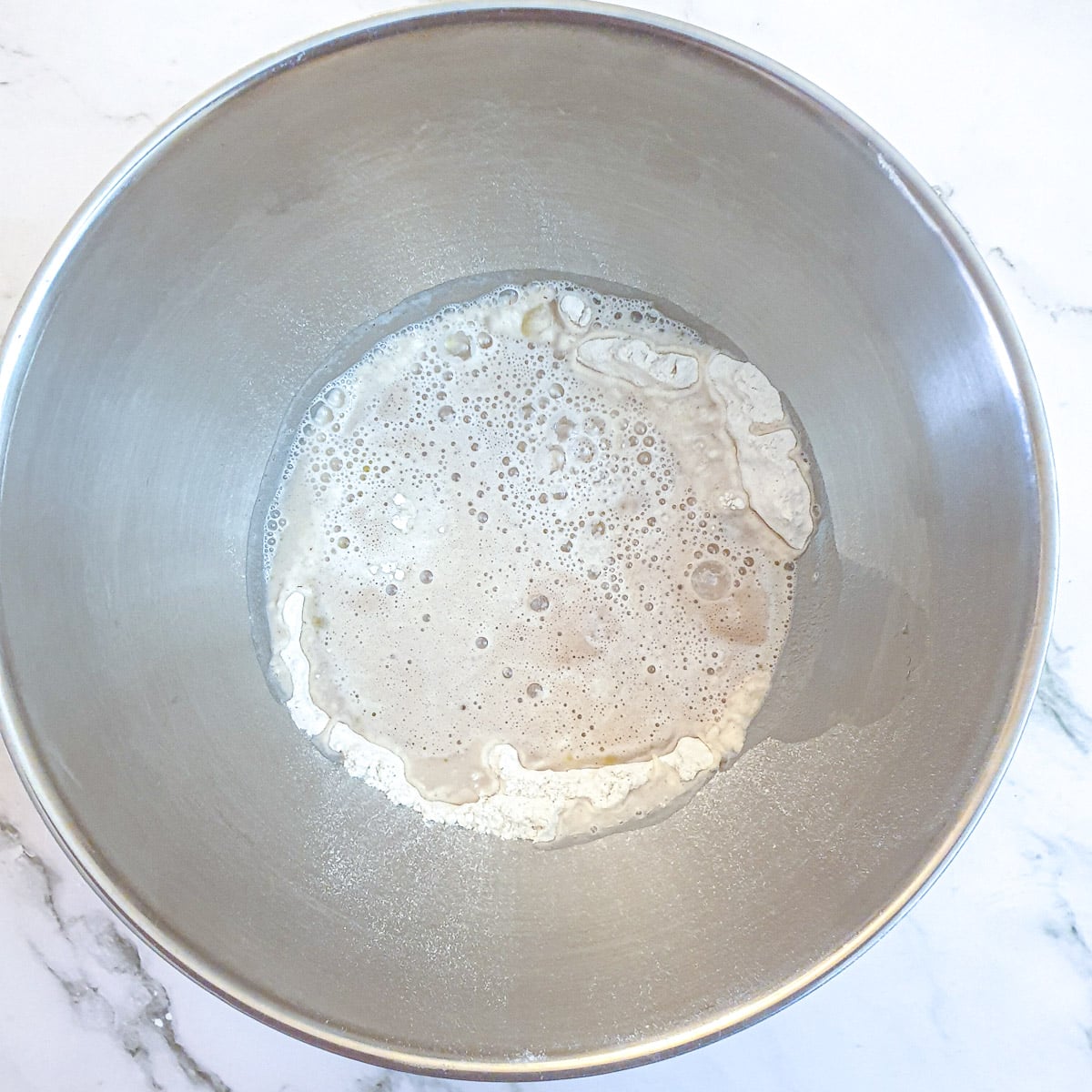
Step 1: Place the flour into a mixing bowl along with the salt, sugar and yeast. Add most of the water.
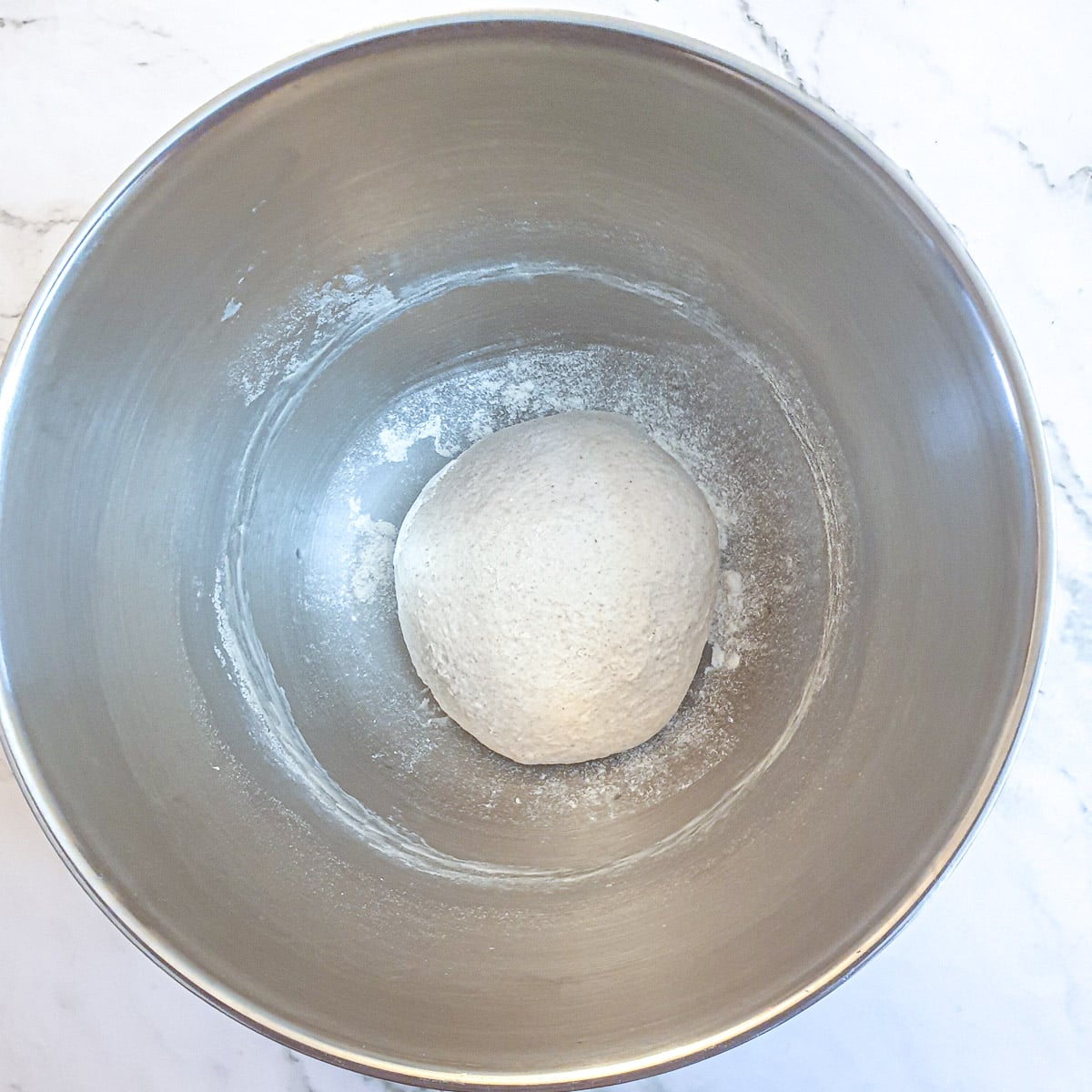
Step 2: Combine the ingredients using a spatula, then knead the dough for 10 to 15 minutes by hand, adding the remaining water if necessary. You could also use the dough hook on a stand mixer and knead for 5 minutes on speed 4. The texture of the dough should be smooth and elastic.
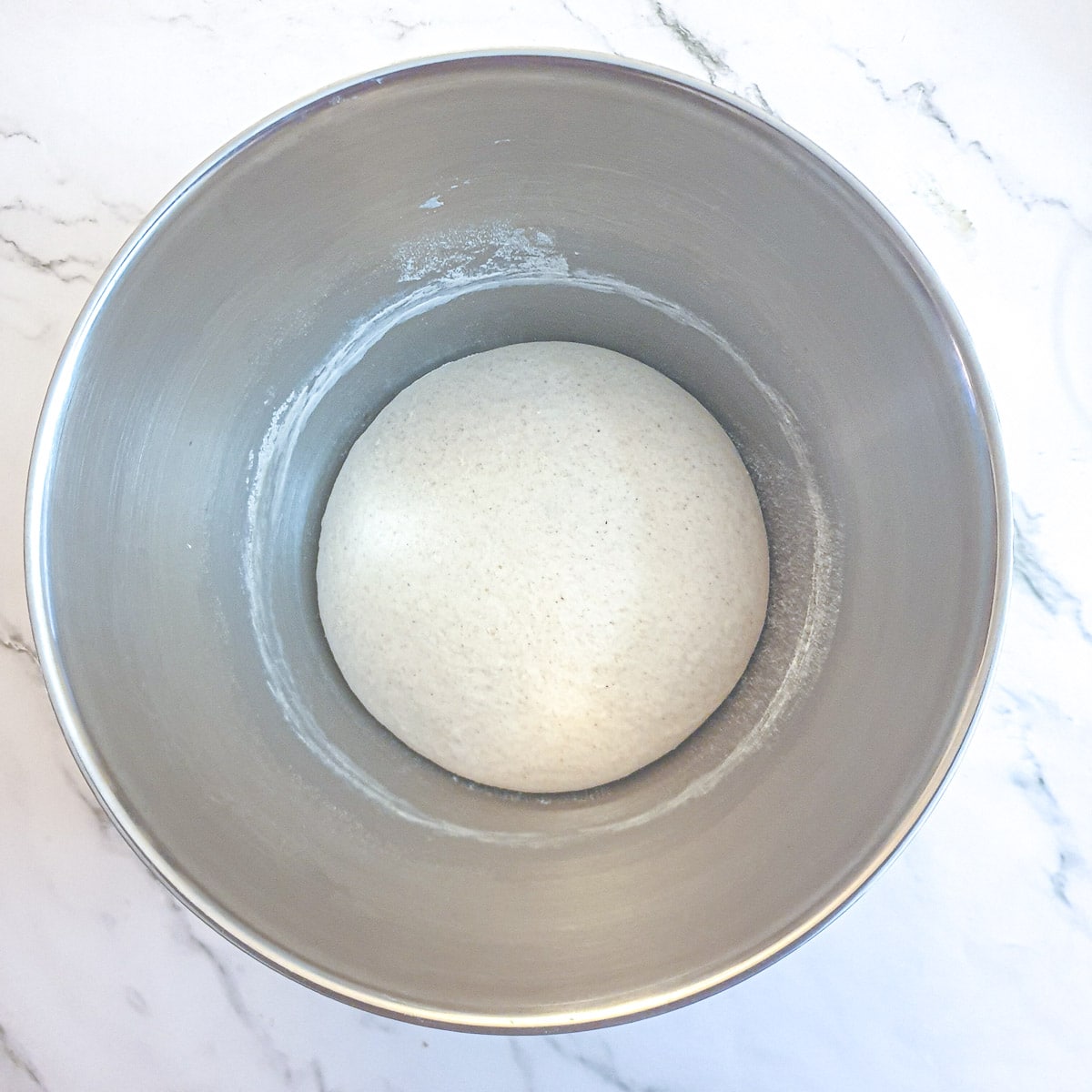
Step 3: Leave the dough in the mixing bowl, brush it lightly with a few drops of olive oil, and cover the bowl with a clean towel. Place the bowl of dough in a warm place (draught-free) to rise for about 90 minutes or until doubled in size.
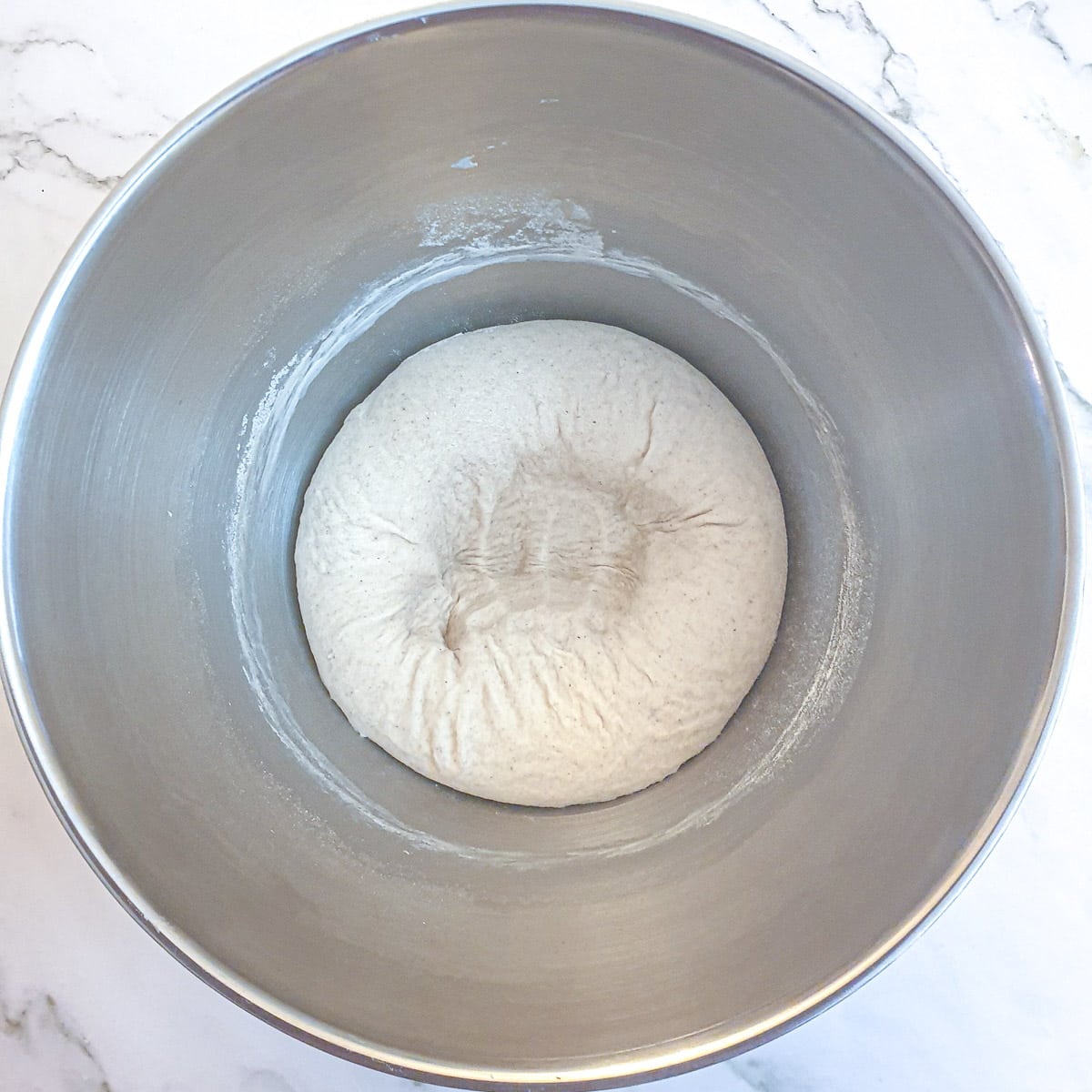
Step 4: Punch down the dough to release the air (I love this bit 🙂 )
Step 5: Divide the dough in half and form it into two balls. Rub each ball lightly with a few drops of olive oil, cover the dough with a clean cloth or plastic wrap until you are ready to make your pizzas.
Each ball will make one 12-inch pizza.
Roll the dough and add the toppings
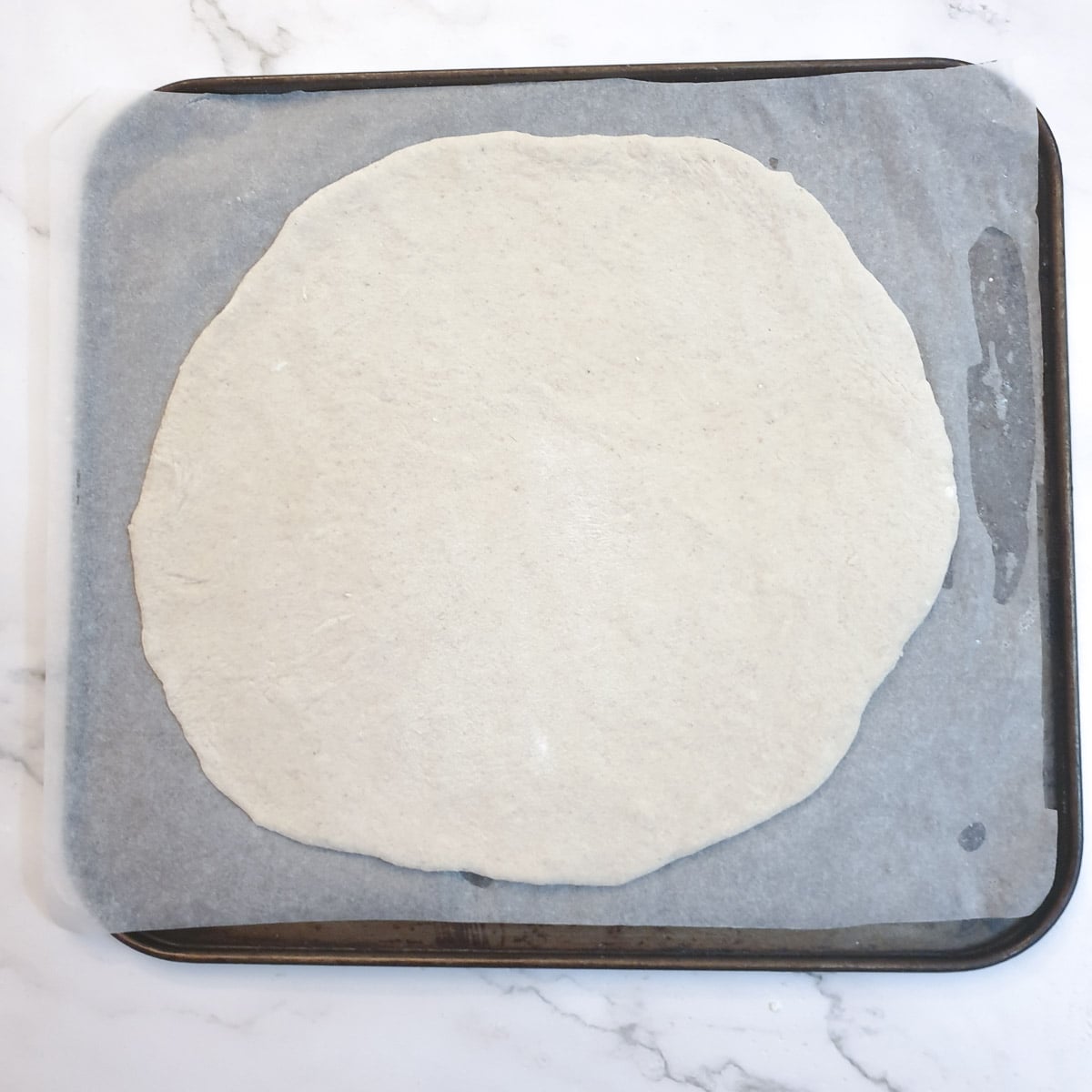
Step 6: Using a rolling pin, roll one of the balls of dough into a circle roughly 12" in diameter and transfer the rolled dough to your baking sheet. I like to line my baking sheet with baking parchment to make cleaning up easier.
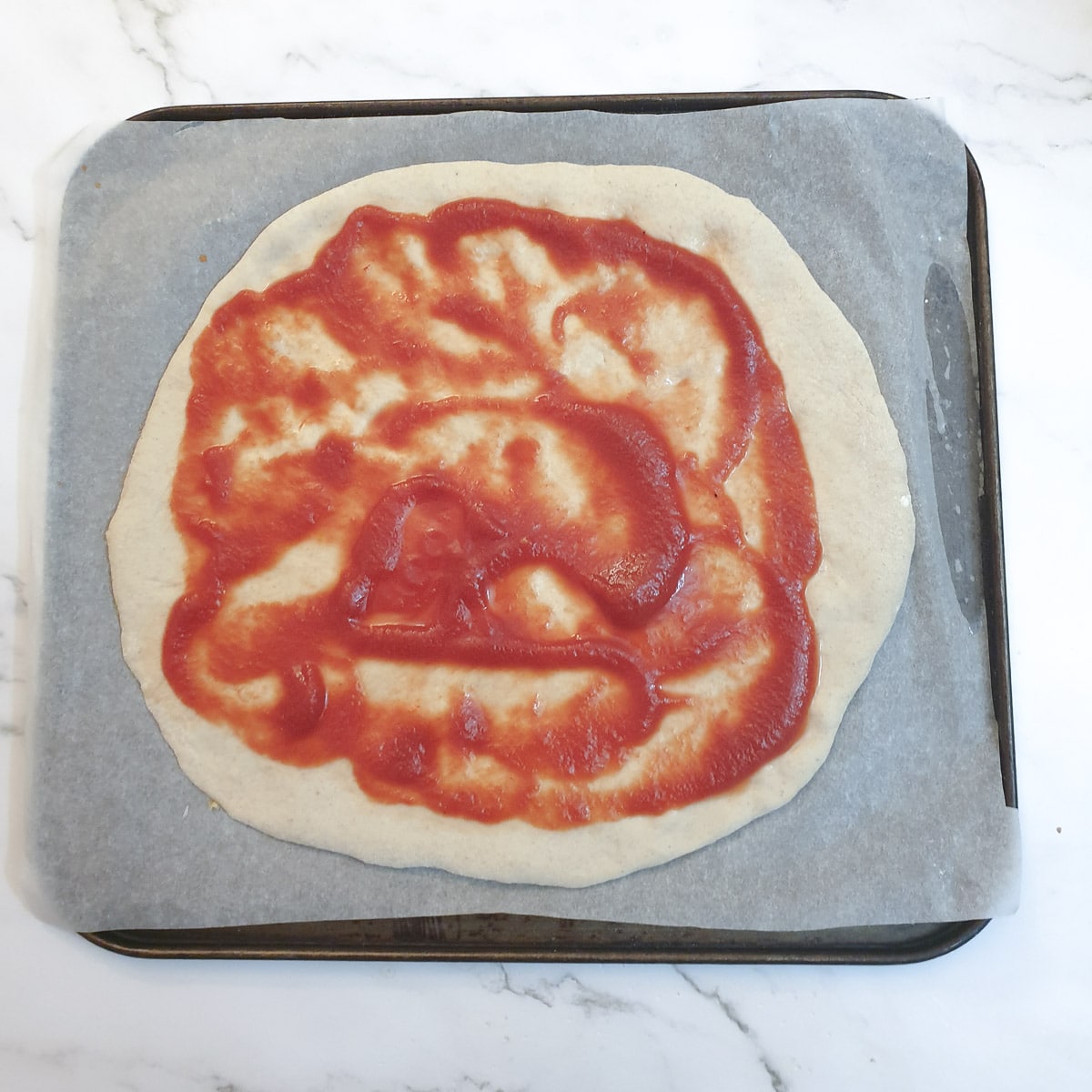
Step 7: Spread the pizza dough with 3 tablespoons of tomato passata. Use this homemade passata recipe or use any tomato-based pizza sauce from your local supermarket.
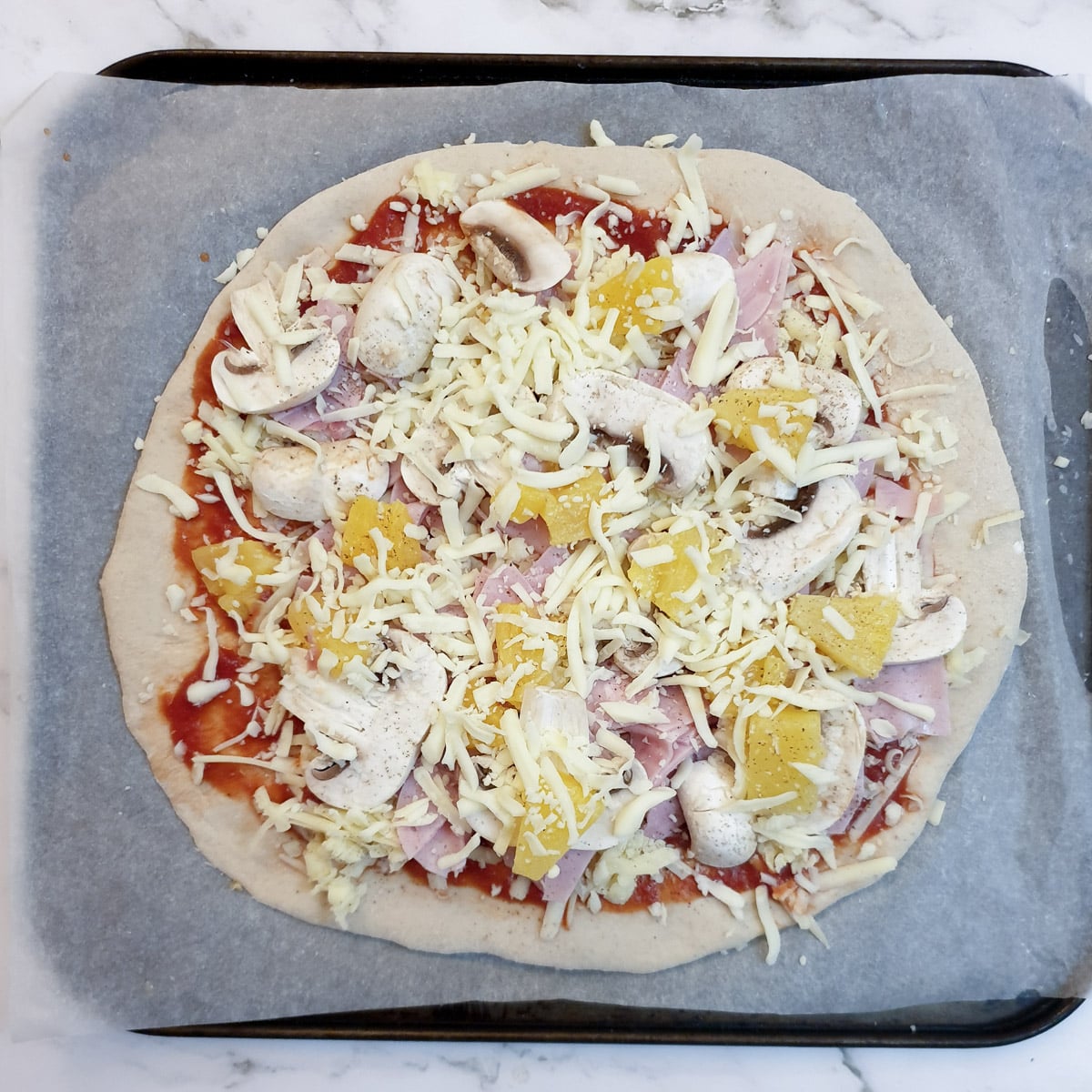
Step 8: Add a generous helping of chopped ham, sliced mushrooms and pineapple cubes. Optionally sprinkle with some dried Italian herbs. Finally, sprinkle with a combination of grated mozzarella and cheddar cheese.
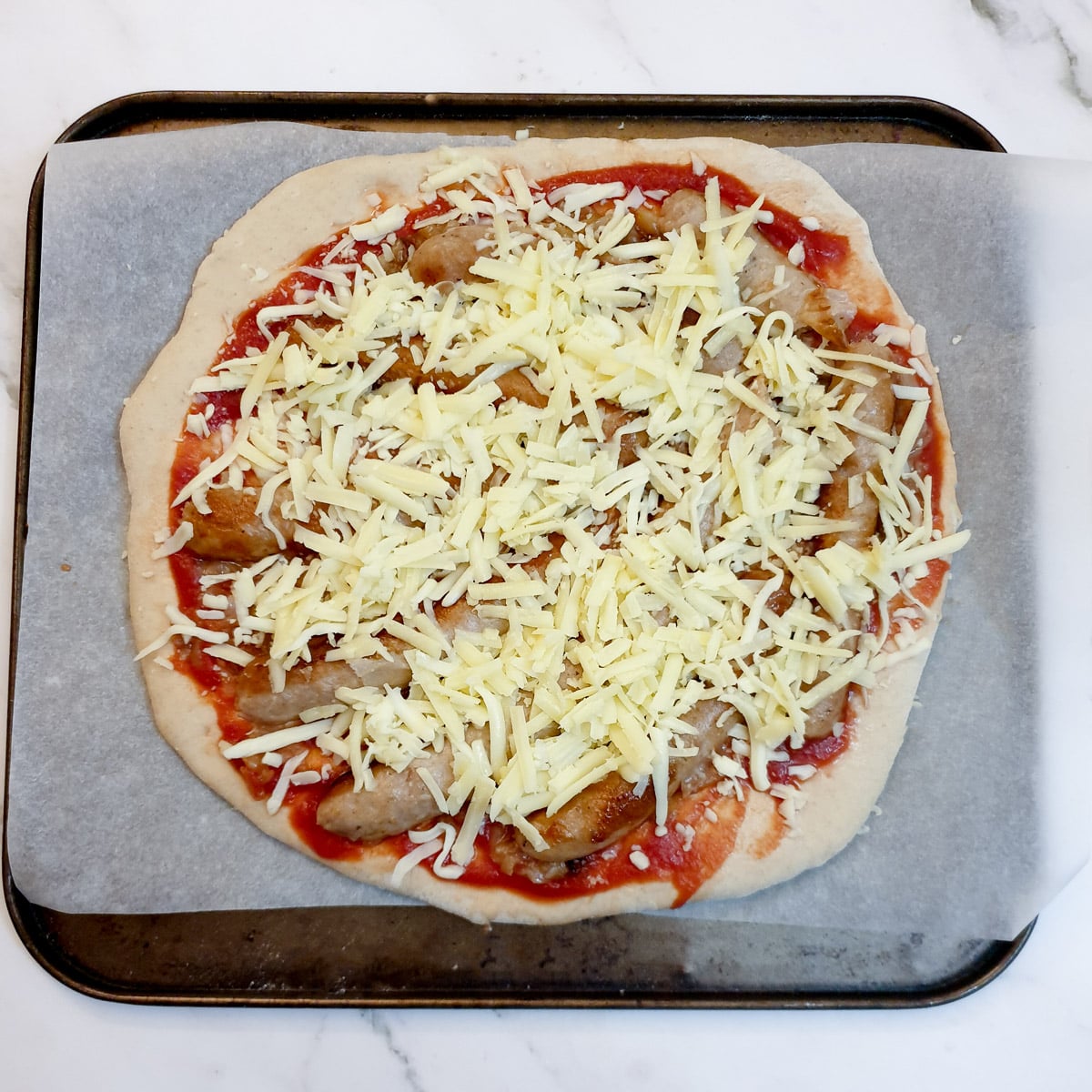
Step 9: Hubby's pizza was made in a similar fashion, but the tomato passata was topped with a helping of caramelised onions and his favourite sausages (which I fried separately and cut in half length-wise), before being covered with a mixture of cheddar and mozzarella.
Bake

Bake the pizzas in a preheated oven (200C / 400F) for 20 minutes until the edges of the dough are golden brown and the cheese has melted.
Serve hot!
Foodle Club top tips
Follow these handy tips to ensure your pizza dough always turns out perfectly:
- Don't make the water too hot. The water should be lukewarm rather than hot. Water that is too hot can kill the yeast and prevent the dough from rising.
- Don't add the water all at once. You might not need all the water. Different brands of flour can absorb different amounts of liquid, so hold a little back initially, and only add it if necessary. The dough should be soft and slightly tacky, but not wet and sticky.
- Give the dough a good knead. Kneading develops the gluten that gives pizza dough its stretchy, chewy texture. Once properly kneaded, the dough should feel smooth and elastic rather than rough and sticky.
- Let the dough tell you when it is ready. Rising time will depend on the temperature of your kitchen. Rather than watching the clock, wait until the dough has roughly doubled in size.
- Give it somewhere warm to rise. Yeast works more slowly in a cold kitchen. Put the covered bowl in a warm, draught-free place, but avoid anywhere excessively hot. In winter, I switch my oven to 200C and let it heat for 2 minutes, then switch it off again. That just takes the chill off and makes the oven warm enough to allow the dough to rise, but not so hot that it kills the yeast.
- Don't add too much extra flour when kneading. It's tempting to keep adding flour if the dough feels slightly sticky, but too much can make the baked pizza dry and tough. As you knead, the dough should become smoother and less sticky.
- If the dough keeps springing back, let it rest. If you're trying to roll or stretch the dough and it keeps shrinking back, cover it and leave it for 10 minutes. This gives the gluten time to relax, and the dough should then be much easier to roll and shape.
- Preheat the oven properly. Pizza cooks best in a thoroughly preheated oven. Give the oven plenty of time to reach the required temperature before putting the assembled pizza in.
- Don't overload the toppings. As tempting as it is to pile everything on, too many toppings (especially wet ones) can prevent the base from cooking properly and leave the centre soggy.

Other uses for homemade pizza dough
Pizza dough is very versatile and there are various other things you can use it for. Here are some of my favourite ways to use it:
- Naan bread - take golfball-sized pieces of dough, form them into flat, thin circles (use your hand or a rolling pin) and fry them in sunflower oil for 2 or 3 minutes per side until they are golden brown. For buttery garlic-flavoured naan bread, fry the dough in garlic butter instead.
- Roosterkoek - (pronounced roos-stir-cook) is a favourite South African barbeque bread. Take balls of dough, slightly smaller than a tennis ball, and flatten them to about one inch in thickness. Arrange them around the edges of a barbeque (away from the direct heat) until they are golden brown on both sides and cooked through. Split and spread with butter before serving.
- Pide - (pronounced pea-day) is a Turkish or Moroccan flatbread formed into a boat shape and stuffed with a savoury filling of lamb, onions, tomatoes, red peppers and spices.
- Cheesy garlic pizza - roll the dough out as for a pizza, spread with garlic butter and top with your favourite cheese. Bake in the oven for 10 minutes. This is delicious served with chicken wings or dipped into a bowl of my favourite beef vegetable soup.
Storage and freezing
Pizza dough can be stored in the refrigerator for up to 3 days. Place the dough in a lightly oiled, covered container with enough room for it to expand as it rises.
If you're making the dough ahead, you can put it into the refrigerator after kneading and let it rise slowly overnight. The longer, slower rise actually helps develop the flavour of the dough.
When you're ready to make your pizzas, take the dough out of the refrigerator about 30 to 60 minutes before you need it. This allows it to come closer to room temperature, which makes it softer and easier to roll or stretch.
You can also freeze pizza dough. Once the dough has risen, knock it back and divide it into individual pizza-sized portions. Lightly coat each ball of dough with olive oil, place it in a freezer bag or airtight container and freeze for up to 3 months.
To use, transfer the frozen dough to the refrigerator and leave it to thaw overnight. Take it out of the refrigerator about 30 to 60 minutes before making your pizza so that it can come closer to room temperature. Once the dough is soft and pliable, roll or stretch it out, add your favourite toppings and bake as usual.
The thawed dough may feel slightly stickier than fresh dough. If necessary, dust your hands and work surface lightly with flour to make it easier to handle.
FAQ
Yes. You can use plain (all-purpose) flour if you don't have strong white bread flour. Bread flour has a higher protein content, which helps develop more gluten and gives the pizza crust its characteristic chewy texture. A pizza made with plain flour will still be perfectly good, but the crust may be slightly softer and less chewy.
The most likely cause is inactive yeast. Check the expiry date and make sure the water you use isn't too hot, as excessive heat can kill the yeast. A cold room can also slow the rising process considerably, so if the dough hasn't doubled in size after the suggested time, move it somewhere slightly warmer and give it a little longer.
Instant or fast-action yeast can normally be added directly to the flour and doesn't need to be tested first. However, if your yeast has been open for a while or you're unsure whether it's still active, stir a teaspoonful into a few tablespoons of lukewarm water with a pinch of sugar. Leave it for 5 to 10 minutes. If it becomes foamy or bubbly, the yeast is still active. If nothing happens, it's best to replace it.
No. There's no need to pre-bake the base for this recipe. Roll or stretch the dough, add your sauce and toppings and bake everything together. Avoid adding too much sauce or very wet toppings, as these can make the centre of the pizza soggy.
Yes. You can double all the ingredients to make four 12-inch pizzas. If you're using a stand mixer, make sure the bowl is large enough to accommodate the extra dough as it is kneaded. You may find it easier to divide a very large quantity of dough into two batches for kneading.
Save for later
If you would like to make this pizza dough why not save the recipe to one of your Pinterest boards so you can find it easily? Just click on the image below.
Alternatively, you can save the recipe by clicking on the floating heart icon on the right-hand side of the screen.
Related recipes
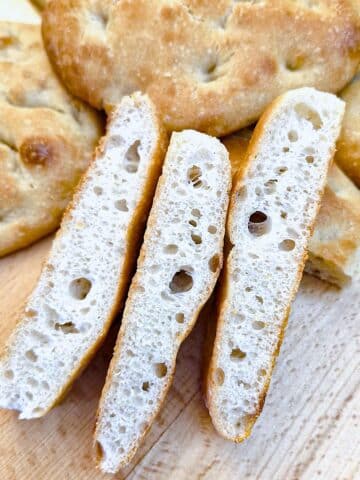
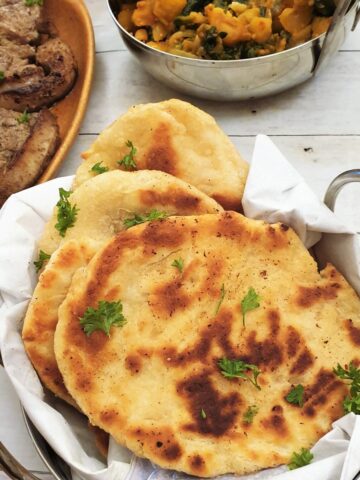
You may also enjoy these other recipes for quick and easy meals:

📋The recipe

How to make pizza dough
(Click the stars to rate this recipe)
Equipment
- Stand mixer OR
- Large mixing bowl
- Rolling Pin
- Baking trays OR
- Pizza baking tray
Ask a Question
If you have a question about this recipe that has not been answered, please use the box below to ask it.
Use this with care. This is an AI-generated result and may contain errors or inaccuracies. I cannot be held responsible for the information returned.
Ingredients
- 2¼ cups / 315 grams strong white bread flour
- 2 teaspoons / 7 grams instant yeast granules
- ½ teaspoon sugar
- ½ teaspoon salt
- ⅔ cup / 160 ml warm water
- 2 teaspoons olive oil
Instructions
- Place the flour into a mixing bowl (or the bowl of a stand mixer) along with the salt, sugar, olive oil and yeast. Add most of the water.2¼ cups / 315 grams strong white bread flour, 2 teaspoons / 7 grams instant yeast granules, ½ teaspoon sugar, ½ teaspoon salt, ⅔ cup / 160 ml warm water, 2 teaspoons olive oil
- Combine the ingredients using a spatula, then knead the dough for 10 to 15 minutes by hand, adding the remaining water if necessary. You could also use the dough hook on a stand mixer and knead for 5 minutes on speed 4. The texture of the dough should be smooth and elastic.
- Leave the dough in the mixing bowl, brush it lightly with a few drops of olive oil, and cover the bowl with a clean towel. Place the bowl of dough in a warm place (draught-free) to rise for about 90 minutes or until doubled in size.
- Punch down the dough to release the air.
- Divide the dough in half and form it into two balls. Rub each ball lightly with a few drops of olive oil, cover the dough with a clean cloth or plastic wrap until you are ready to make your pizzas.
- Preheat the oven to 200℃ / 400℉
- Using a rolling pin, roll one of the balls of dough into a circle roughly 12" in diameter and transfer the rolled dough to your baking sheet. I like to line my baking sheet with baking parchment to make cleaning up easier.
- Cover the dough with your favourite pizza topping and bake in the preheated oven for 18 to 20 minutes until the edges of the dough have turned golden brown and the cheese has melted.
- Serve hot.
Notes
- Don't make the water too hot. The water should be lukewarm rather than hot. Water that is too hot can kill the yeast and prevent the dough from rising.
- Don't add the water all at once. You might not need all the water. Different brands of flour can absorb different amounts of liquid, so hold a little back initially, and only add it if necessary. The dough should be soft and slightly tacky, but not wet and sticky.
- Give the dough a good knead. Kneading develops the gluten that gives pizza dough its stretchy, chewy texture. Once properly kneaded, the dough should feel smooth and elastic rather than rough and sticky.
- Let the dough tell you when it is ready. Rising time will depend on the temperature of your kitchen. Rather than watching the clock, wait until the dough has roughly doubled in size.
- Give it somewhere warm to rise. Yeast works more slowly in a cold kitchen. Put the covered bowl in a warm, draught-free place, but avoid anywhere excessively hot. In winter, I switch my oven to 200C and let it heat for 2 minutes, then switch it off again. That just takes the chill off and makes the oven warm enough to allow the dough to rise, but not so hot that it kills the yeast.
- Don't add too much extra flour when kneading. It's tempting to keep adding flour if the dough feels slightly sticky, but too much can make the baked pizza dry and tough. As you knead, the dough should become smoother and less sticky.
- If the dough keeps springing back, let it rest. If you're trying to roll or stretch the dough and it keeps shrinking back, cover it and leave it for 10 minutes. This gives the gluten time to relax, and the dough should then be much easier to roll and shape.
- Preheat the oven properly. Pizza cooks best in a thoroughly preheated oven. Give the oven plenty of time to reach the required temperature before putting the assembled pizza in.
- Don't overload the toppings. As tempting as it is to pile everything on, too many toppings (especially wet ones) can prevent the base from cooking properly and leave the centre soggy.
Nutrition
I am not a nutritionist. The nutrition information has been calculated using an on-line calculator, and is intended for information and guidance purposes only. If the nutrition information is important to you, you should consider calculating it yourself, using your preferred tool.
If you made this recipe and enjoyed it, I'd love it if you could give me a star rating in the comments below. And if you'd like to get in touch, you can email me at [email protected]. I'd love to hear from you. And don't forget to subscribe to my mailing list so you can grab yourself a copy of my FREE COOKBOOK!
If you'd like to continue browsing, just click on this link to all my recipes.



Alla says
Hi VJ,
I’ve been making pizza for over 30 years, I’ve made both from yeast dough and yeast-free. It always turned out delicious, and your dough is something incomparable! Yesterday I cooked Hawaiian and
Classico, super! Thank you very much for the recipe))
VJ says
Wow - praise indeed!!!! Thank you very much - I'm so glad you enjoyed it 🙂