
This traditional Welsh onion cake is a classic! Made with layers of buttered potatoes, sweet caramelised onions and a centre of tangy cheese, this potato and onion cake is perfect as a hearty side or a simple vegetarian main.

I can hear you all now - 'that looks nothing like a cake!' Any, you'd be right! It's not really meant to be a cake at all. This Welsh onion cake is the Welsh answer to dauphinoise potatoes, and is a delicious side dish made with layers of thinly sliced potatoes and caramelised onions. It's the perfect partner for a Sunday roast, a plate of tasty sausages, or, if you add some crispy fried chopped bacon, as a meal on its own!
The main difference between dauphinoise potatoes and this traditional Welsh version is the butter. Where dauphinoise potatoes rely on cream, a Welsh onion cake is made with butter, giving it a golden nutty flavour and a wonderful crispness. Not the healthiest way to cook potatoes, perhaps - but sometimes we all need a little buttery indulgence!
Each layer of potatoes is brushed with melted butter, seasoned with salt and black pepper, and layered with caramelised onions. In the middle, I've added a layer of sharp cheddar to replace the traditional Caerphilly cheese, which is normally used. It melts beautifully and adds a lovely tang to balance the sweetness of the onions.
The magic happens in the oven. The dish is brushed with butter, so the bottom layer turns gorgeously soft and brown as it bakes. It's covered with tinfoil for the first hour so the potatoes have time to soften, then uncovered for the final 15 minutes to let the top crisp. Once baked, it's tipped out onto a plate, giving you the perfect blend of textures - crispy potatoes underneath, soft, buttery, browned potatoes on top and perfect crispy edges.
The final flurry (as it were) is the tasty melted cheese in the middle, which adds just the right note of creamy sharpness, bringing it all together.
If you want a less buttery potato bake, why not try these boulangere potatoes, which are baked in a similar manner, but rely on vegetable stock to soften them, rather than butter.

Jump to:
Why you should try this Welsh onion cake
- Simple ingredients, big flavour- potatoes, onions, butter and cheese combine to make something wonderful and full of flavour.
- Easy to prepare - a bit of slicing and layering is all it takes. The oven does the rest!
- Crispy and creamy in one bite - with a mix of crispy and soft potatoes, sweet caramelised onions and a layer of gooey cheese, this dish is a winner.
- Make-ahead friendly - it reheats beautifully, and leftovers can be turned into amazing hash browns.
Recipe information
- ⌚ Prep time - 15 minutes
- ⌛ Cooking time - 75 minutes
- 🍚 Yield - serves 4 to 6 as a side dish
Ingredients for a Welsh onion cake
**You can find the exact ingredient measurements on the printable recipe card at the end of this post.**

- Potatoes. Use a good all-rounder potato such as Maris Piper, which holds its shape and doesn't turn mushy. The potatoes should be peeled and thinly sliced. If you have a mandolin, this will take only a few minutes; a sharp knife will do the job too, but will take a bit longer.
- Onions. Yellow, brown or white onions are preferable. They should be peeled and thinly sliced.
- Butter. The butter should be melted as it will be brushed onto the layers of potatoes when they are arranged in the baking dish.
- Cheese. I used cheddar cheese, which should be grated. The traditional cheese used in a Welsh onion cake is Caerphilly, but unless you actually live in Wales, it's difficult to find. Mature cheddar is a good substitute or a mixture of cheddar and mozzarella. If you would prefer not to use cheese in the dish, simply leave it out.
- Salt and ground black pepper. Used for seasoning the potato layers. Because all layers will be seasoned, you should take care not to over-season.
Instructions

Step 1: Melt a tablespoon of butter in a frying pan over moderate heat and add the sliced onions. Season very lightly with salt.

Step 2: Turn the heat to low, cover the pan with a lid and allow the onions to soften. This will take around 15 minutes. Stir them occasionally to ensure they do not burn.
While the onions are softening, you can peel and slice the potatoes. Slice them as thinly as possible. Use a mandolin if you have one, so you get nice even slices; otherwise, just a sharp knife.

Step 3: Line the base of a 9-inch round casserole dish with baking parchment and brush it with melted butter.

Step 4: Arrange an overlapping layer of potatoes on the bottom of the dish. Keep this layer of potatoes as neat as possible, as this will become the presentation layer when the onion cake is turned out onto a serving plate. Brush the potatoes with melted butter and season with salt and pepper.
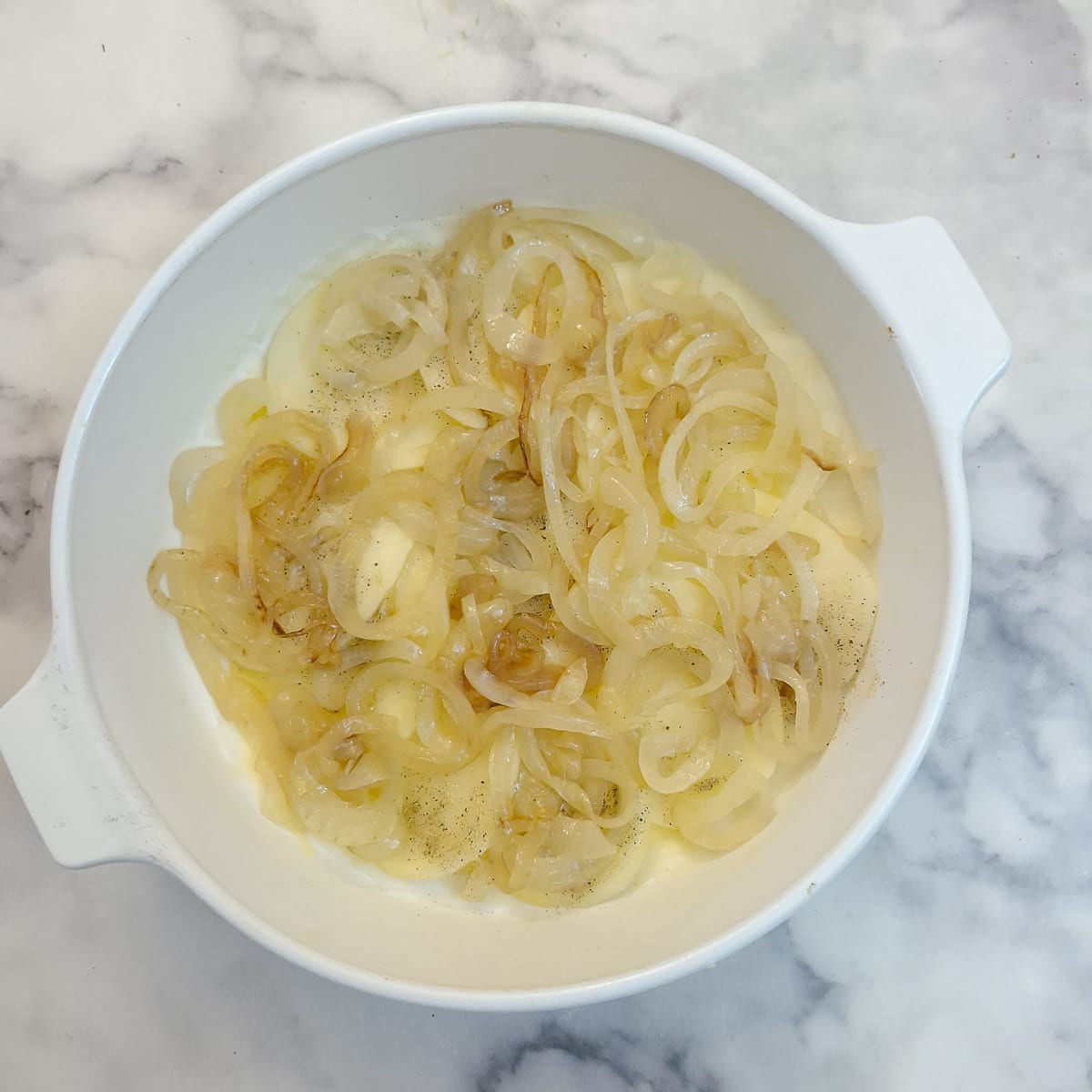
Step 5: Spread half of the onions over the potatoes.

Step 6: Add a second layer of potatoes, brush them with melted butter, season with salt and black pepper and scatter with the grated cheese.

Step 7: Top with a final layer of potatoes and brush them with the remaining melted butter. Give them a final light seasoning of salt and pepper.

Step 8: Cover the dish with a lid (or use tin foil) and bake in a hot oven (200C/400F) for an hour or until you can push a knife into the potatoes with no resistance.
Remove the lid or tin foil and bake for a further 15 minutes until the potatoes turn golden. (I forgot to take a photo of this step 🙃). Remove the potatoes from the oven.

Step 9: Run a spatula around the edges of the potatoes to loosen them. Place a plate over the casserole dish and carefully turn it upside down. Use oven gloves to help you - the dish will be hot. The potatoes should drop down onto the plate. Optionally, garnish with chopped parsley.
Tips for a successful outcome
Here are my top tips to ensure your Welsh onion potato bake always turns out perfectly.
- Slice the potatoes as thinly and evenly as possible. If you can get them to the thickness of a pound coin, that would be perfect.
- Cook the onions on a low heat so they don't over-brown and develop a bitter taste. You should aim to get them soft and just lightly caramelised, but still with a little bite
- Lining the casserole with baking parchment ensures the potatoes do not stick. However, if you intend serving the Welsh onion cake directly from the casserole dish, you can skip this step and just brush the dish with melted butter to help the potatoes develop that lovely brown colour.
- If you don't have a lid for your casserole dish, be sure to fold the tin foil tightly around the edges to keep the steam in the dish.
- Test the potatoes for doneness by sticking a knife into them. If there is any resistance, leave them in the oven for another few minutes before removing the lid and allowing them to brown.
Substitutions
Disclaimer: Please check all ingredients carefully if you have allergies or dietary restrictions. This recipe has not been tested for specific dietary needs.
Here are a few suggestions you might find useful:
- Vegetarian. The dish is already vegetarian. If you are using cheese, check the label to make sure it doesn't contain animal rennet.
- Gluen-free. This dish is naturally gluten-free - but do make sure that any packaged ingredients (such as the cheese) are clearly labelled gluten-free to avoid cross-contamination.
- Dairy. Use lactose-free butter and cheese.
- Low-fat version. Substitute the butter with olive oil. The Welsh onion cake won't be quite as rich, but will still have a lovely texture and great flavour.

Variations
Here are a few ideas to vary the recipe:
- Bacon. Arrange layers of crispy fried bacon between the potato layers for a heartier option.
- Leeks. Convert it into a Welsh leek cake by using leeks instead of onions.
- Cheese. Try different cheeses. As I've mentioned, Caerphilly is traditional, but you could experiment with different cheeses - each brings its own particular flavour. Why not try Red Leicester or Gruyere?
- Mini versions - Assemble mini Welsh onion cakes in individual ramekins or muffin tins. These would be perfect to serve at a dinner party or as part of a buffet spread.
Equipment
These are the main items of equipment you will need to make a Welsh onion cake:
- Mandolin. This makes short work of slicing the potatoes and onions and ensure you get evenly sized slices. You could use a sharp knife instead.
- Frying pan (with a lid). This is used for softening the onions.
- 9-inch round casserole dish (or similar). The ingredients listed in the recipe are sufficient for three layers of potatoes and 2 layers of onion and fit perfectly into a 9-inch diameter dish. You could use a similar sized square dish instead.
Storage and freezing
- Leftovers. Store leftovers in an airtight container in the refrigerator for up to 3 days.
- Reheating. To reheat, place the leftovers in an ovenproof dish, cover loosely with foil and reheat in the oven at 180C/360F for 15 to 20 minutes. Remove the foil for the last 5 minutes to help crisp it up again. You can also reheat it in the microwave, although the texture will be softer.
- Freezing. Fully cooked Welsh onion cake freezes well. Assemble and bake in a disposable aluminium container (so you don't have to freeze your casserole dish). Once cooled, wrap the container in foil and then place it in a freezer bag. Label and freeze for up to 3 months.
- Defrosting. Defrost overnight in the refrigerator and reheat as above. For best results (ie more crispness), reheat in the oven rather than the microwave

Top Tip
Let the Welsh onion cake rest for 10 to 15 minutes after baking before turning it out or slicing it. This allows the layers to settle and hold together, making it much easier to serve neat slices without it falling apart.
FAQ
The recipe is very easy to scale. Simply add extra potatoes and onions - roughly twice the amount of potatoes as onions. Use a larger diameter dish, and stick to the three layers of potaoes, or use a deeper dish and add one or two extra layers.
If using a deeper dish you may need to increase the cooking time to ensure the potatoes have sufficient timeto soften.
If you're scaling down, use a smaller dish and check for doneness a little earlier.
I've mentioned above the you should use a good all-rounder potato. I would be inclined to stick to the more waxy varieties. A floury potato may fall apart during baking.
The term 'cake' refers to the way it's layered and baked as a solid round, and then turned out and sliced like a cake. This is a savoury dish and definitely not sweet!
Save for later
If you would like to try this Welsh onion cake, why not save the recipe to one of your Pinterest boards so you can find it easily? Just click the image below.
Alternatively, you can save the recipe by clicking on the floating heart icon on the right-hand side of the screen.
Related recipes
Visit my sides and salad recipes page for other tasty side dishes. Here are a few potato sides you might enjoy:

📋The recipe

Welsh onion cake with caramelised onions
(Click the stars to rate this recipe)
Equipment
- Mandolin OR
- Sharp Knife
- Frying Pan with lid
- Casserole dish 9-inch or 22-cm diameter
- Spatula
- Pastry brush to butter potatoes
Ask a Question
If you have a question about this recipe that has not been answered, please use the box below to ask it.
Use this with care. This is an AI-generated result and may contain errors or inaccuracies. I cannot be held responsible for the information returned.
Ingredients
- 1¼ pounds / 650 grams potatoes peeled and thinly sliced
- 10 ounces / 300 grams onions peeled and thinly sliced
- 1 tablespoon 15 grams butter for softening the onions
- 2 ounces / 60 grams butter melted (for brushing on the potato layers)
- 2 ounces / 60 grams cheddar cheese grated
- 1 teaspoon salt or to taste
- ½ teaspoon ground black pepper or to taste
Instructions
- Melt a tablespoon of butter in a frying pan over moderate heat and add the sliced onions. Season very lightly with salt.1 tablespoon 15 grams butter, 10 ounces / 300 grams onions
- Turn the heat to low, cover the pan with a lid and allow the onions to soften. This will take around 15 minutes. Stir them occasionally to ensure they do not burn.
- Preheat the oven to 200°C / 400°F
- While the onions are softening, peel and slice the potatoes. Slice them as thinly as possible. Use a mandolin if you have one, so you get nice even slices; otherwise, just a sharp knife.1¼ pounds / 650 grams potatoes
- Line the base of a 9-inch round casserole dish with baking parchment and brush it with melted butter.
- Arrange an overlapping layer of potatoes on the bottom of the dish. Keep this layer of potatoes as neat as possible, as this will become the presentation layer when the onion cake is turned out onto a serving plate. Brush the potatoes with melted butter and season with salt and pepper.2 ounces / 60 grams butter
- Spread half of the onions over the potatoes.
- Add a second layer of potatoes, brush them with melted butter, season with salt and black pepper and scatter with the grated cheese.2 ounces / 60 grams cheddar cheese
- Top with a final layer of potatoes and brush them with the remaining melted butter. Give them a final light seasoning of salt and pepper.
- Cover the dish with a lid (or use tin foil) and bake in a hot oven (200°C/400F°) for an hour or until you can push a knife into the potatoes with no resistance.
- Remove the lid or tin foil and bake for a further 15 minutes until the potatoes turn golden. Remove the potatoes from the oven and allow them to rest for 10 minutes. This will make slicing easier.
- Run a spatula around the edges of the potatoes to loosen them. Place a plate over the casserole dish and carefully turn it upside down. Use oven gloves to help you - the dish will be hot. The potatoes should drop down onto the plate. Optionally, garnish with chopped parsley.
- Serve as a side dish with a roast or sausages.
Notes
- Slice the potatoes as thinly and evenly as possible. If you can get them to the thickness of a pound coin, that would be perfect.
- Cook the onions on a low heat so they don't over-brown and develop a bitter taste. You should aim to get them soft and just lightly caramelised, but still with a little bite
- Lining the casserole with baking parchment ensures the potatoes do not stick. However, if you intend serving the Welsh onion cake directly from the casserole dish, you can skip this step and just brush the dish with melted butter to help the potatoes develop that lovely brown colour.
- If you don't have a lid for your casserole dish, be sure to fold the tin foil tightly around the edges to keep the steam in the dish.
- Test the potatoes for doneness by sticking a knife into them. If there is any resistance, leave them in the oven for another few minutes before removing the lid and allowing them to brown.
- Leftovers. Store leftovers in an airtight container in the refrigerator for up to 3 days.
- Reheating. To reheat, place the leftovers in an ovenproof dish, cover loosely with foil and reheat in the oven at 180C/360F for 15 to 20 minutes. Remove the foil for the last 5 minutes to help crisp it up again. You can also reheat it in the microwave, although the texture will be softer.
- Freezing. Fully cooked Welsh onion cake freezes well. Assemble and bake in a disposable aluminium container (so you don't have to freeze your casserole dish). Once cooled, wrap the container in foil and then place it in a freezer bag. Label and freeze for up to 3 months.
- Defrosting. Defrost overnight in the refrigerator and reheat as above. For best results (ie more crispness), reheat in the oven rather than the microwave.
- Bacon. Arrange layers of crispy fried bacon between the potato layers for a heartier option.
- Leeks. Convert it into a Welsh leek cake by using leeks instead of onions.
- Cheese. Try different cheeses. As I've mentioned, Caerphilly is traditional, but you could experiment with different cheeses - each brings its own particular flavour. Why not try Red Leicester or Gruyere?
- Mini versions - Assemble mini Welsh onion cakes in individual ramekins or muffin tins. These would be perfect to serve at a dinner party or as part of a buffet spread.
Nutrition
I am not a nutritionist. The nutrition information has been calculated using an on-line calculator, and is intended for information and guidance purposes only. If the nutrition information is important to you, you should consider calculating it yourself, using your preferred tool.




Did you make this recipe? Let me know!