
When the Chinese takeaway craving hits, but there are still a few days to go before payday, why not try this easy beef chow mein made with minced beef? It's easy on the purse strings, takes only half an hour to cook, and comes together in one pan.
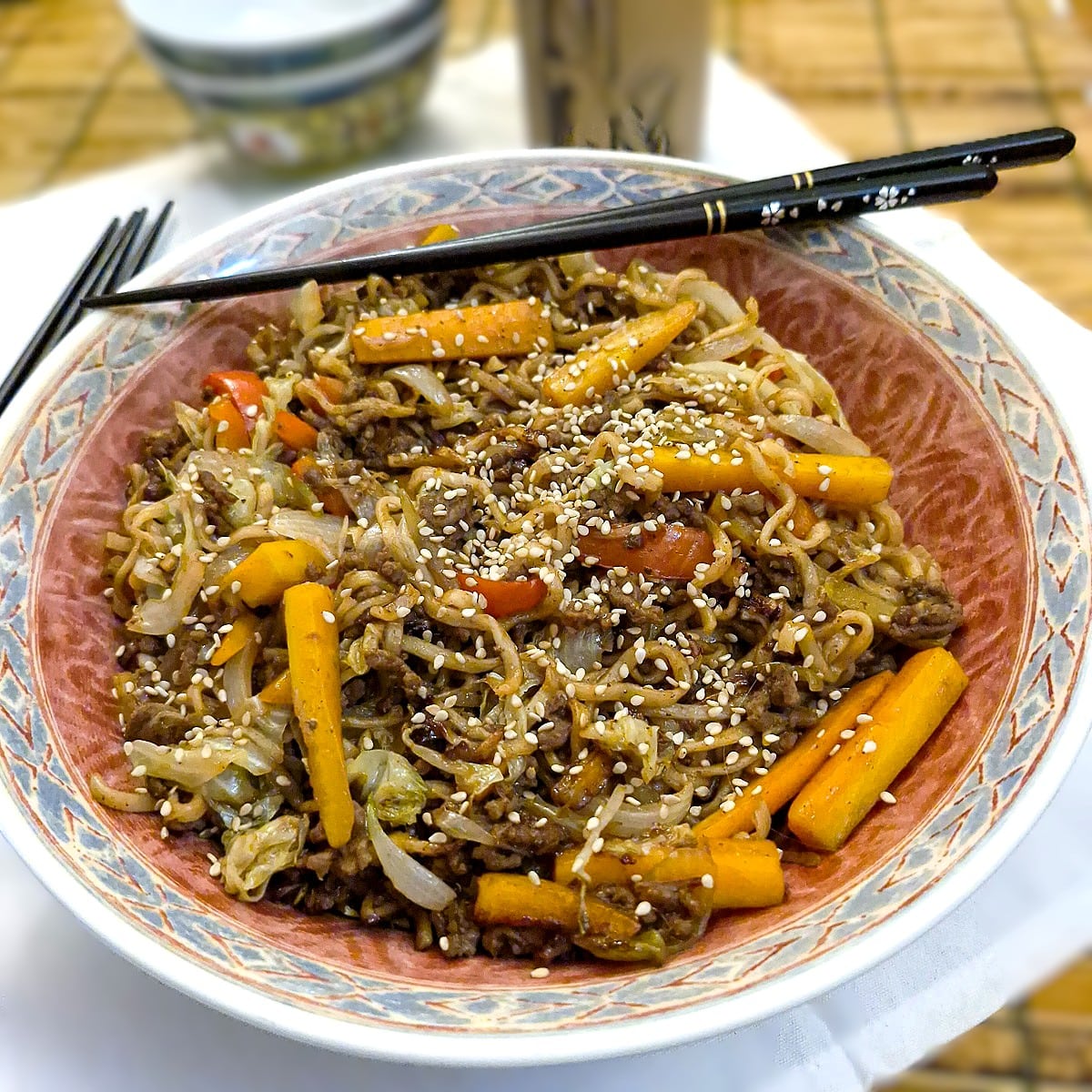
This recipe was inspired by my popular Thai pork mince stir fry. It's been so well-received that I thought a similar recipe with Chinese flavours rather than Thai would be a great addition to the site!
You don't need anything special to make this easy beef chow mein dish. Just Chinese noodles, minced beef (or ground beef), chopped vegetables and some stock-standard soy, oyster and hoisin sauce.
This is a very forgiving recipe; you can toss in whatever vegetables you happen to have available. I used onions, carrots, red bell pepper, cabbage and bean sprouts, but you can swap them out with other vegetables of your choice. Sugar snap peas, mini baby corn, mushrooms, broccoli or even green beans would all be tasty.
And I must say, even though it's made with whatever bits and pieces you've got lurking in the fridge, this beef chow mein made with ground beef (instead of expensive steak), tastes pretty authentic!
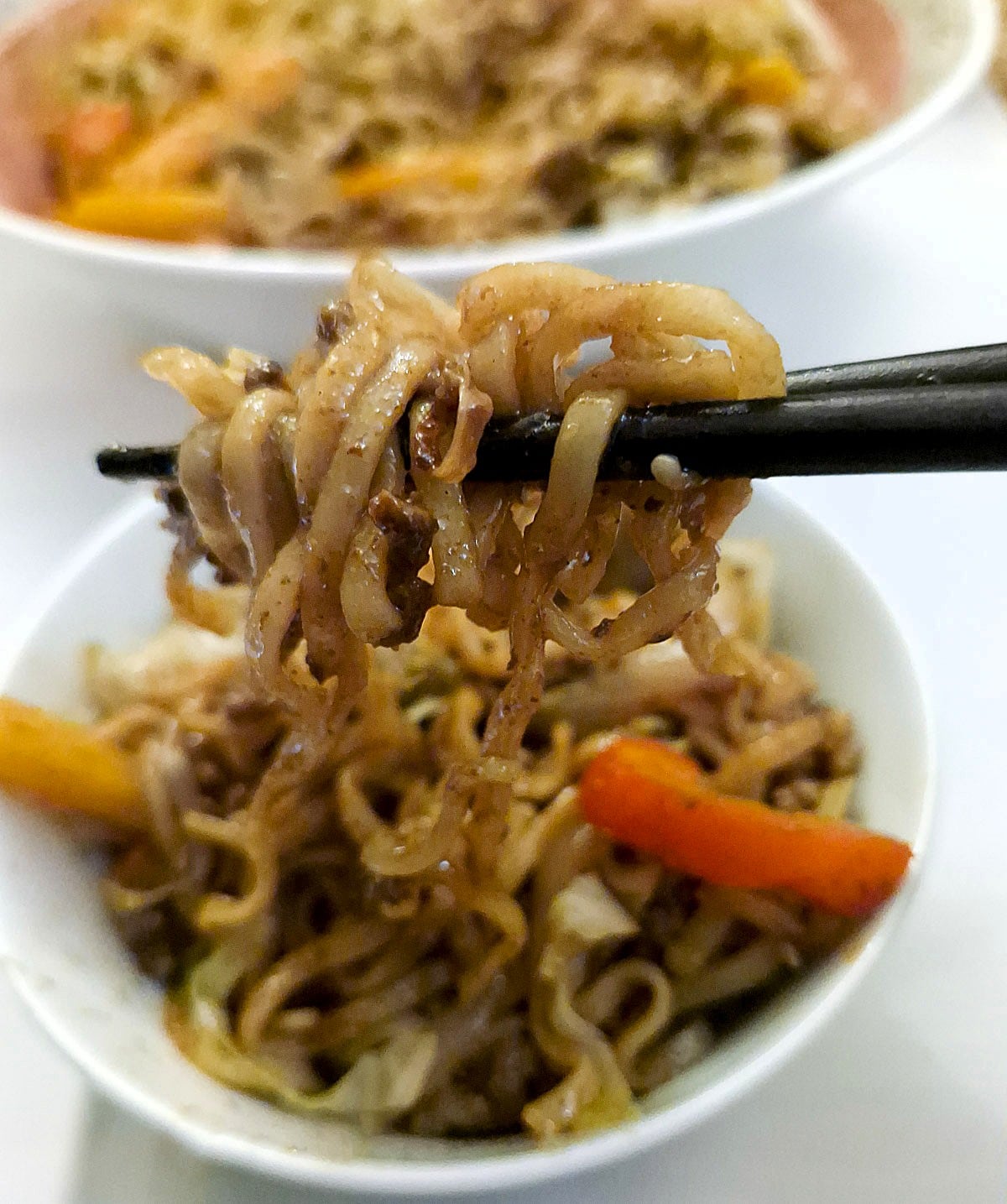
The noodles get coated in the sauce and tangled with the beef and vegetables, providing plenty of flavour in each bite. And best of all, it only takes around half an hour to throw together.
It might not be 100% traditional Chinese cooking, but the flavours are all there. If you're looking for an easy beef stir-fry recipe, I recommend you try this minced beef chow mein. Who knows? It might just replace the good old spag bol as your favourite standby meal!
Jump to:
Why you should try this ground beef chow mein
- Budget-friendly. Using minced beef makes it more affordable than using steak strips, without sacrificing flavour.
- Quick and easy. Ready in around half an hour, making it perfect for weeknights.
- Flexible ingredients. Use whatever vegetables you have in your refrigerator - great for reducing waste.
- One-pan meal. Easy clean up, less washing up afterwards.
- Family-friendly. No chilli, but flavours that everyone will love. Of course, if your family enjoy spicy food, you can easily add chilli to your taste.
Recipe information
Prep time: About 10 minutes - just enough time to chop the vegetables and put the pasta on to boil.
Cooking time: Around 25 minutes.
Yield: Sufficient for 4 helpings.
Ingredients for easy beef chow mein
**You can find the exact ingredient measurements on the printable recipe card at the end of this post.**
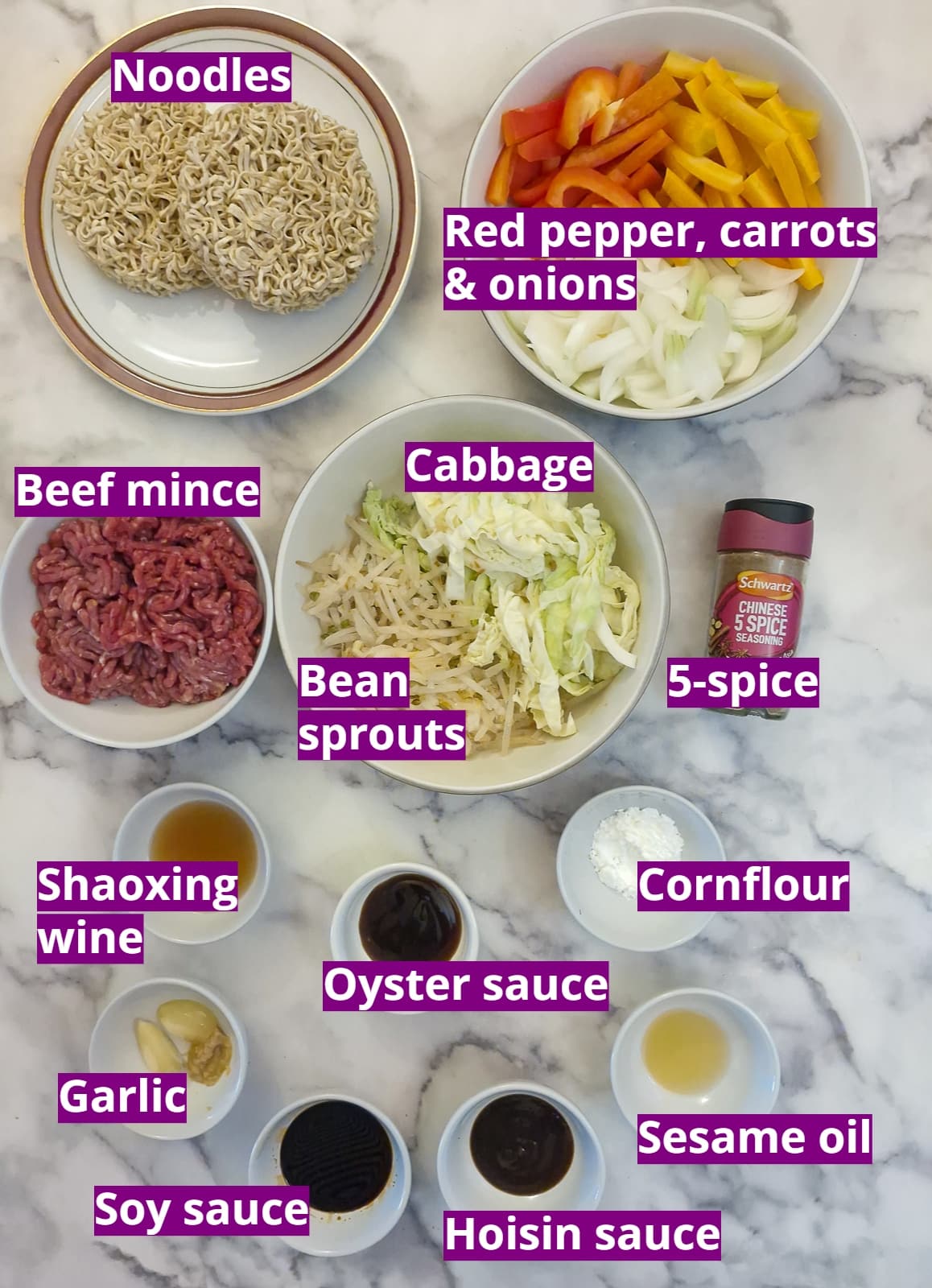
- Noodles. Use your favourite type of noodles. You can use fresh noodles, packets of ramen, dried egg noodles or even pre-cooked 'ready-to-wok' noodles. You should cook them according to the packet instructions. If you put them on to cook while you are preparing the vegetables, they will be ready when you need to add them to the stir-fry. Cook the noodles until they are almost cooked - they will finish cooking once added to the chow mein.
- Beef mince. A low-fat beef mince is preferable as we don't want a greasy dish! If you use a high-fat content ground beef, you should drain all but a tablespoon of fat from the pan once the beef has browned.
- Vegetables. These are to your own choice. Allow approximately one cup of mixed, sliced vegetables per person. Slice and/or dice the vegetables quite finely so they combine nicely into the chow mein.
Sauce and flavourings
- Shaoxing wine. This is a sweet Chinese cooking wine which tastes similar to sherry. You could use sherry instead, or at a pinch, use a tablespoon of white vinegar and a teaspoon of brown sugar.
- Soy sauce. This is dark soy sauce, which can be quite salty, and is why I haven't included salt in the photo. I would suggest you taste the chow mein once it is cooked and only add salt if needed.
- Oyster sauce. Even though oyster sauce is made from oysters, it doesn't taste 'fishy' at all. It has a complex sweet/savoury flavour with a hint of umami.
- Hoisin sauce. This is made from fermented soybeans. I've heard this being compared to a less sweet version of a barbeque sauce. It provides a sweet flavour, with a slight tang.
- 5-spice powder. This is a blend of star anise, cloves, fennel, cinnamon and Sichuan peppercorns, and is widely used in Chinese cuisine.
- Garlic and ginger. Not too much garlic, a couple of finely minced cloves will be sufficient to balance the flavours. I've also added a little ginger paste. You could use grated fresh ginger instead.
- Sesame oil. Sesame oil has a very intense flavour and is used for seasoning rather than frying food. Used sparingly, it adds a pleasant nutty taste
- Cornflour or cornstarch. This is used to thicken the sauce.
- Water. Not too much, there is not a lot of sauce in the dish. Half a cup will be more than sufficient. The cornflour will be mixed with the water before it is added to the chow mein. You could substitute the water with beef stock to add even more flavour.
Instructions
Note: So that I'm not standing over a hot stove, stirring and frying, I like to use a combination of stir-frying / steaming to cook this dish.
Preparation
- Bring a pan of lightly salted water to a boil, then add the noodles and cook them for two minutes less than the time stated on the packet. Drain and set aside until needed.
- Peel and/or wash the vegetables, then slice or shred them.
- Combine the cornflour and water in a small bowl and make sure the cornflour is completely mixed in with no lumps. Then stir in the rest of the sauce ingredients. Set aside until you are ready to add it to the chow mein.
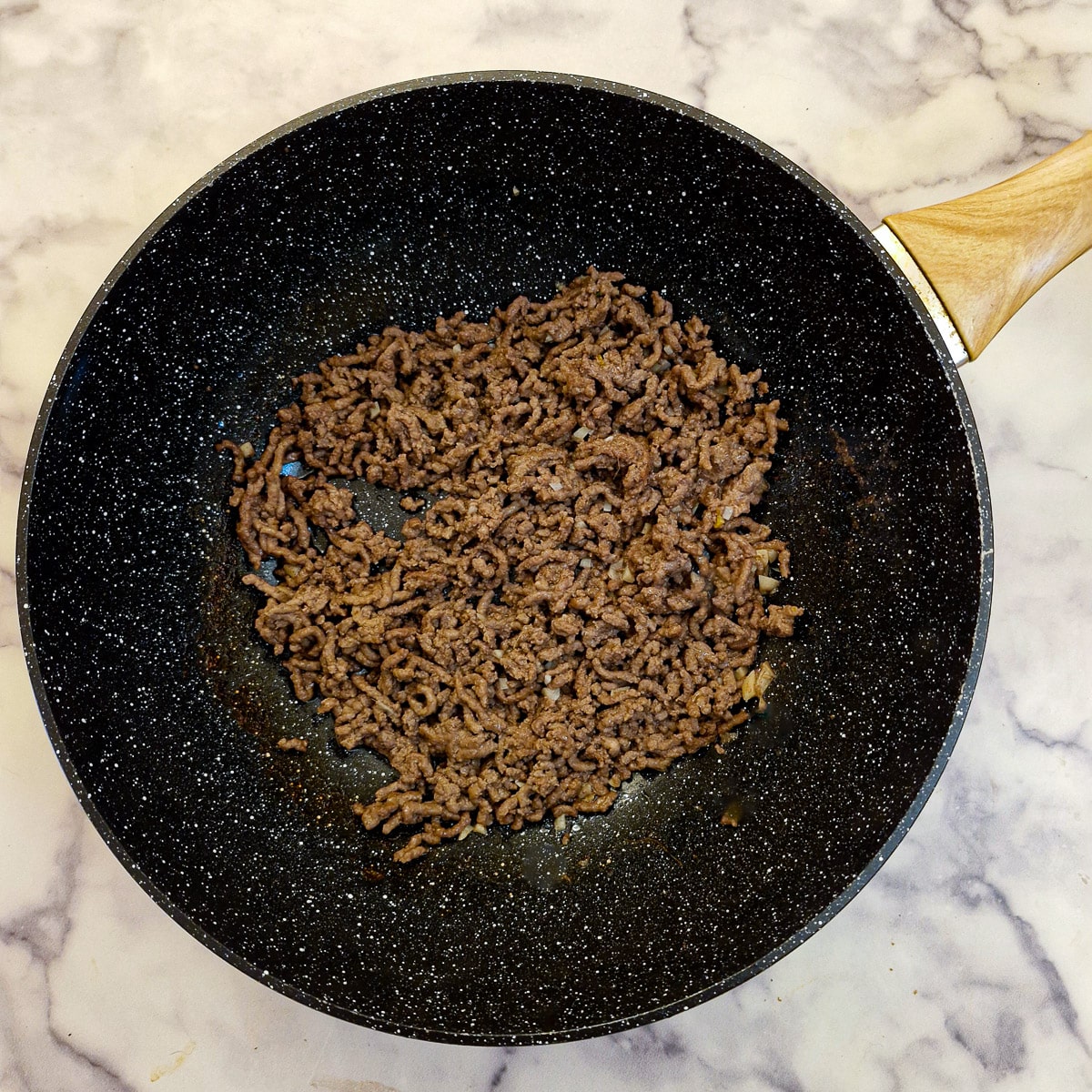
Step 1: Heat a tablespoon of oil in a wok or frying pan and fry the minced beef on medium to high heat, breaking it up with a spatula, until brown and crumbly. Stir the beef for a few minutes to allow the fat to render, then pour off any excess oil.
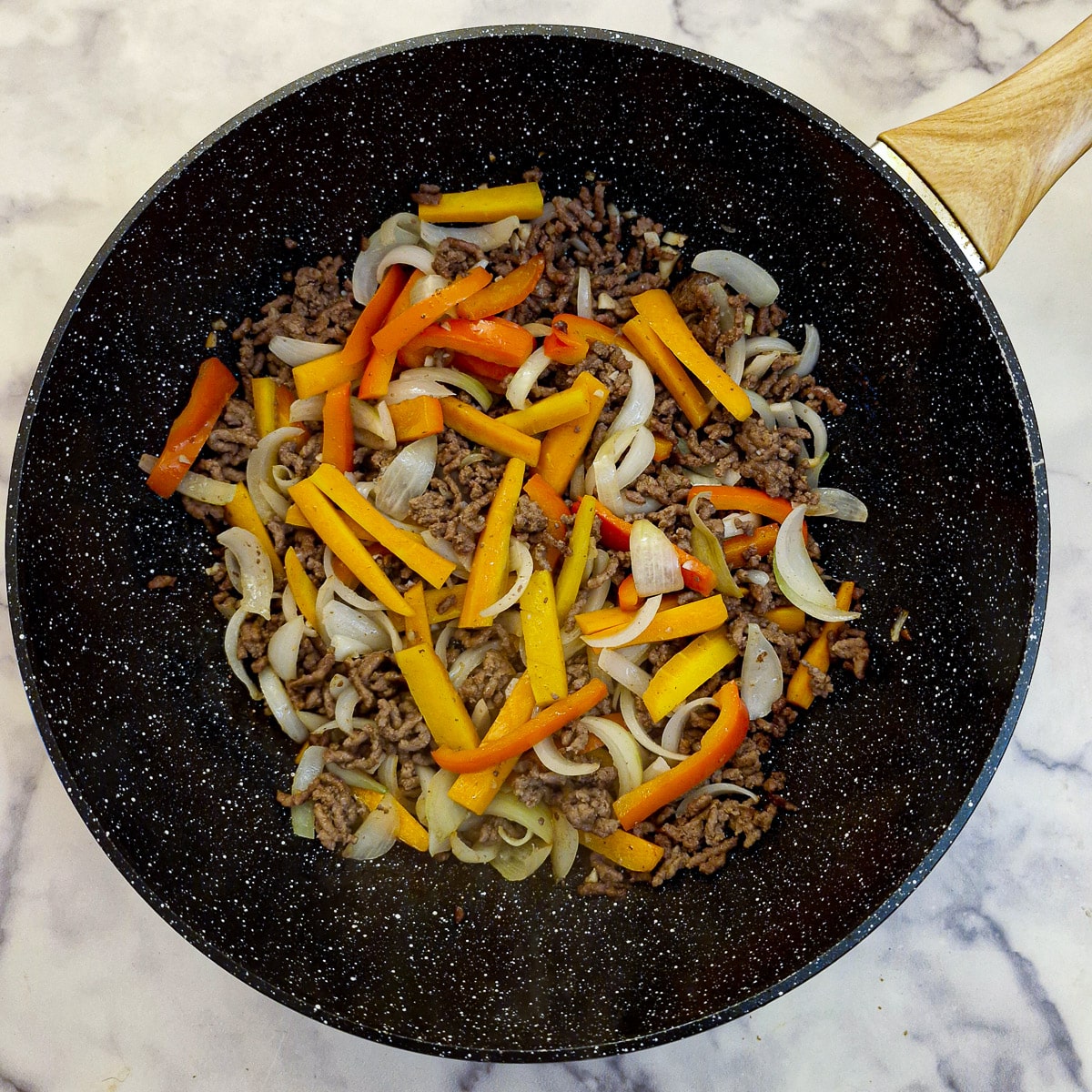
Step 2: Stir in the onions, carrots and red bell pepper. Cover the pan with a lid, turn the heat down to low/moderate and allow the vegetables to steam for 5 to 6 minutes.
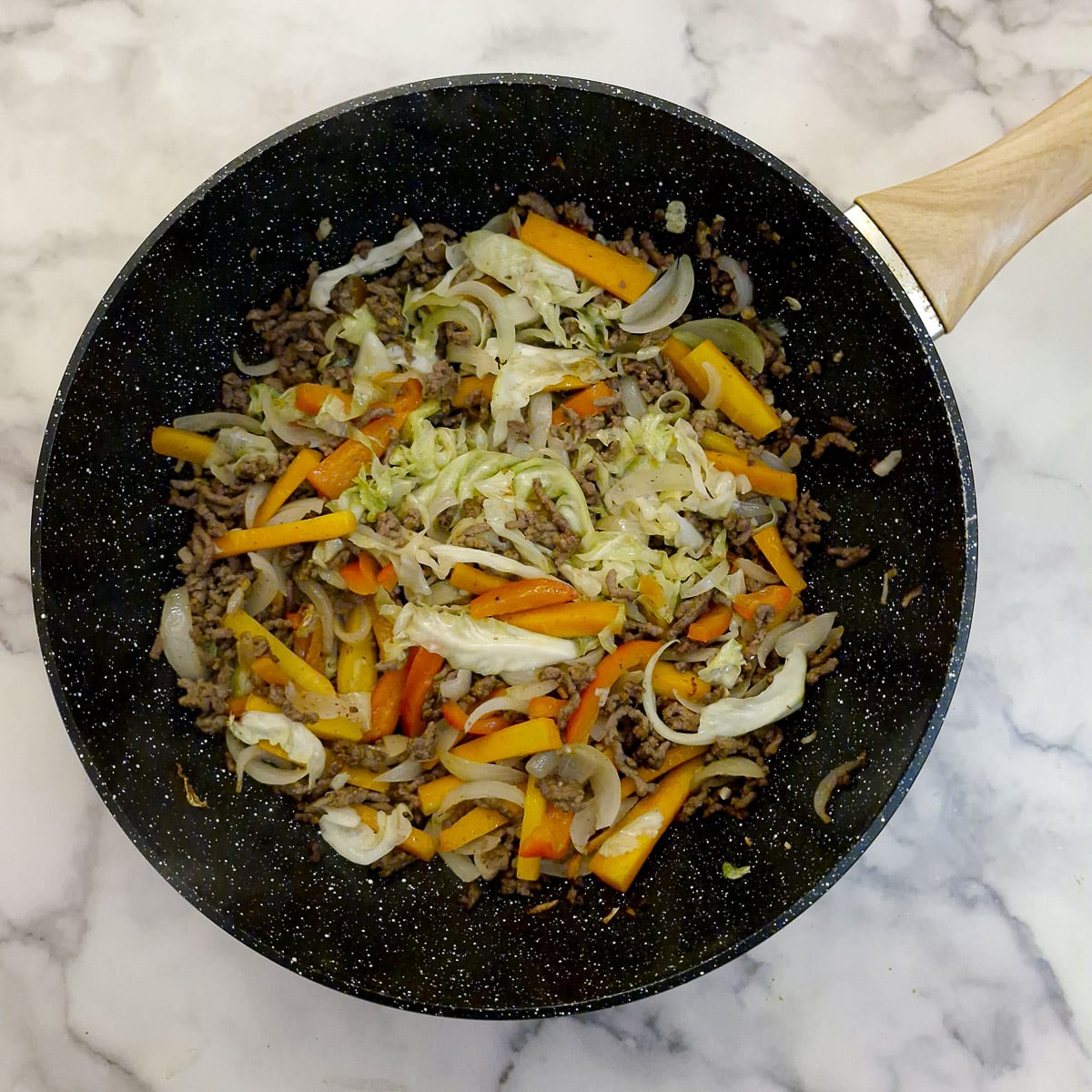
Step 3: Stir in the cabbage and bean sprouts. Cover and steam for a further 4 -5 minutes.
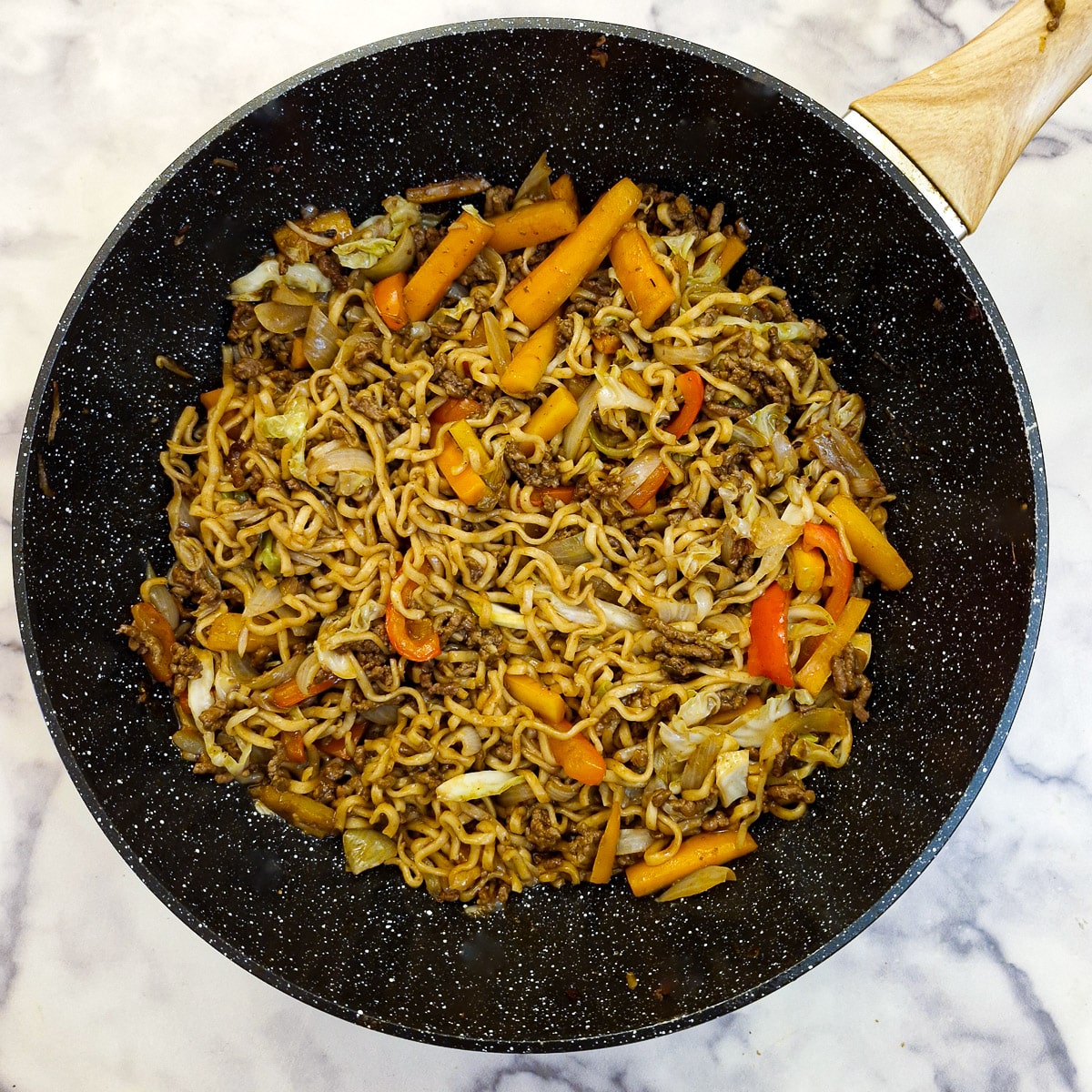
Step 4: Add the prepared sauce ingredients. Turn up the heat to medium and stir until the sauce thickens. Add the meat and the noodles and toss to combine. Turn the heat to low, cover and leave for 3 to 4 minutes to allow the flavours to combine.
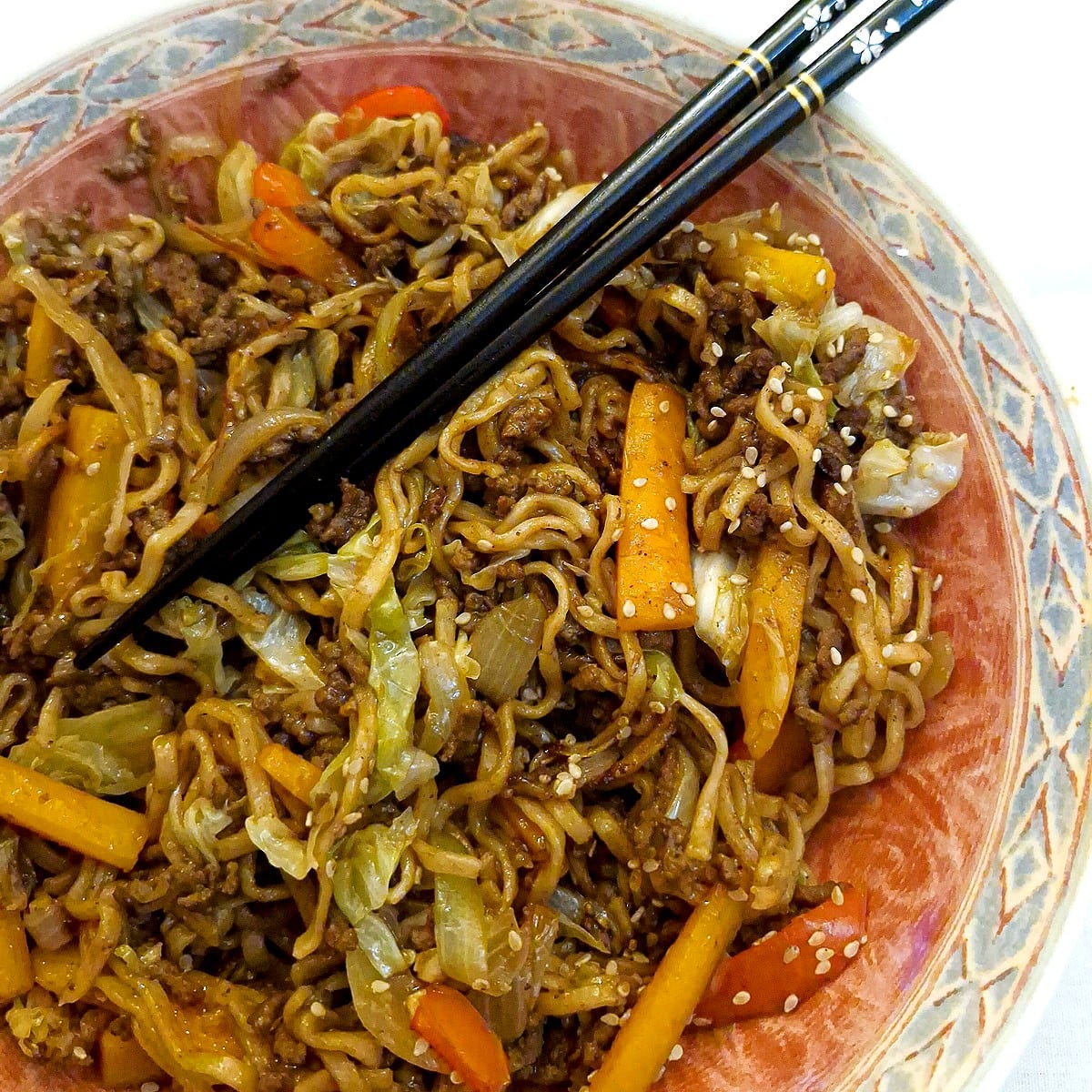
Transfer to a serving dish and optionally garnish with sesame seeds or chopped spring onions (green onions). Serve hot and enoy!
Tips for a successful outcome
Here are my top tips to ensure your beef chow mein with minced beef always turns out perfectly:
- Don't overcook the pasta. It should still be very much on the al dente side as it will continue to cook when added to the chow mein with the sauce.
- Try to cut the vegetables into more or less the same-sized pieces, so they all cook at the same time.
- Once the meat has browned and separated, allow it to cook for 2 to 3 minutes longer to give any fat a chance to render out. If there is a lot of fat, pour most of it away, leaving only a tablespoon in the pan with the meat.
- Fry the onions, carrots and red peppers for a few minutes before adding the other vegetables. Harder vegetables take longer to cook than the softer cabbage and bean sprouts.
- If you want to stand and stir the vegetables as they cook, that's absolutely fine. I prefer to lower the heat, cover the pan with a lid and allow the vegetables to steam gently.
- When adding the sauce, stir continuously until it thickens, then return the meat to the pan and stir in the noodles. You may find a pair of tongs or 2 large spoons helpful to combine everything together.
Variations
There are a few ways in which you could vary this recipe:
- Make it spicy. If you enjoy spicy food, soften one or two chopped chillies with the onions and pepper. You could use a teaspoon of chilli paste or Szechuan peppercorns instead.
- Give it a satay twist. Combine a tablespoon of peanut butter with the sauce ingredients, and garnish the beef chow mein with a few chopped peanuts.
- Chicken chow mein. Swap the beef mince for minced chicken or turkey.
- Make it vegetarian. Replace the meat with tofu or plant-based mince, and perhaps add a few extra vegetables. Bear in mind that oyster sauce is made with oysters, so you may want to use a vegetarian oyster sauce, or omit the oyster sauce and add extra soy and hoisin to compensate.
Equipment
These are the main items of equipment you will need to make this easy beef chow mein recipe:
- I like to use a wok to make this dish as the high sloping sides make it easier to combine all the ingredients. You could use a sauté pan or a large frying pan instead. If you intend to steam the vegetables rather than stir-fry them, you will need a wok or pan with a lid.
- Small saucepan for boiling the noodles and a colander to drain them.
- Sharp knife and chopping board for cutting up the vegetables.
- Spatula or tongs for stirring.
Storage
Leftover minced beef chow mein can be refrigerated in a covered container for up to 3 days and reheated in a saucepan or the microwave.
I'm nervous about freezing dishes made with noodles, as the noodles can turn soft and soggy once frozen and defrosted. However, that said, there is no other reason why you can't freeze the leftovers for another meal.
If you intend to make this meal as part of your meal prep, I would suggest frying the meat and vegetables as per the recipe, then adding the sauce. Freeze at this point. You can keep it in the freezer for 3 to 4 months.
When you are ready to eat it, cook noodles fresh, then stir them into the defrosted chow mein before heating thoroughly in a saucepan.
FAQ
Fresh egg noodles are best because you don't have to spend time cooking them; they can go straight into the pan. Failing that, dried egg noodles give the same result. You just have to boil them first. Instant ramen noodles, or even spaghetti, would both be OK to use.
After cooking, rinse the noodles under cold water and allow them to drain.
Yes, you can use frozen vegetables. Add them to the wok from frozen and stir until heated through. Take care not to let them overcook and become mushy.
Save for later
If you would like to try this minced beef chow mein recipe, why not save it to one of your Pinteret boards so you can find it easily? Just click the image below.
Alternatively, you can save the recipe by clicking on the floating heart icon on the right-hand side of the screen.
Related recipes
Visit my Asian-inspired recipes page for other similar recipes. Here are a few you might enjoy.


📋The recipe
Easy beef chow mein with minced beef
(Click the stars to rate this recipe)
Equipment
- Wok OR
- Large frying pan
- Small saucepan
- Sharp Knife
- Chopping Board
- Spatula
Ask a Question
If you have a question about this recipe that has not been answered, please use the box below to ask it.
Use this with care. This is an AI-generated result and may contain errors or inaccuracies. I cannot be held responsible for the information returned.
Ingredients
Beef and vegetables
- 14 ounces / 400 grams minced beef 5% fat preferably
- 6 ounces / 200 grams Chinese-style noodles
- 1 tablespoons vegetable oil for frying
- 2 cloves minced garlic or more to taste
- ½ teaspoon ginger paste
- 1 large onion peeled and finely sliced
- 1 large bell pepper deseeded and finely sliced
- 2 medium carrots peeled and julienned or thinly sliced
- ¼ small cabbage finely shredded (about 1 cup)
- 1 cup bean sprouts
- 1 tablespoon sesame seeds for garnish
- ½ teaspoon salt optional and to taste
Sauce
- 2 tablespoons dark soy sauce
- 2 tablespoons oyster sauce
- 1 tablespoon hoisin sauce
- 1 tablespoon Shaoxing wine
- ½ teaspoon sesame oil
- 1 teaspoon cornflour (cornstarch) for thickening
- ½ cup water
Instructions
- Bring a pan of lightly salted water to a boil, then add the noodles and cook them for two minutes less than the time stated on the packet. Drain and set aside until needed.6 ounces / 200 grams Chinese-style noodles
- Combine the cornflour and water in a small bowl and make sure the cornflour is completely mixed in with no lumps. Then stir in the rest of the sauce ingredients. Set aside until you are ready to add it to the chow mein.2 tablespoons dark soy sauce, 2 tablespoons oyster sauce, 1 tablespoon hoisin sauce, 1 tablespoon Shaoxing wine, ½ teaspoon sesame oil, 1 teaspoon cornflour (cornstarch), ½ cup water
- Heat a tablespoon of oil in a wok or frying pan and fry the minced beef on medium to high heat, breaking it up with a spatula, until brown and crumbly. Stir the beef for a few minutes to allow the fat to render, then pour off any excess oil.14 ounces / 400 grams minced beef, 1 tablespoons vegetable oil, 2 cloves minced garlic, ½ teaspoon ginger paste, ½ teaspoon salt
- Stir in the onions, carrots and red bell pepper. Cover the pan with a lid, turn the heat down to low/moderate and allow the vegetables to steam for 5 to 6 minutes.1 large onion, 1 large bell pepper, 2 medium carrots
- Stir in the cabbage and bean sprouts. Cover and steam for a further 4 -5 minutes.1 cup bean sprouts, ¼ small cabbage
- Add the prepared sauce ingredients. Turn up the heat to medium and stir until the sauce thickens. Add the meat and the noodles and toss to combine.
- Turn the heat to low, cover and leave for 3 to 4 minutes to allow the flavours to combine.
- Transfer to a serving dish and garnish with sesame seeds. Serve hot.1 tablespoon sesame seeds
Notes
- Don't overcook the pasta. It should still be very much on the al dente side as it will continue to cook when added to the chow mein with the sauce.
- Try to cut the vegetables into more or less the same-sized pieces, so they all cook at the same time.
- Once the meat has browned and separated, allow it to cook for 2 to 3 minutes longer to give any fat a chance to render out. If there is a lot of fat, pour most of it away, leaving only a tablespoon in the pan with the meat.
- Fry the onions, carrots and red peppers for a few minutes before adding the other vegetables. Harder vegetables take longer to cook than the softer cabbage and bean sprouts.
- If you want to stand and stir the vegetables as they cook, that's absolutely fine. I prefer to lower the heat, cover the pan with a lid and allow the vegetables to steam gently.
- When adding the sauce, stir continuously until it thickens, then return the meat to the pan and stir in the noodles. You may find a pair of tongs or 2 large spoons helpful to combine everything together.
- Make it spicy. If you enjoy spicy food, soften one or two chopped chillies with the onions and pepper. You could use a teaspoon of chilli paste or Szechuan peppercorns instead.
- Give it a satay twist. Combine a tablespoon of peanut butter with the sauce ingredients, and garnish the beef chow mein with a few chopped peanuts.
- Chicken chow mein. Swap the beef mince for minced chicken or turkey.
- Make it vegetarian. Replace the meat with tofu or plant-based mince, and perhaps add a few extra vegetables. Bear in mind that oyster sauce is made with oysters, so you may want to use a vegetarian oyster sauce, or omit the oyster sauce and add extra soy and hoisin to compensate.
- Leftover minced beef chow mein can be refrigerated in a covered container for up to 3 days and reheated in a saucepan or the microwave.
- I'm nervous about freezing dishes made with noodles, as the noodles can turn soft and soggy once frozen and defrosted. However, that said, there is no other reason why you can't freeze the leftovers for another meal.
- If you intend to make this meal as part of your meal prep, I would suggest frying the meat and vegetables as per the recipe, then adding the sauce. Freeze at this point. You can keep it in the freezer for 3 to 4 months.
- When you are ready to eat it, cook noodles fresh, then stir them into the defrosted chow mein before heating thoroughly in a saucepan.
Nutrition
I am not a nutritionist. The nutrition information has been calculated using an on-line calculator, and is intended for information and guidance purposes only. If the nutrition information is important to you, you should consider calculating it yourself, using your preferred tool.
If you made this recipe and enjoyed it, I'd love it if you could give me a star rating in the comments below. And if you'd like to get in touch, you can email me at [email protected]. I'd love to hear from you. And don't forget to subscribe to my mailing list so you can grab yourself a copy of my FREE COOKBOOK!
If you'd like to continue browsing, just click on this link to all my recipes.


Did you make this recipe? Let me know!