
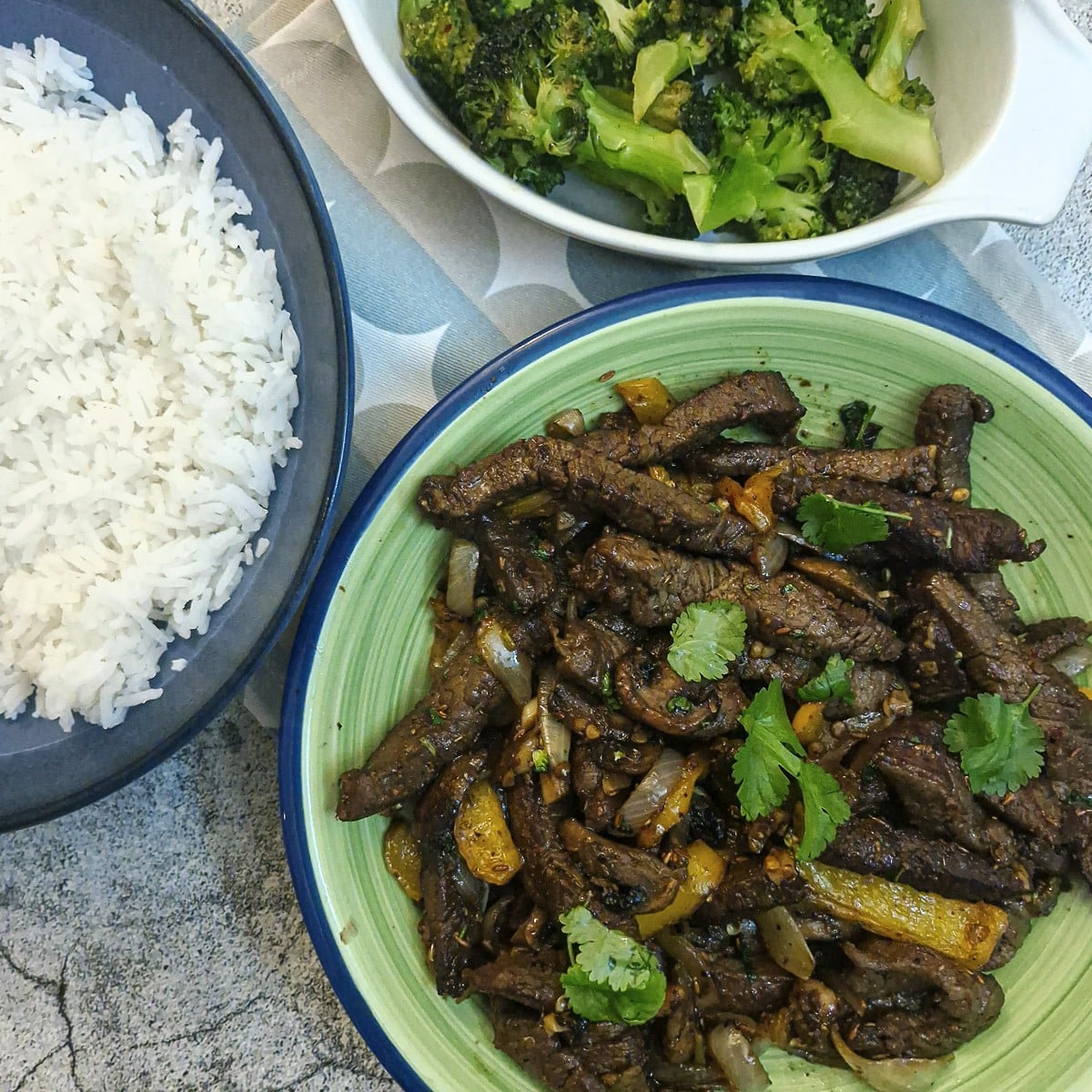
If you have some strips of rump steak, mushrooms, onions, bell pepper and a few spices, you can surprise the family with this cumin beef stir fry, and serve something different for supper.
Jump to:
Recipe at a glance
- Beef cumin stir-fry in a nutshell: Toast the spices, marinate and fry the steak and set it aside, soften the vegetables, add the steak back and stir in the spices. Job done!
- Main ingredients: rump steak, onions, bell pepper and mushrooms, cumin, szechuan peppercorns, garlic and ginger.
- Prep time: 10 minutes
- Marinating time: 10 minutes - but you can let the beef marinate while you prep the veggies.
- Cooking time: 20 minutes
- Yield: Serves 4
A different kind of stir-fry
If you're anything like me, you're always on the lookout for recipes with a difference - and that's exactly what this cumin beef stir-fry is.
This is not your normal stir-fry consisting of veggies, meat and lots of sauce; this cumin beef is a much drier stir-fry - in fact, other than a little marinade for the steak, there's no sauce in it at all. But, for all that, it's no less tasty; the beef is melt-in-the-mouth tender, with the perfect blend of spices.
Cumin beef stir-fry is inspired by the spice-laden street barbeque of northwest China, and is all about smoky cumin, chilli heat and beautifully seared strips of beef. Unlike a typical sauce-heavy stir-fry, this dish is drier and intensely aromatic - almost like kebabs, but stir-fried rather than grilled.
The addition of Szechuan peppercorns adds a whole new element of taste. If you haven't tried Szechuan peppercorns before, do yourself a favour and try to find some. They are readily available in most Asian stores, or you can buy ready-ground Szechuan pepper in the supermarket spice aisle. Szechuan pepper adds a mouth-tingling taste with a slightly numbing effect. It's a unique sensation, and once you've tried it, you'll be looking for ways to use it again.
Here are a couple of recipes using Szechuan peppercorns that you might like to try:
So, let's get on with the cumin beef stir-fry recipe.
Flavour profile
Cumin beef stir-fry (and its close relative cumin lamb stir-fry) originated in the Xinjiang region of northwest China, which was historically part of the Silk Road. Xinjiang is home to the Uyghur people, whose culture, food and spices were heavily influenced by the flavours of Central Asia, Persia and the Middle East. Cumin isn't traditionally central to most Chinese regional cuisines, but as merchants travelled along the Silk Road through Xinjiang, they brought their spices with them. Cumin travelled east, and it stayed!
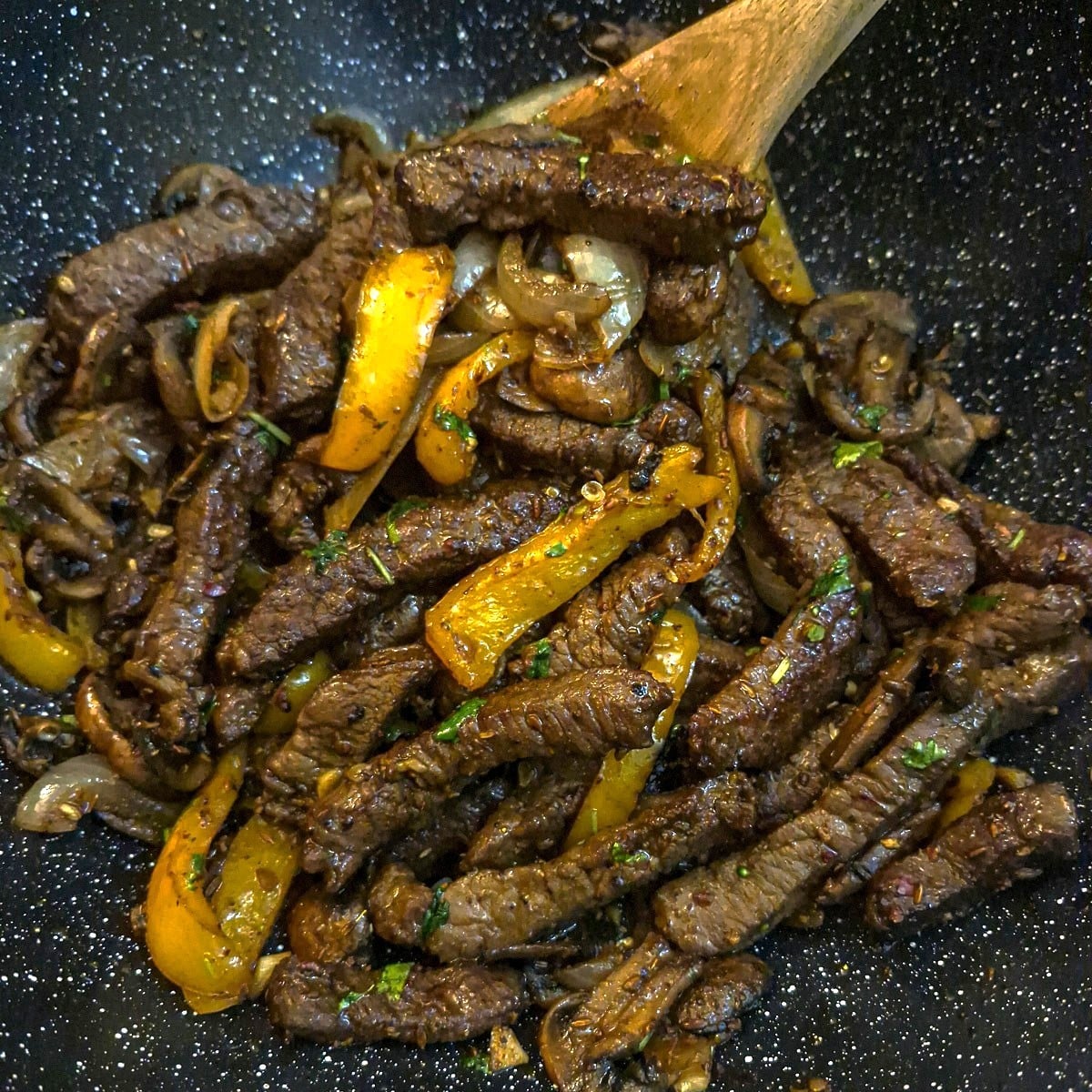
I can't guarantee that my cumin beef recipe is authentic and traditional, but it tastes delicious, and that's good enough for me. Here's what the flavour profile looks like:
- Dry, not saucy. This cumin beef isn't your normal sauce-heavy stir-fry; instead, it's a dry stir-fry, but coated with a generous layer of fragrant spices.
- Heavy cumin aroma. If you enjoy the taste of cumin, then I think you are going to love this!
- Almost kebab-like. This cumin beef stir-fry works equally well served on a bed of fluffy rice, with a side of steamed greens, or packed into a pita bread and eaten like a sandwich.
Ingredients for cumin beef stir-fry
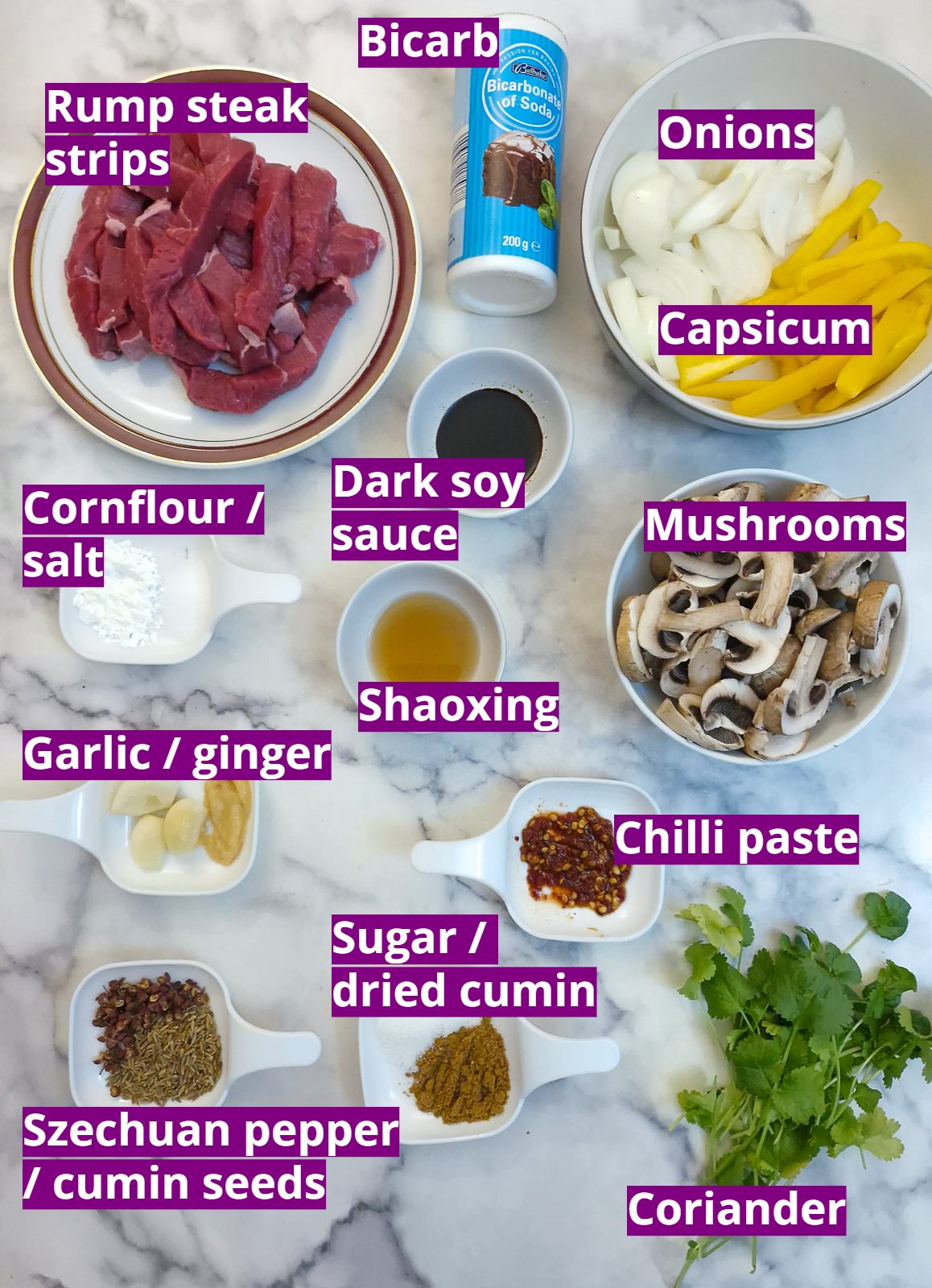
**You can find the exact ingredient quantities on the printable recipe card at the end of this post.**
Meat and marinade
- Rump steak. I like to use rump, but you could use sirloin or even flank steak. You need beef that cooks and tenderises quickly over high heat - don't use stewing steak - it will be too tough. Regardless of the cut of beef, it should be thinly sliced against the grain.
- Bicarbonate of soda (baking soda). This helps to tenderise the meat by raising the pH level, which prevents the muscle fibres from tightening too much during cooking. Many recipes suggest coating the meat with bicarb and rinsing it off after 10 minutes. In this recipe, however, only a small amount is used, so there's no need to rinse it away. It won't leave any aftertaste and won't be noticeable in the finished dish.
- Shaoxing rice wine. This is Chinese cooking wine with a taste very similar to dry sherry. You can find it in most supermarkets these days. Substitute with dry sherry. If you don't cook with alcohol, leave it out, or add half a tablespoon of apple cider vinegar.
- Dark soy sauce, cornflour (cornstarch) and salt. These are the other ingredients that go into the marinade.
- Sugar. Not too much, just half a teaspoon helps round out the flavours. Leave it out if you prefer.
- Vegetable oil. Not pictured, but you will need a small amount of neutral-flavoured oil, both in the marinade and also to fry the steak strips..
Vegetables
- Onions. I used white onions, but you could use red. They should be peeled and sliced.
- Capsicum (bell pepper). The colour doesn't matter - use your favourite. I'd normally be inclined to use red, but I only had a yellow one, so that's what I used! It should be deseeded and sliced.
- Mushrooms. Once again, use your favourite variety. They should be wiped with a damp paper towel to remove any bits of dirt and sliced.
- Garlic and ginger. The garlic should be finely chopped. You can use fresh ginger, which should be peeled and finely grated. For convenience, I keep a jar of ready-prepared ginger paste in my refrigerator and use that instead of fresh.
- Chilli paste. I like to use a brand of chilli paste called Lazy Chilli. It's made with chopped chillies, which have been bottled in white wine vinegar. One teaspoon is the equivalent of one small chilli (which is about my level of heat tolerance)! You can substitute with fresh chopped chillies or use your own favourite brand of chilli paste.
Spices
- Szechuan peppercorns (also known as Sichuan peppercorns) are the dried aromatic husks of the prickly ash shrub, so they aren't actually a true pepper. They have a distinctive citrusy, floral and slightly woody taste, and are well-known for the gentle mouth-numbing or tingling sensation they create on the tongue.
- Cumin. This recipe calls for both cumin seeds and ground dried cumin. The cumin seeds will be toasted with the Szechuan peppercorns to enhance their flavours. This step in the recipe is optional, but highly recommended.
- Coriander. This is optional, but I like to garnish with a little chopped fresh coriander. You might also like to stir some chopped coriander into the stir-fry before serving.
How to make cumin beef stir-fry
💡Tip - this recipe comes together very quickly, so it's a good idea to have all the ingredients prepared and ready before you start cooking.
Marinate the beef
Do this step before you prepare the vegetables, to give the meat time to marinate - it will only need 10 to 15 minutes.
For some reason, I forgot to take photographs of the next few steps, so you'll have to use your imagination.
- Slice the steak into thin slices, taking care to cut against the grain and place it into a small bowl.
- Pour in the soy sauce, Shaoxing wine, salt, cornflour, oil and bicarbonate of soda, and use your hands to massage it into the beef, taking care to ensure each piece of meat is completely covered.
- Set aside while you prepare the vegetables.
Toast the spices
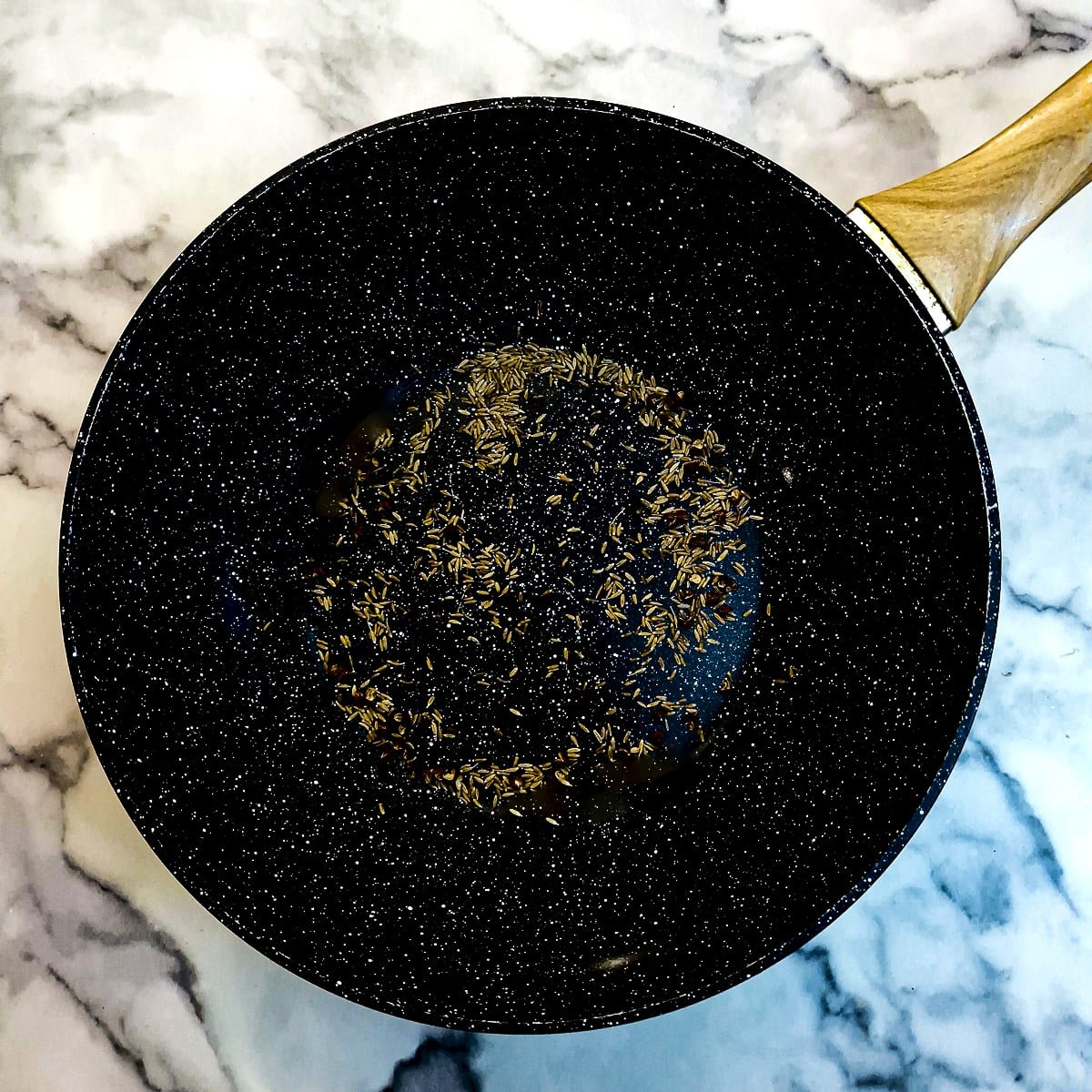
Step 1: Place the Szechuan peppercorns and cumin seeds into a dry wok or frying pan and bring to moderate heat. Stir the spices for 2 to 3 minutes until they start to brown and release their aromas. Take care not to let them burn.
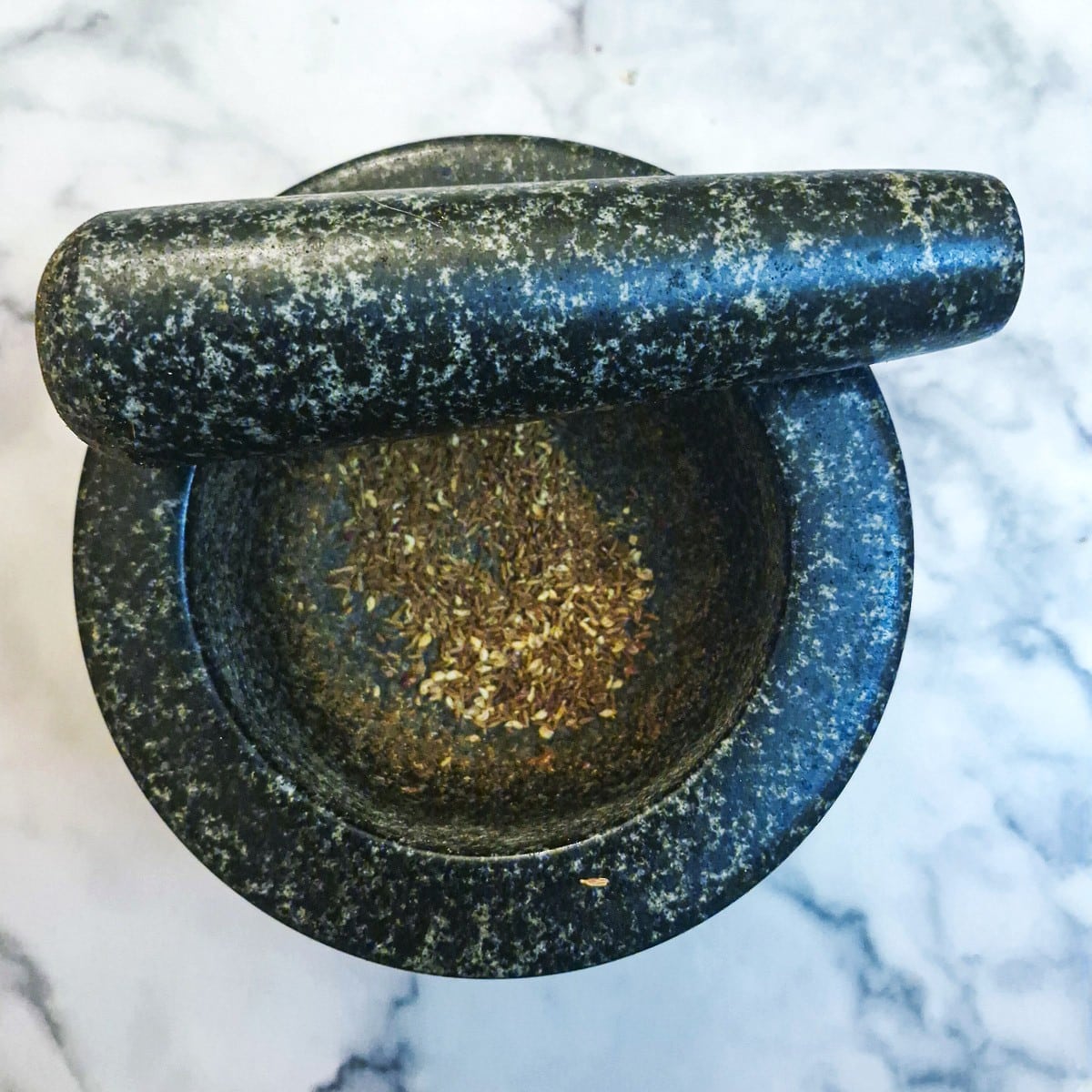
Step 2: Grind the spices in a mortar and pestle and set them aside.
Fry the steak
💡Tip - Don't overcrowd the pan, or the meat will steam rather than sear. Fry the meat in batches if necessary.
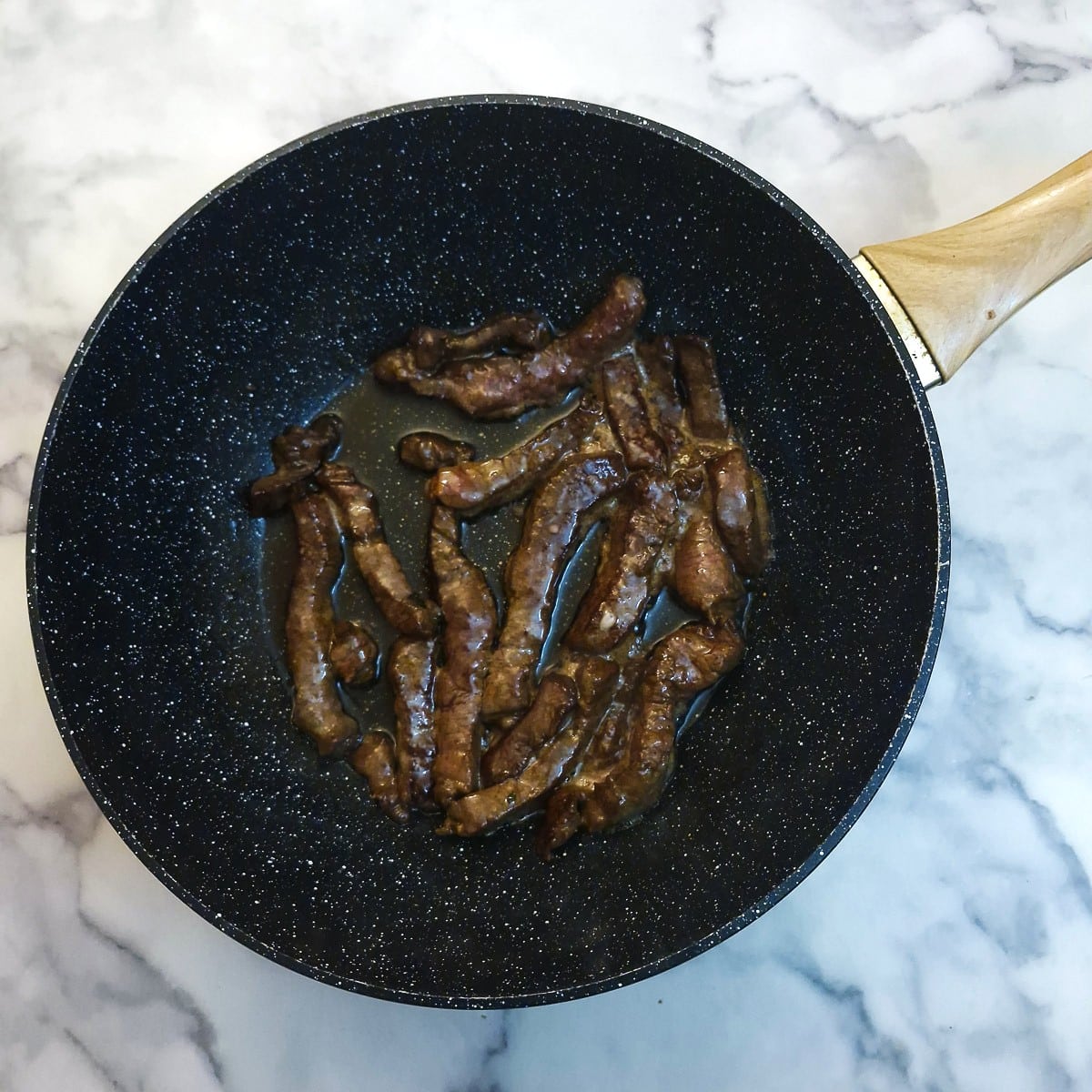
Step 3: Add a splash of oil to the same pan and turn the heat to high. Add the steak in a single layer (be careful, it will sizzle) and leave for 30 seconds. Then use a spatula to stir-fry the beef for 2 to 3 minutes in total until just cooked.
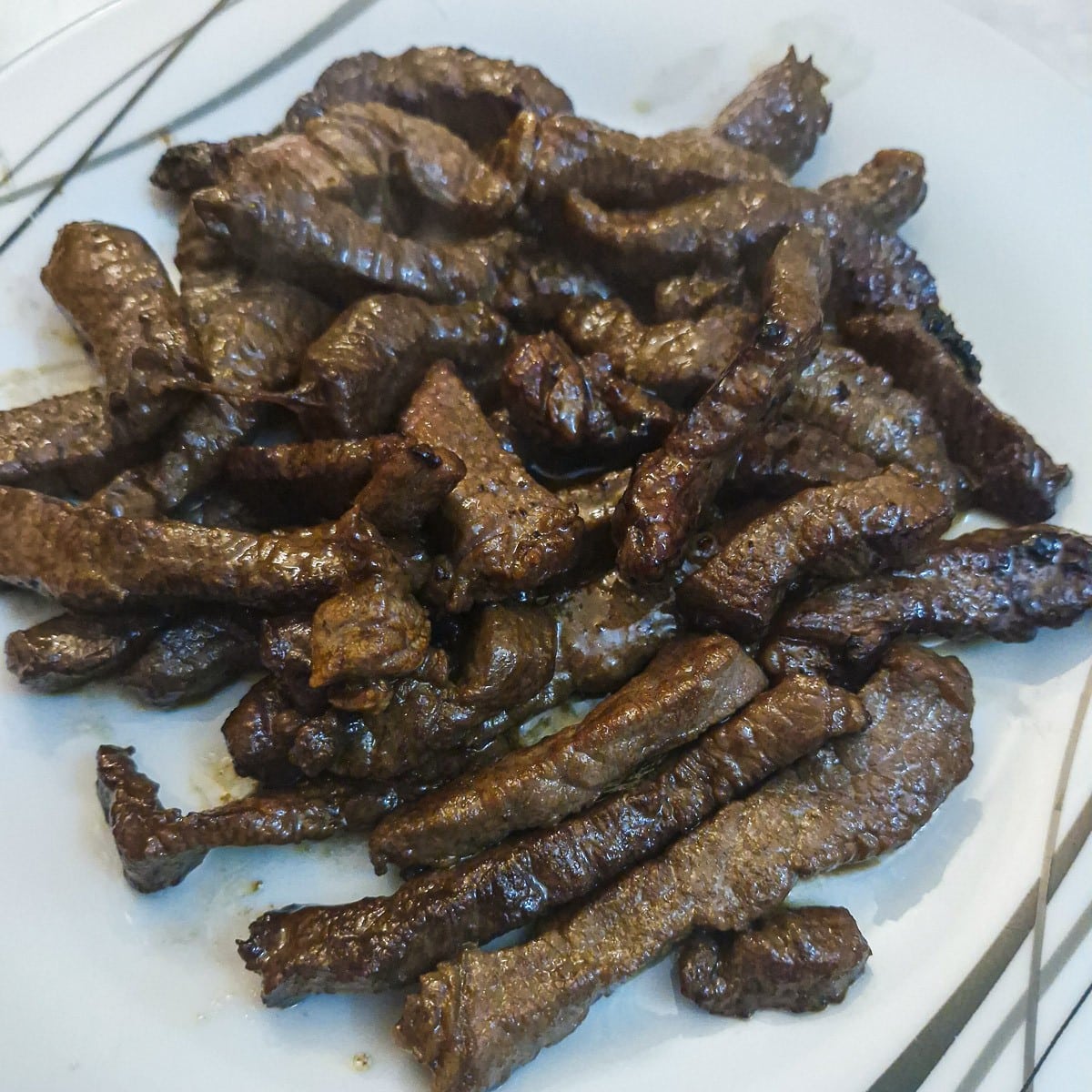
Step 4: Transfer the seared beef to a plate, and repeat with any remaining strips of beef.
Fry the vegetables
💡Tip - When frying the onions and capsicum, don't overcook them - they should be softened but still crispy. I find that if I cover the pan with a lid and leave them for 2 minutes on moderate heat they soften nicely in the steam. Then I remove the lid and stir them for a further minute to get rid of any excess moisture.
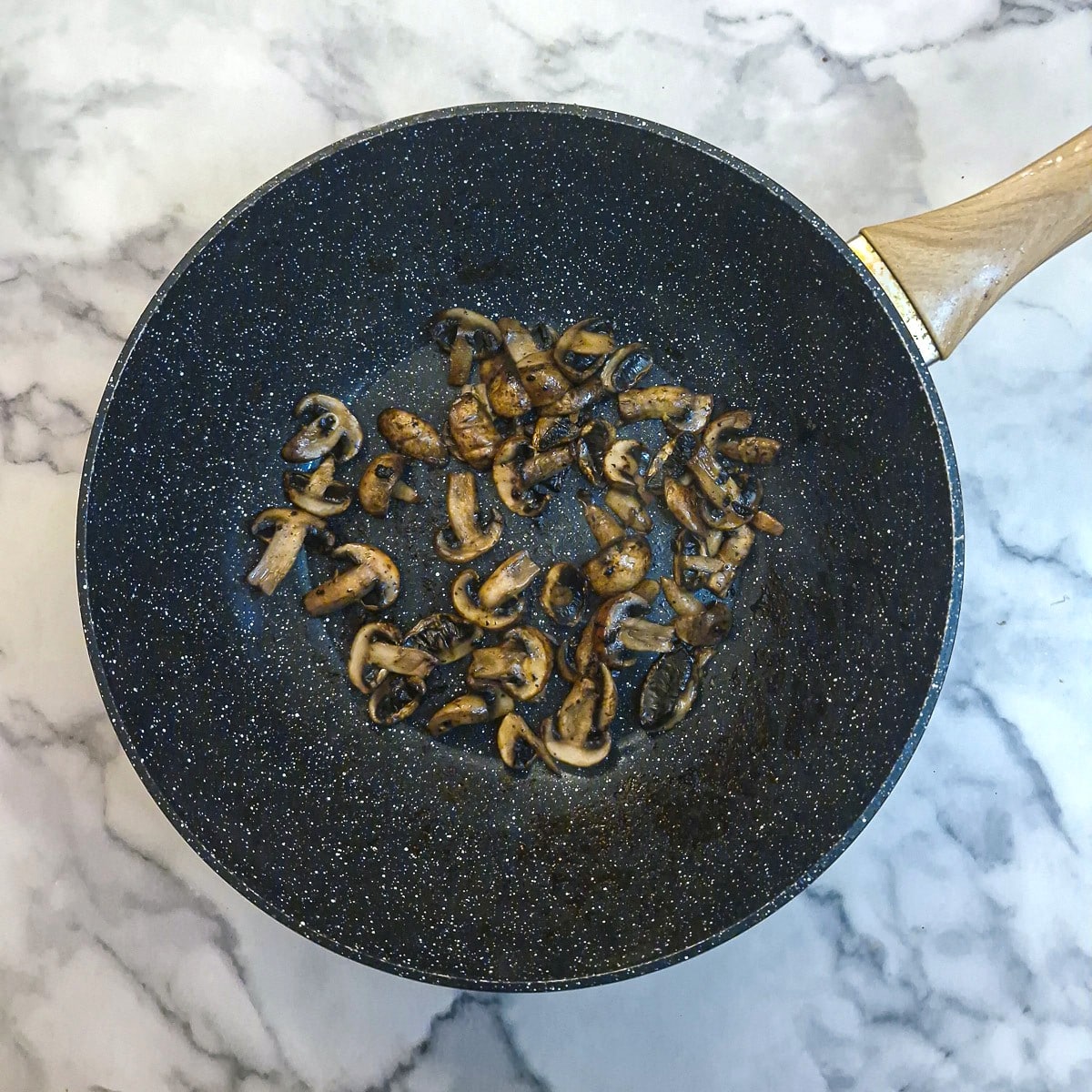
Step 5: Turn the heat back to moderate and stir-fry the mushrooms in the same pan until they have released their moisture. If you need extra oil, add a tablespoonful; however, you will probably find there is sufficient moisture in the pan from the meat marinade. Transfer the cooked mushrooms to the plate holding the meat.
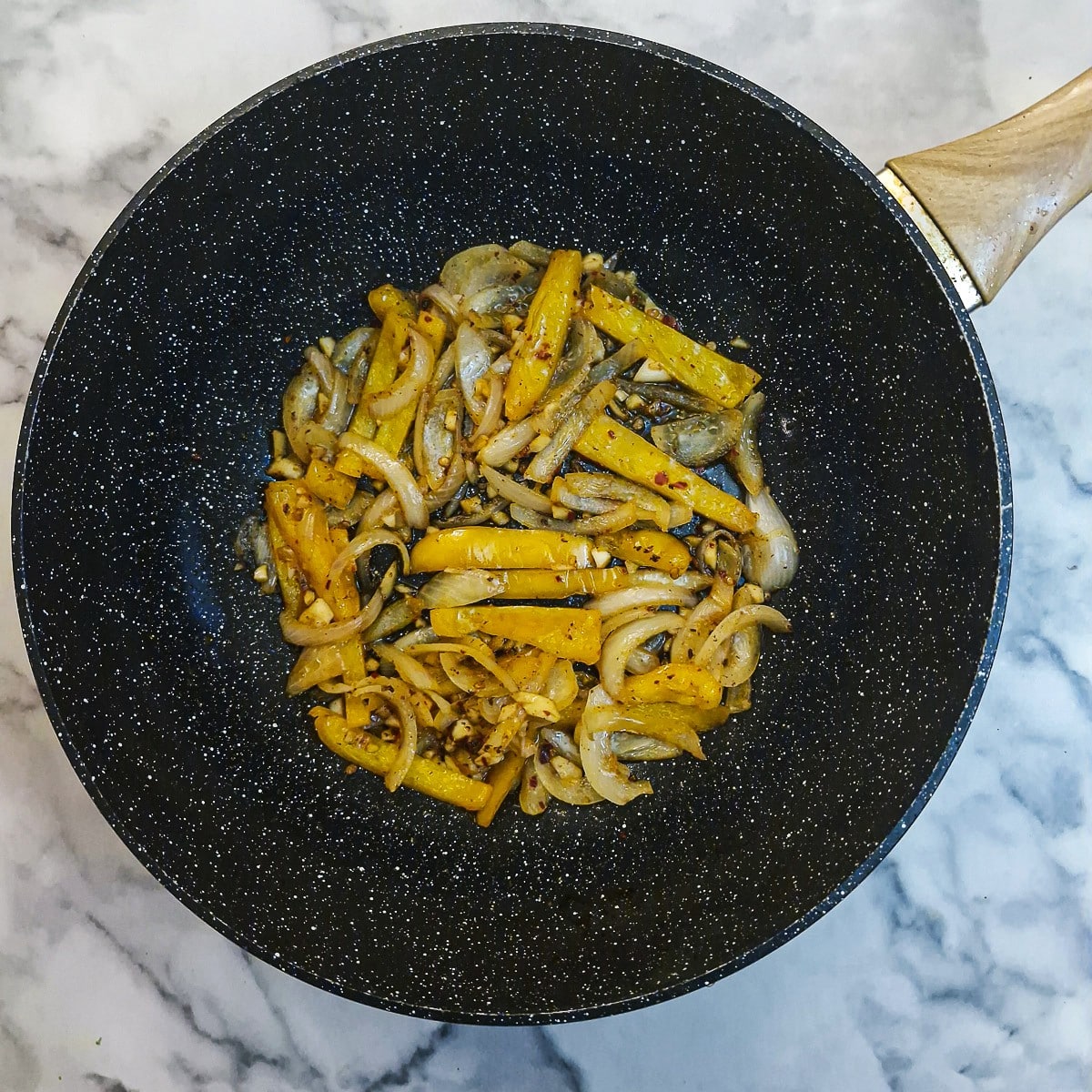
Step 6: Add another splash of oil and stir-fry the onions, capsicum, garlic, ginger and chilli paste (or fresh chillies) for 3 to 4 minutes until the onions are translucent and the capsicum has softened.
💡Tip - When reheating, remove the pan from the heat the moment the meat has heated through. Don't let it sit on the heat, or the steak will become tough and overcooked.
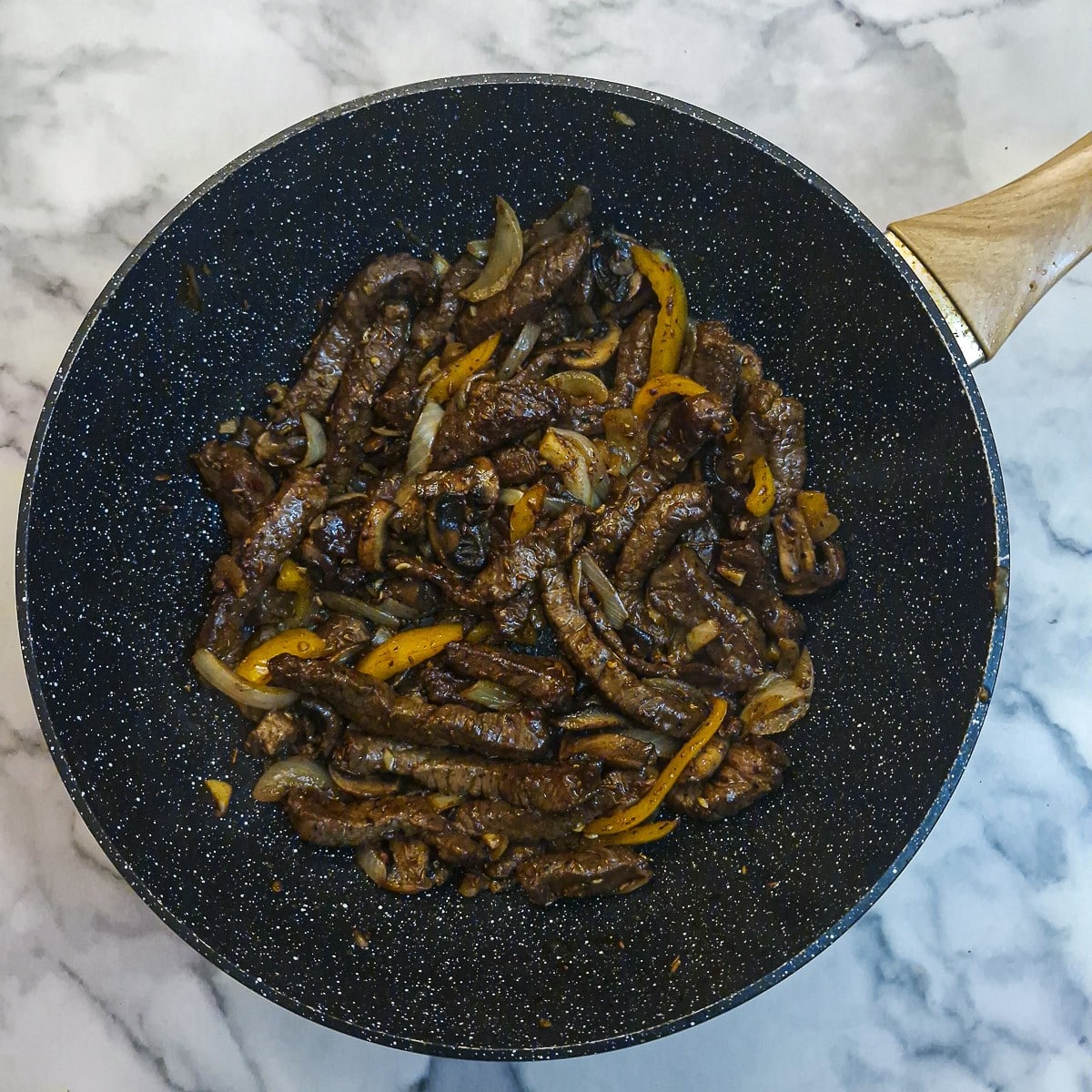
Step 7: Return the meat and mushrooms to the pan, along with any resting juices.
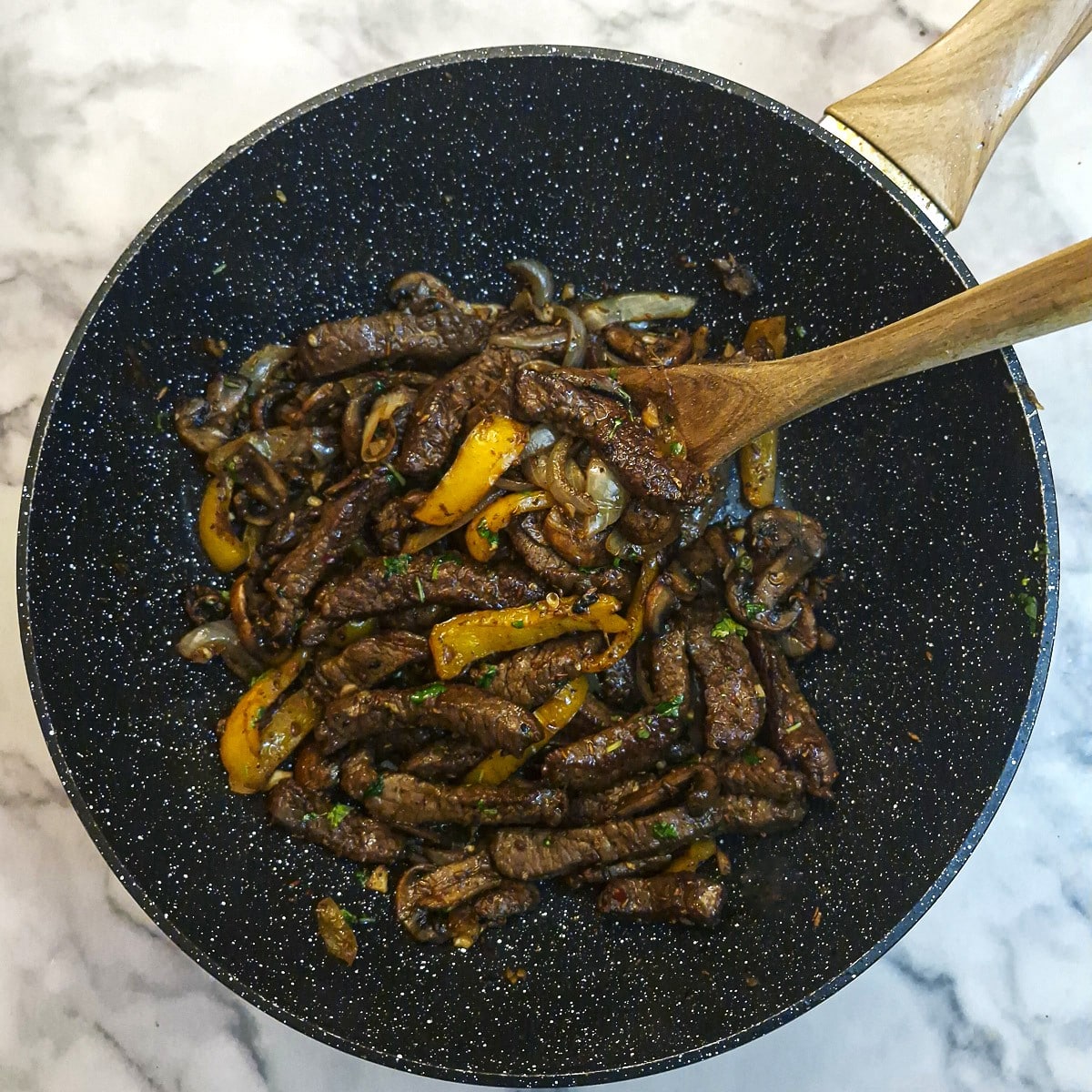
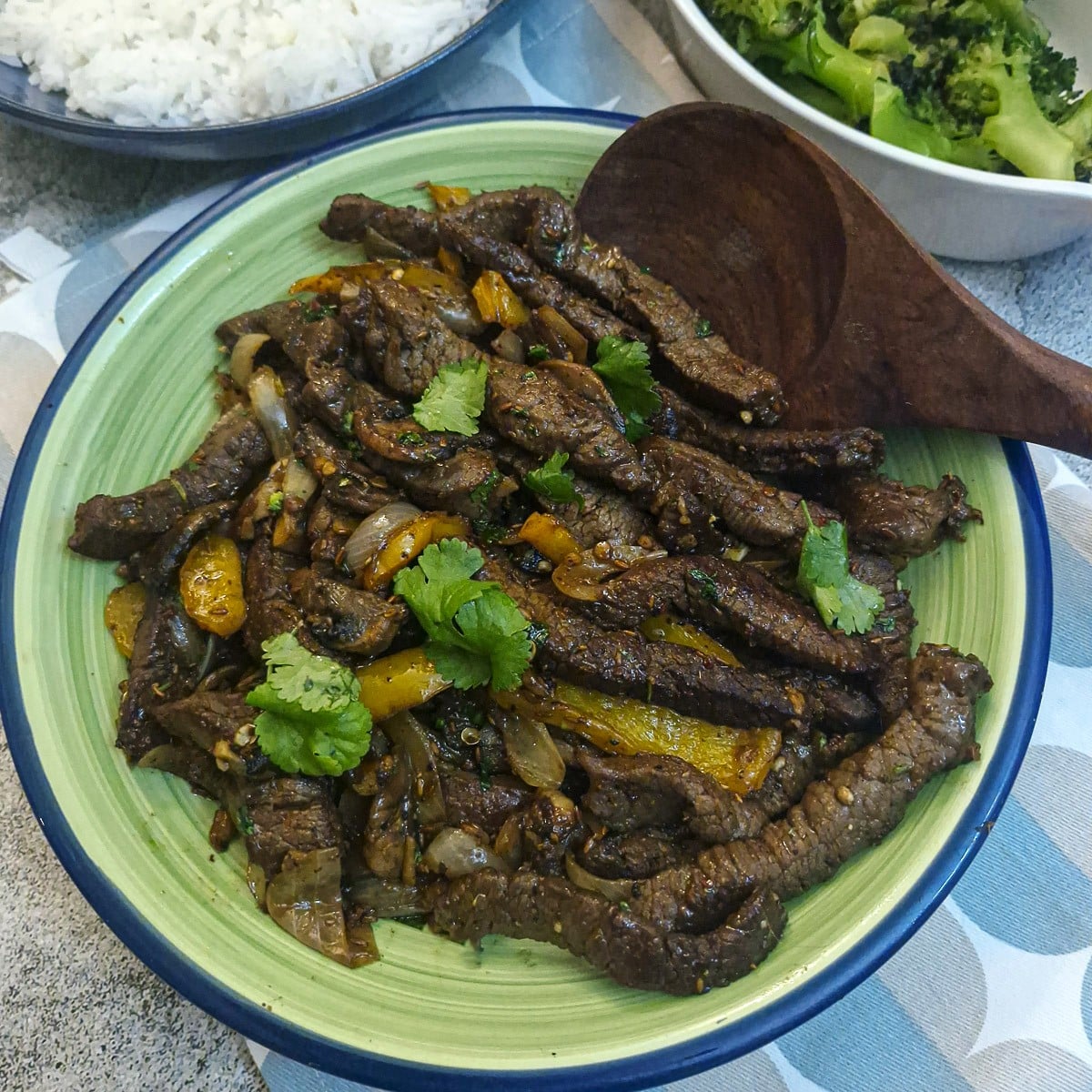
Step 8: Add the toasted spices and the ground cumin (and chopped coriander if using) and stir for 2 minutes until the aromas have developed and the dish is piping hot. Garnish with more chopped coriander and serve immediately.
Serving suggestions
I like to serve this dish with rice. Plain white rice is fine, or you might like to try one of my tasty rice dishes:
If I haven't added any extra vegetables to the stir-fry, I also like to add a dish of freshly steamed green vegetables such as beans or broccoli.
For a relaxed Friday night meal, layer the cumin beef stir-fry into pita bread or roll it in a tortilla wrap and serve with dipping sauces and a green salad.
Variations
This cumin beef recipe is surprisingly versatile - you can tweak it to your own taste while still maintaining the flavour profile.
- Change the protein - make it with lamb or chicken. Thinly sliced lamb leg or chicken thighs can be substituted for the beef with no need to change the cooking time.
- Extra spicy - I know - I'm a heat-wimp. If you want a spicier version, add extra chilli to the recipe.
- Kid-friendly - on the other hand, if you're feeding children, you might want to omit the chilli entirely - although they'd probably enjoy the slightly mouth-numbing taste from the Szechuan peppers.
- Extra veg - there's nothing stopping you from adding a handful of sugar snaps, green beans, or baby corn along with the onions and capsicum for extra colour and crunch.
Equipment
I find the easiest way to cook this dish is in a large non-stick wok. However, a large saute pan would work just as well. Ensure the pan you use is large enough to hold all the ingredients.
I've also got a heavy, granite mortar and pestle. If you have a spice grinder, then lucky you! I've been hinting to my family for a while now, but nothing's materialised yet 😁!
Storing and freezing
- Refrigerator. Leftovers can be refrigerated in a covered container for up to 3 days.
- Reheating. When reheating, take care not to overcook the steak. It can go from juicy and succulent to dry and tasteless in a flash. I normally put one serving in the microwave on 50% power for 2 minutes. You could also reheat it by stirring it in a dry frying pan for 2 to 3 minutes over moderate heat on the stove.
- Freezer. Pack any leftover cumin beef into a suitable freezer container and freeze for up to 3 months. Defrost overnight in the refrigerator and reheat as above.
FAQ
If you look at a piece of beef, whether raw or cooked, you will notice long fibres running through the meat. This is known as the 'grain'. For optimum tenderness, you should always slice against or across the grain, rather than with it. Cutting across the grain shortens the muscle fibres, making the meat easier to chew. If you slice in the same direction as the grain, the fibres remain long, resulting in tougher, stringier pieces of beef.
No, they are not spicy in the way that chilli peppers are. They don't contain capsaicin (the compound that makes chillies hot), so you won't get a burning heat from them. Instead, you get a tingling, slightly numbing sensation in the mouth. In Szechuan cooking, they are often paired with chillies to add heat.
The main ingredient to check would be the soy sauce, which might contain wheat. Swap with tamari or a certified gluten-free soy sauce.
Also check the ingredients on the Shaoxin wine, oyster sauce and chilli paste to ensure they are gluten free.
Save for later
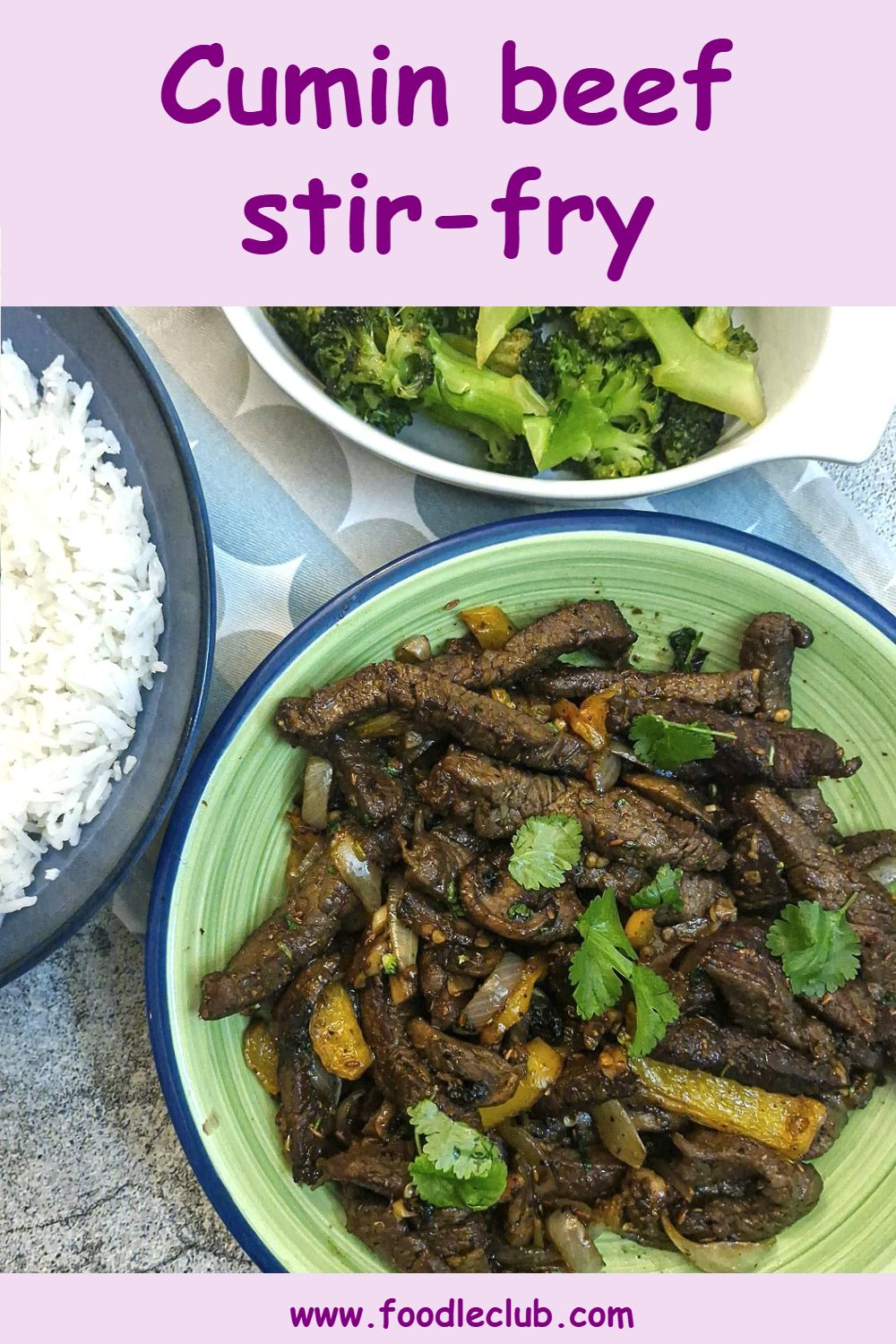
If you would like to try this cumin beef stir-fry, why not save the recipe to one of your Pinterest boards so you can find it easily? Just click the image below.
Alternatively, you can save the recipe by clicking on the floating heart icon on the right-hand side of the screen.
Similar recipes
Visit my beef recipes page for other delicious and easy ideas using beef. Here are a few you might enjoy:



📋The recipe
Cumin beef stir-fry
(Click the stars to rate this recipe)
Equipment
- Non-stick wok OR
- Large frying pan
- Mortar and Pestle
Ask a Question
If you have a question about this recipe that has not been answered, please use the box below to ask it.
Use this with care. This is an AI-generated result and may contain errors or inaccuracies. I cannot be held responsible for the information returned.
Ingredients
Meat and marinade
- 1 pound / 450 grams rump steak thinly sliced against the grain
- ½ teaspoon bicarbonate of soda (baking soda)
- 2 tablespoons Shaoxing rice wine or dry sherry Substitute with apple cider vinegar
- 2 tablespoons dark soy sauce
- 1 tablespoon cornflour (cornstarch)
- ½ teaspoon salt
- ½ teaspoon sugar
- 1 tablespoon vegetable oil
Vegetables
- 1 large white onion (peeled and sliced) approximately 1 cup
- 1 large bell pepper (deseeded and sliced) colour of your choice
- 8 ounces / 225 grams mushrooms wiped and sliced
- 3 cloves garlic finely chopped
- ½ teaspoon ginger paste
- 2 teaspoons chilli paste or more to your own taste
Spices
- 2 teaspoons dried Szechuan peppercorns
- 1 teaspoon cumin seeds
- 1 teaspoon dried ground cumin
- 1 small bunch fresh coriander for garnish
Instructions
Marinate the beef
- Combine the soy sauce, Shaoxing wine, salt, sugar, cornflour and bicarbonate of soda into a bowl large enough to hold the sliced steak.½ teaspoon bicarbonate of soda (baking soda), 2 tablespoons Shaoxing rice wine or dry sherry, 2 tablespoons dark soy sauce, 1 tablespoon cornflour (cornstarch), ½ teaspoon salt, ½ teaspoon sugar, 1 tablespoon vegetable oil
- Slice the steak (against the grain) into thin strips and stir it into the marinade until the beef strips are completely coated.1 pound / 450 grams rump steak
- Set the beef aside for a few minutes while you prepare the vegetables.
- Peel and slice the vegetable as described above.1 large white onion (peeled and sliced), 1 large bell pepper (deseeded and sliced), 8 ounces / 225 grams mushrooms, 3 cloves garlic, ½ teaspoon ginger paste, 2 teaspoons chilli paste
Toast the spices
- Place the Szechuan peppercorns and cumin seeds into a dry wok or frying pan and bring to a moderate heat. Stir the spices for 2 to 3 minutes until they start to brown and release their aromas. Take care not to let them burn.2 teaspoons dried Szechuan peppercorns, 1 teaspoon cumin seeds
- Transfer the toasted spices to a mortar and pestle, grind them and set aside.
Fry the steak
- Add a splash of oil to the same pan and turn the heat to high. Add the marinated steak in a single layer (be careful, it will sizzle) and leave for 30 seconds. Then use a spatula to stir-fry the beef for 2 to 3 minutes in total until just cooked.
- Transfer the seared beef to a plate, and repeat with any remaining strips of beef.
Fry the vegetables
- Turn the heat back to moderate and stir-fry the sliced mushrooms in the same pan until they have released their moisture. If you need extra oil, add a tablespoonful; however, you will probably find there is sufficient moisture in the pan from the meat marinade. Transfer the cooked mushrooms to the plate holding the meat.
- Add another splash of oil and stir-fry the onions, capsicum, garlic, ginger and chilli paste (or fresh chillies) for 3 to 4 minutes until the onions are translucent and the capsicum has softened.
Assemble
- Return the meat and mushrooms to the vegetables in the pan, along with any resting juices.
- Add the toasted spices and the ground cumin (and chopped coriander if using) and stir for 2 minutes until the aromas have developed and the dish is piping hot. Garnish with more chopped coriander and serve immediately.1 teaspoon dried ground cumin, 1 small bunch fresh coriander
- Serve over rice, and optionally add extra steamed vegetables on the side.
Notes
- Substitute the rump steak with sirloin or flank steak. You can also make this dish with sliced lamb leg or boneless chicken thighs.
- Shaoxing rice wine - substitute with dry sherry. For a non-alcohol version, use half a tablespoon of apple cider vinegar.
- Add extra chilli for a spicier flavour. You could also fry chopped fresh chillies with the onion and capsicum.
- For a more substantial meal, add extra vegetables such as sugar snaps, green beans or baby corn.
- As with most stir-fries, this recipe comes together very quickly, so it's a good idea to gather and prep all the ingredients before starting to cook.
- Slice the steak against the grain so that you cut through the muscle fibres rather than alongside them.
- Ensure each steak strip is completely coated with the marinade.
- When frying the steak, don't overcrowd the pan. Add just enough steak to the pan to form a single layer. Fry in batches if necessary.
- When frying the onions and capsicum, don't overcook them - they should be softened but still have a little bite to them.
- When assembling the dish, remove the pan from the heat the moment everything has heated through. Don't leave the pan on the heat or the steak will become tough and overcooked.
- Refrigerator. Leftovers can be refrigerated in a covered container for up to 3 days.
- Reheating. When reheating, take care not to overcook the steak. It can go from juicy and succulent to dry and tasteless in a flash. I normally put one serving in the microwave on 50% power for 2 minutes. You could also reheat it by stirring it in a dry frying pan for 2 to 3 minutes over moderate heat on the stove.
- Freezer. Pack any leftover cumin beef into a suitable freezer container and freeze for up to 3 months. Defrost overnight in the refrigerator and reheat as above.
Nutrition
I am not a nutritionist. The nutrition information has been calculated using an on-line calculator, and is intended for information and guidance purposes only. If the nutrition information is important to you, you should consider calculating it yourself, using your preferred tool.
If you made this recipe and enjoyed it, I'd love it if you could give me a star rating in the comments below. And if you'd like to get in touch, you can email me at [email protected]. I'd love to hear from you. And don't forget to subscribe to my mailing list so you can grab yourself a copy of my FREE COOKBOOK!
If you'd like to continue browsing, just click on this link to all my recipes.




Did you make this recipe? Let me know!